Wes Anderson

The Phoenician Scheme

26/05/25

Cineworld, Edinburgh

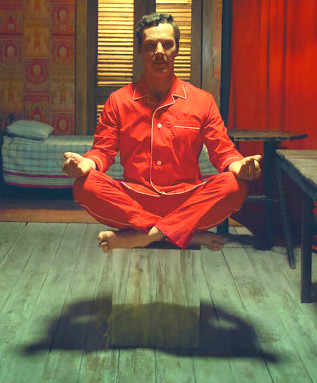
Cinema fans can hardly have failed to notice that a new Wes Anderson movie is on general release. As ever, it features his usual bag of tricks: impeccably-framed images arranged in perfect symmetry on the screen; an extended set of famous faces, all of whom show up for every successive project and seem happy to put in cameo performances for shirt buttons; and, as ever, a plot that appears to have been created simply to redefine the term ‘off-beat.’

Anderson has long been a disciple of Verfremdungseffekt – the distancing technique devised by playwright Bertolt Brecht, employed to prevent an audience from easy identification with his characters. It’s always been there in Anderson’s work to some degree but, this time around, I can’t help feeling that it might have been too enthusiastically applied.

Call me old-fashioned, but I do like a character I can root for. Here, there really isn’t one.

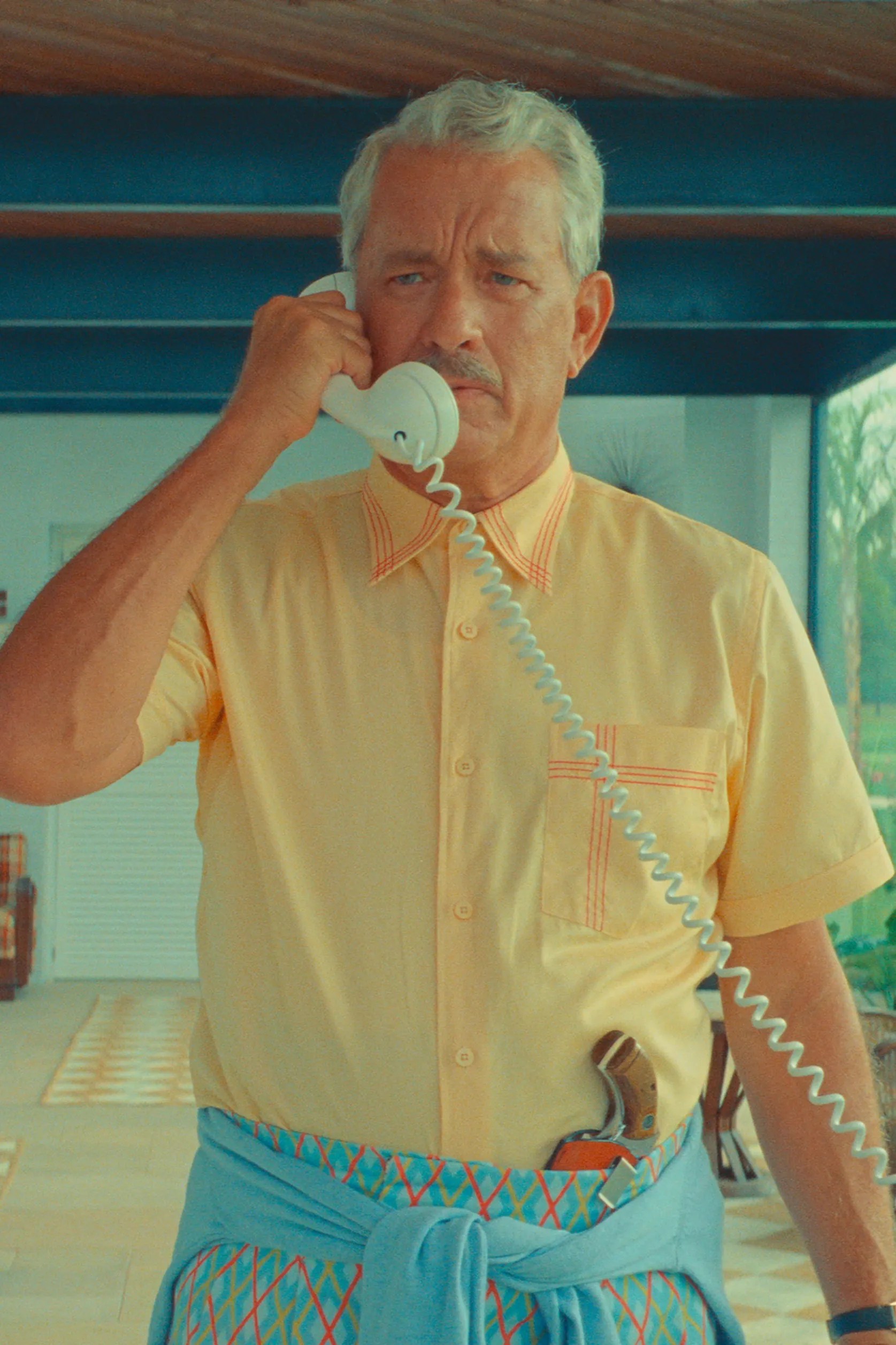
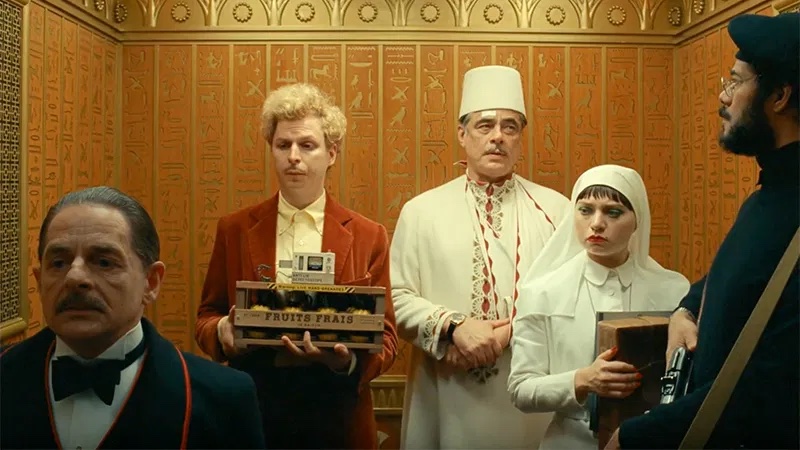
Wealthy and indomitable business magnate Zsa zsa Korda (Benicio del Toro) continues to thrive, despite the many assassination attempts that have been made on him by his rivals. After a near-fatal plane crash, he gets in touch with noviciate nun, Liesl (Mia Threapleton), who may just be his only daughter. (Korda has nine sons, several of them adopted, but he tends to spend as little time with them as possible.) Now, realising that he might be getting close to the end of his life, he has decided to offer Liesl a trial run as the sole heir to his considerable estate. He also takes on a new assistant, Bjørn Lund (Michael Cera), his last sidekick having been blown in half in the aforementioned plane crash.

The threesome must now travel around the fictional country of Phoenicia, where Korda has heavily invested in several major projects. A shadowy cabal of businessmen, led by Mr Excalibur (Rupert Friend), have raised the price of an all-important rivet used in the manufacturing process. This means that, unless Korda can persuade his business associates to take smaller profits, he is at risk of losing everything…

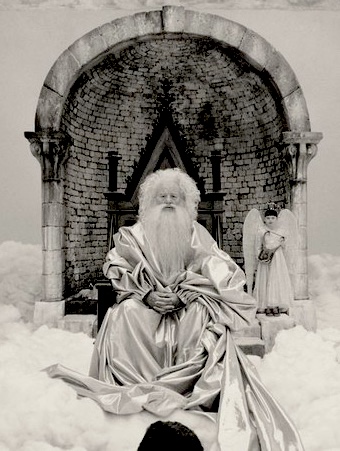
Even as I write this plot outline, I wonder why I’m bothering. Wes Anderson films are like art exhibitions. Some you love, though you cannot exactly pinpoint why. And others leave you flat for no easily-discernible reason. I’m not saying that The Phoenician Scheme is without merit. I sit watching it unfold, approving of its incomparable look and style, occasionally chuckling at some absurd lines of dialogue, even spotting the occasional movie reference. That Moroccan style club run by Marseille Bob (Mathieu Amalric), that’s a nod to Casablanca, right? And the black and white dream sequences, where Korda meets up with God (Bill Murray, naturally), are surely a reference to…

But this is pointless. I loved Anderson’s previous release, Asteroid City, which many viewers dismissed as another exercise in style over content. But this time, even I can’t seem to make myself care enough about the many characters I’m presented with. Korda’s growing relationship with Liesl could perhaps have been the hook that pulled me in, but that element feels somewhat under-developed.

That said, Anderson is one of the few film makers who walks his own path and refuses to compromise his vision. With names like Tom Hanks, Scarlett Johannsson and Benedict Cumberbatch ready and willing to bury their egos in walk-on roles, he’s in the rare position of being free to do exactly as he wishes.

So, why not give this a go? Chances are, you’ll completely disagree with me.

3.6 stars

Philip Caveney

Roald Dahl/Wes Anderson

29/10/23

Netflix

A new film by Wes Anderson is always an interesting proposition. Four new films – the longest of which has a running time of just thirty-seven minutes – is a downright intriguing one.

It must be said from the start that these are less motion pictures than illustrated stories (imagine, if you will, a kind of turbo-charged Jackanory and you’ll get the general idea). First up, there’s the aforementioned longest entry in the quartet, The Wonderful Story of Henry Sugar, which – to begin with – is told by Dahl himself (uncannily impersonated by Ralph Fiennes). The author begins to relate the story of the mysterious Imdad Khan (Ben Kingsley), a man who can see without using his eyes. Khan’s story is then picked up by two doctors (Dev Patel and Richard Ayoade) and they, in turn, transfer their attention to the titular character (played by Benedict Cumberbatch), a man who becomes obsessed with the notion of becoming an expert card cheat. (As you do.)

It’s all delivered as narration (at a breakneck pace) and, of course, the set dressing has the usual Anderson style: a series of exquisite puzzle-boxes, expertly linked together, opening and closing as the tale unravels. It’s beautiful to watch, but ultimately the story leaves me with a powerful sensation of so what?

The Swan (narrated by Rupert Friend) is, for me, the strongest narrative here, the distressing tale of a young boy called Peter (Asa Jennings), who is horribly bullied by a couple of local lads with access to a rifle (always a recipe for trouble) and which culminates in a poignant and rather distressing conclusion. The story is delivered by Friend as he wanders along a series of labyrinthine passageways and this is perhaps the most kinetic of the films.

The Rat Catcher features Fiennes as the central character, a rather creepy individual who visits a garage and offers his services to the proprietor (Friend again), while the tale is told by a narrator (Ayoade). The subtext of this one is rather less straightforward, as is the style. I can’t remember ever seeing an actor miming invisible objects in a film before! The rat catcher has assimilated all the qualities of the creatures he’s supposed to be eradicating and, when he fails in his attempts to locate them (in a haystack), he tries to make up for his failure in a demonstration of unpleasantness. Again, I feel that the story’s conclusion is rather underwhelming.

Finally there’s Poison, an account set in post-colonial India, in which Harry (Cumberbatch) lies in bed convinced that a krait (a venomous snake) is lying asleep on his chest and that the slightest move will cause it to bite him. A local police officer (Patel) and a doctor (Kingsley) are enlisted to resolve the situation and, to give them their fair due, they do their level best. The story culminates in a short and rather shocking demonstration of racism, which some viewers will find unsettling, but is surely the whole point of Dahl’s story – that former white rulers will always refuse to acknowledge their own failings. Strangely, Poison seems to have a similar theme to its predecessor.

With such brevity, it seems fairest to judge the four films as a whole – and indeed, Anderson has said that what attracted him to the idea is the notion that they comprise a kind of interlocking narrative. While this quartet is always visually compelling, I can’t help wishing that this inimitable director had settled on some better examples from Dahl’s extensive back catalogue. There are plenty to choose from.

If you have Netflix, they’re certainly worth clicking through. If nothing else, you’ll be charmed by their quirkiness and the uncompromising style that exemplifies Anderson’s approach to cinema.

3.4 stars

Philip Caveney

Asteroid City

25/06/23

Cineworld, Edinburgh

If you were ever looking for the film director equivalent of Marmite, Wes Anderson might just be your best bet. His detractors delight in pointing out that he always makes the same film, but that’s a ridiculous over-simplification. While I’d be the first to admit that his films do have an unmistakable look – that you can see one frame, taken at random from any one of his many features, and know instantly that it’s his work – we rarely make that complaint about artists who work with paint and canvas.

Asteroid City has all of the man’s familiar hallmarks: those sumptuous, vividly-coloured landscapes dotted with unlikely looking ramshackle buildings; a massive roster of A listers, all of them prepared to swallow their pride in return for delivering just a line or two of quirky dialogue; and that weird detachment from reality, those bizarre situations seemingly created to point up the artificiality of the whole undertaking. For me, these are the elements that confirm Anderson as a unique and brilliant filmmaker. But then, I’ve been a fan ever since Rushmore in 1998.

The film opens in stark black and white with an earnest narrator (played by Bryan Cranston) talking about the creation of a new play by hotshot writer, Conrad Earp (Edward Norton), and the play’s tortuous path to production – and then we cut to the full-colour, wide-screen film adaptation of the same story. War photographer Augie Steenbeck (Jason Schwartzman) arrives at the titular desert town with his son, Woodrow (Jake Ryan), who is one of five gifted children invited to attend a ceremony where one of them will be presented with a prize for their latest invention.

Woodrow and his three little sisters have some devastating news to deal with first, but their father seems far more interested in the presence of screen actor, Midge Campbell (Scarlett Johansson), who has her own gifted daughter, Dinah (Grace Edwards), in tow. It’s not long before Dinah and Woodrow begin to develop an interest in each other…

But this is about as far as any rational plot outline can take us. From this point, madness ensues in the form of a group of singing cowboys, the aforementioned weird childhood inventions and a WTF alien visitation. And, as the tale enfolds, we are treated to regular visits back to the monochrome world of the original theatrical version, where we see the actors in the film actually being the actors and learning to handle their roles, whilst commenting on the artificiality of the whole experience. Meta? Well yes, but clearly that’s the point.

If this sounds hard to get your head around, don’t despair, because the sparky script by Anderson and Roman Coppola keeps the pot bubbling happily away as the story unfolds. I find myself laughing at the wonderful absurdity of some of the situations – and is the director making a comment on cinema’s general inability to handle theatrical material with any sense of conviction?

It’s heartening to see that a sizeable audience has come out for this on a rainy Sunday afternoon and also to read that Asteroid City has enjoyed a bigger opening weekend than the latest Transformers movie. Perhaps a lot more people out there are acquiring a taste for Marmite.

4.6 stars

Philip Caveney

The French Dispatch

23/10/21

Cameo, Edinburgh

The word ‘quirky’ could almost have been invented for Wes Anderson. Since his breakthrough with Bottle Rocket in 1996, the director has relentlessly followed the path less travelled. Along the way, he’s dallied with stop-frame animation and, in his live-action features, has developed a visual style used by nobody else in the business. Take off a blindfold in a movie theatre and watch ten seconds of any one of his films and, chances are, you’ll recognise his style instantly.

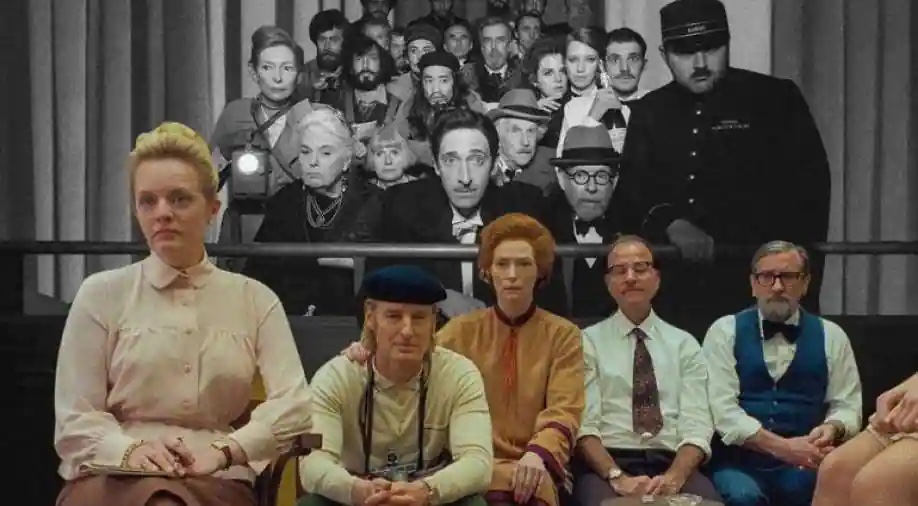
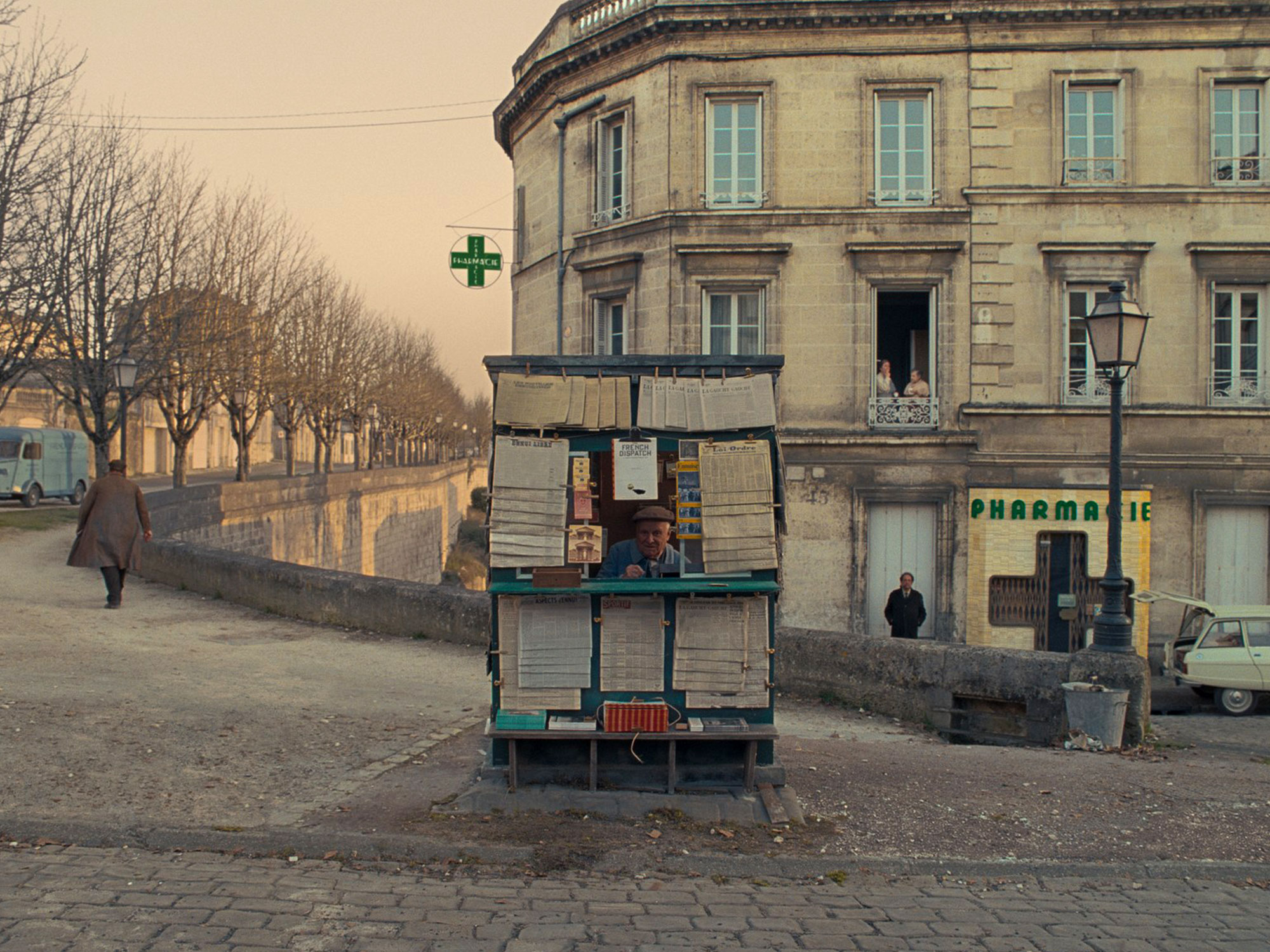
Now here’s the much-delayed The French Dispatch, a portmanteau made up of three short films, linked by a framing device. It probably has a valid claim for being the most Wes Anderson-like film yet as it employs all of the tics and, yes, quirks we associate with him: those bizarre doll house vistas; jarring cuts from colour to monochrome; weird frozen tableaux of action scenes – and characters that are as eccentric as they are amusing. And, of course, there’s also the WA repertory company, a seemingly endless supply of big-name actors, who seem perfectly happy to put their famous mugs in front of the camera, even if they’ve not actually been given much to do.

We begin at the offices of the titular publication, a New Yorker-style literary magazine that is itself an offshoot off a newspaper in Kansas, yet somehow has its headquarters at the top of a ramshackle building in the sleepy French town of Ennui-Sur-Blasé. It’s from here that editor Arthur Howitzer Jnr (Bill Murray) sends his various critics around the country to seek out and document stories of interest – and we are subsequently treated to three of them, all set in the 1960s.

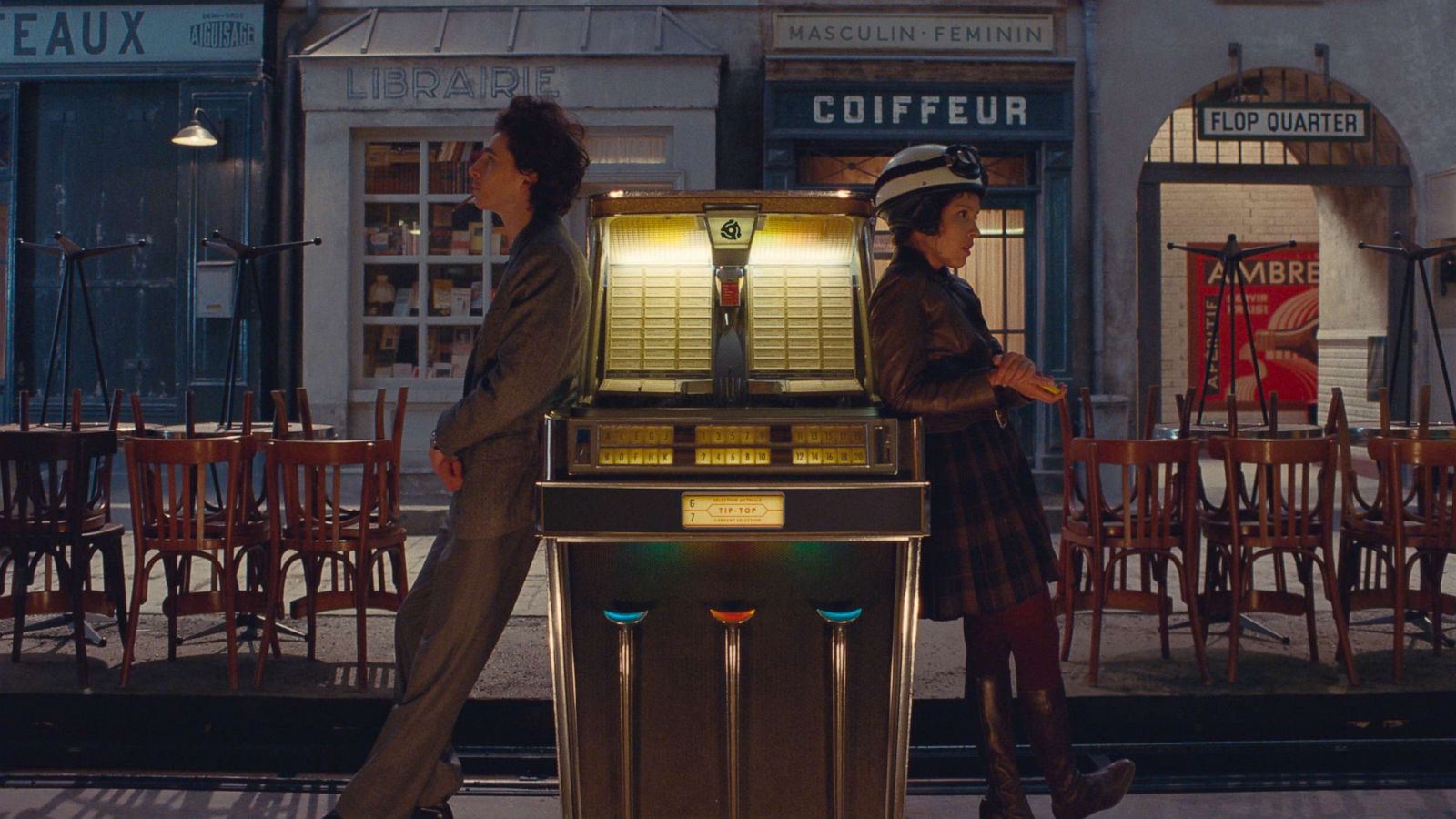
First up we have the tale of convicted murderer, Moses Rosenthaler (Benicio Del Toro), who, inspired by his love for prison warden – and sometime model – Simone (Lea Seydoux), decides to express his love, by creating works of modern art in tribute to her. He inadvertently becomes a cause celebre. Next there’s the story of journalist Lucinda Krementz (Frances McDormand) and her dalliance with dashing young revolutionary, Zefferelli (Timothée Chalamet), whose rebellion against authority is played out as a literal game of chess. Finally, there’s the story of writer Roebuck Wright (Jeffrey Wright), assigned to write a piece about celebrated prison chef, Nescafier (Steve Park), only to find himself caught up in a kidnapping drama involving the adopted son of the prison’s Commisaire (Mathieu Almaric).

The stories are dazzlingly told and the main theme here seems to be one of affection for an age that’s largely gone – a yearning for old-school journalism, when editors cared more about the writing than the money it might generate. Anderson – who co-wrote the story – also has much scorn to heap on the world of art, mocking the ways in which commerce waits greedily in the wings to get its hooks into the next big thing, qualities evidenced by Adrien Brody’s ruthless art dealer, Julien Cadazio. There’s some evident homaging going on here too. The second piece eerily captures the look of French new wave cinema – and did I imagine that little salute to The Twilight Zone’s Rod Serling?

I have to say that I admire The French Dispatch enormously, rather than love it. There’s always an element of grandstanding about Anderson’s work, a celebration of his own uniqueness that can sometimes feel a little too arch – and the parade of characters unleashed here are essentially caricatures rather than people I can believe in. Perhaps that’s entirely the point, but it’s a quality that can polarise audiences.

Suffice to say, if you’re a fan of the director, you certainly won’t be disappointed by what’s on offer here. This is Wes Anderson turned up all the way up to 11. And, in the unlikely event that it’s the first of his films you’ve seen, then enjoy the trip.

4.4 stars

Philip Caveney

Isle of Dogs

25/03/18

The arrival of a new Wes Anderson movie is generally a cause for excitement and Isle of Dogs has the added frisson of seeing him return to work with the London-based 3 Mills animation team, whom he employed to such great effect on Fantastic Mr Fox. It must be said, however, that this is an altogether more ambitious project than his previous stop-motion foray.

The story is set twenty years into the future in the fictional Japanese city of Megasaki. After a recent dog-flu epidemic, Mayor Kobayashi (Komichi Nomura) orders all the city’s dogs to be rounded up and exiled to an offshore island, essentially a rat-infested repository for much of Japan’s unwanted garbage.

On the island, a group of dogs are struggling for survival, led by Chief (Bryan Cranston), a battle-scarred stray who sees himself very much as the alpha male of the pack. His followers  are voiced by a whole menagerie of A-List talent (Bill Murray, Edward Norton, Jeff Goldblum, to name but three). The sudden arrival of Kobayashi’s twelve year old ward, Atari (Koyu Rankin), changes everything. Atari is in search of his beloved lost pet, Spot, who the mayor has insisted must follow the example of all the other four-legged offenders and be sent into quarantine off-shore. This sets Chief and his pack off on a quest to help Atari by locating the missing canine and, of course, they uncover some startling truths in the process. Meanwhile, a pro-dog student group led by the intrepid Tracy (Greta Gerwig) are leading an insurrection against Kobayashi, who, it seems, has not been as honest as he might have been…

Some critics of the film have accused it of cultural appropriation, but I can’t help hoping they are barking up the wrong tree. The love and respect for Japan and its traditions are evident in just about every frame of this delightful movie, from the Taisho drumming sequences to the visual references to veteran directors, Akira Kurosawa and Hayao Mizazaki. What’s more, the animation is so detailed and so brilliantly realised, it’s hard to suppress my gasps of admiration as the story scampers along at high speed from revelation to revelation. All the usual Anderson qualities are in evidence – witty one-liners, a steadfast refusal to get too sentimental about the characters and a delicious vein of dark humour that ties the whole package neatly together.

On the same day we viewed this, The Cameo Cinema hosted a dog-friendly screening, but, as we chose to attend the humans-only show, I cannot really comment on how it went down with its four-legged viewers.

But in my humble opinion, at least, this film is a howling success.

4.4 stars

Philip Caveney

Rushmore

12/01/18

Wes Anderson is one of contemporary cinema’s most original talents. Although his subjects are diffuse and far-ranging, his movies are always shot through with an idiosyncratic sensibility that marks him out as a true auteur. With his new release, Isle of Dogs, looming on the horizon, this is clearly a great time for a retrospective of his work and Edinburgh’s Cameo Cinema have seized the moment by devoting Monday evenings to showings of all his full length films in chronological order. It also gives me the welcome opportunity to see the one Anderson film that has thus far eluded me.

After the incendiary calling card of Bottle Rocket, 1998’s Rushmore is the film that cemented Anderson’s reputation as a force to be reckoned with but, for a whole variety of reasons, I have never managed to catch up with it until now. It’s the story of Max Fischer (Jason Schwartzman) a fifteen-year-old student at the titular preparatory school who has an obsessive genius for organising clubs and societies, even if this means that his actual school work consistently falls short of its potential. He also writes and directs hilariously over-ambitious school plays – his adaptation of Serpico needs to be seen to be believed.

Max chances upon what he feels is a kindred spirit in Herman Blume (Bill Murray), a dispirited businessman who, despite considerable wealth, has become disillusioned with his loveless marriage and the antics of his two oafish sons. He is quite happy to fund some of Max’s madcap enterprises. Max’s acquisitive eye also falls on a new teacher, Rosemary Cross (Olivia Williams), whom he starts to pursue in reckless fashion, even attempting, as a declaration of his love for her, to build a massive aquarium on the school sports field, without even bothering to seek permission. When Rosemary and Herman start an affair, Max is devastated – and takes out his anger in ways that will have disastrous consequences for his future…

Rushmore is an unqualified delight from start to finish and Schwartzman’s performance in the lead role is an extraordinary tour de force. Max is an inspired creation, a charming maverick who, despite a surfeit of confidence, still has an appealing vulnerability. Bill Murray puts in a sanguine and understated effort as the jaded businessman and, as the film progresses, I find myself wondering why we haven’t seen a lot more of Olivia Williams on the big screen, because she offers a beguiling presence as Rosemary.

For me this is up there with Anderson’s finest work (and that’s praise indeed). The completist side of me is very happy to have finally had the chance to tick this off my ‘to see’ agenda. Any other Anderson fans who fancy catching up (or reconnecting) with his work on the big screen should keep their eyes peeled for subsequent showings. Even his slighter efforts are never less than interesting.

4.6 stars

Philip Caveney