Walt Disney

Flow

23/03/25

Cineworld, Edinburgh

We managed to catch nearly all of this year’s Oscar nominated films at the cinema before (or shortly after) the event, but news that the widely-admired The Wild Robot hadn’t taken the gong for ‘best animation’ came as something of a surprise. Only a few minutes into Flow, which is finally on general release, that surprise is quickly annihilated. I often think that the word ‘masterpiece’ is overused but this groundbreaking animation by Latvian director Glints Zilbalodis is so accomplished, it’s all-too easy to see why it was handed the top award. The fact that it was made for a budget of three-million dollars – utilising free software package, Blender – only adds to the accomplishment.

Zilbalodis – who co-wrote the story with Matiss Kaza and Ron Dyens – eschews any of the long-established tropes we’ve come to expect from this genre. There are no talking animals voiced by well-known actors, the creatures that make up the cast can only miaow, bark, screech and grunt at each other and yet, somehow, that all adds to the wonder of the thing. The influences on the verdant look of this strange new world are more Miyazaki than Disney. Much of what I see on the big screen is quite simply breath-taking.

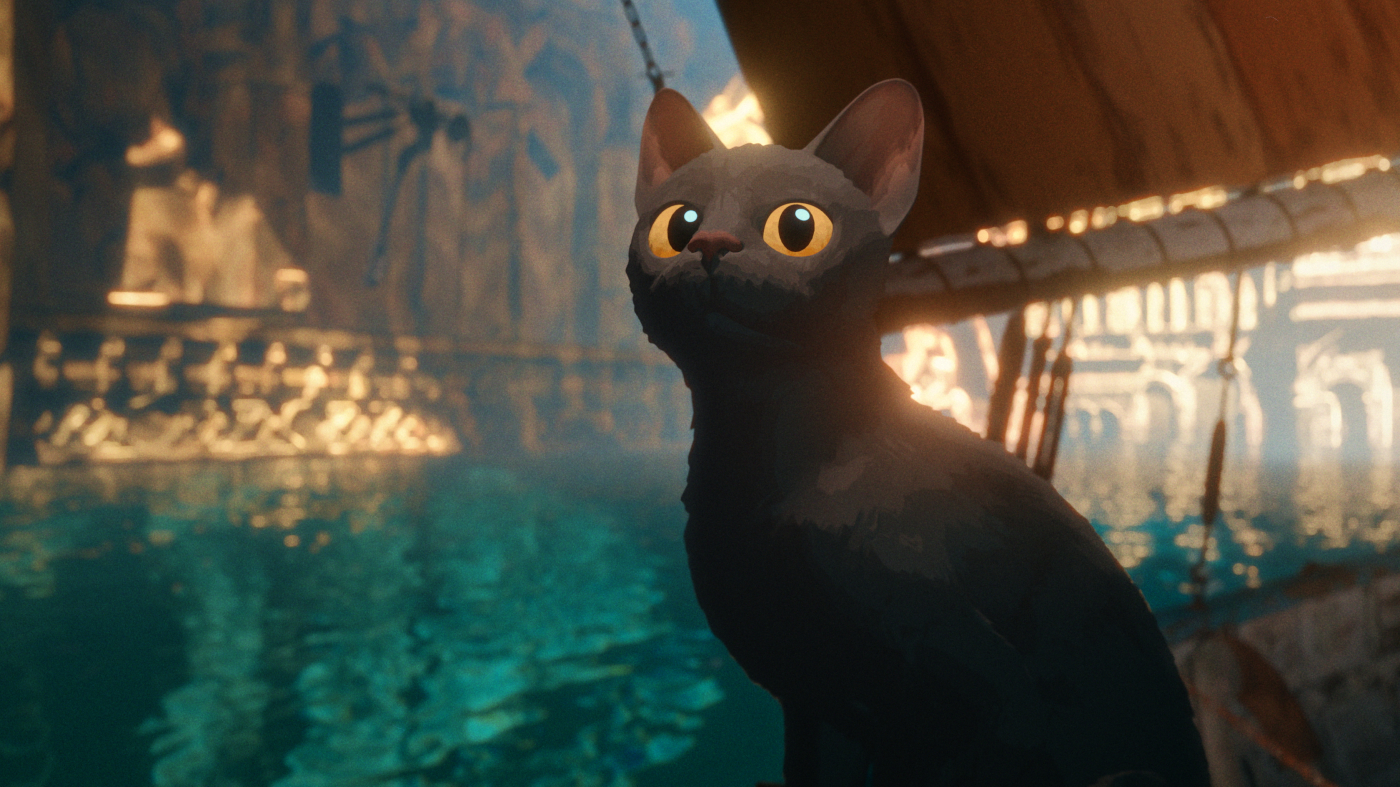
We’re somewhere in the near future and, while initially the world looks intact, there’s no sign of any humans, other than their empty houses and the everyday things they’ve left behind. Our hero is a black cat, who wanders across the countyside engaged in a never-ending search for food. He has a run-in with a pack of dogs, one of them an affable-looking golden retriever, but the confrontation is rudely interrupted by the arrival of a herd of fleeing deer. This is followed by a sudden and unexplained tsunami, a biblical flood that sets water levels rising at a terrifying speed.

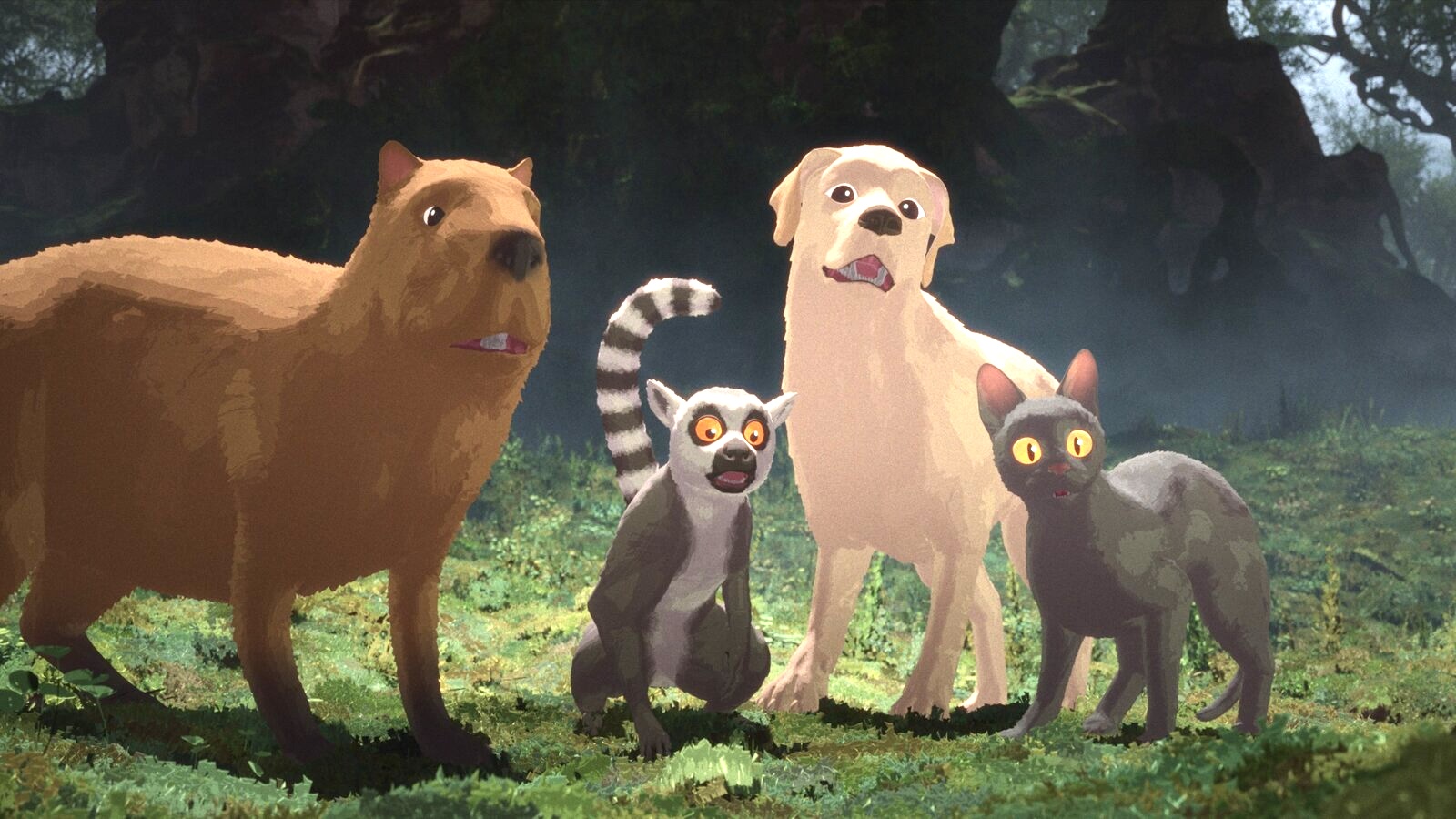
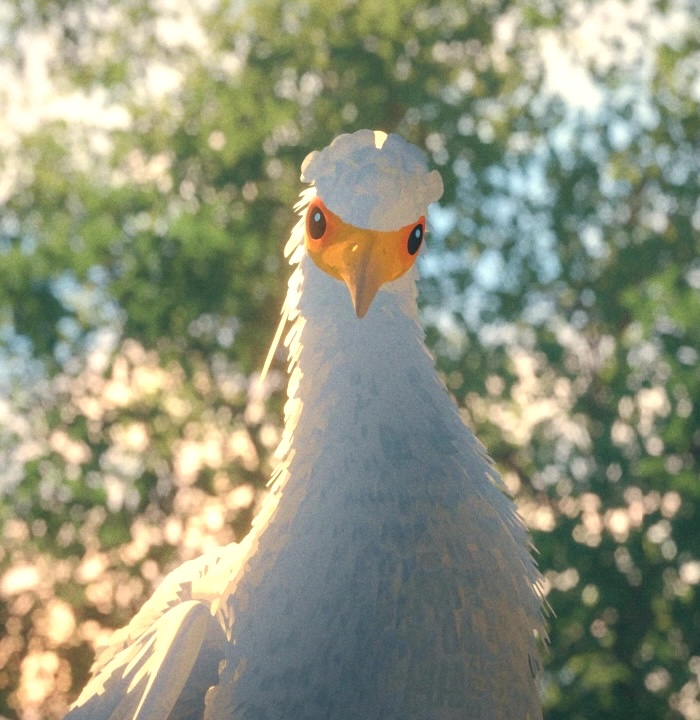
The cat is lucky enough to encounter a sailboat drifting on the torrent but, once aboard, he finds it is already occupied by a capybara; though the two creatures have nothing in common, they quickly learn to co-exist. It’s not long before they are joined by the aforementioned retriever, an acquisitive lemur and a lanky secretary bird, who – it turns out – is pretty good at steering boats. Together they sail onwards, heading now towards a mysterious range of peaks on the far horizon. But what’s waiting for them there?

Flow is a great big allegory wrapped up in an enigma, one that fairly bristles with references. Climate crisis? Right there. Biblical references? Yup, you’ve got them – and not just Noah’s Ark. Allusions to death and what happens when creatures confront it? Oh, yes. It’s probably worth mentioning that there’s a lot of peril in this U certificate story and that some of its strands may not be suitable for younger viewers. While there’s no real violence to speak of, there is evidence of nature red in tooth and claw, so parents should think carefully before taking their smaller offspring along.

For older children and grown-ups, there’s a wonderful feast of viewing to be had, backed by soaring electronic music – composed by Zilbalodis (is there no end to this man’s talents?) with Rihards Zaļupe. Afterwards, there are great discussions to be had about all the different themes touched on by this ambitious, inspired, and sometimes downright challenging story.

It took five years to create Flow – and I’m already looking forward to exploring wherever Zilbalodis takes me next.

5 stars

Philip Caveney

Encanto

Cineworld, Edinburgh

06/12/21

As Disney celebrates its 60th anniversary, it’s interesting to observe how far it’s come in its efforts to celebrate diversity and in its depictions of the world’s different cultures. Encanto is a slice of magical realism, set in a fictional settlement hidden somewhere deep in the Colombian jungle. Gifted to its original settlers by unknown powers via a magical candle, and presided over by the stern Alma Madrigal (voiced by Maria Cecilia Botero), this is a place where the very walls and floors are sentient, moving to accommodate and assist all who pass through its doors. (Note to self: I need a place like this.)

Alma’s children and her extended family are blessed with bizarre magical ‘gifts,’ which range from super-strength to the ability to create exotic flowers at will. Only one of the Madrigals has missed out on these abilities and that’s Mirabel (Stepanie Beatriz), who tries not to feel left out as everyone around her performs eye-popping wonders at the drop of a proverbial hat.

Then one day, Mirabel sees something strange: the Madrigal’s beloved home breaking asunder as, for some unknown reason, it begins to lose its magic. She tries telling the others what she seen, but Alma instructs her, in no uncertain terms, to keep her mouth shut. Could it be that Mirabel is like her mysterious Uncle Bruno (John Leguizamo), who also had dark visions, always got blamed when things went wrong – and eventually went missing?

As you’d expect from the House of Mouse, the animation here is dazzling and the many different characterisations are beautifully realised. Throw in some original Latinx-flavoured songs by man of the moment, Lin Manuel Miranda, and you have a rich and vibrant feast that seems tailor-made for festive viewing, even though there isn’t a snowflake or a sprig of holly in sight.

If Encanto has a weakness, it’s in its storyline.

While the film concentrates on the importance of family and how being ordinary should never be seen as a failing, the story’s narrative arc features no sense of threat, no real danger. The worst that can happen to the Madrigals is they might lose their fancy house and their super-powers and will have to content themselves with being just like the other people in their community. Which really doesn’t generate enough suspense to make me care enough about the outcome.

Perhaps I’m being churlish – and I’m hardly in this film’s demographic. As I said, the animation here is state-of-the-art and the music will have you dancing in your seat. If you have youngsters who need entertaining and you’re looking for a feel-good festive treat than Encanto could be exactly what you’re looking for.

3.8 stars

Philip Caveney

Mary Poppins Returns


23/12/18

Sporting a ‘what it says on the can’ title, Mary Poppins Returns is a thoroughly decent and handsomely mounted sequel to one of Disney’s most iconic films. I’ll ‘fess up right here and now and say that I don’t hold the original movie in the kind of esteem that some of my friends evidently do – but I entirely understand that, with its combination of whimsy and fantasy, it’s become a popular Christmas perennial.

The sequel takes place in depression-era London, some twenty years after the events of the first film, where the Banks children have grown up to a rather more depressing reality than they’ve been used to. Michael (Ben Whishaw) is a recently bereaved widower with three adorable young children to look after, while his sister, Jane (Emily Mortimer), has devoted her life to working for worthy causes. Michael hasn’t been too diligent about paying the bills and is now in danger of losing the beloved family home to the very bank he works for, after failing to keep up the repayments on a loan. The bank’s dastardly new manager, Wilkins (Colin Firth), is taking every step to ensure that the family home will soon be subject to repossession.

Into this troubled scenario, floats Mary (Emily Blunt), hanging onto the tail of a passing kite. Blunt is perhaps the logical actor to fill those famous red shoes,  but her incarnation is sterner and, it has be said, a good deal more mischievous than her predecessor. She is clearly in cahoots with local lamplighter, Jack (Lin Manuel-Miranda), and together the two of them lead the Banks children into a whole series of magical situations.

If this sounds familiar, it ought to. The sequel sticks pretty closely to the format of the first film, replete with song and dance numbers – one of which is rather more fruity than you’d ever have expected from Julie Andrews – cleverly animated sequences (an underwater spectacle is perhaps the standout) and brief appearances from high calibre guest stars like Meryl Streep, Angela Lansbury and a very spry Dick Van Dyke.

As I said, it’s all decently done, but perhaps, in the end, that over-familiarity works against it. Nothing here comes as a surprise and some of the plot strands are so needlessly over-complicated, they can only be solved by Mary – but she does have an infuriating habit of hanging back until the last possible moment. Also, sadly, none of the songs here are quite as memorable as the likes of Go Fly A Kite or A Spoonful of Sugar.

If you’re looking for a suitable Christmas film for all the family, this is probably the logical one to aim for, but be warned, you may not come out singing one of the songs.

3.6 stars

Philip Caveney