
27/10/23
Festival Theatre, Edinburgh
“Remember, remember, the fifth of November, gunpowder, treason and plot. I see no reason why gunpowder treason should ever be forgot.”
We haven’t forgotten, of course. Bonfire Night looms large in the national calendar: every year, we bundle up in hats and gloves for an evening of funfairs, ginger parkin and fireworks. Guy Fawkes is burned again and again, his straw-stuffed effigies punished annually for his attempted crime.
So no, he’s not forgotten. But what exactly do we remember?
On the way to the theatre, I realise just how shaky my own grasp of the history is. I know that Guy Fawkes and some Catholic collaborators attempted to blow up the Houses of Parliament and that it was something to do with the Reformation. I know that he was hung, drawn and quartered. And, um, that’s it.
So I’m fascinated to learn more about the context, to understand how James I/VI angered Catholics by reneging on his promise to stop persecuting them, sacrificing their freedom for his own financial gain. Ricky Allan’s songs and Charli Eglington’s book help to illuminate the lives of those forced to deny their faith. It’s a salient message: in a world of tyranny and subjugation, terrorism is inevitable.
Although Guy Fawkes (Gabriel Akamo) is the name we all know, this show, directed by Hannah Chissick, focuses primarily on Martha and Thomas Percy (Nicole Raquel Dennis and Sam Ferriday), opening with their illicit wedding and charting their troubled marriage. Although both actors deliver strong performances, this seems like something of a mis-step, as the ups and downs of their relationship are less interesting than the actual gunpowder plot, which is relegated into second place.
In fact, Fawkes barely features in the actual story here. Instead, he’s cast as an observer, a narrator, leading the audience through the events as they unfold. This has a curiously distancing effect: he never actually enters the scenes to interact with the other characters, so it appears as if he were not involved. This means that the ending, when he’s captured and tortured, feels unearned. We don’t know what he’s being punished for.
There’s a problem with the pacing too, particularly in the second act. While the first is punctuated with a little levity in the form of Oscar Conlon-Morrey’s Iago-like Robert Cecil, manipulating King James (Joe McFadden) with practised ease, the second is a far more sombre affair, with too many ballads getting in the way of the action. Dennis and Emilie Louise Israel (Anne Vaux) give it socks and their soaring voices are undeniably impressive, but it does get a little wearing listening to them worry about how ‘vulnerable’ their menfolk are, when I’m impatient to know what’s going on with the barrels of explosives and the attack on parliament.
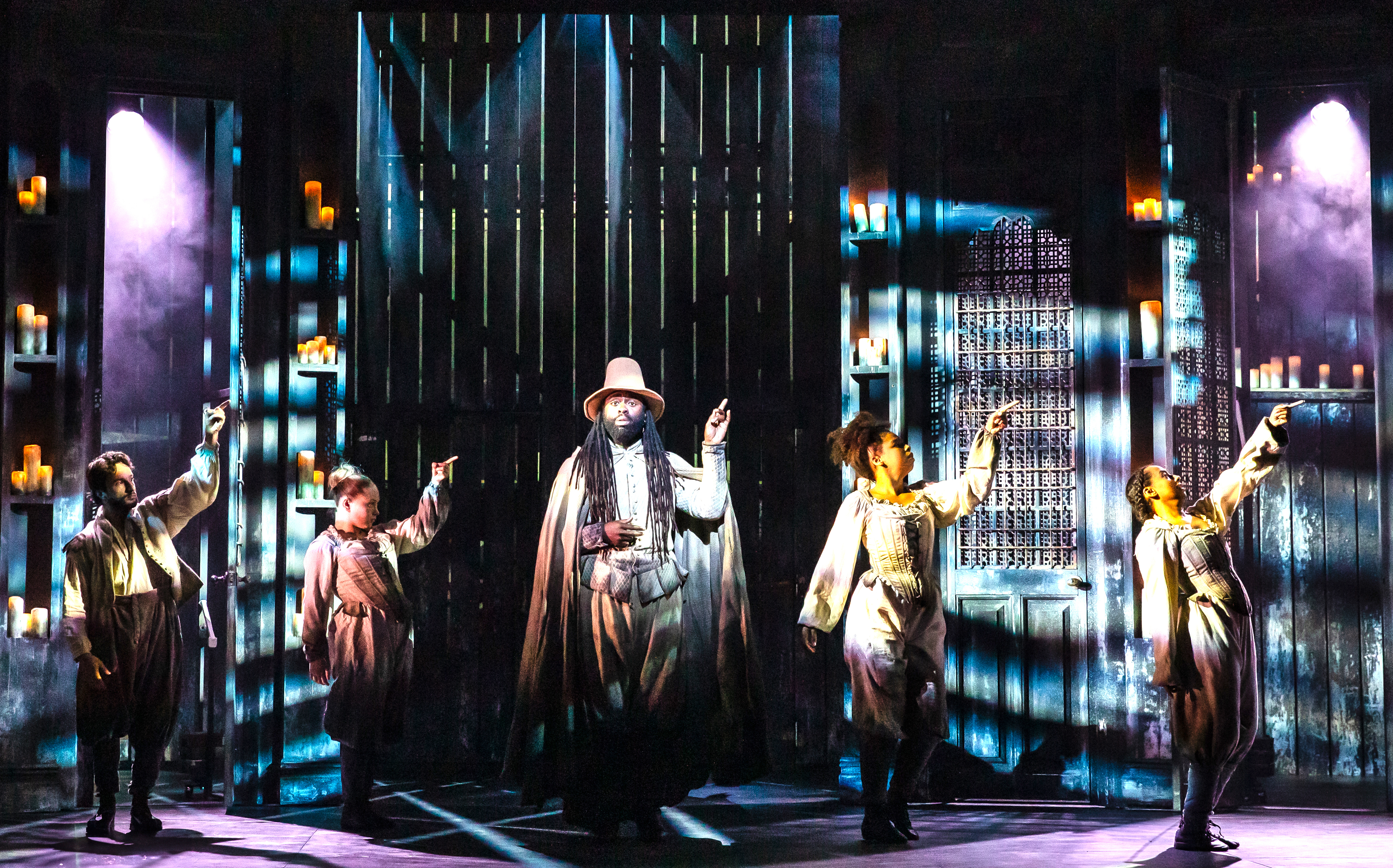
There is much to like, however. I love Taylor Walker’s choreography: the ensemble work is impressive, the artful movement adding to the sense of menace and unease. And the vocals are impressive: perhaps Israel is the standout, but there are no weak links here. It’s a real pleasure to listen to these performers sing.
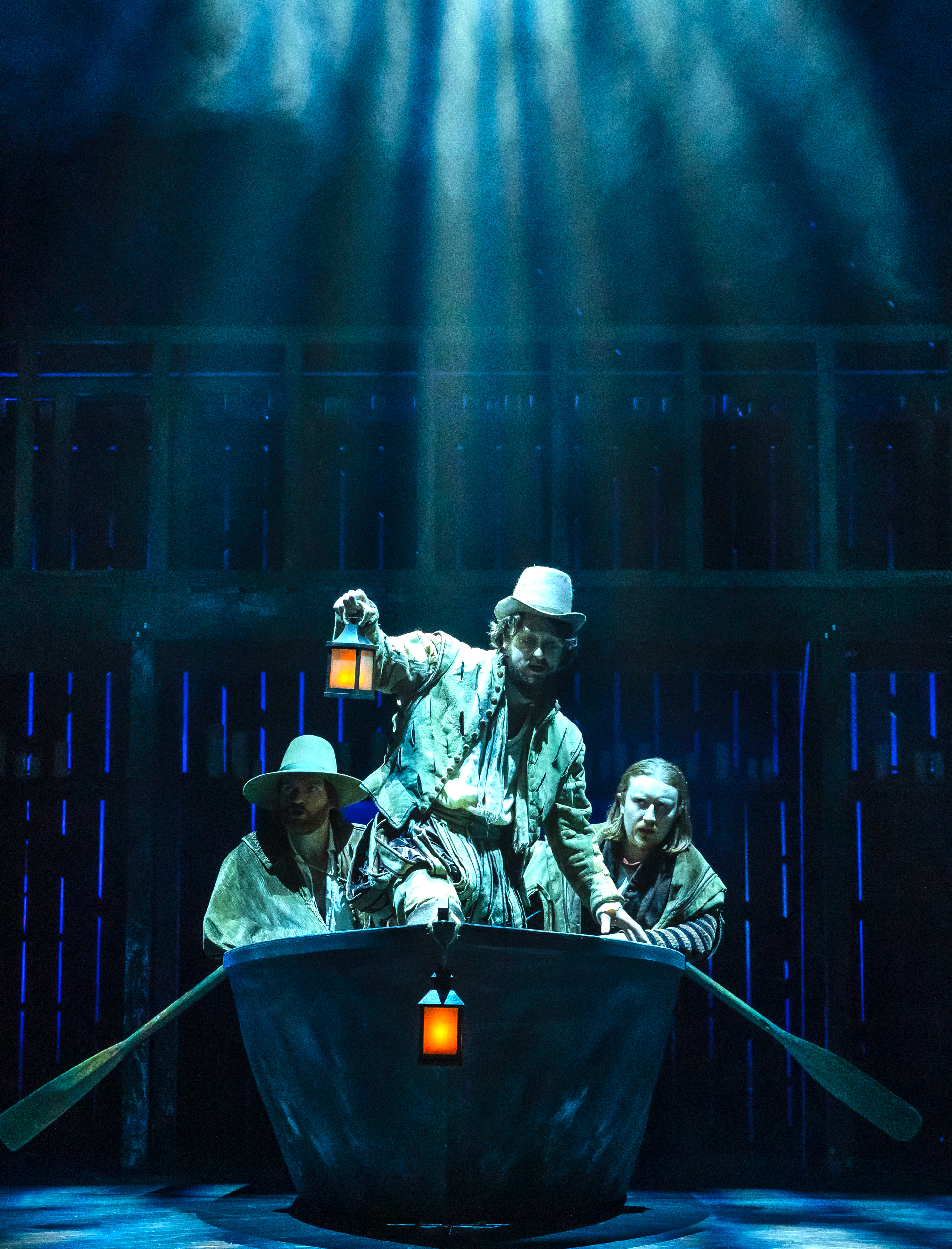
Best of all, the production looks sumptuous: between them, Philip Witcomb (set) and Jason Taylor (lights) have created a thing of beauty, all sliding doors and shafts of light; one moment a palace, the next a tunnel. The transitions are instant and almost magical, an exemplar of stagecraft’s sleight of hand. The moment when a boat comes sliding out of the darkness is thrilling, transporting us to the Thames at night, the tension immediately cranked right up.
So, although it smoulders rather than going off with a bang, this is certainly a handsome piece of work.
3 stars
Susan Singfield
 Bouquets & Brickbats