Traverse Theatre

Scotties

27/09/18

Traverse Theatre, Edinburgh

Michael (Ryan Hunter) is fifteen years old, and he’s got homework to do. He’s been told to write an essay on local history, but he’s not sure where to start. The library’s shut because it’s a bank holiday, and his dad (Stephen McCole) is annoyed with him for being so disorganised. There’s tension in the air. Michael’s mum (Mairi Morrison) speaks to him in Gaelic, but Michael responds pointedly in English. He’s feeling rebellious, rejecting his roots. Only his gran seems to understand him.

But then he remembers the plaque at Kirkintilloch, commemorating the young Irish migrant workers – or ‘Scotties’ – who died in a bothy fire in 1937. His interest piqued, he opens up his laptop, and begins to research the conditions in which these people lived…

…and then he’s there, amongst them, working the potato fields with Molly (Faoileann Cunningham) and her compatriots from the island of Achill. He learns about their back-breaking work, about their customs; how they’re treated as outsiders and how they long for home.

And he also learns some uncomfortable truths about his own family.

Scotties – written and conceived by Muireann Kelly and Frances Poet – is a satisfying play, fascinating in its illumination of a moment in history, and uncompromising as it draws parallels with the way migrants are still treated today. Not so much bi-lingual as trilingual (Scottish Gaelic, Irish Gaelic and English), this is a clear demonstration of how language shapes us and informs us, links us to our past and our future: it is integral to our sense of self. The scripting is clever – I don’t know any Gaelic, but I can always understand what’s happening; I don’t feel I’m missing out (although, no doubt, there is a deeper resonance for those whose mother tongue this is). Theatre Gu Leòr’s mission to bring Gaelic theatre to a diverse audience is perfectly served by Scotties: it’s accessible and engaging and makes me want to know more.

The play’s structure is effective, like high quality YA fiction brought to life on the stage. Seeing everything from the young protagonist’s point of view means that we can learn with him, and his innocence is beguiling. The music (by Laoise Kelly) is vivid and  atmospheric, taking us from the giddy delights of an impromptu ceilidh down to mournful funereal pipes.

I like the set too: the gossamer-thin gauze between past and present showing how our history never really leaves us, is always there, informing what we do.

Scotties is in Edinburgh until Saturday 29th September – and it’s well worth seeking out. After that, it’s moving on to Achill Island (5th-6th October), where – no doubt – it will have an even more profound impact.

4.5 stars

Susan Singfield

Nests

08/09/18

Traverse Theatre, Edinburgh

Xana Marwick’s Nests is a compelling play, with an appealing dream-like quality. It’s unusual: the gritty subject matter ought perhaps to clash with the whimsical storytelling, but – somehow – it really works.

We’re in a clearing in a forest, home to ‘the father’ (David MacKay), an alcoholic eking an existence by selling everything he owns. There’s not much left: a run-down caravan, a broken drum kit, a guitar and a few pots and pans. But he can scrape together funds for his cheap cider habit, and he’s harming no one but himself.

But even this miserable dwelling is appealing to ‘the boy’ (Ashleigh More), a lost and forgotten child in need of sustenance and care. Outcasts, invisible, united by their vulnerability, the pair forge an unlikely partnership, each fulfilling for the other the role of missing parent/child.

It’s beautifully told, at once visceral and ethereal. It’s tragic, yes, but it’s funny too, and the characters are bold and true. Mackay imbues the father with a strange fragility, despite his coarse language and quick temper, and Ashleigh More is equally affecting: the boy’s swagger and bravado undercut with deep sorrow, his love of crows particularly resonant.

I especially like the cartoon crows (animated by Kate Charter and Claire Lamond). They add to the sense of unreality, flitting from screen to screen and interacting with the boy; there’s a real playfulness here, and it’s extremely engaging.

This production, by Frozen Charlotte and Stadium Rock, is a real gem, and I’m genuinely moved by it.

4.4 stars

Susan Singfield
 

On the Exhale

22/08/18

Traverse Theatre, Edinburgh

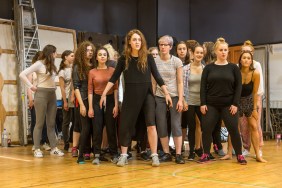
During the madness that is the Edinburgh Fringe, it would be all too easy to overlook the delights being offered at the city’s established theatres. On the face of it, On The Exhale,  written by Martin Zimmerman and directed by Christopher Haydon, seems perfectly engineered for festival audiences. This powerful monologue, brilliantly delivered by Polly Frame, was written in response to the Sandy Hook Elementary School shooting of 2012. It’s a searing examination of the subject of gun control and, unexpectedly, it’s also about the compelling seduction that deadly weapons can exert upon those who use them.

Frame plays an academic in an American University. In the play’s opening moments, she talks about her steadily building paranoia at the thought of one of her more headstrong students suddenly deciding to walk into her study with a firearm tucked into his waistband. She mentions the cool, clinical steps she is taking in order to prepare herself for such an awful eventuality, about what she will do in such dire circumstances. But, when tragedy does decide to rear its ugly head, the danger comes from an entirely different quarter…

The nature of the unfolding story is so important that it would be impossible to chronicle it in any more detail without giving too much away. Suffice to say that there are some genuine surprises here, the story heading from its initial premise into entirely unexpected areas. Frame is a compelling narrator, her vulnerability enhanced by the spare setting, which has her pacing barefoot through a tangle of fluorescent light fittings as she talks, the potential danger of a misplaced step all too evident.

As she draws us steadily deeper into her confidence, I find myself virtually holding my breath, not wanting to miss a single detail of her heartbreaking story. This is a masterful piece of theatre and my only regret is that I didn’t find time to see it earlier in the month. It’s on for just a few more days, so do take the opportunity to catch this while you still can.

4.5 stars

Philip Caveney

Theatre Bouquets 2016

unknown-18

unknown-18

unknown-18

We’ve been lucky enough to see some amazing theatre again in 2016. Here, in order of viewing (and with the benefit of hindsight), are our favourite productions of the year.

Hangmen – Wyndham’s Theatre, London

Unknown-1

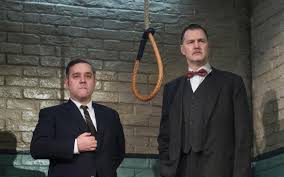
An excellent start to the year’s theatrical viewing, Martin McDonagh’s play was absolutely superb: funny, frightening and thought-provoking with an outstanding central performance by David Morrissey.

The Girls – The Lowry, Salford

Gary Barlow, Tim Firth and the original Calendar Girls credit Matt Crockett

This was the biggest surprise of the year for us: on paper, it sounded a million miles away from the sort of thing we usually enjoy, and we went along reluctantly. But it was a truly delightful production – flawlessly realised.

The Merry Wives – The Lowry, Salford

image

Northern Broadsides version of The Merry Wives of Windsor was a rambunctious, irreverent take on the tale, with the inimitable Barrie Rutter clearly relishing the role of Falstaff.

I Am Thomas – Lyceum Theatre, Edinburgh

I_Am_Thomas_415x800_jpg_300x200_crop_q85

A strange and eclectic production, telling the tale of Thomas Aikenhead, the last person in Scotland to be hanged for blasphemy, this was essentially a series of vignettes and musical interludes, with an ensemble taking turns to play the eponymous role.

King Lear – Royal Exchange Theatre, Manchester

04-KING-LEAR-RET-L-R-Pepter-Lunkuse-Cordelia-Don-Warrington-King-Lear-Photo-Jonathan-Keenan

Michael Buffong’s King Lear was a tour de force, a gimmick-free yet undeniably modern production. Don Warrington was well-cast in the central role, but it was Pepter Lunkuse’s Cordelia who really stood out for us. She’s definitely one to watch!

Stowaway – Home, Manchester

Unknown

Analogue Theatre’s troubling tale of a stowaway falling from a flying aeroplane and landing in the car park of a DIY store was fascinating, depicting a moment where worlds collide and understandings begin to take root. A thought-provoking, political play.

Royal Vauxhall – Underbelly Med Quad, Edinburgh

2016ROYALVA-APJ-300

A quirky and irreverent musical, telling the true story of when Freddie Mercury and Kenny Everett dressed Princess Diana in drag and took her to the Royal Vauxhall Tavern in London for a night out, incognito. We loved this production.

Wonderman – Underbelly Potterrow, Edinburgh

Wonderman_edinburgh_FOURSHEETS-quartersize_final

Based on the short stories of Roald Dahl – and incorporating a true incident from his eventful life – Gagglebabble’s collaboration with the National Theatre of Wales was a sprightly mix of drama and music with a deliciously dark heart.

Cracked Tiles – Spotlites, Edinburgh

2016CRACKED_AVH

This beautifully crafted monologue, written and performed by Lorenzo Novani, was the downbeat tale of a young man who inherits a Glasgow fish and chip shop from his father Aldo. Novani was quite staggering as Riccardo.

Dear Home Office – Underbelly Med Quad, Edinburgh

2016DEARHOM_AXD

This was the story of unaccompanied minors applying for asylum in the UK, performed with touching vulnerability by eight refugee boys. The play was an amalgamation of the performers’ own experiences, blended with fictional accounts. A raw and truthful exposé.

The Suppliant Women – Lyceum Theatre, Edinburgh

29676962992_8e7a020135_b

It’s a rare thing indeed when you go into a theatre and are treated to something unique – but that is the word that kept coming to us, as we sat entranced in the stalls of The Lyceum, watching David Greig’s production of The Suppliant Women. Truly brilliant.

Grain in the Blood – Traverse Theatre, Edinburgh

unknown-2

A real one-off, this was a stark, unnerving chiller, at once contemporary and classical, with dialogue that was taut and ultra-modern in style, all fragments and silences and unfinished thoughts. This was a complex, angular, unwieldy play – a fascinating watch.

Jack and the Beanstalk – King’s Theatre, Edinburgh

cfk-panto-beanstalk-header

By far the best panto we have ever seen, this was a standout production, with fantastic performances from King’s Theatre regulars Allan Stewart, Andy Gray and Grant Stott. It brought the year to a celebratory end.

Susan Singfield

Last Christmas

cxfn_7-xeaakjaj

13/12/16

Traverse Theatre, Edinburgh

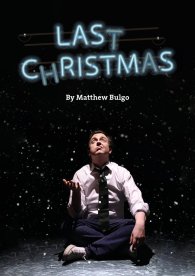
The Traverse does grown-up Christmas theatre, and we’re thankful for that. It’s not that we don’t enjoy stories for younger audiences (Philip is a children’s author, after all), but it’s good to have a little variety, and the festive season often seems a little one-note, catering only for those with youngsters in tow. Not here, though. Here we have Matthew Bulgo’s Last Christmas, a monologue about grief and love.

Welshman Tom is angry and depressed. He’s struggling to cope with his father’s death, and hates the forced jollity of the office Christmas party, especially when Suse, his despised boss, tries to make him pay actual cash for the privilege of being there. He has relationship problems too: things with his girlfriend, Nat, are moving faster than he can deal with, and he’s really not sure that he’s going to make it through the holidays. A visit home to see his mum helps him to confront his demons, and to come to terms with both his future and his past.

It’s a strong performance from Matthew Bulgo, who succeeds in taking us with him through a whole gamut of emotions. There’s no set, no props, no obvious costume. Just one man, casually dressed, talking us through a few days of his life. And it’s well done: understated and convincing. Okay, so it’s a slight tale, and there’s no moment of high drama, no resounding climax to round things off. But it’s very nicely told, and certainly worth going to see.

3.8 stars

Susan “Suse” Singfield


Grain in the Blood

03/11/16

Traverse Theatre, Edinburgh

Grain in the Blood is the second play by Rob Drummond we’ve seen this week, but it’s so different from the rambunctious, slapstick humour of The Broons that it’s hard to believe it’s from the same pen. This is a clearly a playwright who doesn’t want to be pigeonholed, who likes to experiment with a wide range of forms and genres. And this is all to the good, because Grain in the Blood feels like a real one-off, a spare, stark, unnerving chiller that is at once contemporary and classical. Its remote farmland setting is precise and detailed – and yet it could be anywhere. The dialogue is taut and ultra-modern in style, all fragments and silences and unfinished thoughts – but it could be any time. This is a complex, angular, unwieldy play – and it’s fascinating to see the plot unfurl.

Sophia (Blythe Duff) is a retired vet. Her son, Isaac (Andrew Rothney), has been in prison for years, ever since he murdered his wife, Summer. Sophia lives on the family farm, with her sickly granddaughter, Autumn (Sarah Miele), and Summer’s sister, Violet (Frances Thorburn). Autumn is dying; she needs a kidney transplant to survive. Under the careful watch of his minder, Bert (a wonderfully monosyllabic John Michie), Isaac is released from gaol for a long weekend, to meet his daughter and make a decision: will he donate a kidney to help her live?

There’s a sinister atmosphere on stage throughout, an uneasy sense of what might come to pass, accentuated by the presence of the shotgun we know is in the chest, by the slaughtered lambs and the kitchen knives. And the verses, recited by Autumn, conjure up an ancient world of witchcraft and folklore and bloody rituals.

The tension is palpable. There’s a school group sitting in front of us in the auditorium, and they’re so invested in the action that they gasp out loud as one, breathe out a collective “no” as the final plot point is revealed.

Orla O’Loughlin’s direction is subtle: these are actors who have been told to play the silence, explore the stillness, consider proxemics and use the edges of the stage – and this all helps authenticate that all-pervading sense of dread. Autumn’s bedroom, revealed by sliding walls at the back of the living room where everything else takes place, looks like the final picture on an advent calendar: the double doors opening to show an ethereal figure poised between life and death, bathed in yellow light and speaking truths. This potty-mouthed youngster is the moral heart of the play.

Grain in the Blood does what the best theatre should: it entertains, of course, but it also makes you think. It raises questions, demands answers. This is one I highly recommend.

4.7 stars

Susan Singfield

Tracks of the Winter Bear

19/12/15

Traverse Theatre, Edinburgh

It’s Christmas time, and the theatres are full of pantomimes and children’s tales. And that’s fine: I love a good panto, and some of my favourite stories are written (primarily) for a younger audience. But variety is the spice of life, they say, so the Traverse’s grown-up alternative is a very welcome thing.

Tracks of the Winter Bear comprises two short plays, companion pieces exploring the themes of love and loss. They’re separate yet linked, both intrinsically Edinburgian, set in the Abbeyhill district of the city. The same pub is referenced in both (The Regent Bar), and the two protagonists (Shula and Jackie) are  both lonely, middle-aged women, trying  – in their very different ways – to make some sense of their lives.

Act 1, by Stephen Greenhorn, is my favourite of the two. Using reverse chronology, it charts the tragic love affair of Shula (Deborah Arnott) and Avril (Karen Bartke). It’s a bleak but ultimately beautiful piece, with thoughtful, nuanced performances; Arnott, in particular, seems to embody the brittle hurt of grief.

Act 2 is an altogether stranger beast, telling the tale of a mangy polar bear and a washed-up Mother Christmas, both escapees from a tawdry Winter Wonderland theme park. The bear, cast adrift and hunted in an unknown land, speaks in the voices of those she has killed. Mother Christmas, or Jackie – played with bar-room swagger by the delightful Kathryn Howden – befriends her with promises of shortbread and love, and the two embark on an unlikely journey ‘home.’ It’s a fascinating premise and it’s very well-played (Caroline Deyga’s Bear is physically compelling), but it seems a little uncertain of its way, forsaking the early, earthy humour for a less engaging attempt at profundity.

Both pieces use what is essentially the same set, a narrow, snow-covered traverse stage (ironically, this is the first time we have seen this configuration at the, ahem, Traverse theatre). It’s curtained with a light gauze, which serves both to hint at snow in the air, and to create a misty, fairy-tale-like quality. The mirror-audience, visible throughout, magnifies my own reactions; it’s the perfect staging choice for this production, I think.

Overall, then, this is definitely one to watch. It’s interesting and original, and a welcome respite from all the feel-good fare.

4 stars

Susan Singfield


Crash

Crash.preview

Traverse Theatre, Edinburgh

29/10/14

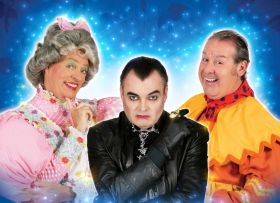
Offered in the great value, A Play, A Pie and A Pint slot, Crash by Andy Duffy is a brilliantly understated monologue that plays with our emotions and never loses momentum from start to finish. Monologues can be tricky. It’s crucial that an audience is brought into the actor’s confidence from the word go and Jamie Michie as ‘The Man’ manages to do just that.

He begins by telling us about an actual crash in which he was the driver and his wife, a passenger. But it also transpires that he is a stock market trader, who in 2007 strikes out on his own, just as the financial world is about to go into meltdown. The Man finds a new partner, experiments with meditation and tries to carve out a new future in the trading business, but deep inside, there is something festering…

Michie plays the role with great aplomb, making us care about a character who we eventually come to realise, we probably shouldn’t invest too much sympathy in. He is in effect, an unreliable narrator and at certain points through the play, the rug is pulled rather sharply out from under our feet as we realise he has led us astray. It’s a measured but powerful performance; when tears are called for, they are provided.

At just £12 for the performance and the lunch, this is a superb matinee that delivers in every sense of the word.

4.2 stars

Philip Caveney