Tim Roth

Tornado

15/06/25

Cineworld, Edinburgh

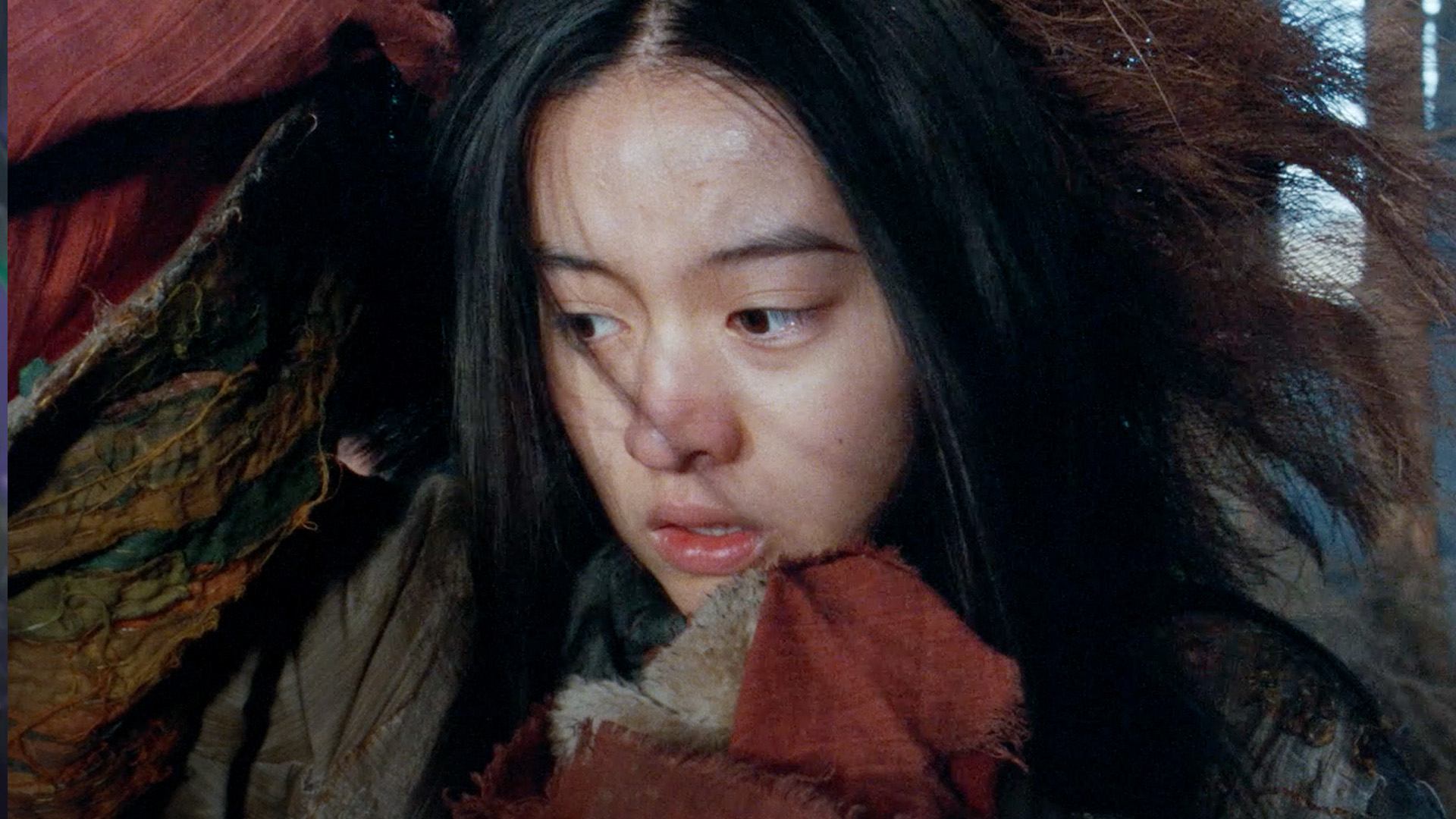
If originality is one of the major objectives of filmmaking, then director John Maclean’s sophomore feature, Tornado, seems a promising concept. This strange genre mash-up could probably best be described as ‘a samurai revenge-Western set in sixteenth-century Scotland.’ I feel fairly confident that there haven’t been many other films that would fit that description. But like Maclean’s debut, Slow West, it’s ultimately an exercise in style over content.

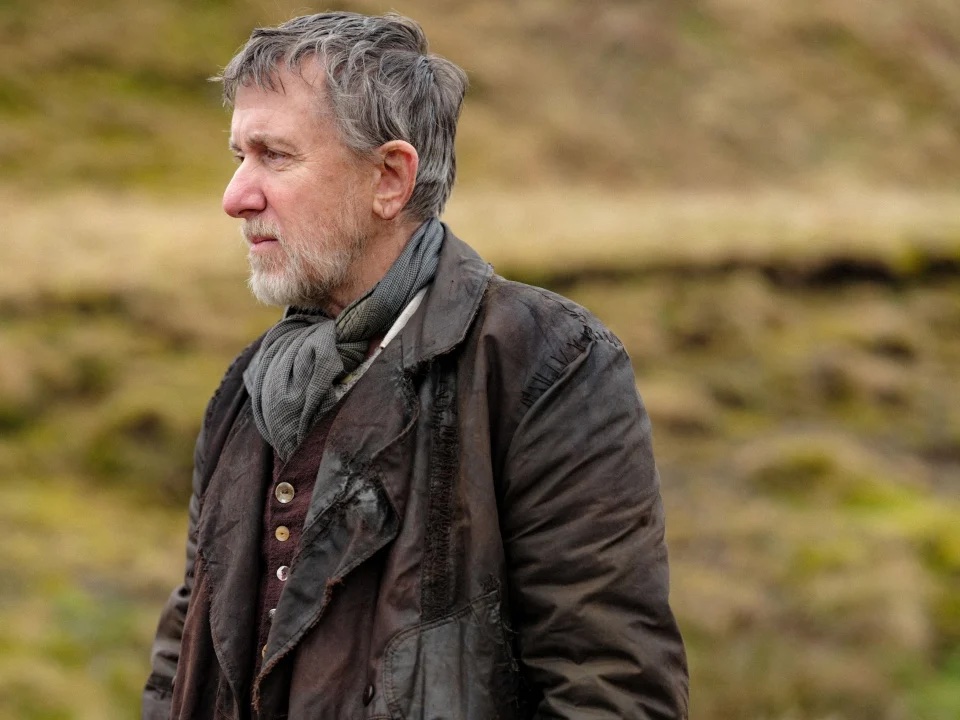
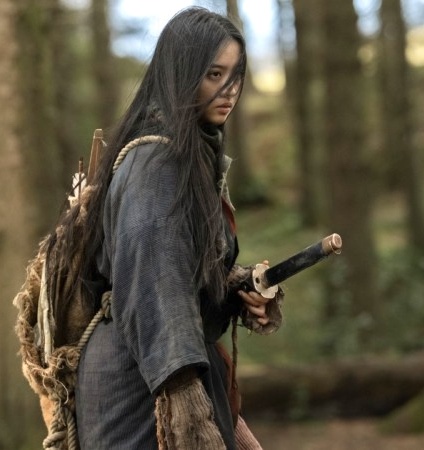
We’re somewhere in ‘the British Isles’ in the 1500s and a young Japanese girl and an even younger boy are fleeing from a ragged gang of villains led by Sugarman (Tim Roth). The girl, it turns out, is the titular Tornado (Kôki,), who, we later learn – in a clumsily-handled flashback – has hidden a horde of stolen gold coins in the woods. The money was originally taken from Sugarman’s gang by The Boy (Nathan Malone), a random character who just happens to be hanging around. Tornado and her father, Fujin (Takehiro Hira), who are part of a travelling circus – are performing their puppet show when Sugarman and his gang show up.

Fujin, a former samurai, is still obsessed with honour and duty, but Tornado is much more interested in getting out of the hardscrabble existence she’s currently trapped in. When she spots the robbery, she takes the money from The Boy and hides it, giving him a single coin for his troubles. When Sugarman and his crew – which include his resentful son, Little Sugar (Jack Lowden) – start to exact brutal vengeance on anyone who stands between them and their loot, it becomes clear that Tornado is going to have to resort to her father’s samurai training to get herself out of trouble…

Tornado is undoubtedly a good-looking film, courtesy of Robbie Ryan’s cinematography, but we learn so little about the various characters, it’s hard to really care about any of them and that includes the lead, whose thoughtless actions ultimately lead to numerous deaths. There isn’t much dialogue here and what there is sounds utterly contemporary, which I’m sure is intentional, but serves to undermine the realism. Roth is a fabulous actor but is reduced to muttering short lines, and it’s also frustrating to see excellent actors like Jack Lowden and Joanne Whalley given precious little to do or say.

When the story finally kicks into action, the swordplay sequences are lacklustre and unconvincing, with Maclean more interested in framing individual shots than have his players rehearse until they’re drilled to perfection – and even at just an hour and forty minutes, the events feel strangely leaden, an interesting idea that doesn’t quite come off. A shame, because the trailer for this really led me to expect something more groundbreaking than it actually delivers.

3 stars

Philip Caveney

Selma

MV5BODMxNjAwODA2Ml5BMl5BanBnXkFtZTgwMzc0NjgzMzE@._V1_SX214_AL_

08/02/15

Selma chronicles the turbulent three month period in 1965, when Dr Martin Luther King led the protest to try and obtain equal voting rights for black people in the Southern states of America. Even though that right had already been officially granted, the powers that be had conspired to ensure that it was one that would never be claimed, so King set out to lead a series of ‘peaceful’ marches from the town of Selma, Alabama to the capital city, Montgomery. What happened next is a matter of history. The racist police and redneck citizenry enacted violent and bloody opposition to the event, beating and in some cases murdering the marchers with apparent impunity.

Make no mistake, this is an important film. It examines one of the most shameful periods in civil rights history and largely gets its message across. But it’s also a curiously muted affair, a consequence perhaps of its 12A certificate, something which demands that the more distressing scenes are somewhat airbrushed. Curiously too, the film makers were denied the use of any of King’s legendary speeches, mainly because the intellectual property rights are tightly controlled by his children and they wouldn’t allow the use of them here (oddly though, they had no problem licensing the “I have a dream’ speech to a French telephone company for an ‘undisclosed sum.’ Go figure.) This meant that screenwriter Paul Webb had the unenviable task of writing some original speeches for one of the greatest orators in history.

Much wrath has been incurred over recent weeks by David Oyelowo’s supposed snub by the Oscar and BAFTA panels. Many have suggested that his performance was overlooked simply because of his race. The truth is that he does offer a solid, understated portrayal of MLK, one that is full of dignity and one that captures the man’s distinctive voice patterns with remarkable alacrity, but at the same time, it doesn’t really have the stature (or the histrionics) expected of an Oscar contender. There are other solid performances on offer here too. Tom Wilkinson shines as Lyndon B. Johnson and Tim Roth perfectly nails the unpleasant, racist demeanour of Governor George Wallace. And yet the events are related at a funereal pace and there are too many scenes of King sitting in darkened rooms, brooding over his next move.

A good film then, though perhaps not a great one – but at the same time, a film that absolutely demands to be seen by as wide an audience as possible. I was warned to expect to shed tears for this and though a notorious ‘weeper’ that didn’t actually happen. But a palpable sense of shame did remain with me, the shame that in my own lifetime, events like this were ever allowed to happen. It also helped me to appreciate the immense courage of all those people who put their lives on the line in the name of civil rights.

4 stars

Philip Caveney