
13/11/24
Traverse Theatre, Edinburgh
Harry Mould’s debut play is an exploration of a little-known aspect of the Samaritans’ work. Until today, I hadn’t even considered that there might be any need for ethical debate around the simple kindness of providing a ‘listening ear’, offering comfort to the desperate, company to the lonely, a glimmer of hope to the suicidal. But – through their own mother’s experiences – Mould has uncovered something weirdly problematic in the organisation’s past: the eponymous ‘Brendas’, designated volunteers, who (between 1958 and 1987) consented to hear out those men who called seeking sexual gratification, wanting someone to talk to while they masturbated. Anglican vicar Edward “Chad” Varah founded the Samaritans on the principle that it should be a non-judgemental organisation, turning no-one away. But of course, these particular callers pose a moral conundrum, rife with contention.
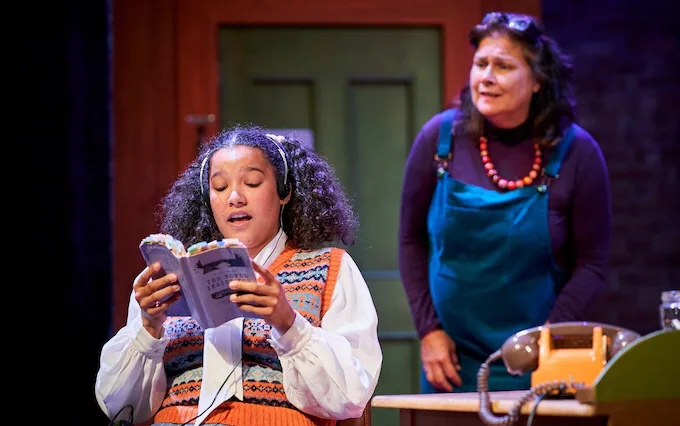
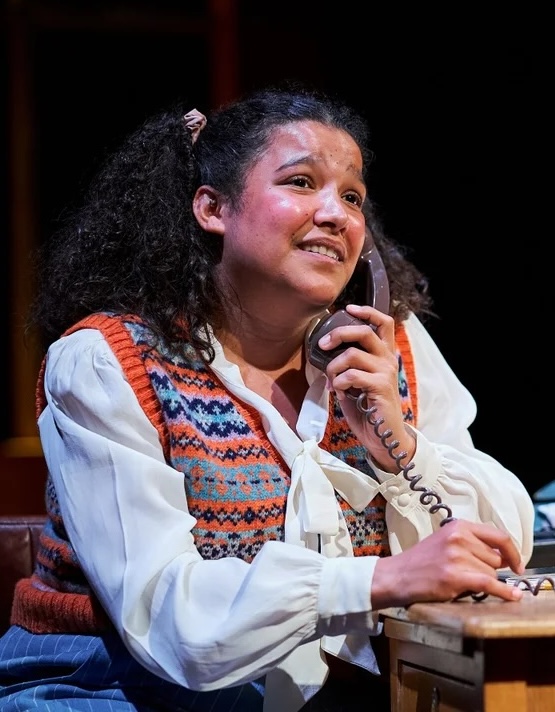
Mould positions the issue as a debate between two chalk-and-cheese volunteers. Anne (Fiona Bruce) is an old-hand with a pragmatic approach to the work she does. She’s warm but gruff, confident but self-effacing, and perfectly comfortable listening to her “befriendable regulars” talking about the knickers they imagine she’s wearing or telling her about their erections. Karen (Charlotte Grayson) is only eighteen, and she’s Anne’s polar opposite: an engaging, opinionated character whose lively charm belies her brittle reserve. She’s innocent, prudish and very defensive about her lack of life experience – and she certainly isn’t going to hold back from telling Anne exactly what she’s doing wrong. In response, Anne smiles, shrugs and offers to make tea.
It’s a winning formula and, directed by Ben Occhipinti, the actors infuse their characters with disarming likability. This makes sense; they’re good people, giving up their time to try to help others, spurred on by the urge to make a difference in a troubled world. Mould’s dialogue is very well-written, and I especially enjoy the allusions to the women’s backstories, rendering them convincingly real: Anne’s unrequited love for her former colleague, Gracie; Karen’s inability to make friends and her struggle to deal with the prejudice she encounters as a mixed-race woman.
The detailed, naturalistic set, designed by Natalie Fern, clearly evokes that particular ilk of workplace claustrophobia, where everything outside seems oddly unreal and diminished, in this case heightened by the blacked out windows and emphatically locked door.
However, while Karen’s argument is well-defined, Mould seems on shakier ground with the older woman’s reasoning – we never hear a lucid explanation as to why Anne accepts her role as a Brenda. She has had many years to consider her position, so it seems logical that she would be able to put forward a compelling defence. Instead, she’s strangely reticent. Nonetheless, by the end, Karen seems to have accepted Anne’s line of thinking, which I find a little confusing. I don’t know what Anne has said to change Karen’s mind.
Despite the subject matter, the writing is also a little coy: although Karen refers to the inherent power dynamic between the male caller and the female listener, there’s no deeper consideration of what this means – of how Anne might derive a sense of power herself from these calls, for example, or even feel somehow that she deserves the degradation. What drives the men to call these anonymous women and is it okay for “Chad” – the leader – to ask his workers to comply? I can’t help feeling that there is more to be explored here.
Nonetheless, Mould has created two engaging, memorable protagonists and, through them, they have shed light on a fascinating piece of recent history.
And now it’s time for me to call my mum and tell her what I’ve learned tonight about her name…
3 stars
Susan Singfield
 Bouquets & Brickbats