The Lyceum Theatre

The Seagull

15/10/25

Lyceum Theatre, Edinburgh

Sometimes a particular production of a play can be a revelation. The Royal Lyceum’s The Seagull is a good case in point. Chekhov famously insisted that his plays were actually comedies – yet every time I’ve gone along to see one, I have been presented with something ponderous and rather miserable.

This inspired interpretation of the Russian’s best-known play, adapted by Mike Paulson, finally sets the record straight. While it’s indisputable that the story has a tragic conclusion, the journey there is spirited and so chock-full of acerbic humour that, from the opening lines, I’m laughing.

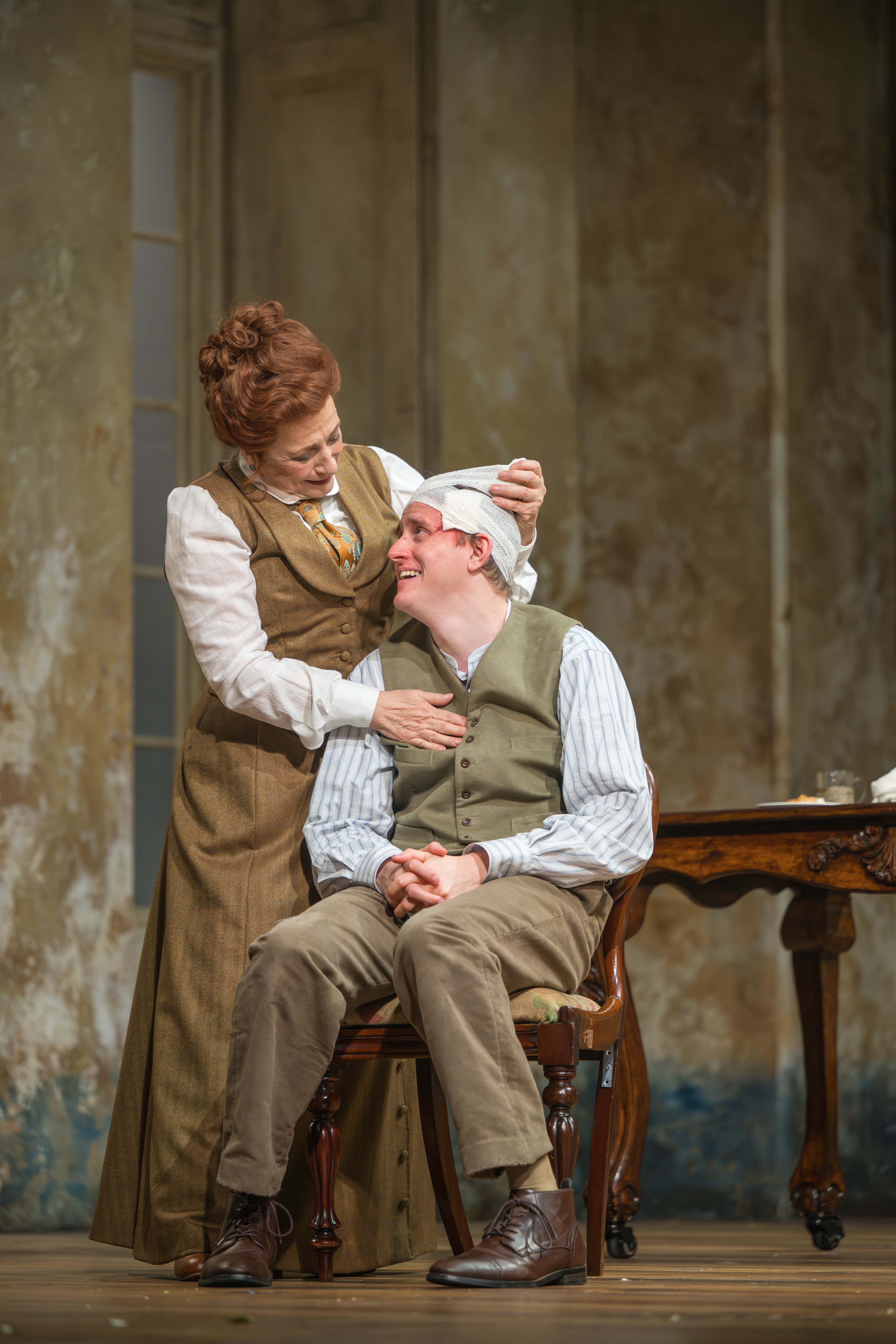
In the first act, the elderly and infirm Pyotr Sorin (John Bett) is entertaining his family and their friends at his country estate. His younger sister, former actress Irena Arkadina (Caroline Quentin), has brought along her son, Konstantin (Lorn McDonald), who is deeply in his mother’s thrall and has aspirations to be a playwright. Irena is also accompanied by her lover, Trigorin (Dyfan Dwyfor), a fêted young writer, though it’s clear he derives very little pleasure from his success.

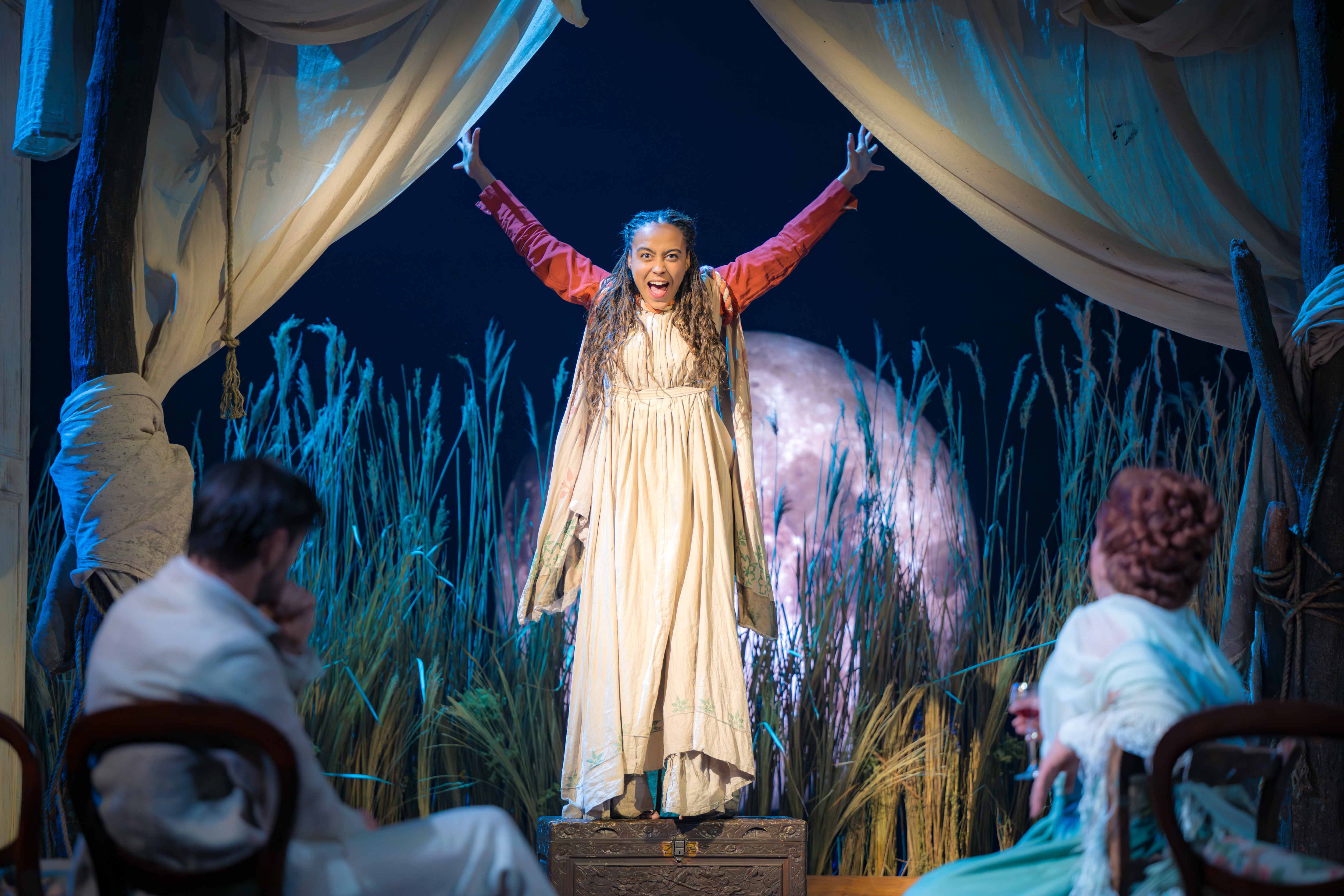
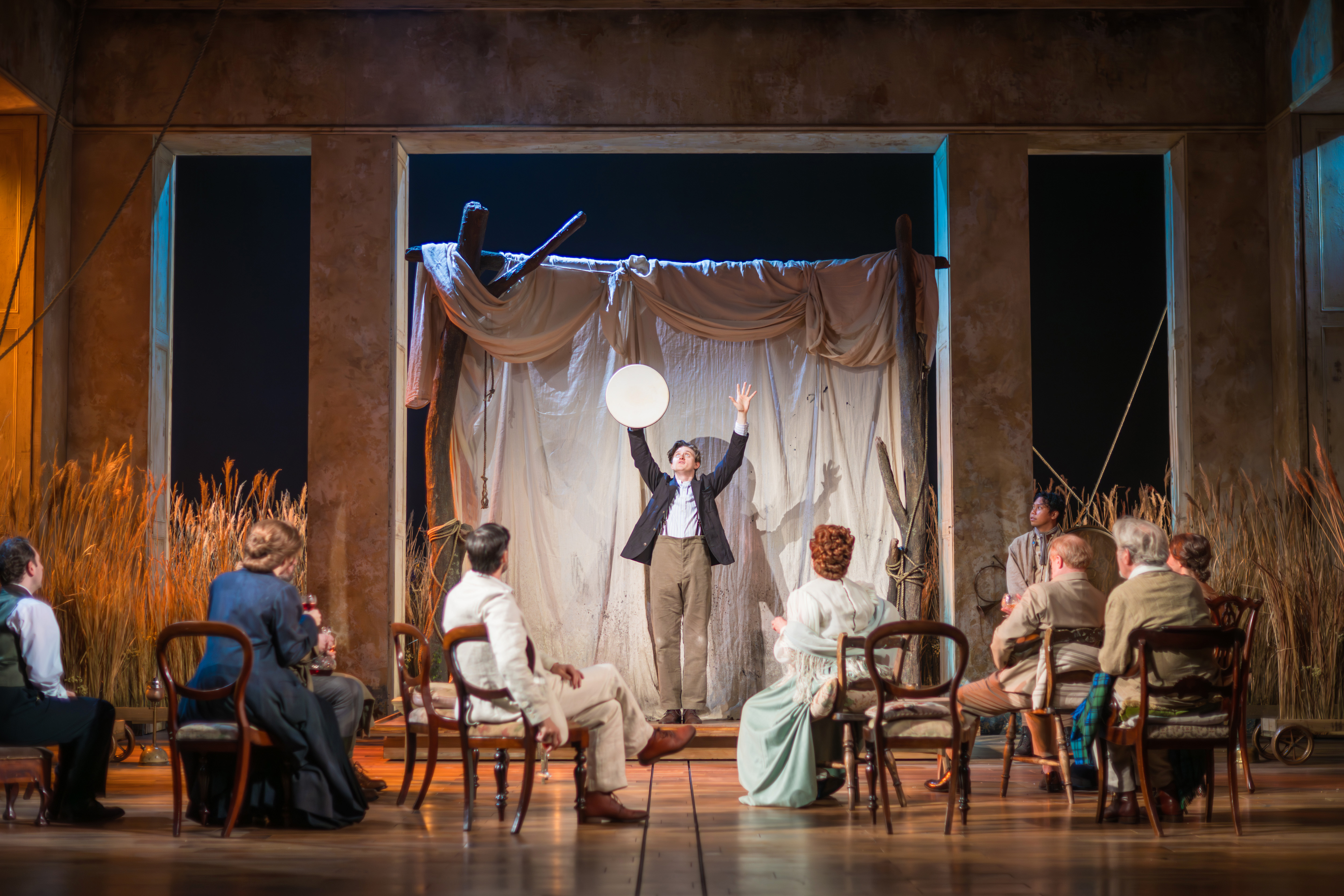
Although unnerved by Trigorin’s presence, Konstantin presses ahead with a performance of his latest project. He’s enlisted the help of an aspiring actress, Nina (Harmony Rose-Bremner), who lives on a neighbouring estate. He claims to be seeking a ‘new theatrical form’ and he’s devastated when his mother airily dismisses the monologue as ‘incomprehensible.’ He’s even more upset when Nina (who he clearly adores) seems much more interested in talking to Trigorin than to him.

Meanwhile, Masha (Tallulah Greive), the daughter of the estate’s boorish steward, Shamrayev (Steven McNicholl), is hopelessly in love with Konstantin, though he seems barely aware of her existence. She views the fact that shy local schoolteacher, Medvendenko (Michael Dylan), is in love with her as something of a major irritation.

In such a tangle of unfulfilled longing, it’s inevitable that tragedy is waiting somewhere in the wings…

There’s so much to enjoy here and not just Quentin’s perfectly-judged performance as the conceited, self-aggrandising Irena, intent on making every conversation all about her. The gathering of disparate characters is well-realised, with Bremner excelling in the role of the increasingly-unsettled Nina, whose obsession with becoming an actress threatens to lead her headlong into madness. Dylan generates a goodly share of the laughs as the hapless and self-critical Medvendenko, in particular during his pithy exchanges with the local physician, Dr Dorn (Forbes Masson), who seems to have brought along enough laudanum to put everyone out of their misery.

I’m entranced by Anna Kelsey’s autumnal set design, particularly in the first act where Konstantin’s outdoor stage has an ethereal beauty. Director James Brining brings out all the nuances of Chekhov’s witty script and the piece seems to zip along, buoyed by what I assume is the simple intention of making this one of the most accessible Chekhovs you’re ever likely to see – an aim that is accomplished with élan.

4.5 stars

Philip Caveney

Life is a Dream

02/11/21

Lyceum Theatre, Edinburgh

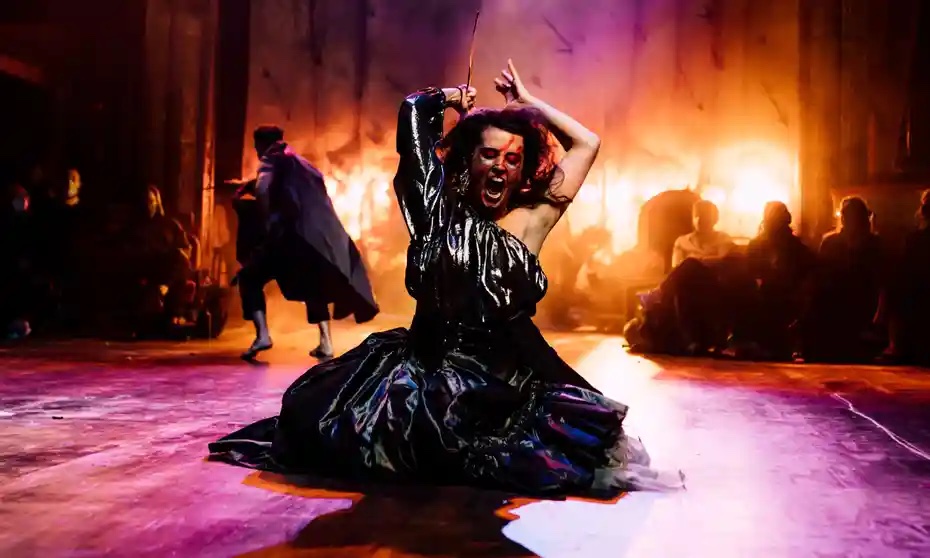
There’s something decidedly dreamlike about our return to the Lyceum.

It’s been so very long since we’ve entered these hallowed portals and, now that we’re here, we hardly recognise the place. It’s had a major makeover for this play, with a new floor built up over the stalls. The result is a more intimate performance space; this production is presented in the round, with some members of the audience sitting right next to the actors. I’m reminded, more than anything, of the Royal Exchange in Manchester, our old ‘go to’ venue for new and innovative theatre, and this reinvention seems like an astute move on the part of the Lyceum. And if director Wils Wilson doesn’t maximise the reconfigured space’s potential quite as well as, say, Sarah Frankcom might, that’s only to be expected; after all, the Exchange’s artistic directors have had a lot of practice at this!

Life is a Dream is one of those weird seventeenth century fairy tales, written by Pedro Calderon and first staged in Madrid in 1630. This translation, by Jo Clifford (who, coincidentally, is sitting in the row in front of us), is strong on acerbic humour and gender confusion and, while it probably wouldn’t do to think too closely about the bizarre machinations of the plot, the actors’ confidence seems to grows steadily throughout the performance, exerting a powerful grip on the audience.

This is the story of captive prince, Segismundo (Lorn MacDonald), imprisoned in a tower by his own mother, Queen Basilio (Alison Peebles), who once dreamed that her son would turn out to be a tyrant, so decided to be proactive and imprison him just in case. But Segismundo is released by his old tutor, Clotaldo (John McCaulay), and pretty soon, the prince has the opportunity to show that he can be kind and considerate, but, driven half mad by his long imprisonment chooses to do exactly the opposite – until he is told that life is all a dream, and so he should do his best to behave well and stop the nightmares. Then there’s angry, jilted Rosaura (Anna Russell Martin) and her companion, Clarin (Laura Lovemore), the latter of whom keeps breaking the fourth wall to make sarcastic comments about what we’re watching…

Actually, there’s little point in going over the plot in detail, because it’s quite frankly bonkers, but what comes across so powerfully here is the magical feel of the production and the excitement of seeing something new, fresh and innovative. McDonald is terrific as the near feral Segismundo, scampering around the stage, snorting and quivering like a hunted animal, seemingly unable to make a quick decision. Peebles brings a sense of quiet authority to her role as the much misguided Queen of Poland and Russell Martin has a delightful knack for uttering sarcastic asides.

More than anything else, it’s great to back at the Lyceum and this sparky piece makes for a delightful return.

We’re already excited to see what comes next.

4 stars

Philip Caveney

Wendy & Peter Pan

30/11/18

Lyceum Theatre, Edinburgh

The story of Peter Pan is a perennial Christmas favourite for family audiences. This clever reworking by Ella Hickson, created for the Royal Shakespeare Company in 2013, is adapted not from JM Barrie’s original play, but from from the extended version he published as a novel in 1911.

As you might deduce from the rearranged title, this is an altogether more feminist version of the story. Instead of being a helpless victim throughout the action, Wendy (Isobel McArthur) is clearly one for taking the initiative and, as it turns out, she’s also a dab hand with a cutlass. She first meets Peter (Ziggy Heath) shortly after the death of her brother, Tom (Keiran Gallagher); a year later, her parents, still unable to regain their equilibrium, appear to be drifting apart. Then Tom reappears and takes Wendy and her two other brothers, John (George Naylor) and Michael (Christian Ortega), off to join the Lost Boys in Neverland…

This rumbustious, sprawling adventure seems to delight in subverting audience expectations. Hook (Gyruri Sarossy) is not the usual sneering fop, but an oafish yob who’s beginning to feel the inexorable advance of old age. His bosun, Smee (Dorian Simpson), is a pernickety, snarky sort of fellow, who also throws a few good dance moves when he’s in the mood. Tink (Sally Reid) is a punky Glaswegian in dark glasses and sparkly leggings who is well versed in caustic remarks. There are sword fights aplenty (one of which I fear goes on a tad too long), a spectacular pirate ship set and, of course, there’s quite a bit of flying, though sometimes this feels a little too careful to be truly magical. I expect that will develop as the performers become more confident with the ropes and harnesses.

Needless to say, the younger members of the audience (at whom this is mostly aimed) have a great time with this, although one little chap in front of us does seem a bit overwhelmed by an unexpected visit from a very large and hungry crocodile; and there’s enough depth here for the big kids in the audience not to feel left out. The most interesting idea is an allegory about bereavement and the need for people to move on with their lives. Perhaps, Hickson seems to be saying, Neverland is something more than just a place for aimless kids to hang out.

At any rate, those with restless youngsters seeking entertainment could do a lot worse than head down to the Lyceum for their yuletide fix. This is sprightly stuff that should keep the whole family thoroughly entertained.

4 stars

Philip Caveney