The Lobster

Bugonia

02/11/25

Cineworld, Edinburgh

Yorgos Lanthimos must qualify as one of the hardest-working directors in the business – and one of the most consistently brilliant. Since his breakout with The Lobster in 2015, he’s unleashed a whole string of knockout films and, as I’ve observed elsewhere, he has the gift of turning the wildest, most experimental ideas into palpable hits at the box office. If, in its opening scenes, Bugonia seems like his most straightforward story yet, don’t be fooled. Eyebrow-raising revelations are waiting an hour or so further down the line.

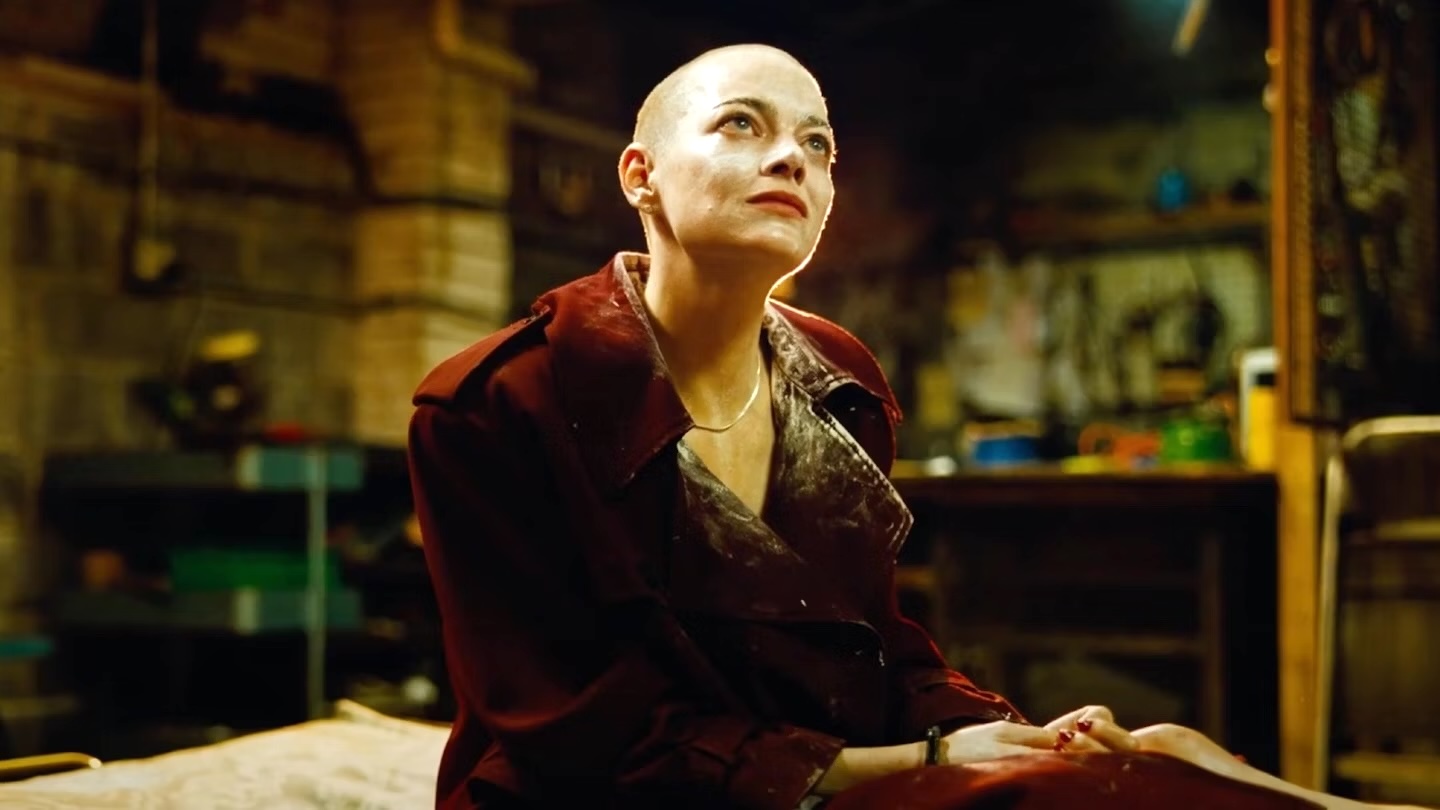
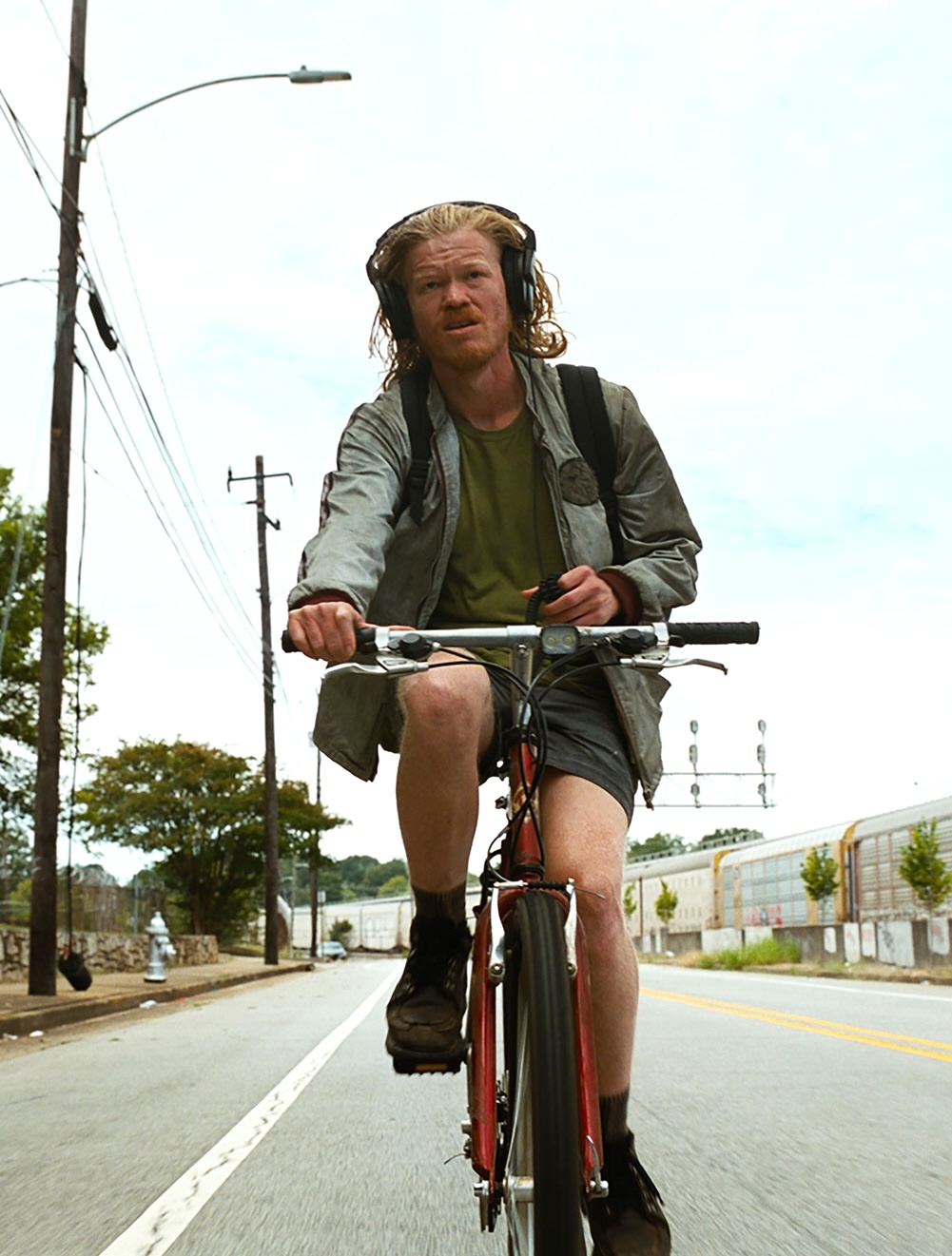
Michelle Fuller (Emma Stone) is the CEO of pharmaceutical megacorporation, Auxolith, located in an unspecified area of the USA – though surprisingly, much of the film was actually shot in and around High Wycombe. As she goes about her business, she’s blissfully unaware that her movements are being studied by Teddy Gantz (Jesse Plemons), a lowly worker at her company’s packaging warehouse.

In his spare time, Teddy studies internet conspiracies and has come to the conclusion that Michelle is actually an ‘Andromedan’ – an alien creature responsible for many of the problems currently facing humanity. She’s also indirectly responsible for the plight of his mother, Sandy (Alicia Silverstone), who is on life support after being used as a test case for one of Auxolith’s experimental drug projects. Worst of all, in Teddy’s mind, is the fact that Michelle is also directly responsible for the decline of the honeybee, which is key to the world’s survival.

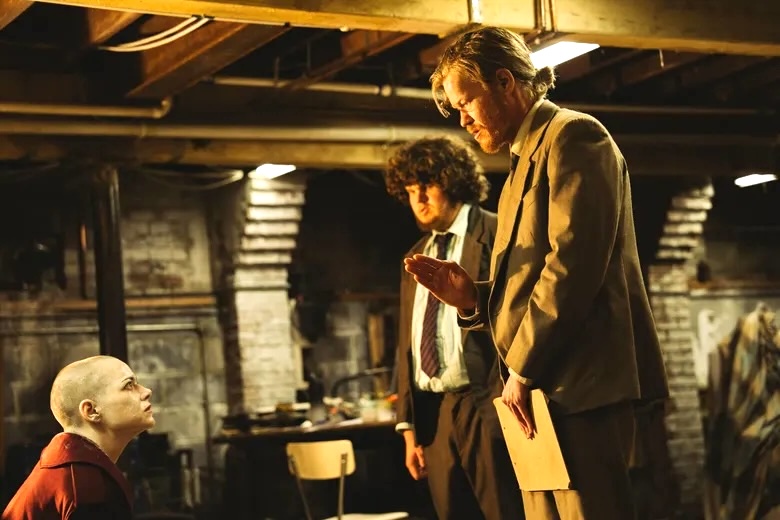
Assisted by his vulnerable cousin, Don (Aiden Delbis), Teddy kidnaps Michelle and the two men take her to their ramshackle home in the middle of nowhere. They take the precaution of shaving her head and covering her with antihistamine cream – to prevent her from contacting her ‘mothership’. Teddy wants to use Michelle as a bargaining tool with the Andromedan Emperor, so he can negotiate freedom for the human race. But first, Michelle must be interrogated…

It would be a crime to reveal any more about the plot but, once again, I find myself marvelling at Lanthimos’s ability to manipulate me as a viewer, leading me first in one direction, then in an entirely different one before dashing all my assumptions. There are moments here where I have to restrain myself from gasping out loud. Inspired by Save the Green Planet by South Korean filmmaker, Jang Joon-hwan (which I haven’t seen), Bugonia has been adapted by Will Tracey and, in its latter sections, incorporates elements of a high-stakes thriller as Michelle is obliged to use all her considerable skills to stay alive.

Both Stone and Plemons are utterly captivating in the central roles and it’s easy to see why they’ve become members of Lanthimos’s repertory theatre – while there’s something utterly adorable about Delbis as the hapless Don, unable to challenge the commands given to him by Teddy, even when it’s evident that they disgust and confuse him.

But the film’s true triumph is only revealed in a final extended sequence, where Lanthimos brings all the different strands of the story together to create a shattering, thought-provoking conclusion. The director has announced that he’s ‘taking a rest’ after this and, following a run that includes The Favourite, The Killing of a Sacred Deer, Poor Things and Kinds of Kindness, I’d say he’s definitely earned one.

5 stars

Philip Caveney
Poor Things

12/01/24

Cineworld, Edinburgh

What is Yorgos Lanthimos’ secret? Since 2015’s The Lobster, he has released a string of wild, absurdly funny and generally unhinged films, the kind of projects you’d expect to see consigned to little art house cinemas, but – as we saw withThe Favourite – his inventive offerings are pulling in the big crowds and attracting top-flight performers to star in them. Tonight’s early evening screening is packed with a predominantly young crowd, who spill out afterwards, excitedly discussing what they’ve just watched. In an age where predictable comic-book films have ruled the roost for far too long, this is heartening to see.

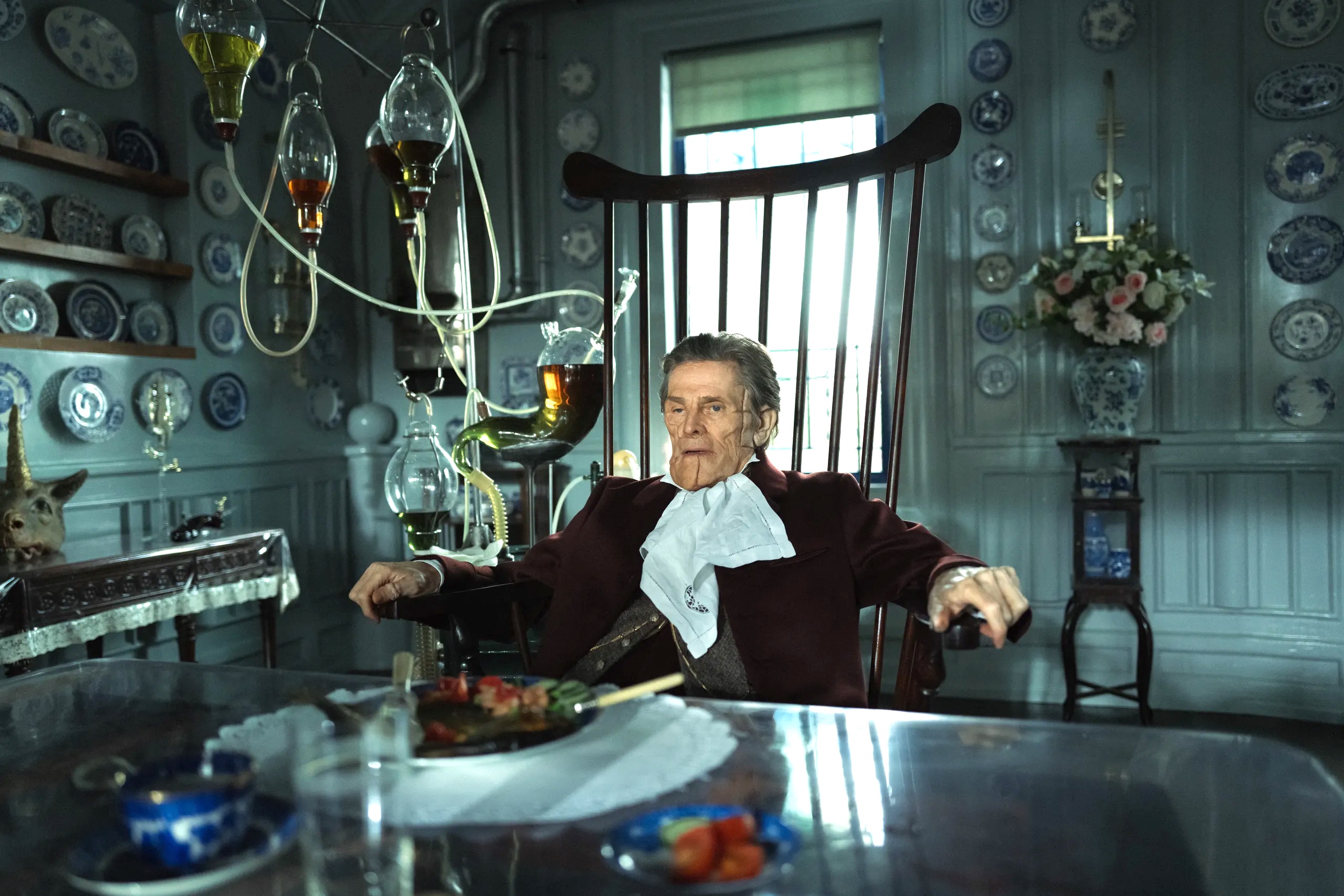
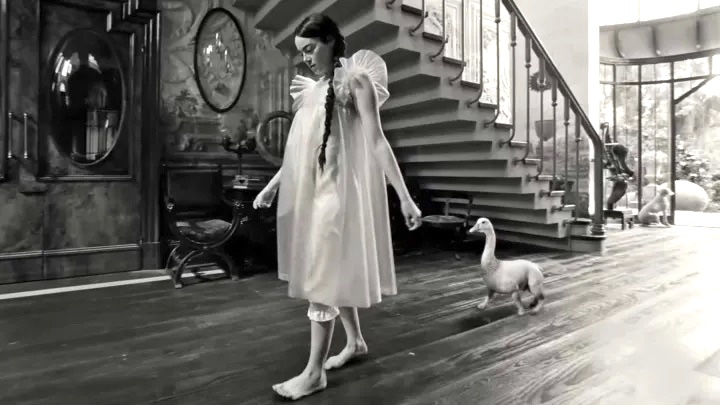
Poor Things, adapted by Tony McNamara from the novel by Glaswegian author Alasdair Gray, is surely Lanthimos’ most surreal piece yet. It’s been relocated to London (much to the ire of Gray’s fans) and relates the story of Bella Baxter (Emma Stone), a woman who, in the film’s opening scene, throws herself from a bridge into the River Thames. Her corpse is found by Dr Godwin Baxter (Willem Dafoe), a scientist in the Victor Frankenstein tradition. He carries her to his laboratory, reanimates her and makes a few radical adjustments, creating a new being who has to completely relearn how to speak, walk and generally comport herself.

Godwin is assisted by his young protégée, Max (Ramy Youssef), who quickly falls in love with Bella, but into this already weird scenario wanders caddish lawyer, Duncan Wedderburn (Mark Ruffalo). He spots an opportunity and promptly purloins Bella for his own nefarious purposes. He whisks her away on a whistle-stop tour of the world, calling in at some of the strangest cities you’ll ever witness on the screen…

It’s hard to know where to start throwing superlatives at this, but I’ll try.

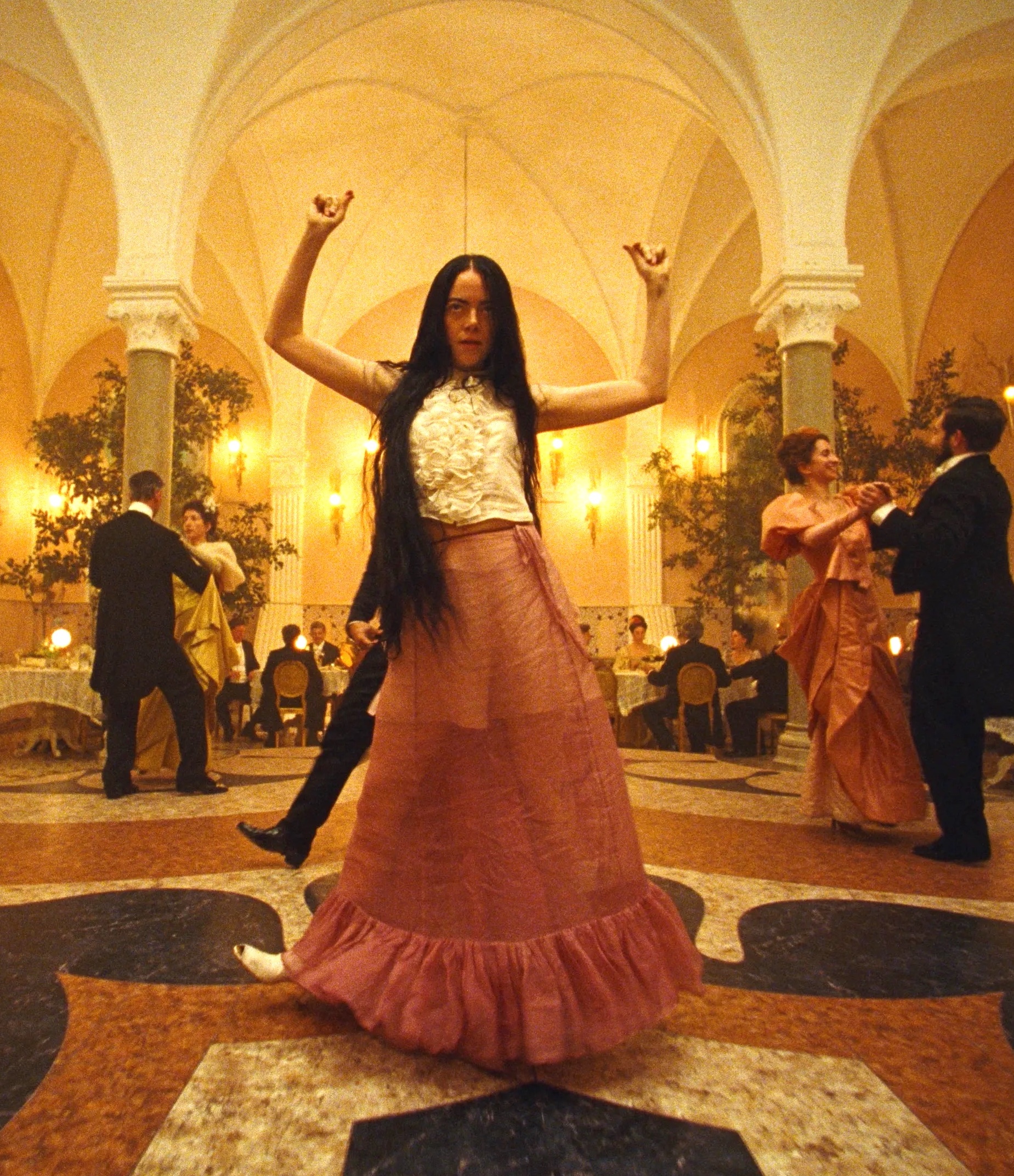
Poor Things simply vibrates and hums with pure invention, switching from black and white, to heightened colour, from fish-eye lens interiors and cramped city streets, to majestic – almost hallucinatory -landscapes, every frame so packed with ideas that I’m convinced I could watch this a dozen times and spot something new with every viewing. Stone, in a performance that has already claimed a Golden Globe and seems a good bet for an Oscar, is extraordinary here, uncannily inhabiting the character of a naïve woman. She is subjugated and exploited by the vicissitudes of toxic males, but somehow manages to assert her own agency and emerge victorious. Dafoe, who could so easily have been a clichéd horror figure, emerges as a sympathetic and weirdly adorable character, who has devoted his life to exploring the mysteries of science but still cares about his ‘daughter”s happiness. Hats-off also to composer Jerskin Fendrix for the suitably eerie score, which complements the action perfectly.

A word of warning: Poor Things has an 18 certificate and some of the content – especially those sections set in Paris – are unapologetically sexual in nature, but the film somehow never feels prurient. These scenes only serve to fuel the essence of the story: how the inherent nature of mankind is to corrupt and destroy everything of value. This may sound po-faced, but I’ve seldom seen a message delivered with such unfettered exuberance.

This is Lanthimos’ best feature yet (after The Favourite, that’s praise indeed). I’m already excited to hear about where he’s headed next. Just name the date, Yorgos; I’ll be first in the queue.

5 stars

Philip Caveney

The Killing of a Sacred Deer

04/11/17

Yorgos Lanthimos’s previous film, The Lobster is a real divider of opinion. Many people love this dark dystopian comedy, while others just can’t get their heads around the surreal craziness of the plot. I suspect the same fate awaits The Killing of a Sacred Deer, which, while it heads into much darker territory than its predecessor, still offers us a story that has very little to do with any kind of perceived reality. And yet, for all that, this bizarre fable about the nature of sacrifice is a powerfully compelling tale that exerts a real grip.

Heart surgeon Steven Murphy (a hirsute Colin Farrell) enjoys a successful career. Married to ophthalmologist, Anna (Nicole Kidman), and the father of Kim (Raffey Cassiday) and Bob (Sunny Suljic), he seems content with his life but talks only in the most banal terms about the dullest subjects – an early discussion with an anaesthesiologist about a watch that Steven is thinking about buying sets the tone.  

We soon learn, however, that Steven has a secret. He is meeting regularly with teenager, Martin (Barry Keoghan) and, inevitably, we suspect that there’s something sinister going on. But the film is full of misconceptions. Martin, it turns out, is the son of a man who died on Steven’s operating table and the surgeon is simply trying to be nice to him, possibly because he feels a sense of guilt about what happened. Steven, we discover, is fond of a drink and may not have been entirely sober when he went into the operating theatre. As the film develops, Martin begins to inveigle his way more and more into the Murphy household and even insists that Steven should come to his house and meet his mother (an unsettling cameo from Alicia Silverstone), who Martin claims ‘has feelings’ for Steven. But then Martin says something that will change Steven’s life forever. It’s in the nature of a prediction – and means the surgeon having to make the most difficult decision of his life…

This is a fascinating tale, expertly told. Though it has no rational explanation, there’s a mounting sense of dread throughout and the story (co-written by Lanthimos and Efthymis Filippou) seems to delight in exploding received wisdoms about how people will act under certain conditions. A mother will always put her children first, right? Siblings will always look out for each other, yes? Well, in this film’s worldview, nothing can be taken for granted.

If I’m honest, the movie overstays its welcome somewhat. With twenty minutes cut from the running time, this would have been stronger, but nevertheless there’s still plenty here to enjoy, not least Keoghan’s wonderfully dead-eyed performance as the teenage boy who comes to exercise complete control over the Murphys. Oh, that title, by the way, refers to the myth of Iphigenia, so those of you who have studied the classics might have some intimation about where the story is headed.

As I said at the beginning, some people will inevitably hate this film. For me, though not perfect, it’s even stronger than The Lobster, and I for one will be fascinated to see where this exciting and highly original film-maker goes next.

4.4 stars

Philip Caveney

The Lobster

MV5BNDQ1NDE5NzQ1NF5BMl5BanBnXkFtZTgwNzA5OTM2NTE@._V1_SY317_CR5,0,214,317_AL_ Unknown-4

18/10/15

There’s no other way of saying it. The Lobster is weird.

This surreal blend of dark comedy and occasional violence won the Jury prize at this year’s Cannes Film Festival and it represents Greek director Yorgos Lanthimos’s first foray into the English language. It was strangely heartening to see that despite its unabashed art house ambitions, it had somehow managed to pull a decent crowd into a multiplex on a Sunday afternoon. Gratifying too, that only a few people walked out of the showing shaking their heads.

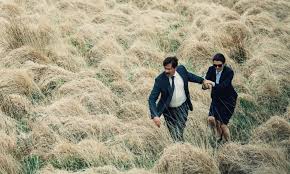
David ( a barely recognisable Colin Farrell) finds himself dumped by his wife of twelve years (well, eleven years and one month, to be exact – the film is very pedantic about things like that). In the dystopian society in which the story is set, this means that he soon finds himself whisked off to a mysterious seaside hotel, where he has just forty five days to find himself a new partner. If he fails in his quest, he will be transformed into the animal of his choice and ‘set free’. David opts to be a lobster, because he’s always been quite good at boating and water sports. Meanwhile, he and his fellow guests go out on daily hunting expeditions in the forest, shooting ‘loners’ in the nearby woods with tranquilliser guns. For every loner they bring back, their time at the hotel will be extended. On his first day there, David meets up with ‘the limping man’ (Ben Whishaw) and ‘the lisping man’ (John C. Reilly) and forms an uneasy alliance with them – in this world, people are defined by their characteristics – David, for instance, is shortsighted. The hotel is presided over by Olivia Colman and her partner, (Gary Mountaine) who can always be called upon to perform a hysterically funny version of a Gene Pitney number, when required (trust me, it works!). Indeed, the first half of the film, is often laugh-oh-loud funny. Whishaw introducing himself to the other guests is a particular delight. In the later sections, when David goes on the run in the forest and falls under the wing of a survivalist leader (Lea Seydoux), the laughs are somewhat harder to find, but the narrative still holds you in its grip, right up to the tense and decidedly unresolved ending.

Yes, you say, but what is The Lobster actually about? Good question.

For me, it’s an allegory about relationships and the immense pressure that is placed upon them by the expectations of society. It’s about the way people have to compromise with each other in order to coexist. And it’s about mankind’s inherent selfishness, the casual cruelty that people will often inflict upon one another. It’s by no means a perfect film – but in its own, unconventional way, it’s more challenging than anything else you’re likely to encounter at the cinema, these days. And one thing’s for sure. You’ll talk about it afterwards.

4 stars

Philip Caveney