18/01/25
Cineworld, Edinburgh
Director Leigh Whannell last plundered the vaults of Universal Studios with his reboot of The Invisible Man (2020), where he managed to completely reimagine the 1933 source film (starring Claude Rains) as a twisty-turny nail-biter with Elisabeth Moss. The Wolf Man, a 1941 fright flick for Lon Chaney, has had plenty of remakes over the years, but few of them have ever managed to unleash the story’s full potential. While Whannell makes a spirited attempt here, framing this as an allegory about a man trying to escape from the toxic influences of his late father, the telling is poorly-paced and runs out of steam long before it ends.
It begins with an effective flashback. A young boy called Blake (Zac Chandler) heads out on a hunting expedition into the forests of Oregon with his authoritarian father, Grady (Sam Jaeger). The two of them live alone in a remote cabin (in the woods, naturally) and Blake has overheard Grady talking on the CB radio, making ominous remarks about something ‘dangerous’ that lurks in the forest, so the kid is understandably pretty nervous. Sure enough, in a thoroughly gripping sequence, the two hunters find themselves becoming potential prey as they are pursued by an unseen creature…
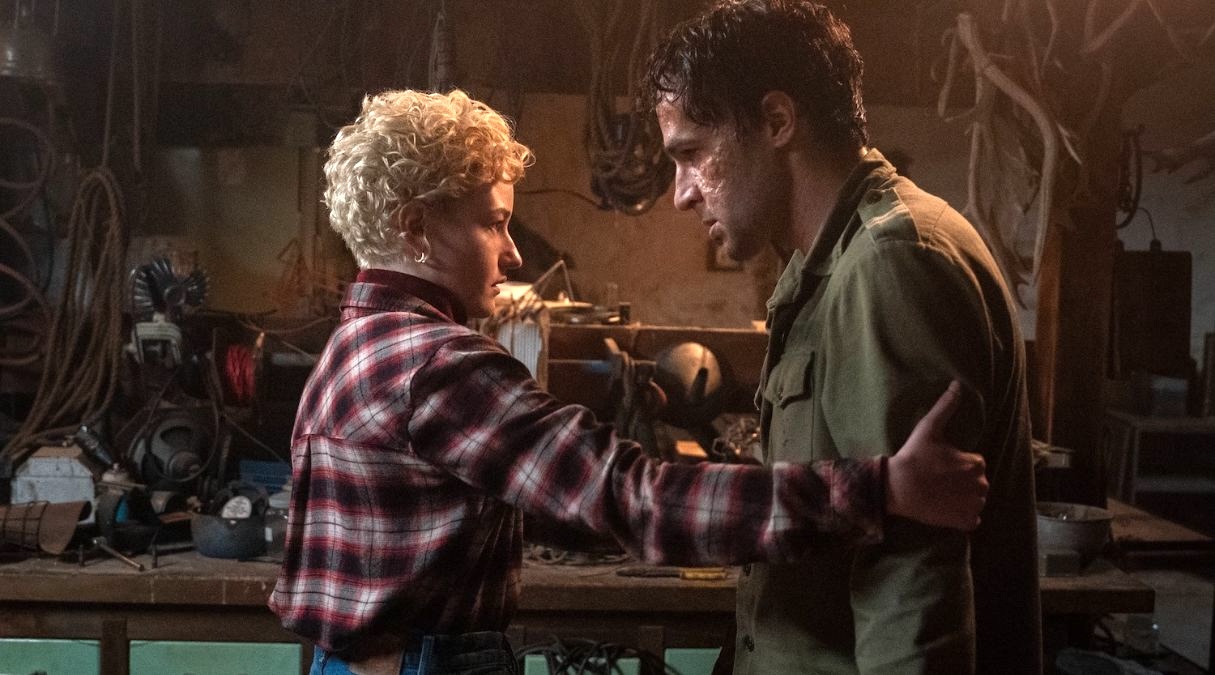
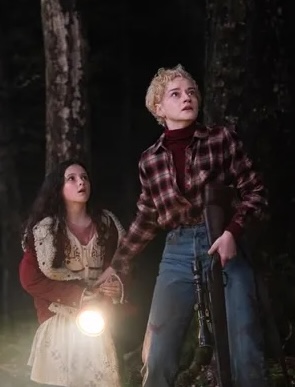
40 years later, Blake (now played by Christopher Abbott) is living in San Francisco. He’s a would-be writer who has lost his mojo and is playing the role of house-husband while his journalist wife, Charlotte (Julia Garner), puts food on the table. Blake is constantly worried about their young daughter, Ginger (Matilda Firth), and sees his sole reason for existence as a mission to protect her from harm.
Grady, meanwhile, has been missing presumed dead for a very long time. When news comes through that the authorities have officially pronounced him ‘deceased,’ Blake comes up with an idea. Why don’t the three of them hire a van, drive out to Oregon and clear out his father’s cabin, whilst having a relaxing holiday in the process? At this stage, I’m not sure which is most unlikely – Blake’s suggestion or his wife and daughter’s decision to say ‘Hey, why not?’
But it happens anyway and, in what feels like a rather rushed narrative, the three of them drive to Oregon and find themselves menaced by a mysterious upright beast even before they properly arrive at their destination…
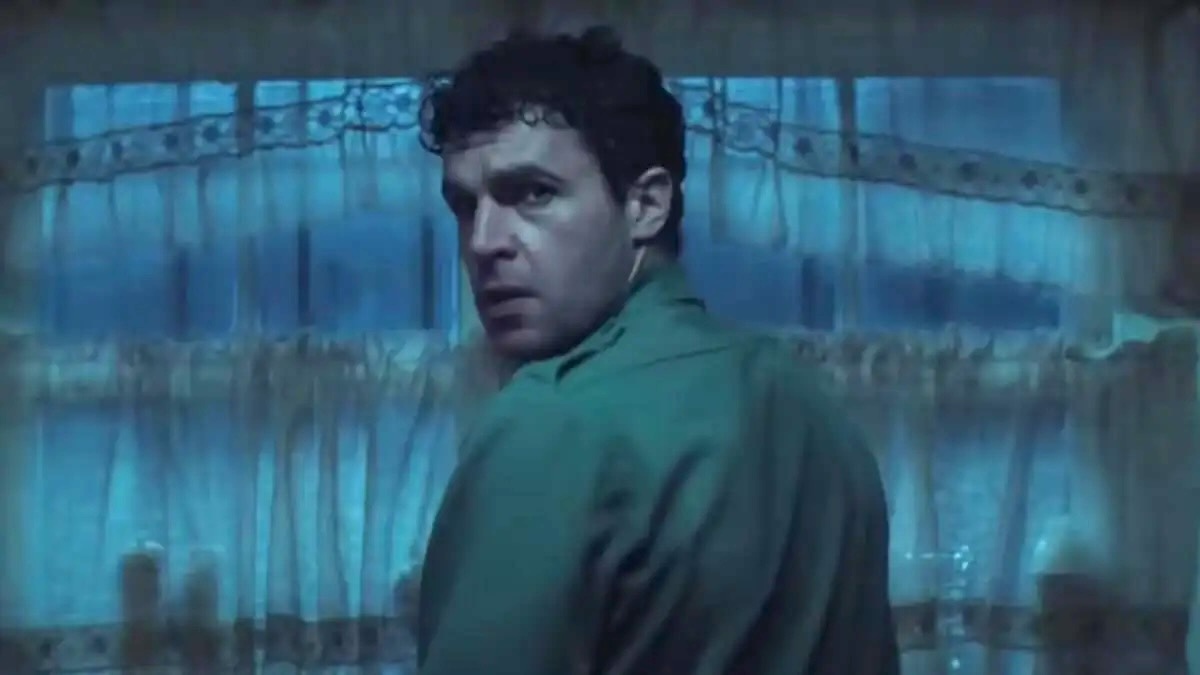
To give the film its due, Whannell manages to cook up impressive levels of suspense for the film’s first hour. Stefan Duscio’s murky cinematography and Benjamin Walfisch’s eerie music add to the steadily mounting sense of dread. When Blake suffers an injury and begins to transform into – well, take a wild guess – his situation seems to mirror a whole series of possible references from drug addiction to generic inheritance. But just as I’m thinking that this is going to be a triumph, there’s a major development (I’m confident you’ll spot it when it arrives) where the story reaches its logical conclusion, and where it really ought to end.
Except that there’s still another half hour to fill – and so the action continues, squandering most of the Brownie points earned so far, in what feels like a series of completely superfluous extra scenes. As is so often the case, the more we see of the titular creature, the less menacing it becomes. A last, thought-provoking scene arrives a little too late to undo the damage.
A shame, because that first hour definitely takes the viewer to some very uncomfortable places – and it’s hard not to conclude that, if it had only taken the family a little longer to get to the cabin, this could have been a much more satisfying experience.
3.4 stars
Philip Caveney


 Bouquets & Brickbats