
21/01/23
Cineworld, Edinburgh
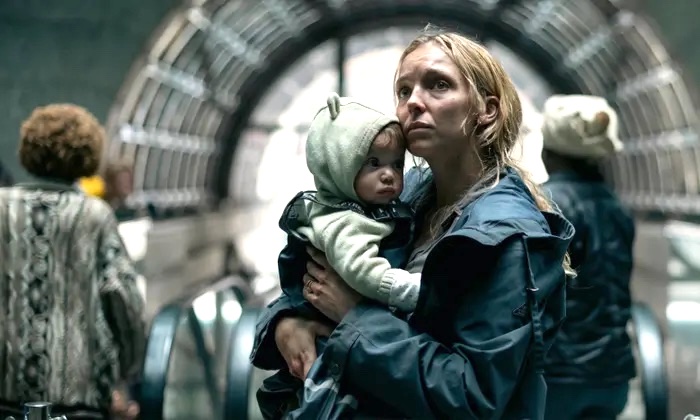
The End We Start From – with a screenplay by Alice Birch based on the novel by Megan Hunter – comprises two distinct stories in a single telling. On the surface, we have the literal tale of an apocalyptic flood rendering much of the UK uninhabitable. Underneath, there is a metaphorical account of a new mother drowning under pressure.
Directed by Mahalia Belo and starring Jodie Comer, the allegory is not subtle. As the Woman takes a bath and caresses her heavily-pregnant belly, the camera inverts: her whole world is about to be turned upside down; as the Woman’s water breaks, so the flood smashes through her kitchen window, engulfing her and changing everything. She’s nameless, billed only as ‘Woman’; she is clearly supposed to be an archetype, a universal Everymother.
But it doesn’t need to be subtle. This works.
Comer is luminous; she has that elusive quality we used to call the ‘X’ factor until the phrase was hijacked by Simon Cowell’s karaoke nights. The camera loves her, and she is a truly talented actor. The supporting cast (especially Joel Fry as her partner and Katherine Waterston as her friend) are great, but there’s no doubting whose movie this is. Comer imbues the Woman with a strong, relatable character, fighting for survival against the odds.
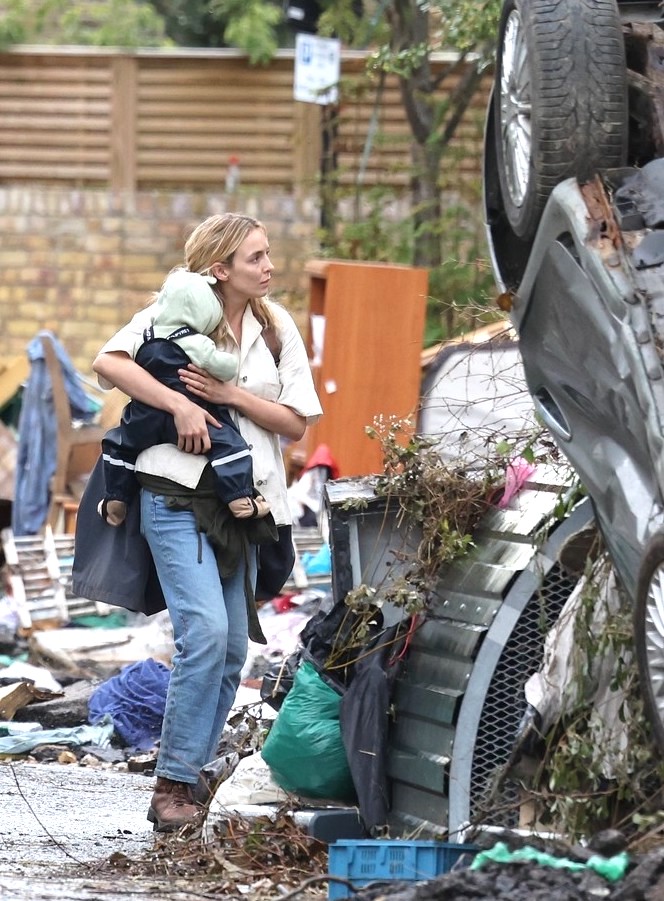
Birch’s script is spare and under-stated – and therefore terrifyingly believable. This isn’t a Zombie flick, where everyone suddenly becomes feral, but the prospects are just as bleak; this climate disaster is devastating but credibly so. People are flooded out of their homes so they take to their cars in search of somewhere safe. Before long, the roads are blocked; towns and villages on higher ground close ranks, scared of sharing and losing what they have. Shelters are set up, but spaces are limited. In the midst of all this is the Woman, wide-eyed with the shock of having just given birth, frightened for herself and for her baby. And desperate people do desperate things…
Belo’s low-key direction cleverly magnifies this awful plausibility. She never lingers on the violence we know is out there, its menace amplified by the fact it’s just out of sight. The aftermath of a broken, waterlogged London emerging from the storm is especially affecting. The tempestuous weather – beautifully, even languorously, shot by Suzie Lavelle – feels like a warning, a case of ‘when’, not ‘if’. We can almost feel the strength of nature and our powerlessness against it.
Indeed, emerging from the cinema into the wild wind and rain of Storm Isha, the storyline seems scarily prescient as we battle our way home.
4.3 stars
Susan Singfield


 Bouquets & Brickbats