15/03/26
Cineworld, Edinburgh
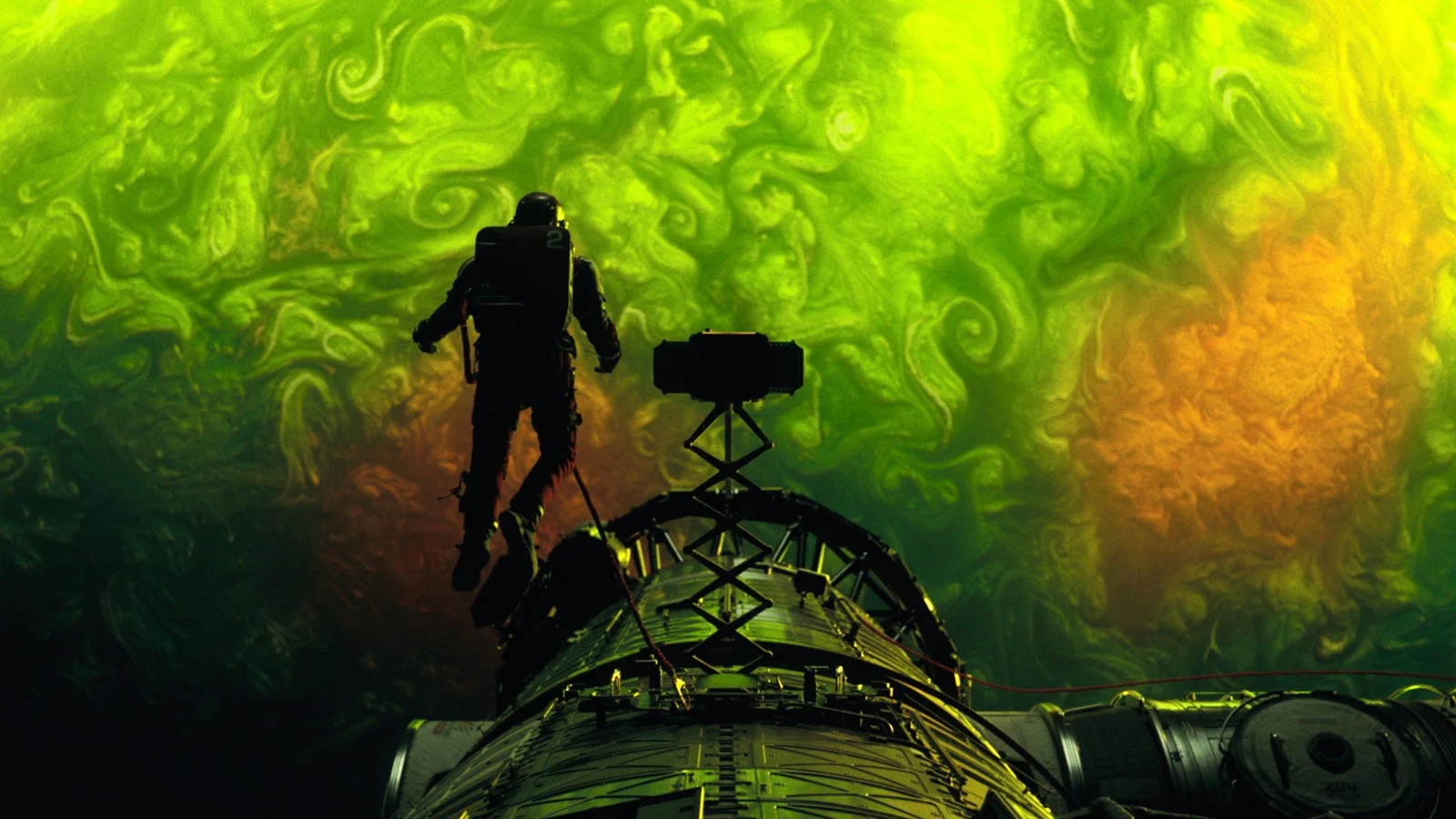
Science fiction movies come in all shapes and forms. They can be epic widescreen showcases. They can be intriguing ‘what if’ commentaries on uncertain futures. They can be wildly funny, gently heartwarming. They can be tales of triumph over adversity. They can be suspenseful, ironic, prophetic and surprising. Project Hail Mary somehow manages to be all of these things in the space of a couple of hours and, trust me, that’s not intended as a criticism.
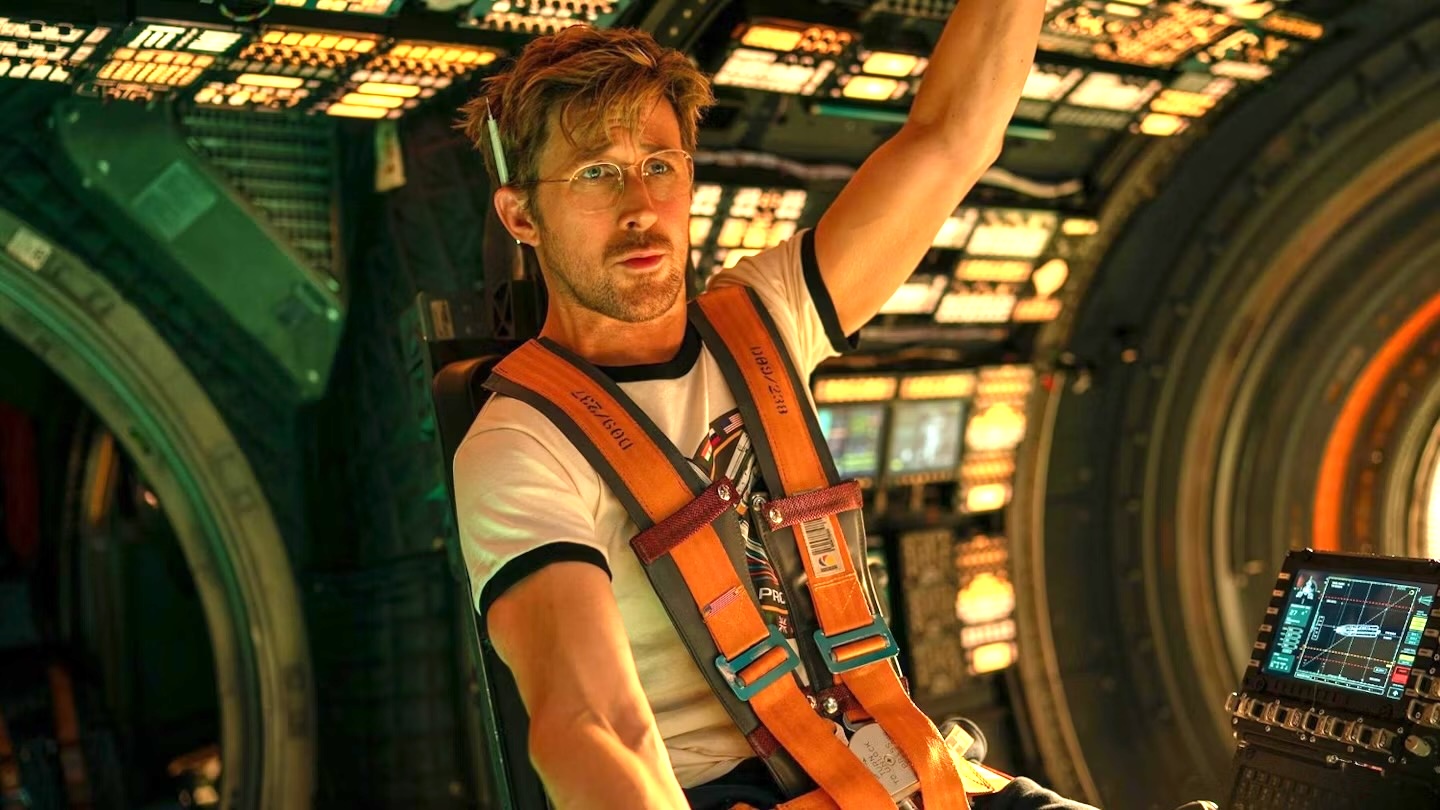
Based on the novel by Andy Weir and adapted by Drew Goddard, the story begins aboard the titular space probe with Ryland Grace (Ryan Gosling) waking up from a very, VERY long sleep. He’s long-haired, bearded and extremely confused. What’s he doing on a freaking space ship? He’s a junior high school teacher for Christ’s sake! And why are the only other people aboard the probe both dead?
Memories from thirteen years ago gradually start to come back to him. He remembers being approached by Eva Stratt (Sandra Hüller), an administrator for the European Space Agency. She’s looking for a molecular biologist, something that Ryland worked at before he became a teacher. Eva delivers some bad news: the sun is dying, its power being gradually consumed by single-celled organisms called ‘Astrophage.’ If nothing is done about the situation, it will mean that humanity is going to face ‘total extinction’ within just a few short years. Will Ryland help her to find a solution for the problem?
He agrees to join her huge team of scientists, but makes it very clear from the outset that he’s really not interested in going into outer space himself. He’s a homebody, not a hero. On no account will he ever don a spacesuit and venture out of Earth’s gravity. Eva tells him it’s not a problem. So… how did he get here? And now he is here, what’s he supposed to do?
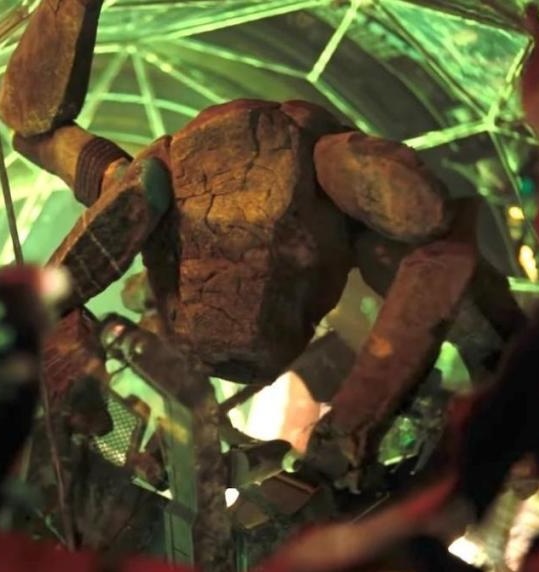
I love the way this complex tale is told, the background to the story gradually released via out-of-sequence recollections. Directors Phil Lord and Christopher Miller seem to relish multi-faceted storylines (see Into the Spider-Verse if you want further proof) and while PHM takes its own sweet time laying out all the pertinent details, it never loses momentum. Around the halfway mark, Ryland has a chance encounter with an alien starship and subsequently meets up with its only surviving crew member. He’s an Eridian, a strange many-limbed creature that appears to be made from lumps of stone and who Ryland immediately dubs ‘Rocky.’ Once they have devised a way to communicate, Ryland discovers that Rocky is on a similar mission to him – trying to find a way to save his own planet, Erid, which is also being ravaged by those pesky astrophages.
The two of them resolve to work together, though that isn’t a straightforward process…
The relationship between the two mismatched travellers is at the heart of this goofy and unapologetically sentimental tale. Rocky is a deceptively simple creation, devised using old-school puppetry rather than digital effects – and Gosling has rarely been more engaging than he is here, as a kind of super-nerd discovering that he’s capable of more than he ever imagined.
Best watched on an IMAX screen – some of the special effects sequences are eye-popping – this is an enchanting and thought-provoking tale that keeps me hooked throughout and delivers an intricate storyline with extraordinary skill.
4.6 stars
Philip Caveney



 Bouquets & Brickbats