08/07/23
Cineworld, Edinburgh
Viewed via an Unlimited ‘Secret Screening,’ Joy Ride is a film we probably wouldn’t bother to book in normal circumstances – but I’m all for stepping out of my comfort zone now and then. This is a rumbustious comedy, a sort of Asian-American Bridesmaids.
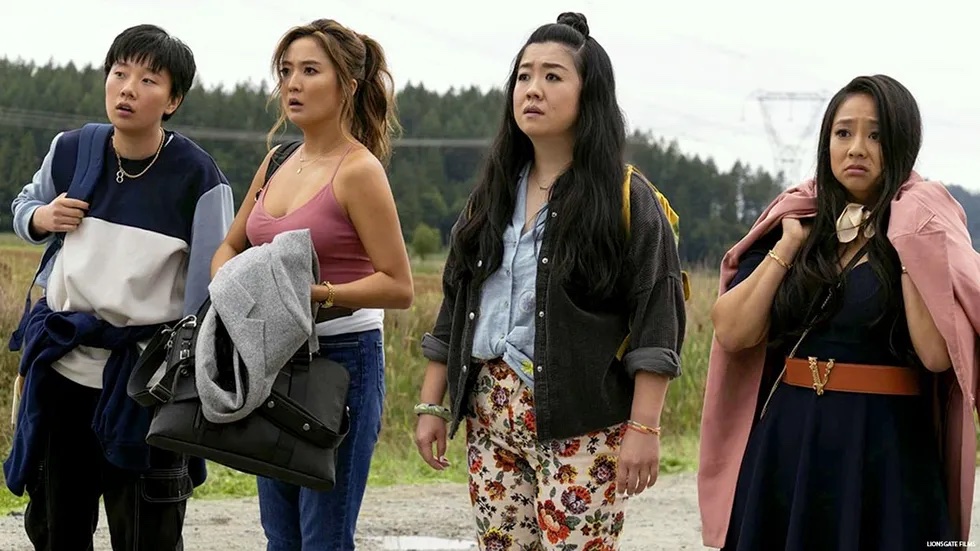
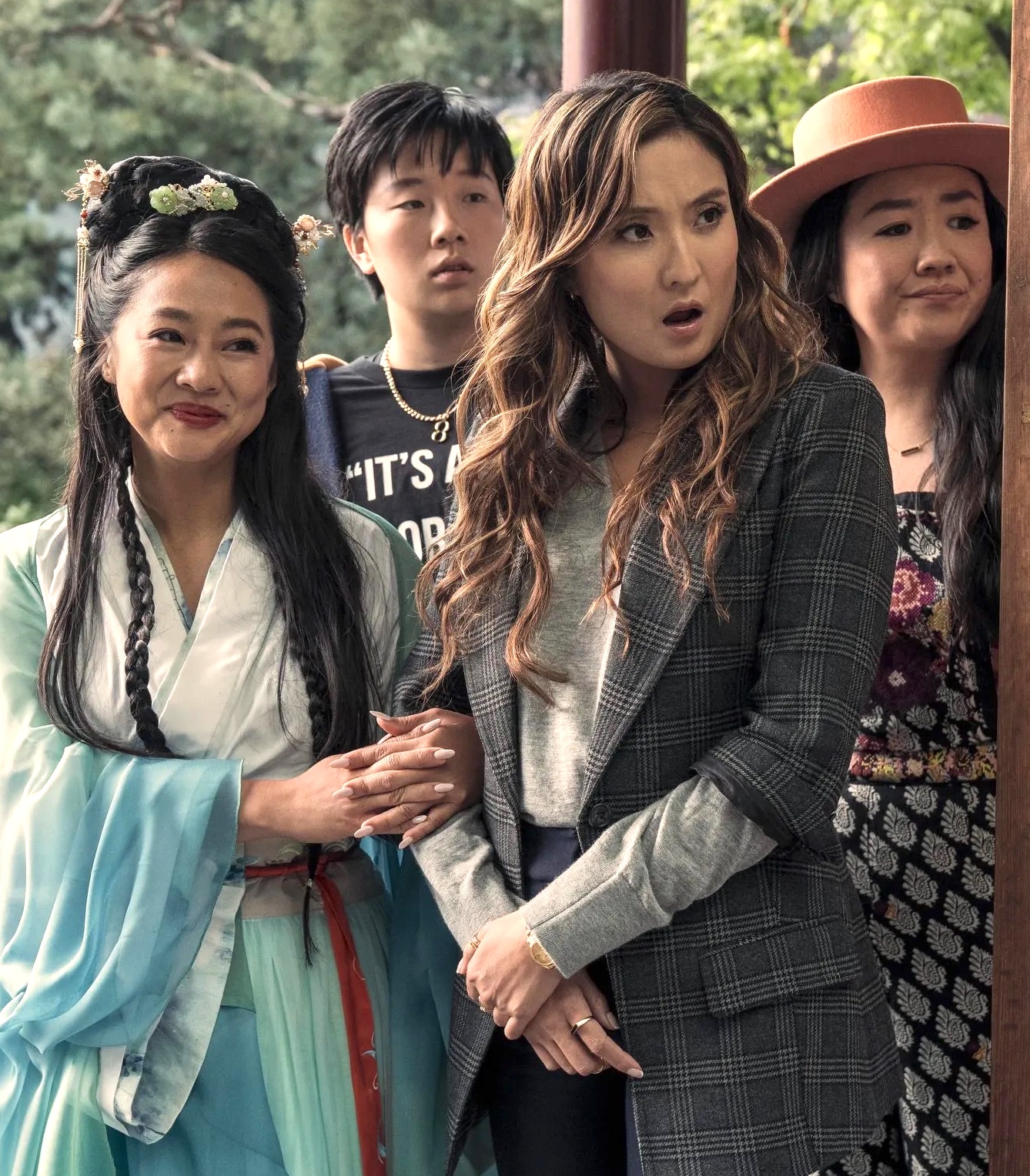
Audrey (Ashley Park) is working in a Seattle law firm and jumps at the chance of going to China to oversee an important business deal. She has no memories of her birthplace because she was adopted as a baby by a white American couple, but she’s still besties with Lolo (Sherry Cola), her friend and protector ever since her arrival in the USA. Lolo is an artist, who specialises in objects inspired by human genitalia – something that writer/director Adele Lim seems to think is hilarious, and something on which we’ll have to agree to differ.
Would it be a good idea for Audrey to take Lolo to China with her? Clearly it wouldn’t, but of course she does anyway. Along for the ride comes Lolo’s hapless pal, ‘Deadeye’ (Sabrina Wu), a non-binary computer nerd obsessed with K Pop. Deadeye is a strangely adorable character and one of the best things about this patchy tale.
Once in Beijing, the trio meet up with mutual friend, Kat (Stephanie Hsu), an actor currently filming a popular television series, with a Hollywood deal in the pipeline. Kat and Lolo have an adversarial relationship, which is intensified when Kat introduces her hunky fiancee, Clarence (Desmond Chiam), a devout Christian who has no knowledge of Kat’s sexually active past, nor of the fact that she sports a memorable tattoo in an intimate place.
When Audrey meets the Chinese businessman with whom she needs to broker a deal, he’s clearly unimpressed when she admits to knowing nothing of her origins. When Lolo suggests it might be a good idea for Audrey to reconnect with her birth mother, in order to save the deal, the four friends promptly set off on an odyssey to the place where Audrey was born…
On paper, it sounds like a complicated scenario, but essentially, it’s an excuse for a breathless romp that meanders through a variety of locations, occasionally managing to be genuinely funny. More often than not, however, it confuses the lead characters’ insatiable appetites for sex and cocaine with humour. You could argue that there have been lots of films in which male characters follow similar trajectories, but if I’m honest, I don’t care much for them either. I’d also be more impressed if Joy Ride‘s ultimate message wasn’t one of those fridge magnet statements about friendship and forgiveness. And the problem is, you can see it coming from miles away.
The best bits here are the observations about different cultures, the way that a person’s upbringing influences the decisions they make throughout life. Trying to find a train carriage, for instance, Audrey shies away from sharing with Chinese people and instead assumes the lone white female on the train is more trustworthy. Big mistake.
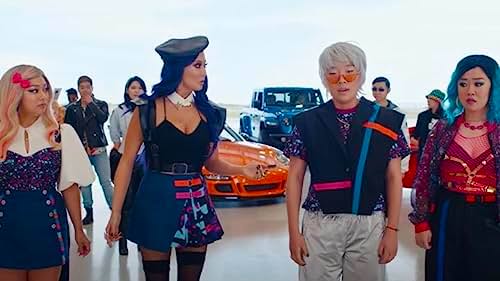
Ultimately, Joy Ride delivers pretty much what it says in the title: a silly, frenetic chase through a series of unlikely situations, sometimes hitting the jackpot, but mostly missing by miles. A potentially funny sequence where the foursome try to impersonate a K Pop band (in order to get through an airport checkout without passports) is full of promise, but is squandered when they can only manage to deliver a truly forgettable few lines. Still, I’m hardly in the demographic for this. If Hsu’s recent success in Everything Everywhere All at Once is anything to go by, this could do serious business.
2.9 stars
Philip Caveney

 Bouquets & Brickbats