Rooney Mara

Women Talking

15/02/23

The Cameo, Edinburgh

Sarah Polley’s Women Talking is an unusual film, in that it really is all in the words. It’s a film to listen to, rather than a film to watch. Based on the novel by Miriam Toews, itself based on a true story, it is billed as an ‘imagined response to real events’. This is, to my mind, both its strength and its weakness.

The real events are shocking: in Bolivia, between 2005 and 2009, more than a hundred girls and women were drugged and raped by the men in their Mennonite community. They were knocked out with cattle tranquillisers so that, when they woke up – bruised and bloody, pregnant and diseased – they didn’t really know what had happened, although terrifying fragments of memory sometimes surfaced. The men offered various explanations: they had been visited by ghosts or the devil; they were lying; they were hysterical. Eventually, two men were caught in the act; they gave other names, and eight were gaoled.

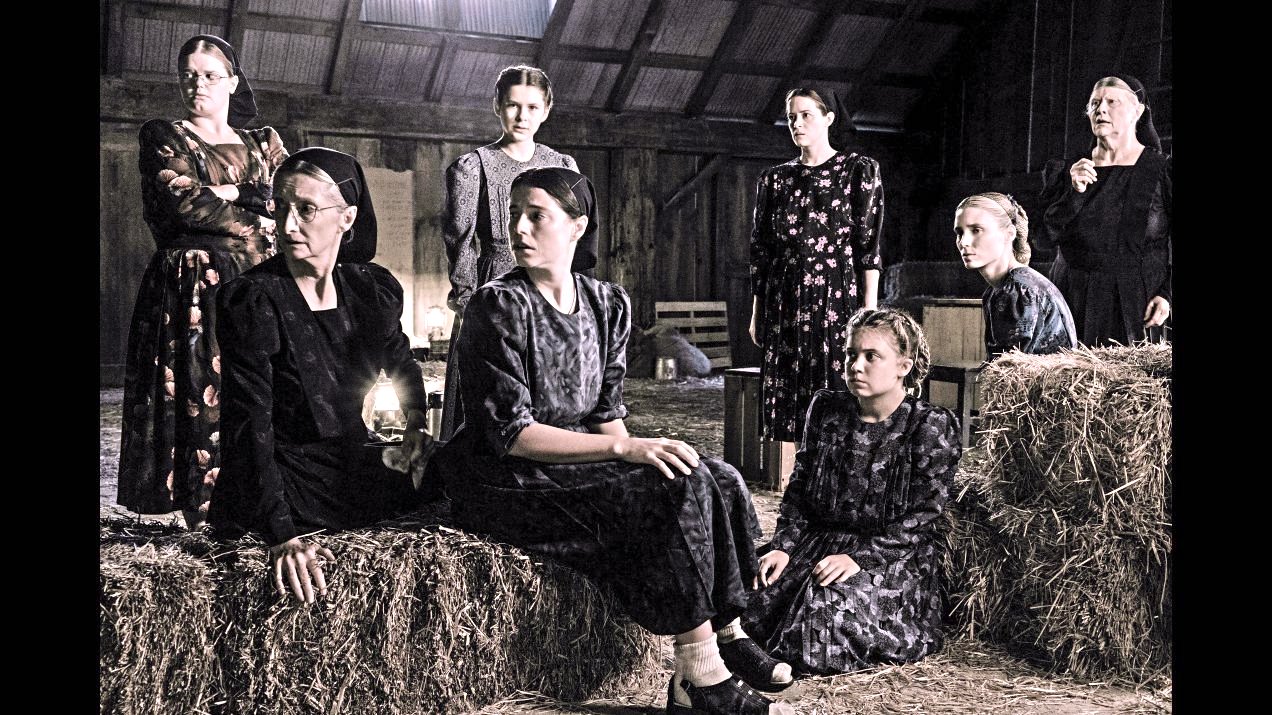
To their credit, neither the book nor the film dwell on the violence. We’ve all seen too many women brutalised on screen. Instead, they deal with the imagined aftermath. The story is moved to Canada; the collective victims ascribed characters and backstories. Rooney Mara is Ona, pregnant, but still radiating love. Clare Foy is Salome, with vengeance in her heart. Jessie Buckley is Mariche, minded to stay and try to forgive, because that’s what God decrees and she doesn’t want to be damned. All of the community’s men have gone to the city to post bail for the two who have been arrested, meaning that the women have forty-eight hours to make a decision. Do they stay and forgive? Stay and fight? Or leave, and start again?

There’s an attempt here at generating tension: the forty-eight hour deadline; the possibility that the women might be too timid to either fight or leave. But, in truth, this doesn’t really work. Who could doubt that these articulate, confident women would show their mettle when it came to it, that they wouldn’t do their utmost to protect their daughters?

The conversation is fascinating, incorporating far-reaching and nuanced questions about power, education, complicity and the role of an ally. I’m engrossed in the arguments. However, I can’t pretend I wouldn’t like a bit more dramatic drive, a bit more of a traditional story arc. Perhaps I wouldn’t feel this way if these were real testimonies – a verbatim piece would have more heft – but, as it’s fiction, I feel it’s asking a lot of an audience to sit through a film that could just as easily be a podcast or a radio play.

I’m glad that Polley has moved away from the book’s male narrator, August (Ben Whishaw), justified by Toews because women and girls in the Molotschna colony don’t learn to read or write. Given the subject matter, it seems like a no-brainer to silence him, so that he’s just the transcriber, and the story we hear is not filtered through a man’s perspective.

Despite my quibbles, there’s no doubting that these are strong, nuanced performances, imbued with dignity and pain, nor that the women talking need to be heard. It’s an important film. Just not, to my mind, an especially good one.

3.5 stars

Susan Singfield

Nightmare Alley

25/01/22

Cineworld, Edinburgh

After the heartwarming optimism of Belfast, could there be a more contrary film than Nightmare Alley? This bleak, cynical tale of corrupt grifters, who spend their days trying to part the vulnerable from their worldly wealth, is a noir in the truest sense of the word, and marks the first time that Guillermo del Toro has stepped away from the supernatural or  sci-fi in order to tell a story. That said, this is every bit as dark as anything he’s done before.

It is of course, a remake, originally filmed in 1947 and starring Tyrone Power. Here, the boots of the lead character, Stanton Carlisle, are convincingly filled by Bradley Cooper. When we first meet Carlisle he’s carefully eradicating all traces of something he’s done – something bad that can only be cleansed by fire – but we won’t be given more detail until much later. After a long ride on an overnight bus, Carlisle arrives on the doorstep of a seedy carnival run by Clem Hoatley (Willem Dafoe), a venal charmer who thinks nothing of employing alcoholics and passing them off as ‘geeks’ – supposed ‘wild men’, who will bite the heads of live chickens for the entertainment of the carnival’s visitors.

Carlisle makes himself useful, helping to pitch tents and dispose of rubbish. He meets up with ‘Zeena’ (Toni Collette), who runs a mind-reading act alongside her alcoholic husband, Pete (David Strathairn), and, spotting an opportunity, Carlisle succumbs to Zeena’s charms, whilst filching the basics of Pete’s old routine for future use.

The carnival provides a wonderful setting, an atmospheric world where the neon-lit, tawdry wonders seem to throb with an innate sense of dread. Carlisle meets up with Molly (Rooney Mara), whose act has her being ‘electrocuted’ on a nightly basis. Carlisle transfers his affections to her, and the couple head off to the film’s second act, which takes up the story two years later. Now Carlisle and Molly are running a successful night club act, using Pete’s old blueprint, and are living the highlife. What could possibly go wrong?

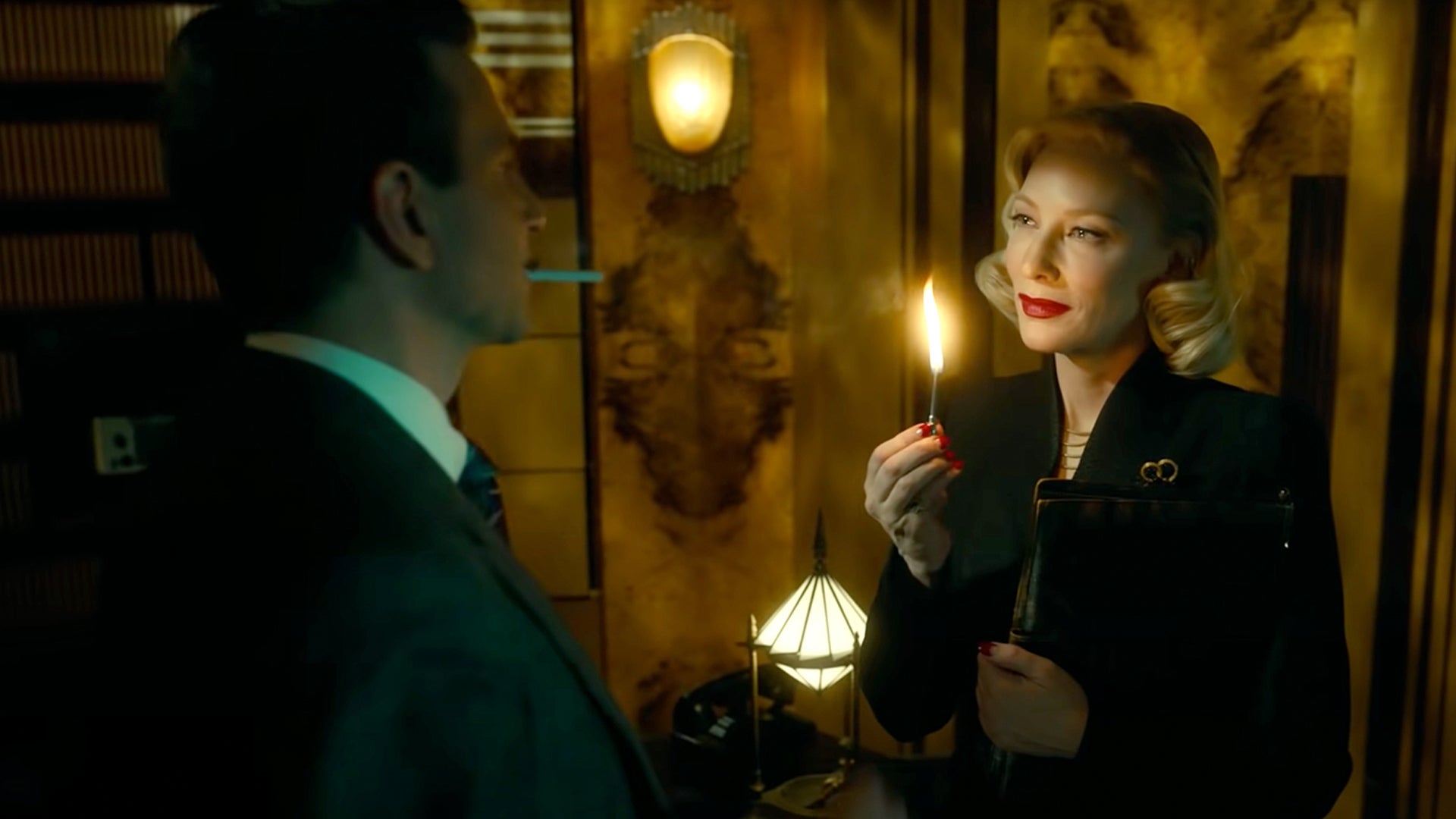
Well, this is noir, so of course there has to be a femme fatal and she dutifully arrives in the shape of psychologist Dr Lilith Ritter (Cate Blanchett). She starts to dangle the prospect of even greater riches in front of Carlisle. Will he yield to temptation?

Del Toro’s theme here is that the unscrupulous operate by exploiting the weaknesses of their victims, whether they’re doing it from the grubby confines of a canvas tent or the swish environs of an art deco apartment building. And, as ever, the wealthy are never happy to stand still, when they can see even more riches glittering enticingly, just out of reach.

Nightmare Alley is proper, grown-up filmmaking. The lengthy running-time and serious subject matter will doubtless put some punters off, and financial success will rather depend on whether any of its predicted Oscar nominations come to fruition. While this might not be the slice of cinematic perfection that is The Shape of Water, it’s nonetheless the work of a gifted director at the peak of his powers, handling a tricky subject with consummate skill, aided and abetted by the dazzling cinematography of Dan Lautsen.

Plans are afoot to release a monochrome version of this, but it’s hard to imagine how it could look any more lush than it does here, with every frame a veritable work of art.

4.8 stars

Philip Caveney


A Ghost Story

14/08/17

Unless you’ve been living in a cave for the last few months, you’ll already have heard about this film. It’s the one where Oscar-winning actor Casey Affleck spends most of his time hidden under a bed-sheet – the one where Rooney Mara has to eat an entire chocolate pie in one take, even though she’s never actually eaten pie before… Seldom has so much information been spread in advance of a film’s release. And then there’s that killer trailer, which really raised my expectations for this.

So, is the actual film any good? Well, the answer to that question isn’t as straightforward as you might hope.

This is the story of handsome young couple, C (Casey Affleck), and M (Rooney Mara), living together in a modest clapboard house, somewhere deep in the heart of Texas. When C is killed in a car crash  – don’t worry, this really isn’t a spoiler – he somehow finds himself rising up from his death bed, cloaked in his funeral shroud. He returns to his house, where he watches in silence as M goes through a lengthy grieving process before finally moving on with her life and leaving for pastures new. C is doomed to remain tied to the house, waiting for something – we’re not sure exactly what – to happen and, as we eventually witness, he is destined to be there for eternity, even able to somehow loop back around to revisit the past.

The film unfolds at such a funereal pace, it makes a Terence Malick film seem like Fast and Furious by comparison. Indeed, at times it’s less like a motion picture and more like watching a series of still images in an art gallery. Obviously, this is no accident on the part of writer/director David Lowery, who clearly wants you to meditate deeply on the subjects of bereavement, mourning and the passing of time, but I’d be lying if I claimed that the film doesn’t sometimes test my patience to the extreme. Which is not to say that there aren’t some brilliant ideas in here. There are, but they take an inordinate amount of time to reveal themselves. The conviction remains that this could have been a brilliant short but, even at an economical 92 minutes, it drags its heels more than you’d like.

Weirdly, the images do tend to stay with you long after the closing credits, but this doesn’t feel like enough to recommend it to others. It feels to me that there’s the ghost of a very good movie in there somewhere, but it’s too tightly wrapped in its funeral shroud to ever claw its way out. Definitely a marmite film, this, and I’m already bracing myself to hear from those who will inevitably jump to its defence. But I was left wanting more. And that makes A Ghost Story a major disappointment.

2.5 stars

Philip Caveney

Carol

MV5BMTcxNTkxMzA5OV5BMl5BanBnXkFtZTgwNTI0ODMzNzE@._V1_SX214_AL_

28/11/15

Director Todd Haynes seems to belong to another age. His films effortlessly capture the look and feel of the 1950s – the fashions, the furniture and, more than anything else, the cigarettes – not since the days of Bette Davis has a film made the simple act of smoking a cigarette look so downright glamorous. The characters light up everywhere – in restaurants, bars and in the street. (Even staunch anti smokers may leave the cinema longing for a cigarette). Despite its presumably unconscious promotion of nicotine, Carol may just be Hayne’s best movie yet. It’s a love story, a slow burner told at a languorous pace, featuring two fine performances from its lead actors.

Therese Belivet (Rooney Mara) works in a department store, but harbours dreams of one day being a professional photographer. One Christmas, Carol Aird (Cate Blanchett) comes looking for a present for her daughter and Therese sells her a train set. When she leaves, Carol leaves her gloves on the counter (accidentally? On purpose? We’re never quite sure). There is an immediate connection between the two women and when Therese takes the trouble to return the gloves, Carol invites her to lunch. We soon discover that Carol is separated from her husband, Harge (Kyle Chandler), largely because of an affair she has recently had with Abbi (Sarah Paulson). When Harge discovers the developing friendship between Therese and Carol, he decides to make life difficult for his wife, and claims custody of their daughter. Carol is faced with a difficult decision.

There’s so much to admire here – as well as perfectly judged performances from the cast, there’s glowing cinematography by Edward Lachman, a gorgeous score by Carter Burwell and an intelligent script by Phyllis Nagy, based on an early novel by Patricia Highsmith. The production simply oozes class and I loved the fact that it steadfastly refuses to sensationalise its subject matter. You might argue that there’s more than a passing similarity to Hayne’s 2002 production, Far From Heaven, but when the staging is as swooningly assured as this, it’s a resemblance I’m prepared to overlook.

4.2 stars

Philip Caveney