Robert Harris

Conclave

01/12/24

Cineworld, Edinburgh

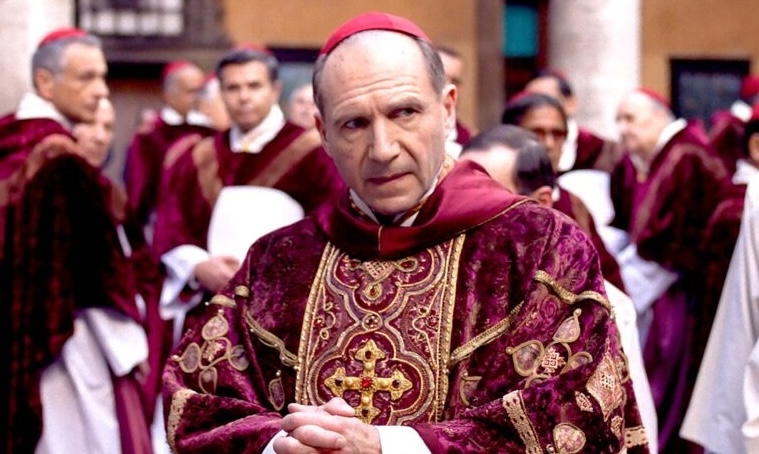
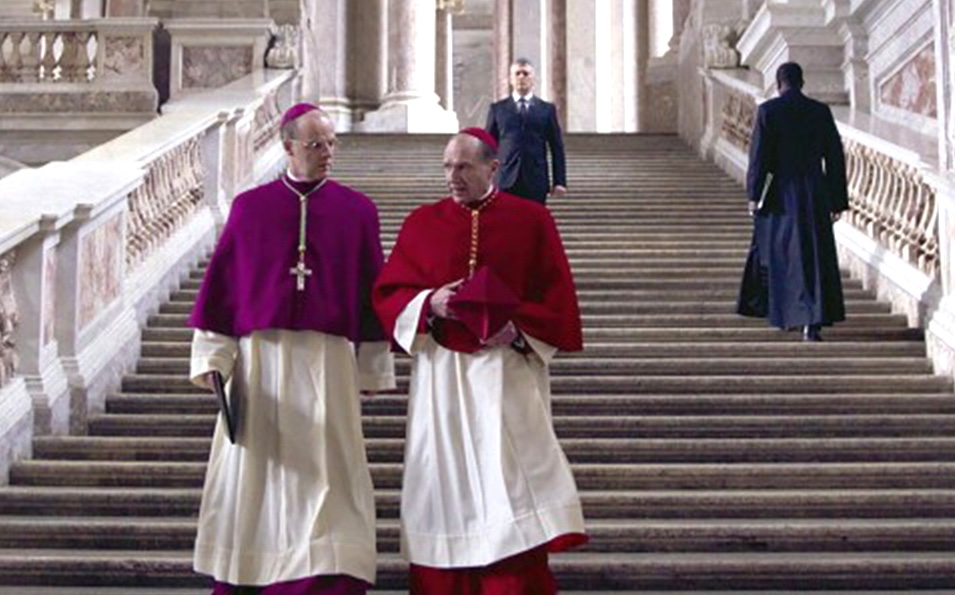
The Pope has died peacefully in his sleep and, following the long-established conventions of the Catholic church, archbishops and cardinals from across the world gather in The Vatican to undertake the complicated ritual of choosing a successor. The task of organising the ensuing (and highly secretive) process falls to Cardinal Lawrence (Ralph Fiennes), the dean of the college of cardinals, who must put aside his personal grief in order to referee the resulting contest. But who will claim the coveted role?

Will it be Italian hardliner (and notorious racist) Tedesco (Sergio Castellitto)? How about the reserved but highly respected African contender, Adayemi (Lucian Msamati)? Might the prime slot fall to the influential and oleaginous American, Tremblay (John Lithgow), whose recent activities seem to suggest he’s not entirely trustworthy? And let’s not forget the wild card, newly arrived from Kabul, Benitez (Carlos Diehz), a bishop that none of the main players even knew existed, until now.

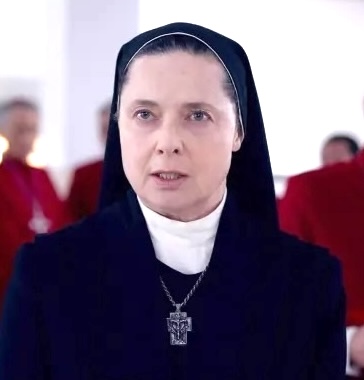
Meanwhile, one of the few women here with any influence, Sister Agnes (Isabella Rosselini), seems to be holding back on some important nuggets of information…

Lawrence is rooting for his old friend, Bellini (Stanley Tucci), a man determined to bring Catholicism into his more liberal worldview but an unexpected rivalry springs up when Lawrence finds himself also emerging as a potential candidate, something he most certainly does not want. After suffering doubts about his own faith, he’s been looking for an excuse to step quietly away from the church of Rome…

After his epic remake of All Quiet on the Western Front, director Edward Berger has turned his skills to a much more intimate story. Conclave, adapted by Peter Straughan from the novel by Robert Harris, generates its own, claustrophobic grip as the conclave moves through vote after vote, the various candidates jockeying for supremacy. This is serious, grown-up filmmaking and has about it all the mystery and intrigue of a superior crime drama. It’s heartening to note that a big crowd has turned out for this Sunday afternoon showing, a situation that these days is too often the preserve of more lightweight family fare.

It’s probably true to say that those who are already familiar with the novel are not going to be quite as blown away as I am by the film’s head-scrambling outcome, which I really, REALLY don’t see coming. (Those in the know, please keep the information to yourselves.)

Conclave is a compelling film, that has something revelatory to say about one of the most powerful and oppressive religions on the planet. It’s a film, moreover, that ingeniously encapsulates its most fundamental premise into a deceptively simple final shot.

4. 4 stars

Philip Caveney
Munich: The Edge of War

06/02/22

Netflix

History has not been kind to Neville Chamberlain. He’s generally depicted as the naïve fool who, despite good intentions, utterly failed to put the stops on Adolf Hitler. It’s interesting to note that this Netflix film, based on a novel by Robert Harris, chooses to view his actions in the lead up to World War 2 in a more sympathetic light. Could it be that the man actually knew what he was doing?

This is a handsomely mounted production that struggles to create any real sense of suspense, because… well, unlike say Quentin Tarantino, director Christian Schwochow decides to stick closer to the truth. Plot spoiler: Hitler does not get mown down in a hail of bullets by the film’s heroes a la Inglourious Basterds. Just so you know.

We first meet Hugh Legat (George McKay) and his friend, Paul Von Hartmann (Jannis Niewöhner), in 1932, when they are celebrating their graduation from Oxford, along with Paul’s Jewish girlfriend, Lena (Liv Lisa Fries). Paul is singing the praises of a certain Adolf H, who – he genuinely believes – represents the best future for his homeland. Hugh is understandably horrified. Shortly thereafter, Hugh visits Paul in Munich, where the latter seems even more bullish about his adulation for the Führer – and the two friends fall out with each other.

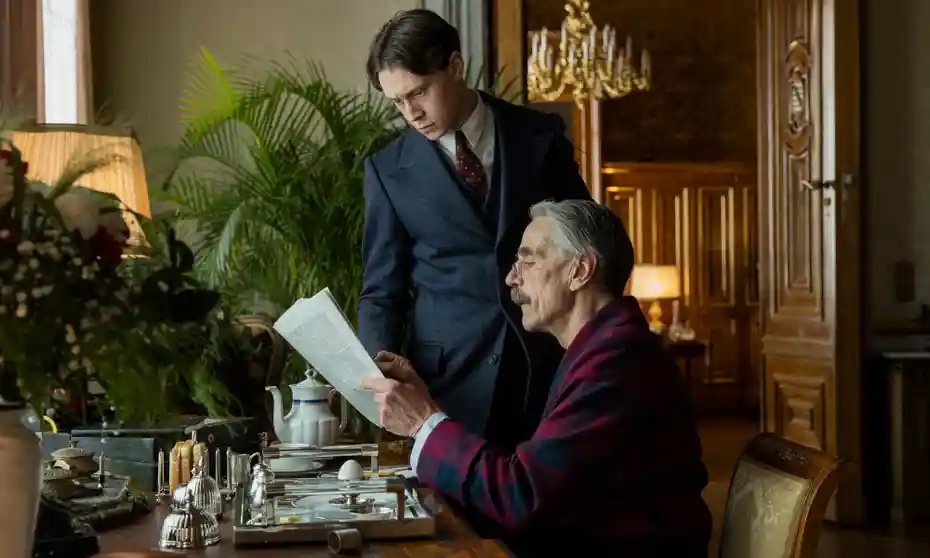
The action moves on six years, and Paul’s views have changed for the better. He’s realised that his earlier beliefs were short-sighted to say the very least and is now involved in a clandestine plot to bring Hitler down before he can do any more damage. When he discovers that his old pal, Hugh, has become private secretary to Neville Chamberlain (Jeremy Irons), Paul spots an opportunity to get to the British PM, in order to urge him not to sign the upcoming Munich agreement.

Hugh, somewhat reluctantly, finds himself once again on his way to Germany.

McKay, having spent a lot of time running like the clappers to avoid impending carnage in 1917, finds himself doing something similar here, only this time, he’s attempting to head off an entire World War. (So no pressure there.) He’s very engaging as a young man trying to do his level best, whilst struggling with tantrums from his wife, Pamela (Jessica Brown Findlay), who seems to take it personally that her husband thinks preventing a World War is more important than ensuring he’s home for dinner every evening.

Niewöhner has a smouldering James Dean-ish quality that augers well for his future, while Irons is typically assured in his depiction of Chamberlain, giving us a bumbling, frightfully British sort of chap, who is obsessed with making recordings for the good old BBC and won’t tolerate anybody speaking out of turn. Ulrich Matthes, meanwhile, gives us one of the most terrifying screen Hitlers I can remember.

Matters become more complicated when Paul discovers that a childhood acquaintance, Franz Sauer (August Diehl), is now a leading officer in the SS and that the two of them are going to be spending a lot of time together. What’s more, Sauer is also clearly suspicious about his former schoolfriend’s intentions and has an unfortunate habit of turning up in all the wrong places.

Munich: the Edge of War offers an entertaining couple of hours, but the protagonists never seem to be really imperilled. While this may work in the source novel, it prevents the film from ever going into the kind of overdrive its final stretches require.

3.6 stars

Philip Caveney