Robert Daws

Wodehouse in Wonderland

22/08/25

Assembly George Square (Studio 3), Edinburgh

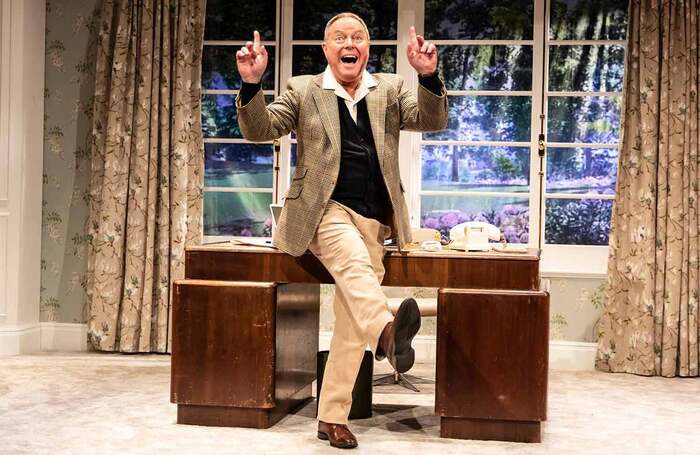
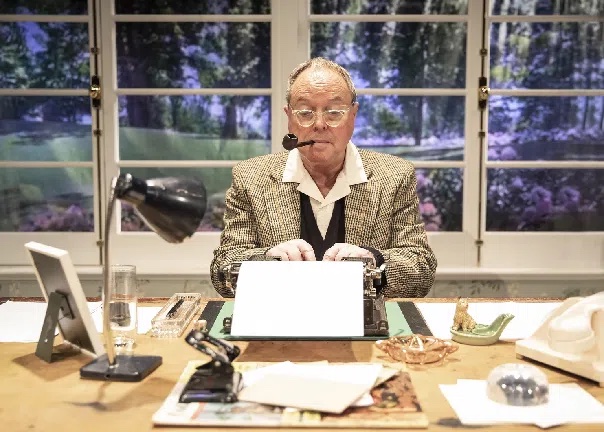
Not so much an impersonation as a celebration, Robert Daws is clearly having a whale of a time in William Humble’s Wodehouse in Wonderland, and, after a few minutes of uncertainty while I tune in to the tone of the piece, so am I. Wodehouse is, of course, one of those writers who almost defy belief: incredibly prolific, very successful in his own lifetime – but remembered now for the accusations levelled at him for his ‘collaboration’ with the Nazis during World War Two.

We meet him in the 1950s, living in exile in Long Island and reluctant to return to his British homeland. He’s still writing fiction (though a book now takes him six months rather than three) and he’s also hankering after another shot at writing for the theatre with his old partner, Guy Bolton, who lives nearby.

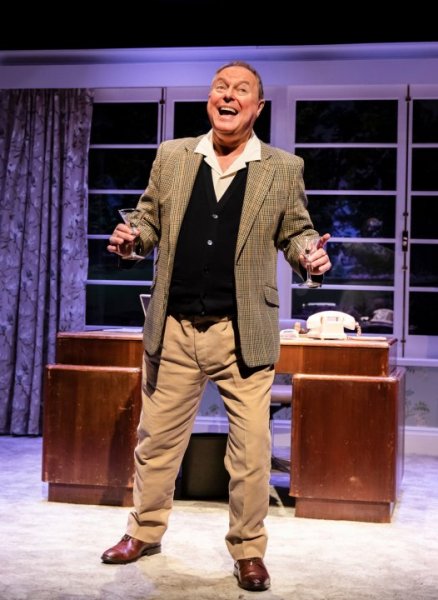
Daws offers a relaxed and jovial performance as Wodehouse, mixing martinis as he talks, expressing his intense dislike for the great Russian authors (too gloomy) and making slyly humorous observations about his wife, Bunny’s profligacy. He also speaks lovingly about his adopted daughter, Leonora – or ‘Snorkles’ as he prefers to call her – who he claims is his ‘Number 1 critic.’

He talks – with great reluctance – to his American biographer, who eventually nudges him in the direction of that unfortunate business with the Germans… and, lest the tone grow too serious, every so often, Daws interrupts proceedings to launch into a rendition of one of the author’s comic songs.

Wodehouse in Wonderland is a revelation in many ways. I was a fan of Jeeves and Wooster back in the day and read several of their adventures when (just like Wodehouse in his youth) I was sequestered in a rather unpleasant boarding school. I learn quite a lot about the author over the hour and realise that I have been misinformed about that ‘collaboration’ business – so it’s nice to have the record set straight.

Towards the conclusion, there’s also a moment of sweet sadness, which Daws handles with absolute assurance. While this may be best suited to those familiar with Wodehouse’s work, it’s not essential. Those looking to spend a pleasant and rewarding hour on the Fringe should find plenty here to keep them thoroughly entertained.

4.4 stars

Philip Caveney

Ten Times Table

04/02/20

King’s Theatre, Edinburgh

This revival of Alan Ayckbourn’s 1976 meeting-based comedy begins well, the disparate characters all deftly drawn and the tedious nature of committee membership perfectly skewered. The time wasted on protocol (proposing and seconding a chairperson, for example, when there’s only one contender); the petty rivalries that develop into full-blown feuds; the horrible ‘conference’ rooms in once-grand hotels: all present and correct.

There are laughs a-plenty in the first act, albeit of the gentle variety. Robert Daws is entertaining as the  pragmatic Ray. The town pageant, commemorating The Massacre of the Pendon Twelve, is his pet project and he’s ostensibly in charge. But it soon gets hi-jacked by Marxist ideologue and local history teacher Eric (Craig Gazey) – and Ray’s wife, Helen (Deborah Grant), is far from happy. Soon, the committee is split into two warring factions, and the re-enactment of the battle seems destined to be as bloody as the original.

The play is at its best when it’s focus is the pedantry: Mark Curry’s Donald is a stickler for the rules, and his adherence to irksome rituals is always amusing. Elizabeth Power plays Donald’s more-astute-than-she-appears mother, Audrey, who also draws more than her share of laughs. The political satire is less effective – not detailed enough, perhaps, to really say much of import, too superficial to have a real impact. Still, after the first act, we head out for our interval drinks intrigued to see how the rising tensions will be resolved.

But the second act is a little disappointing, the farcical elements too ‘polite,’ the pay-off too trifling to really satisfy. The relationship between Eric’s two lovers – his live-in partner, Phillipa (Rhiannon Handy), and fellow committee member, Sophie (Gemma Oaten)  – is vapid and uninteresting, despite both women delivering good performances, so that I struggle to see what we’re supposed to take away from this strand of the story. And Harry Gostelow has a truly unenviable task, trying to make weirdly angry ex-soldier Tim (who’s called in to lead the resistance against Eric) even faintly believable. The revelations have all been over-signposted, so that the ridiculous ‘horse’ is entirely expected (and therefore not as funny as it might be) and the final bombshell robbed of any power.

Nevertheless, there is plenty to enjoy here, particularly if you’ve ever been subjected to the special kind of awfulness that only exists in an endless round of meetings…

3 stars

Susan Singfield