Roald Dahl

Wonka

08/12/23

Cineworld, Edinburgh

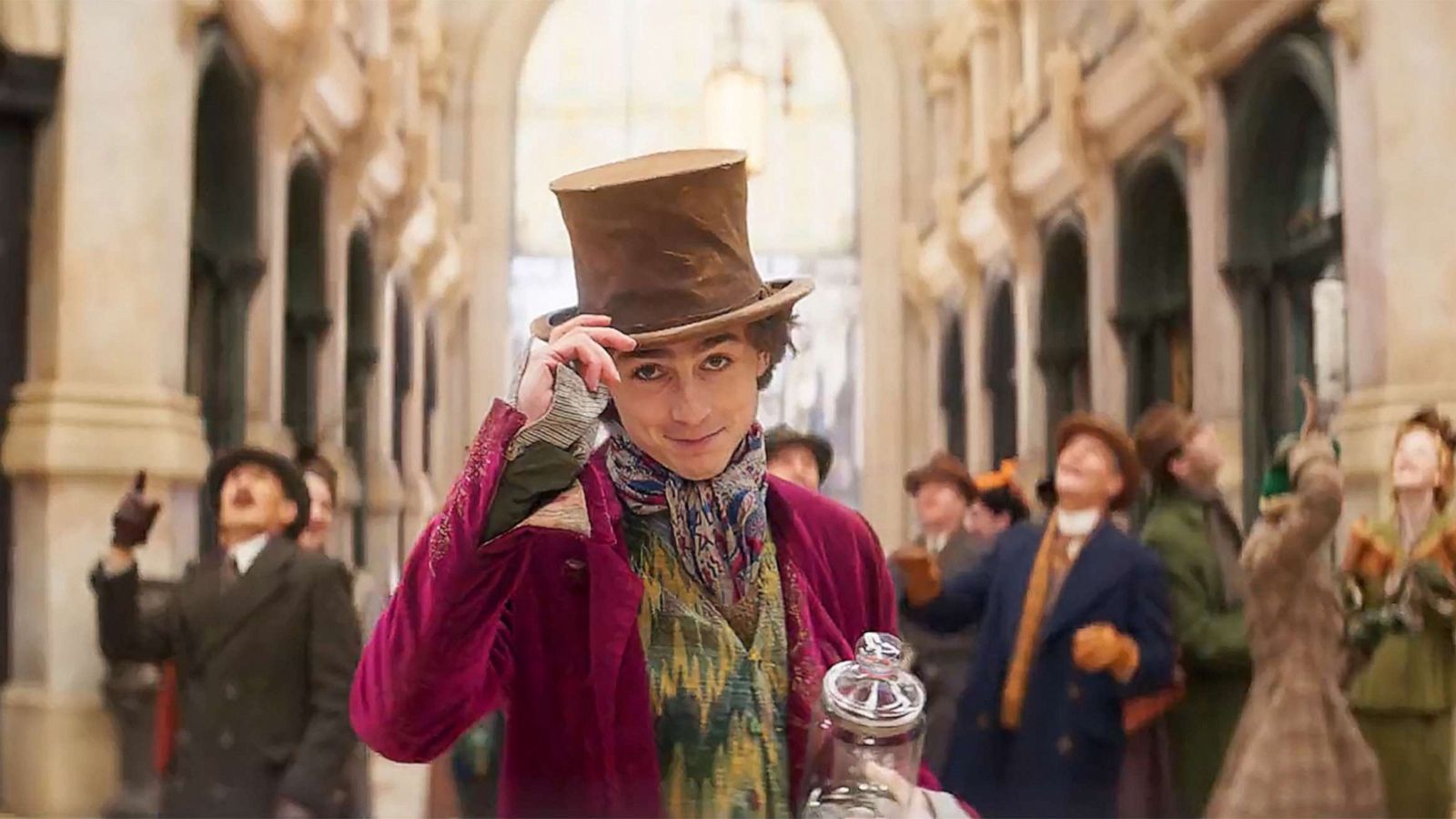
The omens were always good for Wonka. Director Paul King and writer Simon Farnaby have already delivered two brilliant (5 star) Paddington films, but were willing to assign the upcoming Paddington in Peru to other hands in order to focus on this origin tale based around Roald Dahl’s most celebrated character. What’s more, Timothée Chalamet – who seems to have the uncanny ability to choose box office winners with ease – was signed up for the title role right from the very beginning.

And sure enough, Wonka turns out to be as sure-footed as you might reasonably hope, powered by a deliciously silly story and some sparky songs by Neil Hannon, plus a couple of bangers salvaged from the much-loved 1971 film starring Gene Wilder. Laughter, music and magic: they’re all here in abundance.

In this version of the tale, the young Willy Wonka arrives in a city that looks suspiciously Parisian (but is actually Oxford). His masterplan is to pursue an ambition he’s had since childhood: to create the world’s most delicious chocolate.

Armed with an original recipe from his late mother (a barely glimpsed Sally Hawkins) and augmented by some magical tricks he’s picked up along the way, Wonka has mastered the chocolatier’s arts to the final degree, but has somehow neglected to learn how to read. Which explains why he soon ends up as a prisoner, working in a hellish laundry run by Mrs Scrubbit (Olivia Colman, for once playing a convincingly loathsome character) and Mr Bleacher (an equally odious Tom Davis). It’s here that Wonka acquires a small army of workmates, including Noodle (Calah Lane), a teenage orphan who has mysterious origins of her own and who soon proves to be Wonka’s most valuable ally.

When he’s eventually able to sneak out and pursue his main goal, he quickly discovers that the local chocolate industry is dominated by three powerful and devious men, Slugworth (Paterson Joseph), Prodnose (Matt Lucas) and Fickelgruber (Matthew Baynton), who are willing to go to any lengths to protect the stranglehold they currently enjoy. They see Wonka as a potential threat and will stop at nothing to eliminate him…

Mostly, this works a treat. Chalamet is an astute choice for the lead role, capturing the man-child quality of young WW, whilst still managing to hint at the darker elements that lurk deep within him. Lane is suitably adorable and, if the triumvirate of evil chocolate barons never really exude as much malice as you’d like, it’s no big deal. The only real misstep is the fate of the local police chief (played by Keegan Michael-Key), who takes bribes in the form of chocolate and who steadily puts on more and more weight, until he’s almost too big to fit in his car. While this fat-shaming device may be true to the ethos of Mr Dahl, it feels somewhat out of place in a contemporary story.

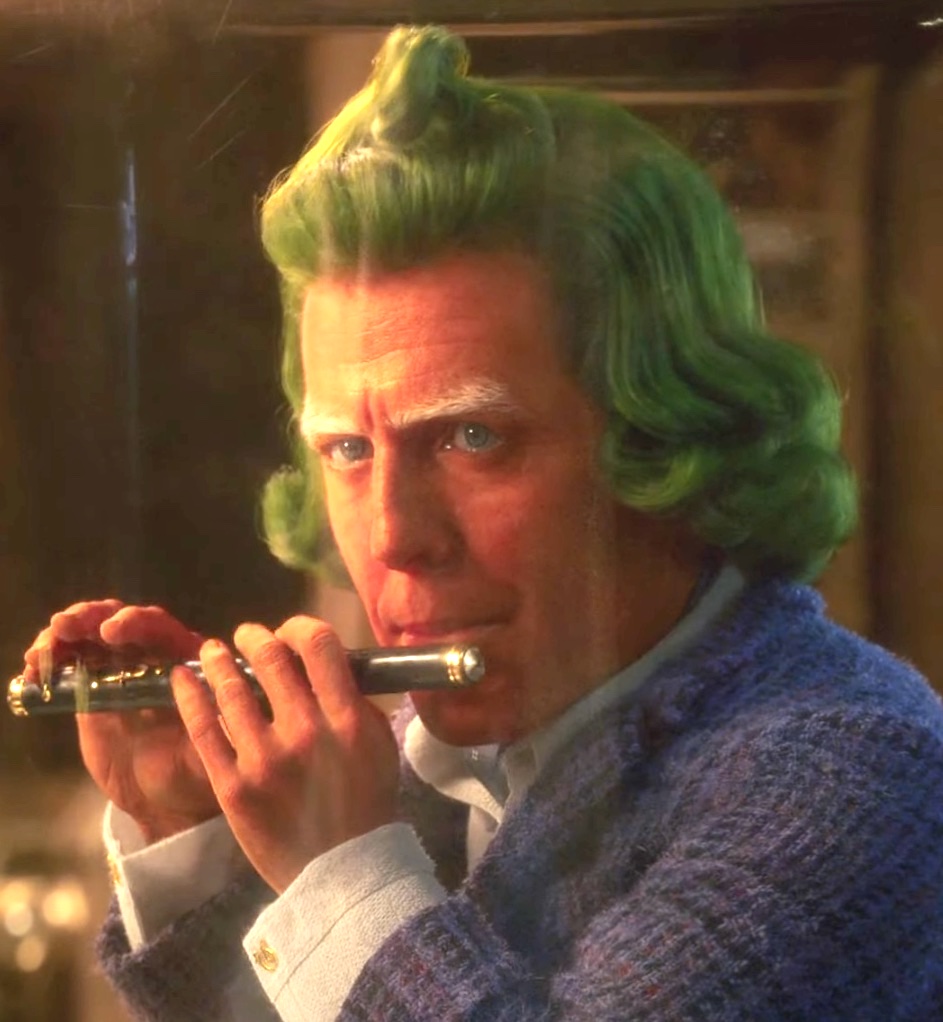
And of course this being a Wonka tale there must be Oompa-Loompas, played here by an orange-skinned, green-haired Hugh Grant, who is wonderfully pompous and self-possessed, yet somehow manages to be quite adorable at the same time. As you might guess, Mr Grant is obliged to dance (again), something he allegedly hates doing. He’s used sparingly through the film but still nearly manages to steal it from under Chalamet’s nimble feet.

All-in-all, Wonka is an enjoyable family film, as bright, glittering and irresistible as a bumper hamper packed with tasty treats. It’s interesting to note, however, that I didn’t come out of this feeling like tucking into some. On the contrary, a scene where Willy and Noodle find themselves drowning in a big vat of molten chocolate actually has me feeling faintly queasy.

Nonetheless, those seeking an enjoyable couple of hours at the cinema, could do a lot worse than buying a ticket for this delightful offering, which will appeal to viewers of all ages.

4.4 stars

Philip Caveney

Roald Dahl/Wes Anderson

29/10/23

Netflix

A new film by Wes Anderson is always an interesting proposition. Four new films – the longest of which has a running time of just thirty-seven minutes – is a downright intriguing one.

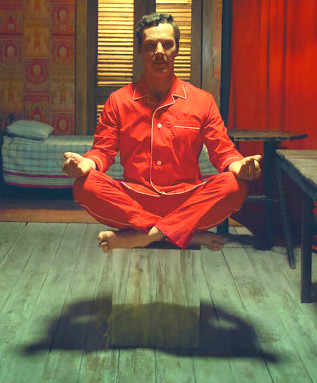
It must be said from the start that these are less motion pictures than illustrated stories (imagine, if you will, a kind of turbo-charged Jackanory and you’ll get the general idea). First up, there’s the aforementioned longest entry in the quartet, The Wonderful Story of Henry Sugar, which – to begin with – is told by Dahl himself (uncannily impersonated by Ralph Fiennes). The author begins to relate the story of the mysterious Imdad Khan (Ben Kingsley), a man who can see without using his eyes. Khan’s story is then picked up by two doctors (Dev Patel and Richard Ayoade) and they, in turn, transfer their attention to the titular character (played by Benedict Cumberbatch), a man who becomes obsessed with the notion of becoming an expert card cheat. (As you do.)

It’s all delivered as narration (at a breakneck pace) and, of course, the set dressing has the usual Anderson style: a series of exquisite puzzle-boxes, expertly linked together, opening and closing as the tale unravels. It’s beautiful to watch, but ultimately the story leaves me with a powerful sensation of so what?

The Swan (narrated by Rupert Friend) is, for me, the strongest narrative here, the distressing tale of a young boy called Peter (Asa Jennings), who is horribly bullied by a couple of local lads with access to a rifle (always a recipe for trouble) and which culminates in a poignant and rather distressing conclusion. The story is delivered by Friend as he wanders along a series of labyrinthine passageways and this is perhaps the most kinetic of the films.

The Rat Catcher features Fiennes as the central character, a rather creepy individual who visits a garage and offers his services to the proprietor (Friend again), while the tale is told by a narrator (Ayoade). The subtext of this one is rather less straightforward, as is the style. I can’t remember ever seeing an actor miming invisible objects in a film before! The rat catcher has assimilated all the qualities of the creatures he’s supposed to be eradicating and, when he fails in his attempts to locate them (in a haystack), he tries to make up for his failure in a demonstration of unpleasantness. Again, I feel that the story’s conclusion is rather underwhelming.

Finally there’s Poison, an account set in post-colonial India, in which Harry (Cumberbatch) lies in bed convinced that a krait (a venomous snake) is lying asleep on his chest and that the slightest move will cause it to bite him. A local police officer (Patel) and a doctor (Kingsley) are enlisted to resolve the situation and, to give them their fair due, they do their level best. The story culminates in a short and rather shocking demonstration of racism, which some viewers will find unsettling, but is surely the whole point of Dahl’s story – that former white rulers will always refuse to acknowledge their own failings. Strangely, Poison seems to have a similar theme to its predecessor.

With such brevity, it seems fairest to judge the four films as a whole – and indeed, Anderson has said that what attracted him to the idea is the notion that they comprise a kind of interlocking narrative. While this quartet is always visually compelling, I can’t help wishing that this inimitable director had settled on some better examples from Dahl’s extensive back catalogue. There are plenty to choose from.

If you have Netflix, they’re certainly worth clicking through. If nothing else, you’ll be charmed by their quirkiness and the uncompromising style that exemplifies Anderson’s approach to cinema.

3.4 stars

Philip Caveney

Matilda the Musical

08/12/22

Cineworld, Edinburgh

Way back in 2010, we spent a few days in Stratford-upon-Avon, to see in the New Year. Of course, we planned to go to the theatre while we were there, but we were winging it, and didn’t check what was on. We just assumed there’d be a Shakespeare, and thought we’d pick up tickets on the night. So we were disappointed to find nothing from the Bard on offer, and grimaced at the thought of the only thing there was: a kids’ musical. Still, we didn’t have anything else to do, so we wandered disconsolately up to the box office, only to find that there were no seats left. Double dejection. “There are some standing tickets,” we were told. “They’re £5 each.” We dithered. Did we really want to spend a couple of hours on our feet watching a play we weren’t that keen to see? “It’s only a fiver,” we reasoned. “If we don’t like it, we can leave at the interval.”

That night, we were treated to the delight that is Matilda the Musical – one of the most fortuitous accidents of our lives. Of course we didn’t leave at the interval: we were captivated. Tim Minchin and Dennis Kelly had created a masterpiece, and we’d been lucky enough to stumble upon it.

Of course, the raw material they had was good. Roald Dahl’s Matilda is an engaging character: a little girl with more wit and gumption than any of the adults in her life. At the tender age of ten, she realises that she can’t put up with either her parents’ wilful neglect or her cruel headteacher’s bullying. After all, “if you always take it on the chin and wear it, nothing will change”. It shouldn’t take a child to put things right, but she only knows two decent grown-ups: Miss Honey, who is stymied by her own fear, and Miss Phelps, who doesn’t know the dismal truth, only the fairytale Matilda has concocted for her. It’s a David and Goliath tale, of pantomime proportions.

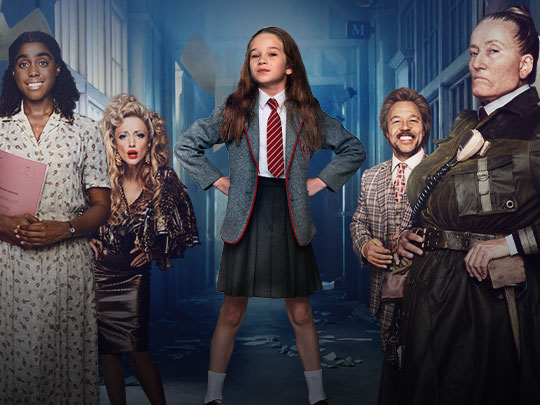
I am excited to see the film version of this (by now) hit stage show, and it doesn’t disappoint. Alisha Weir imbues Matilda with just the right amounts of sass and vulnerability, all righteous anger and secret yearning. Emma Thompson’s Miss Trunchbull is a towering threat, oversized to illuminate the mountain Matilda has to climb; she’s clearly revelling in the role. Indeed, there’s a sense of relish from all the adult actors playing against type: Lashana Lynch (Miss Honey) unleashing her softer side and some seriously impressive vocals; Stephen Graham and Andrea Riseborough taking a break from the highbrow as Matilda’s comedically grotesque parents. It’s a fun, feel-good film – despite the horrific violence and cruelty it contains – with a bright, rainbow palette, and the sense, all the way through, that Matilda will triumph.

The young cast are adorable – cute, but not overly contrived. Andrei Shen (Eric), Charlie Hodson-Prior (Bruce), Rei Yamauchi Fulker (Lavender), Ashton Robertson (Nigel) and Winter Jarrett-Glasspool (Amanda) make a formidable team, following Matilda’s lead and ultimately freeing themselves from Miss Trunchbull’s clutches.

Matthew Warchus, who also directed the theatre version, makes the transition to film successfully. There is an element of staginess, it must be said, but only in the best possible way: those huge, ensemble dance numbers are a delight.

With kids or without them, Matilda the Musical feels like a Christmas must-see this year.

4.2 stars

Susan Singfield

To Olivia

08/04/21

Now TV

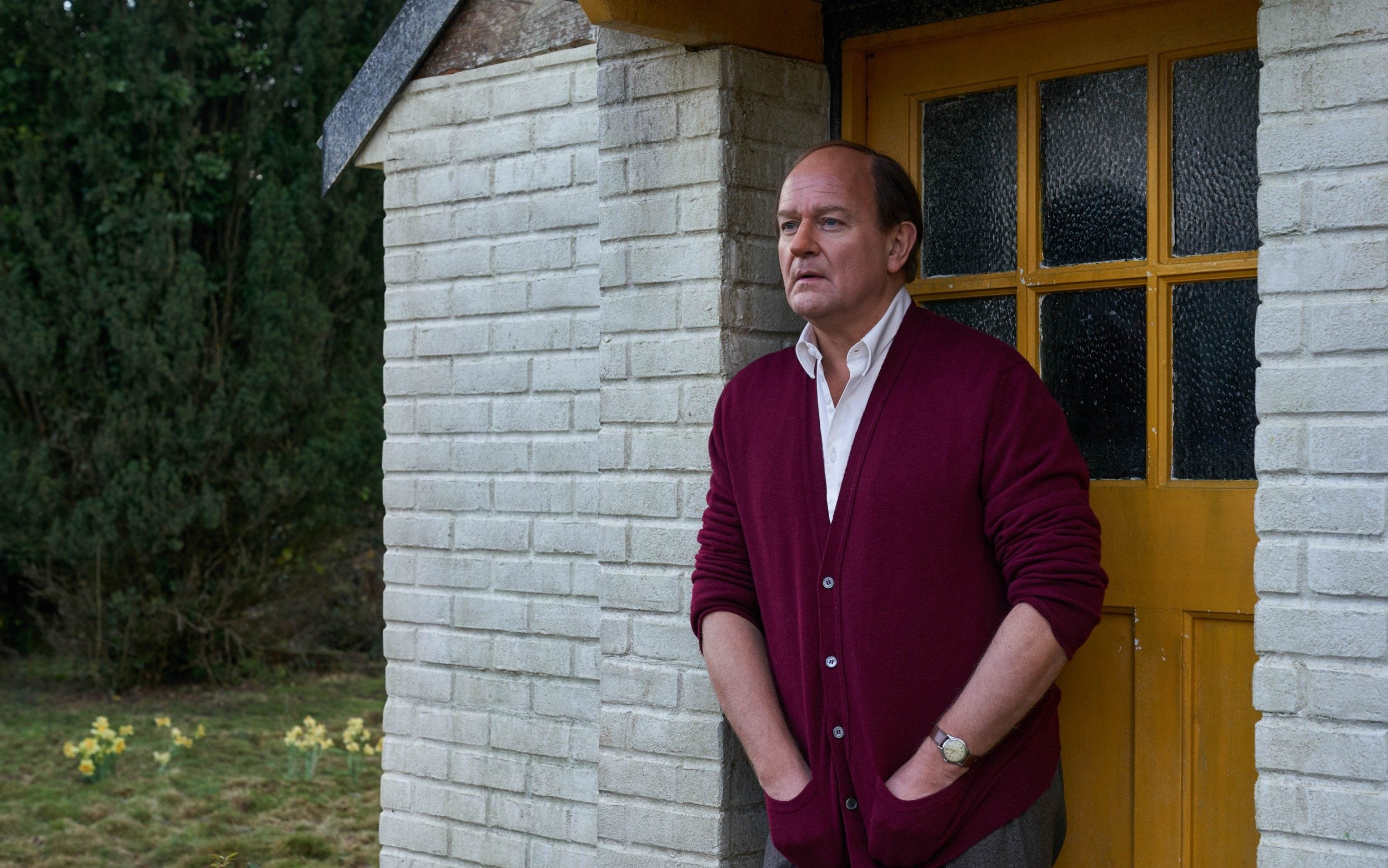
It’s the early 1960s and ambitious author Roald Dahl (Hugh Bonneville) is smarting from the lukewarm reception afforded to his recently published children’s novel, James and the Giant Peach. Undeterred, he’s planning his next opus, Charlie and the Chocolate Factory. We know he’s an author because he constantly talks about the work in progress, dropping little references that relate to what’s coming next and using his three children, Olivia, Tessa and Theo, as sounding boards for his new ideas. This is something that, in my experience, real authors never do. Should I ever fall into the habit, please feel free to tell me to shut up.

Dahl lives in darkest Surrey with his wife, acclaimed screen actress, Patricia Neal (Keeley Hawes), who is herself dissatisfied by the fact that her once eventful career seems to be heading nowhere fast, since she’s reached a certain age – though she has been offered a small part in Martin Ritt’s upcoming movie, a little thing called Hud. (Roald thinks the part is beneath her and advises her not to bother).

But their country idyll is shattered when Olivia contracts measles and, with no vaccine available in the 1960s, promptly dies of encephalitis. This film then is about Dahl’s desperate attempts to come to terms with the death of his daughter and his subsequent struggle to maintain both his marriage to Neal and his relationships with his other children. On paper, it promises to be a visceral tearjerker. But somehow, it’s not.

John Hays’ film makes a valiant attempt to cover this difficult subject matter, but seems to shy away from anything too tortuous or distasteful, which means it all feels rather too cosy for its own good. Attempts have been made to ‘plain up’ Hugh Bonneville with a false nose and a balding pate but, even when he’s being unpleasant – something that the real Roald Dahl was allegedly very adept at – he’s still basically Hugh Bonneville, the very definition of a thoroughly nice chap. Hawes is perhaps a better fit for Neal, but isn’t given the kind of catharsis her character requires. Even her brief interplay with Paul Newman (Sam Heughan, who certainly looks the part) seems more concerned with pointing out how capable she is at putting the director and lead actor straight about their own project, which just feels downright odd.

To Olivia is curiously underwhelming. There’s an admittedly lovely turn from Isabella Jonsson as Tessa and there’s also the final performance from Geoffrey Palmer as a deeply unpleasant archbishop of Canterbury, ranting about animals not being allowed into the kingdom of heaven, but even that isn’t enough to make this project fly.

It’s like being assaulted with nicely plumped cushions – you don’t really feel any impact.

2.8 stars

Philip Caveney

Wonderman

Wonderman_edinburgh_FOURSHEETS-quartersize_final

21/08/16

Underbelly Potterrow, Edinburgh

Based on the short stories of Roald Dahl – and incorporating a true incident from his eventful life, Gagglebabble’s collaboration with the National Theatre of Wales is a sprightly mix of drama and music with a deliciously dark heart. Though musicians are onstage throughout the show, it’s somehow not so much a musical as a comic drama with songs. These days, Dahl is best known for his children’s books, but anyone of a certain age will be well aware of his parallel career as the author of comically disturbing stories with a ‘twist in the tale.’

In 1940, young airman Roald Dahl is rushed to hospital after crashing his plane in the Egyptian desert. He has serious facial injuries and is suffering from temporary blindness. Swathed in bandages and pumped full of drugs, he begins to hallucinate – and the hallucinations take the form of several of his most successful and grotesque short stories – including Man From The South, for my money one of the best stories ever written.

This is a brilliant ensemble piece – the script and lyrics by Daf James are witty and entertaining, the music by Lucy Rivers is delightful and the seven-strong cast perform faultlessly in their multiple roles. The one hour and five minutes zips by in a trice and if there’s a single disappointment here, it’s simply that it’s over so soon.

One delightful image – sheets of paper blowing around the stage in the rush of wind from an electric fan, stays with me as I leave the theatre. Wonderman is aptly named. This is a fabulous production.

4.8 stars

Philip Caveney

The Witches

THE WITCHESCurve Theatre Leicester

21/03/16

The Lowry, Salford Quays

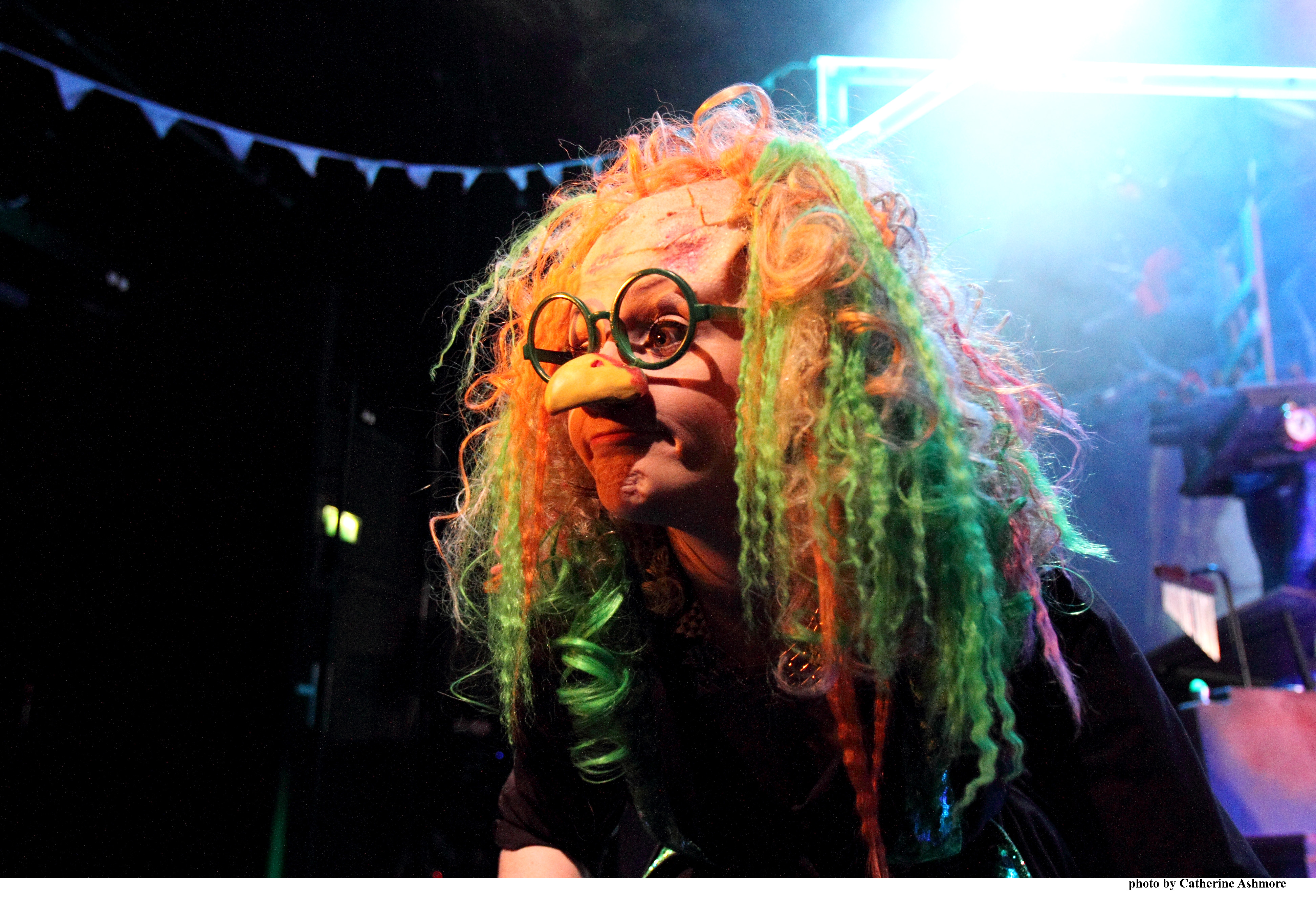
Looking around at the eager audience for tonight’s show, it’s evident that this isn’t really aimed at our demographic. There’s a lot of very young children in the seats and they seem to be having a whale of a time. As well they might, because this is Roald Dahl’s The Witches, a co-production between Leicester Curve and Rose Theatre, Kingston. It all begins with a jolly song, performed by the seven-strong cast, but within a few minutes, Boy (Fox Jackson-Keen, looking disturbingly like a young David Walliams) has been orphaned and gone to live with Grandma (Karen Mann) in Norway, where she tells him all about real-life witches and how to identify them.

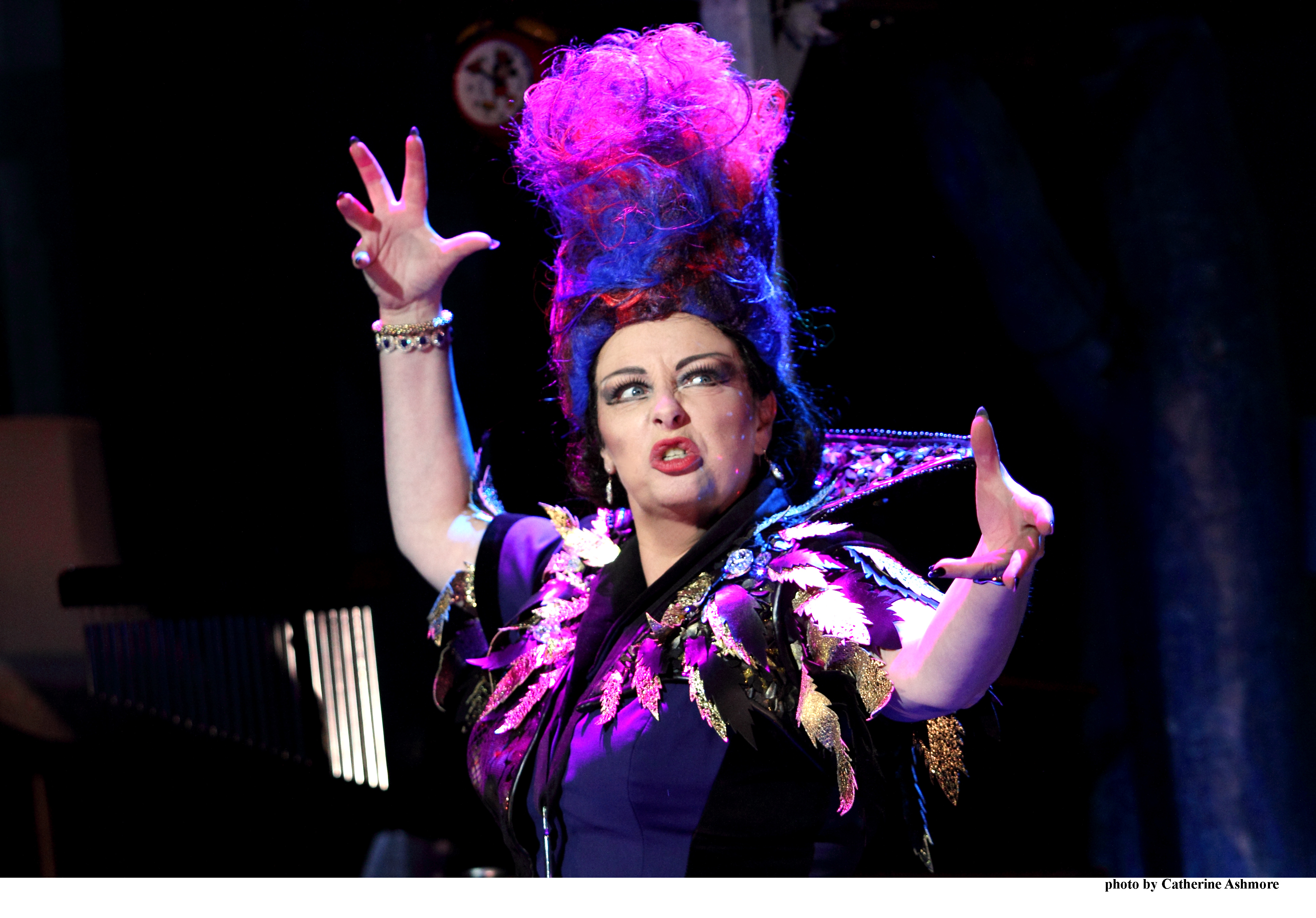
But the educational authorities insist that Boy must return to England to continue his studies, so he and Grandma decamp to the UK and shortly afterwards, go on holiday to a hotel in Bournmouth. It is here that a convention of witches meets every year to discuss business, overseen by the Grand High Witch (a sneeringly malevolent Sarah Ingram) who has engineered a plan to turn all children in the vicinity into mice.

This is a sprightly production, that plays Dahl’s witches more for laughs than for menace. Just about everybody on stage has a go on some kind of musical instrument (Jackson-Keen even throws in a few somersaults) and the cast have quite a bit to do to flesh out a whole range of colourful characters. But there are certain elements here that don’t quite gel. As any self-respecting  Dahl fan will tell you, witches are bald and hide the fact by donning elaborate wigs – so it is somewhat confusing when the clearly hirsute witches are ordered to remove their wigs… and actually put some elaborate ones on – furthermore, the play’s big climax simply needs more bodies to get across the idea that all the witches are transforming, not just their leader. (Maybe the filmed sequences used elsewhere might have been utilised to flesh out this important scene?) Having said that, there was a rather splendid ‘how-did-they-do-that?’ moment where one character sank into a tureen of soup and Bruno (Kieran Urquhart) raised the night’s biggest laughs by denying that he had turned into a mouse, despite having ears, whiskers and a long tail. ‘You are a mouse!’ screamed one little girl, delightedly. And she was clearly right on that score.

One for the youngsters then, but perhaps lacking the nuanced layers that would have kept the parents a tad more engaged. Dahl is still one of the country’s most treasured authors (mostly because he delights in putting his young protagonists through absolute hell) and he was never one to shy away from uncomfortable scenes. A pity then, that an unremittingly  Dahl moment towards the play’s conclusion is somewhat neutered by a cheesy song straight afterwards, but hey, the kids aren’t complaining and this one is definitely for them.

3.8 stars

Philip Caveney