17/10/23
Traverse Theatre, Edinburgh
It’s a propitious time for this play to appear, following, as it does, close on the heels of Ken Loach’s ‘final’ film, The Old Oak. 2016’s I, Daniel Blake was one of the veteran director’s most palpable successes, a compelling and often heartbreaking study of working-class life in broken Britain, set in the North East of England and featurIng stand up comedian Dave Johns in the title role.
It’s Johns who has adapted the film for stage and, for the most part, he’s stuck pretty closely to Paul Laverty’s screenplay – a little too closely perhaps, because surely the whole point of a theatrical adaptation is to open up the original to fresh perspectives. Suffice to say that all the key scenes from the movie are present and correct, and it’s a hard heart indeed that can resist the subsequent pummelling.
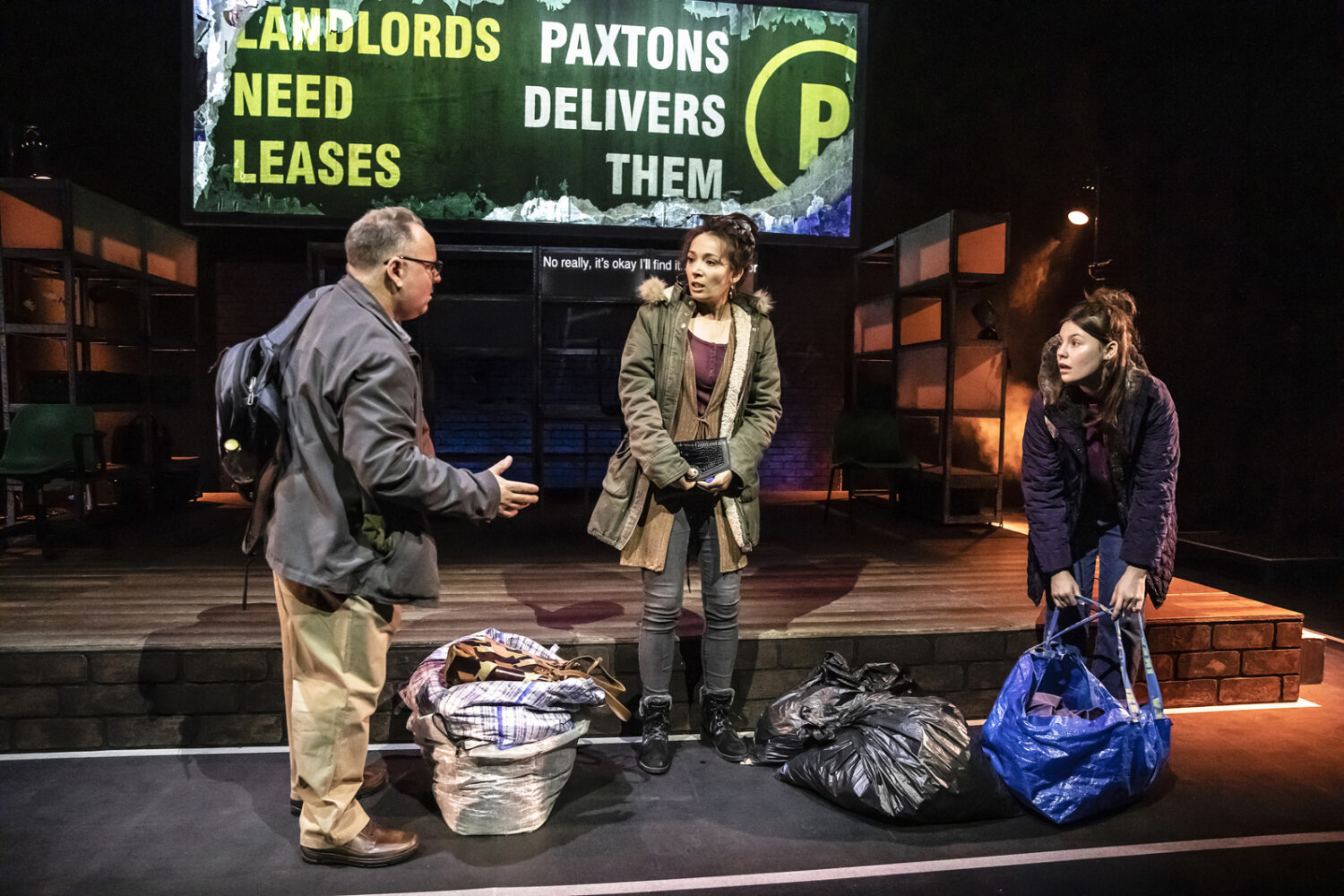
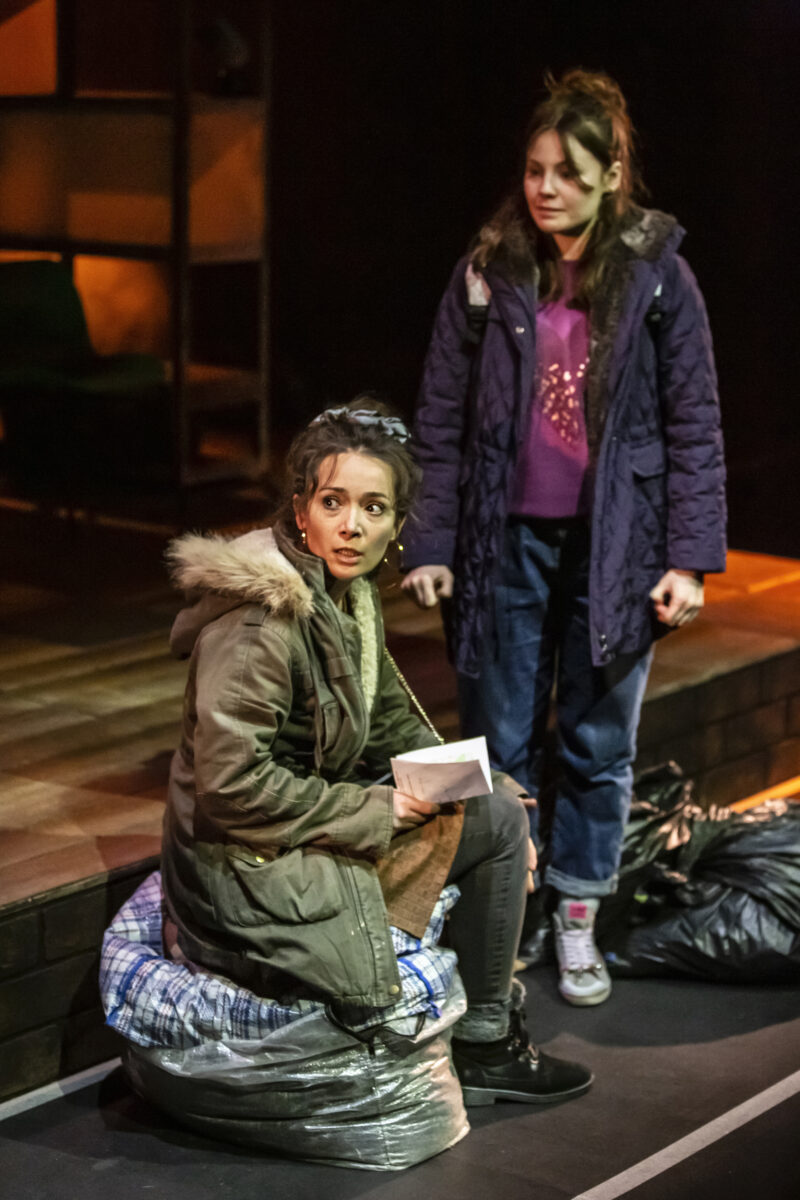
Daniel (David Nellist) is a widower, a carpenter by trade, recently stricken by a debilitating heart attack. His doctor has advised him that he cannot risk doing anything strenuous but, in order to qualify for Jobseeker’s Allowance, he has to be able to demonstrate that he is actively looking for employment. At the job centre he encounters Katie (Bryony Corrigan) and her daughter, Daisy (Jodie Wild), recently rehoused from London and struggling to survive in an unfamiliar location. But Katie is a few minutes late for her meeting and is brusquely told that she is being sanctioned and will have to wait four weeks to get any money.
Daniel befriends the pair and does what he can to help them settle into their new home, while he goes about the thankless task of jumping through the various hoops that the DHSS keep throwing in his path. It’s clear that sooner or later, the merde is going to hit the fan…
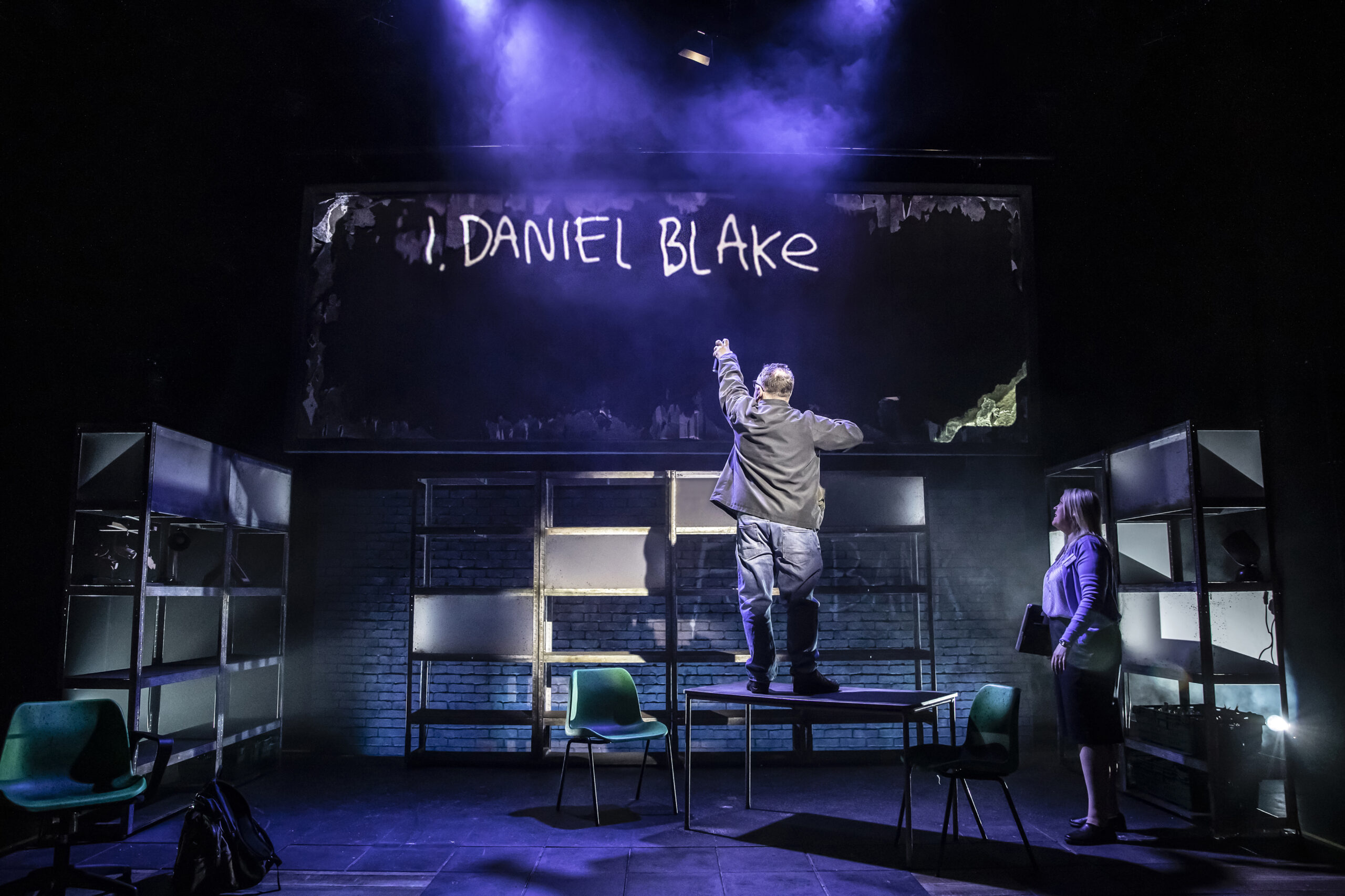
The performances are exemplary (particularly Corrigan, who has to handle most of the heavy lifting), and there are some credible attempts to bring the piece up to date with recordings of the voices of Boris Johnson and Liz Truss, demonstrating their complete lack of empathy for anyone who is less privileged than them. Rhys Jarman’s design makes good use of video projection, highlighting a series of meaningless adverts supposed to inspire confidence in the government’s approach to unemployment, while Mark Calvert handles the direction with an assured touch.
But not everything from the film translates effectively to the stage. There are perhaps a couple of heartless interviews too many and a lengthy scene that follows the infamous graffiti incident – a homeless guy delivering an attempt at a rabble-rousing oration – feels uncomfortably tacked on.
Still, this is a credible and compelling play and the fervent applause from a packed audience makes it clear, that if anything has changed for the unemployed since 2016, it’s certainly not for the better.
4 stars
Philip Caveney



 Bouquets & Brickbats