Rhys Anderson

Blinded By The Light

21/05/25

Traverse Theatre, Edinburgh

Drawing on the true story of a historical protest, Sylvia Dow’s Blinded by the Light illuminates two distinct timelines: first, the real-life miners who held a ‘stay-doon’ in the pit at Kinneil Colliery in 1982; second, the fictional inhabitants of a near-future dystopia, forced underground by the climate crisis and now occupying those same Bo’ness tunnels.

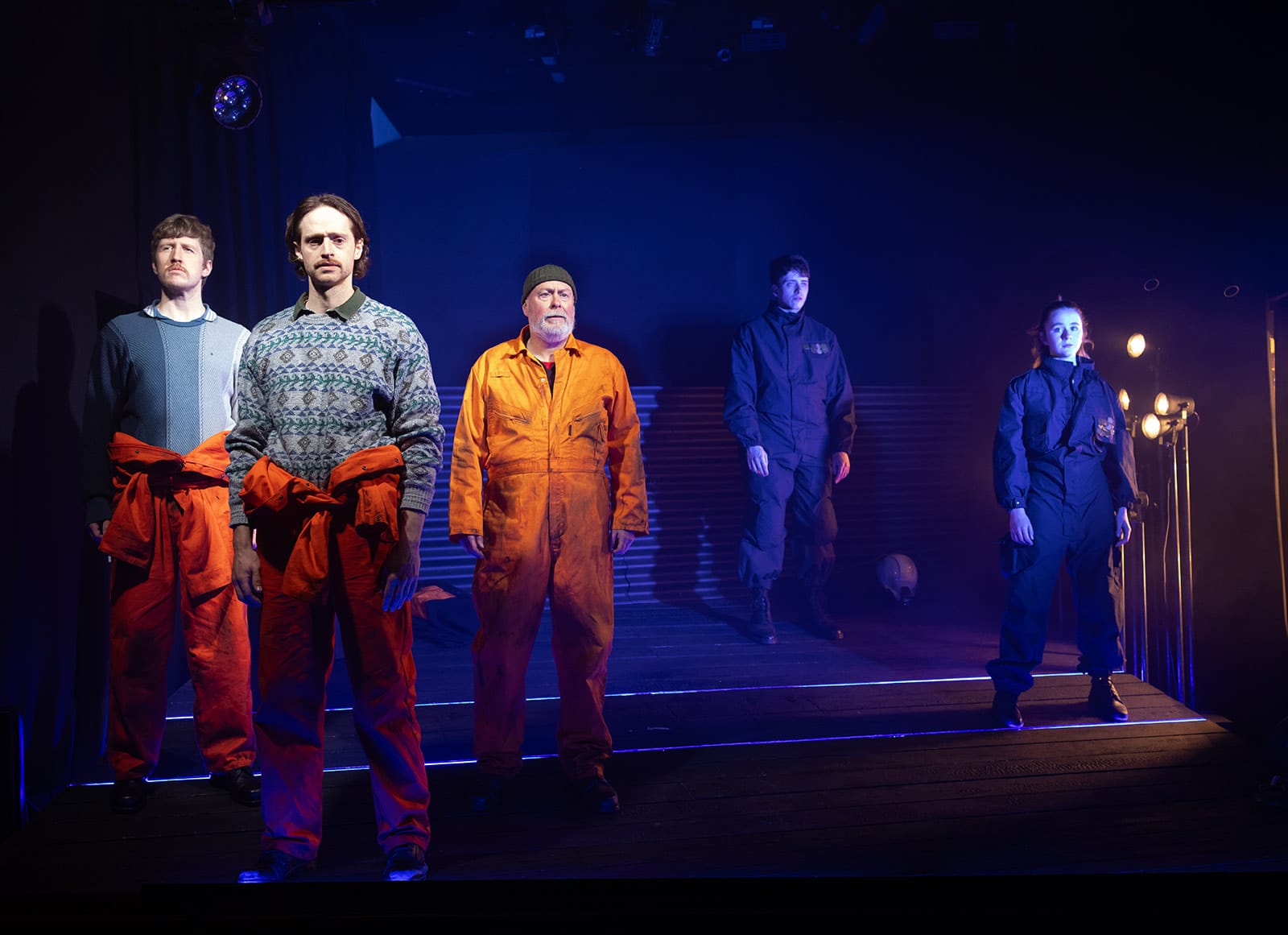
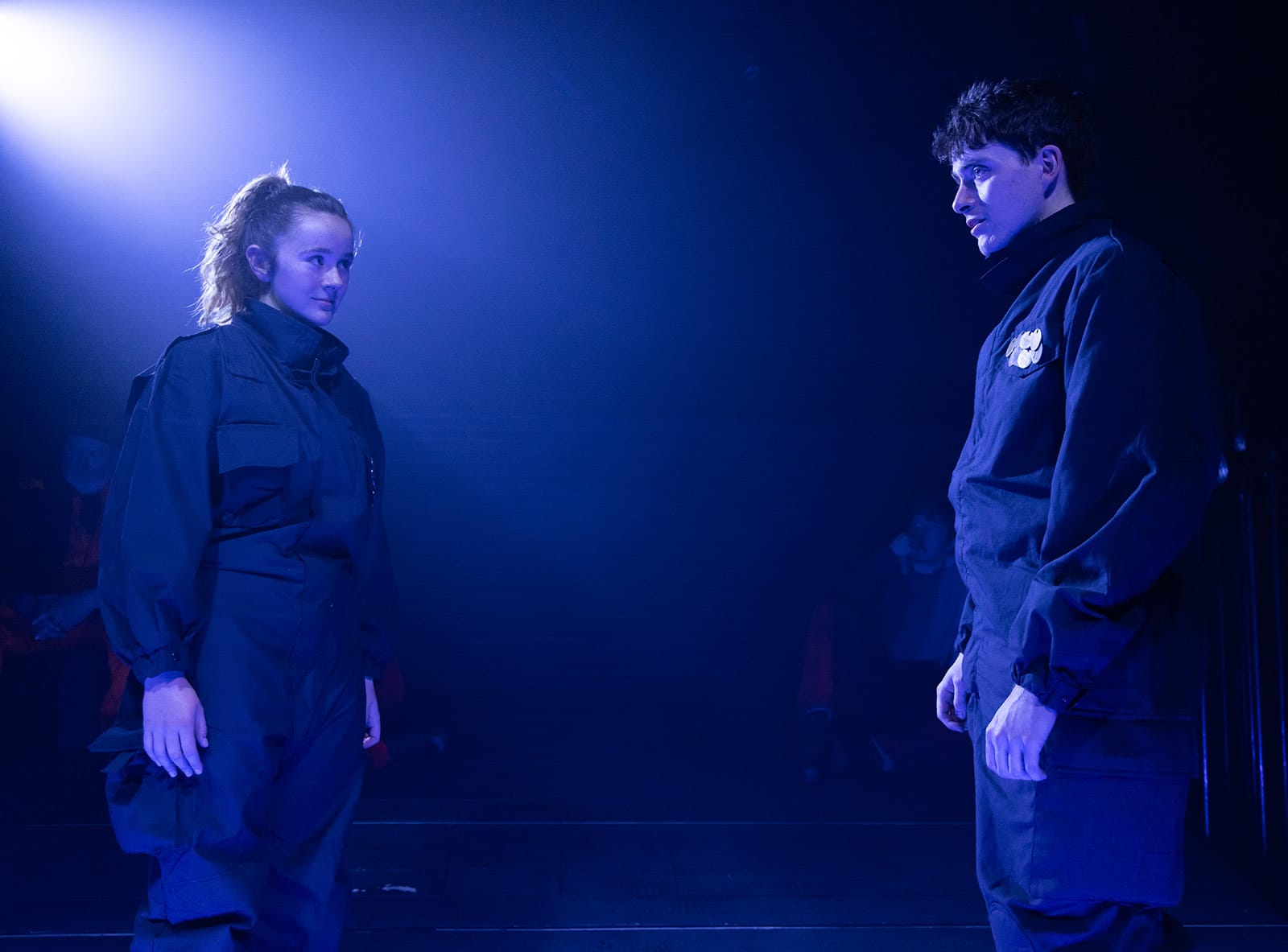
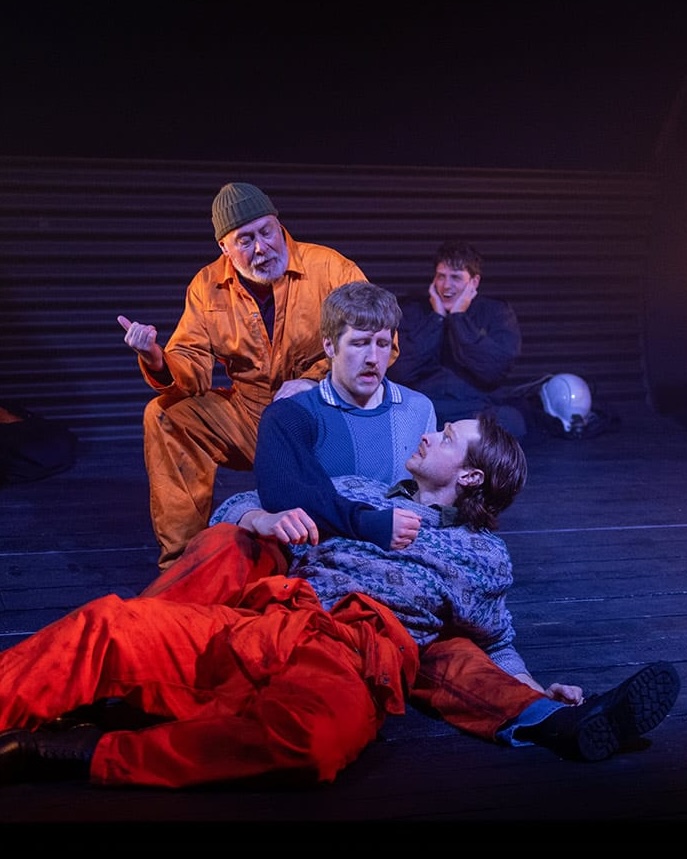
Nimbly directed by Philip Howard, the disparate worlds intersect seamlessly, the stories harmonising into something bigger and brighter than the sum of their parts. For Lily 7 (Holly Howden Gilchrist) and Freddie 9 (Reece Montague), the coal-black warren is a prison: they’ve never been ‘up’; never seen the grass or felt the rain; to them, the sun is nothing more than an enticing concept, gleaned from forbidden books. Meanwhile, two hundred years earlier, Andy (Rhys Anderson), Matt (Barrie Hunter) and Matt’s son, Jerry (Andrew Rothney), view the mine very differently. For them, it represents a well-loved way of life – not just their workplace but also their community. Of course, they also have friends and family in the outside world, but it’s their mining jobs that define them. The looming pit closure threatens everything they know and love.

Becky Minto’s simple set design works well. A steeply-raked wooden floor emphasises the precariousness of the situations, and the small footprint forces all five characters into close proximity, highlighting their interdependence across the centuries. The script employs repetition and echoes to stress these links, and Howard mines this (sorry!) for full effect, as the tunnels’ inhabitants occasionally finish each other’s lines or speak in perfect unison. A scene where Lily and Freddie place their palms in the handprints left by their ancestors is particularly affecting.

The performances are uniformly strong, but Howden Gilchrist and Rothney are the standouts for me, perhaps because their characters share a wide-eyed optimism, which makes their inevitable defeat all the more heart-rending.

In a play where light – or lack of it – is literally the point, the lighting designer’s role is even more important than usual. Colin Grenfell rises to the occasion, conveying the mine’s darkness while simultaneously directing our attention to the action as it unfolds. The clear distinction between the timelines is also achieved primarily through stage lighting (along with some wonderfully atmospheric sound design by Philip Pinsky).

Dow writes with a lightness of touch, exploring big political ideas without ever straying into the didactic or expositional. The plight of Britain’s striking miners, sacrificed to Thatcherism, is effortlessly laid bare, as is a warning about the bleak future we’re stumbling towards, with its shades of both Fahrenheit 451 and 1984.

Blinded by the Light has left Edinburgh now, but there are still two more chances to see this thought-provoking production: at St Andrews’ Byre Theatre on the 23rd May and Stirling’s Macrobert Arts Centre on the 24th. Catch it if you can!

4.3 stars

Susan Singfield
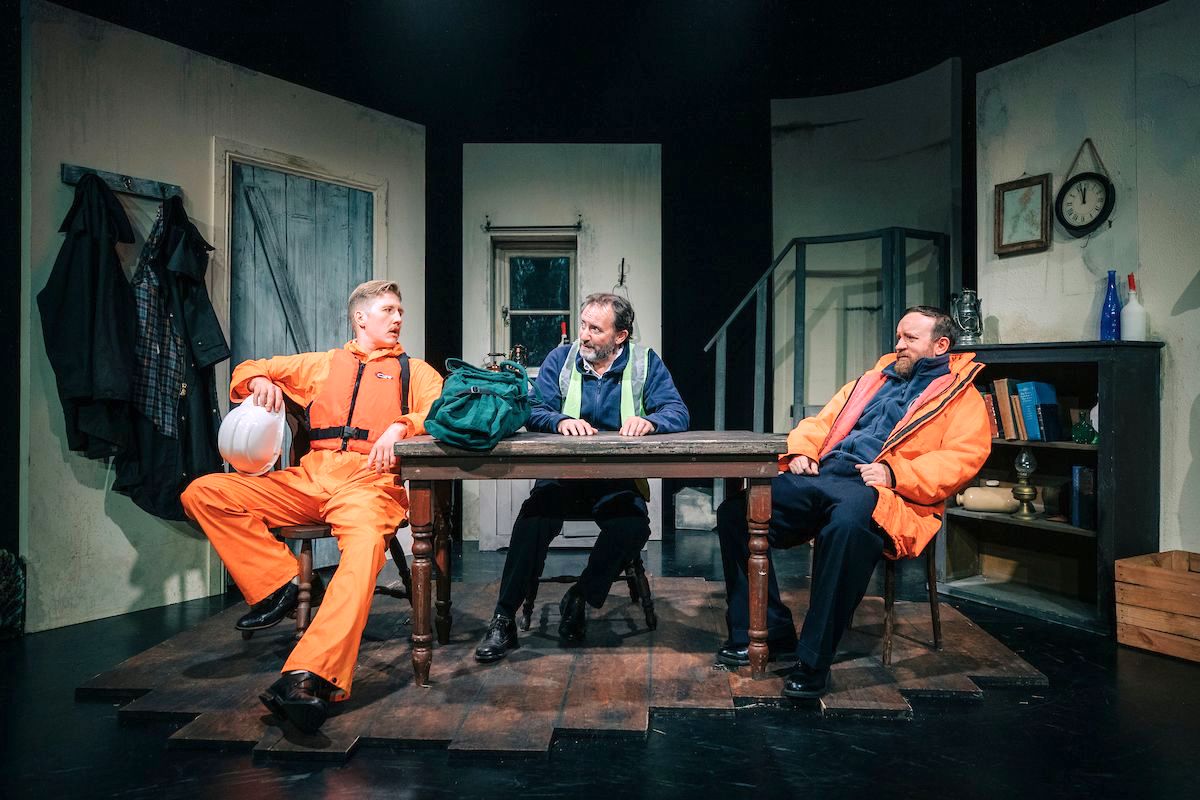
Keepers of the Light

08/09/23

The Studio at Festival Theatre, Edinburgh

It’s not difficult to understand why the island is a popular symbol in literature. Separate by its very nature, an island always exists as a counterpoint to a known ‘main’ land, allowing a writer to remove their protagonists from their usual environs and – by means of a storm or a lost sea vessel – trap them in a mysterious and unfamiliar place. The dimensions help too: the island serves as both a microcosm and a pressure pot, illuminating and intensifying the characters’ concerns.

Little wonder then that the real-life mystery of three lighthouse keepers who went missing from the Flannan Isles in 1900 looms large in the public imagination. From Wilfred Wilson Gibson’s 1912 poem (still commonly taught in schools), to Kristoffer Nyholm’s 2018 film, The Vanishing, the story continues to intrigue – and Scottish playwright, Izzy Gray, is the latest to be thus inspired. Indeed, as an Orcadian, rooted in island culture, she has a special connection to the subject matter. Lighthouses are in her blood.

The Flannan Isles lighthouse had only been operational for a year when a terrible storm struck. The light went out, alerting the authorities to the fact that something was amiss, but – by the time a search party made it to the island – there was no trace of the three keepers.

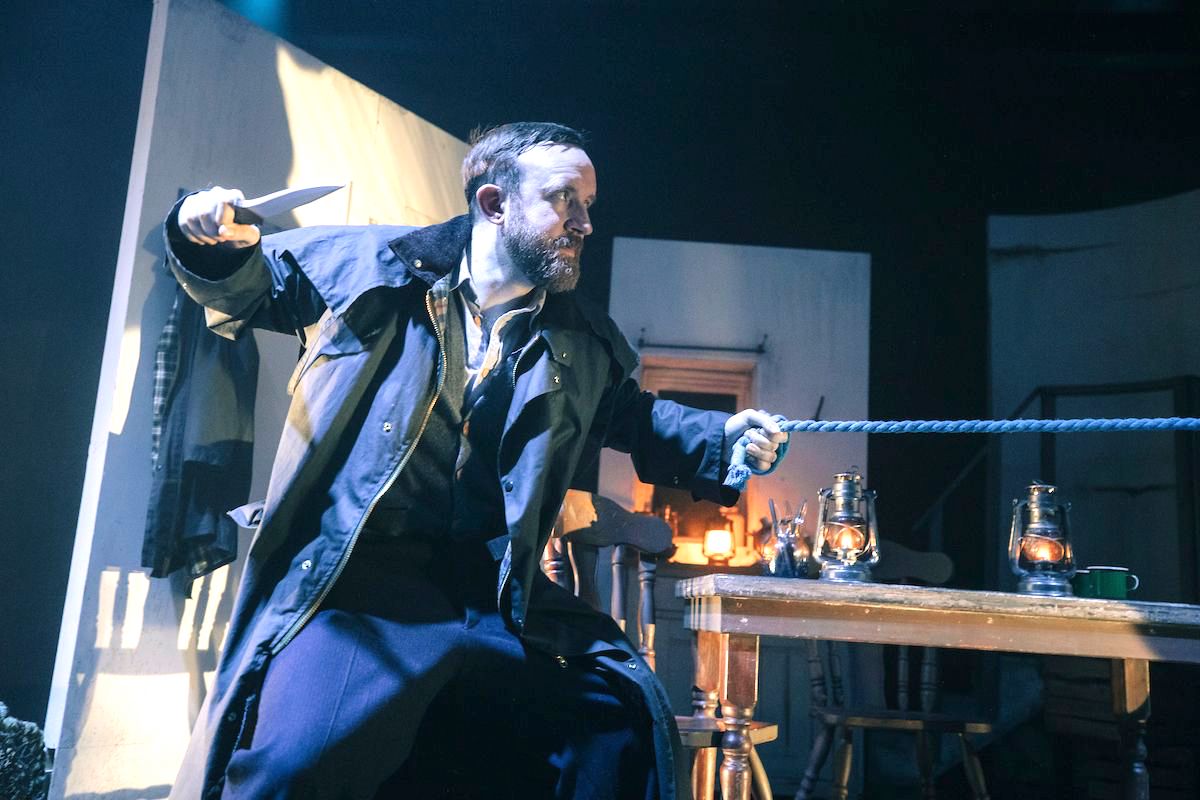
In Keepers of the Light, Gray intersperses the tale of the three lost men, Donald, Tam and Jim (Rhys Anderson, Fraser Sivewright and Garry Stewart respectively), with the parallel narrative of their modern-day counterparts, Mac, Alec and Davie. The lighthouse no longer requires keepers – it’s been automated for more than fifty years – but it does need maintenance, and the three engineers are helicoptered in for what is supposed to be a couple of hours for a routine job. But destiny has other ideas, and the men find themselves stranded overnight with nothing to do but consider the fates of their predecessors…

Gray explores the enduring nature of the mystery, pointing out that the reason the story is so compelling is that there is no answer: all we have is conjecture and gossip, supposition and fantasy. This meta-telling is made explicit by the decision to bookend the play with Alec’s musings, as he contemplates the idea that people are drawn to fill in the gaps. If something is unknown, we make up our own solutions.

It’s not all plain sailing. At times, the dialogue feels a little forced and unnatural, and some of the jokes and themes are hammered home (Davie’s Tic Tac error, for example, is clear; it gets a laugh: we don’t need Mac to add, “No, you mean TikTok!”). The piece would benefit from leaving more unsaid, trusting the audience to infer the meaning from the context.

Another minor niggle: I don’t think the actors need to leave the performance space every time they switch characters. After the first couple of metamorphoses, it’s clear what is happening, and the exiting and re-entering just slows things down. At one point, they do begin to transform on stage, taking off their fleeces and putting on their twentieth-century characters’ hats, which works well, but then they exit anyway, before returning a few seconds (and some minor costume changes) later.

Nonetheless, Keepers of the Light – ahem! – keeps the light shining on this fascinating tale, boldly straddling fact and fiction.

3 stars

Susan Singfield