21/02/26
Theatr Clwyd, Yr Wyddgrug
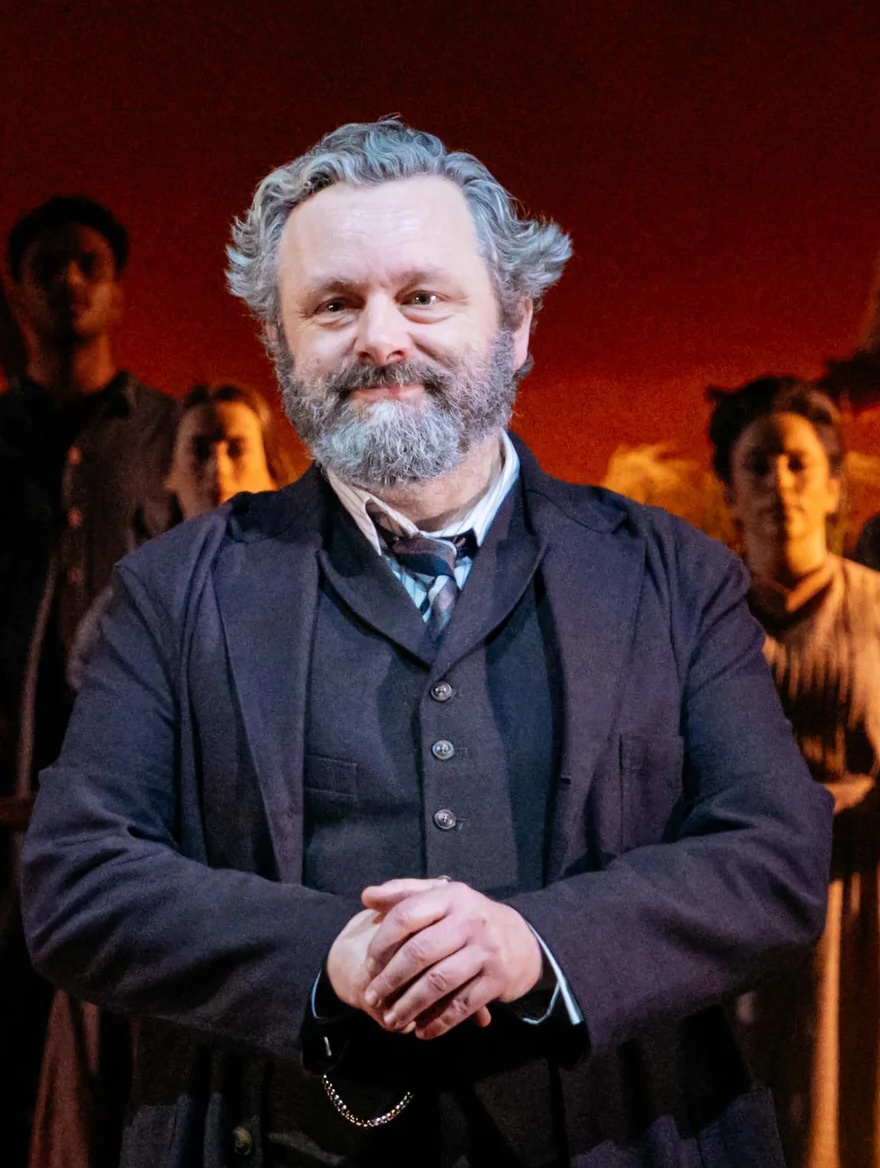
Why can’t everybody be like Michael Sheen? He’s an inspiration in the truest sense of the word: a dream combo of determination, integrity, generosity and vision. When the National Theatre of Wales lost its Arts Council funding and subsequently shut down, most of us wrung our hands and despaired. Not Mr Sheen. If Wales needed a national theatre, he thought, then the only question was how to deliver it.
And the answer was: he’d pay for it. He’s been a ‘not-for-profit’ actor since 2021, using his considerable income to fund social causes and charitable projects. And what could be closer to a Welsh thespian’s heart than an institution dedicated to producing, promoting and preserving his beloved Cymru’s theatrical culture?
And so the Welsh National Theatre was born, and here we are – Philip, Mum and I – at the newly-refurbished Theatr Clwyd, ready to see its inaugural production, Thornton Wilder’s Our Town. Although this quintessentially American play seems an odd choice for a Welsh debut, any doubts I have are soon expelled as the production gets underway. Despite the fact that the fictional Grover’s Corners has a very specific location (Wilder describes it as “in New Hampshire, just across the Massachusetts line,” and even provides us with fake co-ordinates), its gentle exploration of everyday life has a universal quality that makes it applicable to small towns everywhere.
Ultimately, Our Town is a celebration of community: an ensemble piece with no sensational storylines or great climactic moments. If that sounds boring, don’t be misled. The whole point of this play is to embrace the ordinary, to highlight the little things that make life worthwhile.
Sheen plays the Stage Manager, a meta-theatrical character who breaks the fourth wall and addresses the audience, narrating and commenting on the action as it unfolds over twelve years.
We first meet the townsfolk in Act 1 (“Daily Life”). It’s 1901 and neighbours Emily Webb (Yasemin Özdemir) and George Gibbs (Peter Devlin) are teenagers, about to graduate high school. Their respective parents, Editor and Mrs Webb (Rhodri Meilir and Nia Roberts) and Dr and Mrs Gibbs (Gareth Tempest and Sian Reese-Williams), represent the steady, family-focused nature of the town. They are good people, not especially ambitious, but determined to provide a secure base for their children, and hopeful that they too will lead decent, contented lives.
Act 2 (which follows without a break) is titled “Love and Marriage” and takes us forward in time to 1904. Emily and George, now 19 years old, are about to tie the knot. There are nerves, excitement, doubts and reassurances – and, ultimately, a joyful wedding.
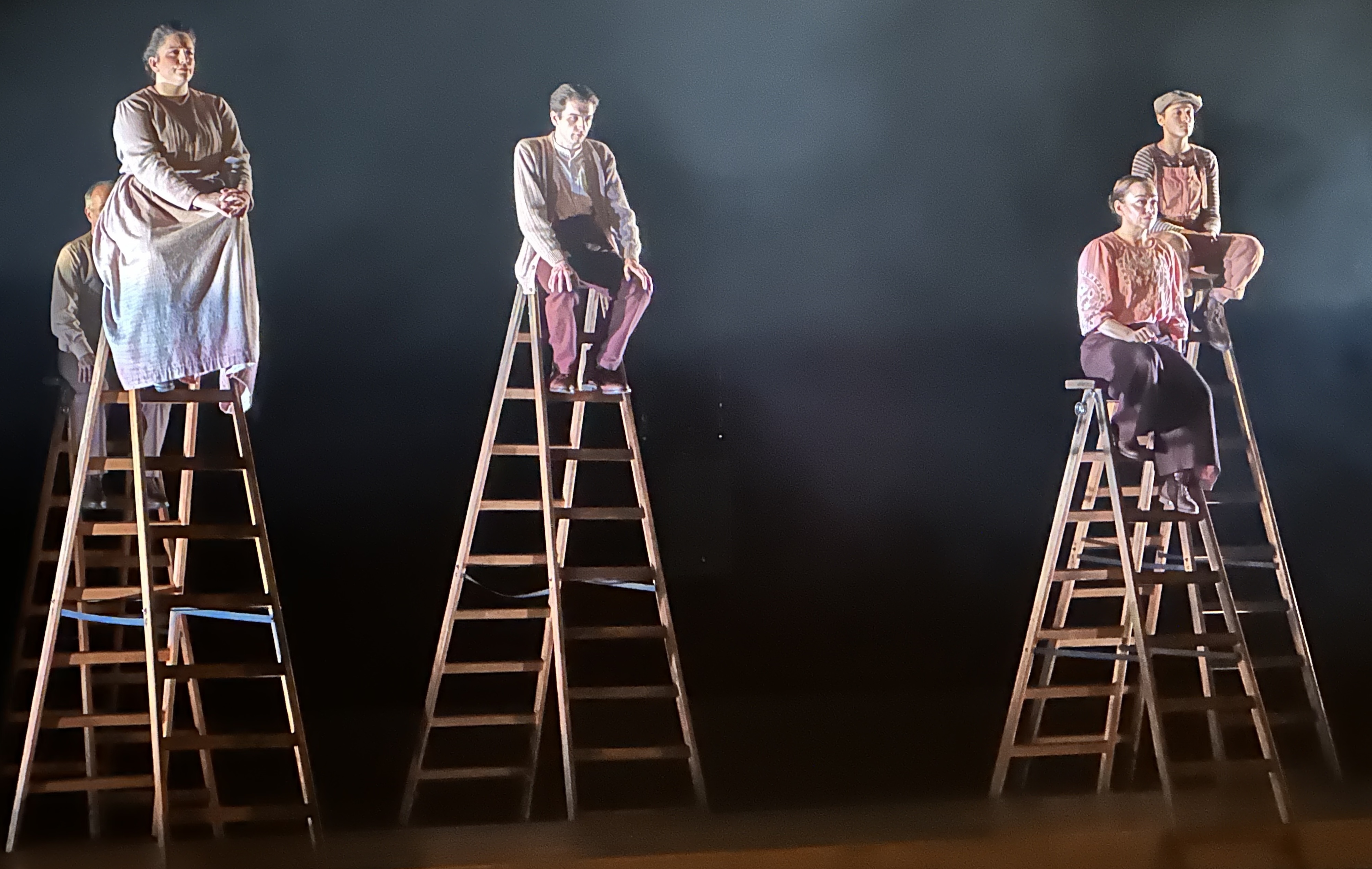
The twenty-minute interval precedes a distinct shift in tone. The third act (“Death and Eternity”) is almost unbearably poignant. Nine years have passed – and so have some of Grover’s Corners’ inhabitants, including Mrs Soames (Christina Modestou) and alcoholic choir director Simon Stimson (Rhys Warrington). Emily’s little brother, Wally (Aisha-May Hunte), has died of a burst appendix, while George’s mother has succumbed to pneumonia. Their ghosts perch on ladders in the cemetery, looking down on their loved ones as they grieve. The spirits lament the living’s incapacity to notice the small moments, their lack of appreciation for the minutiae of life.
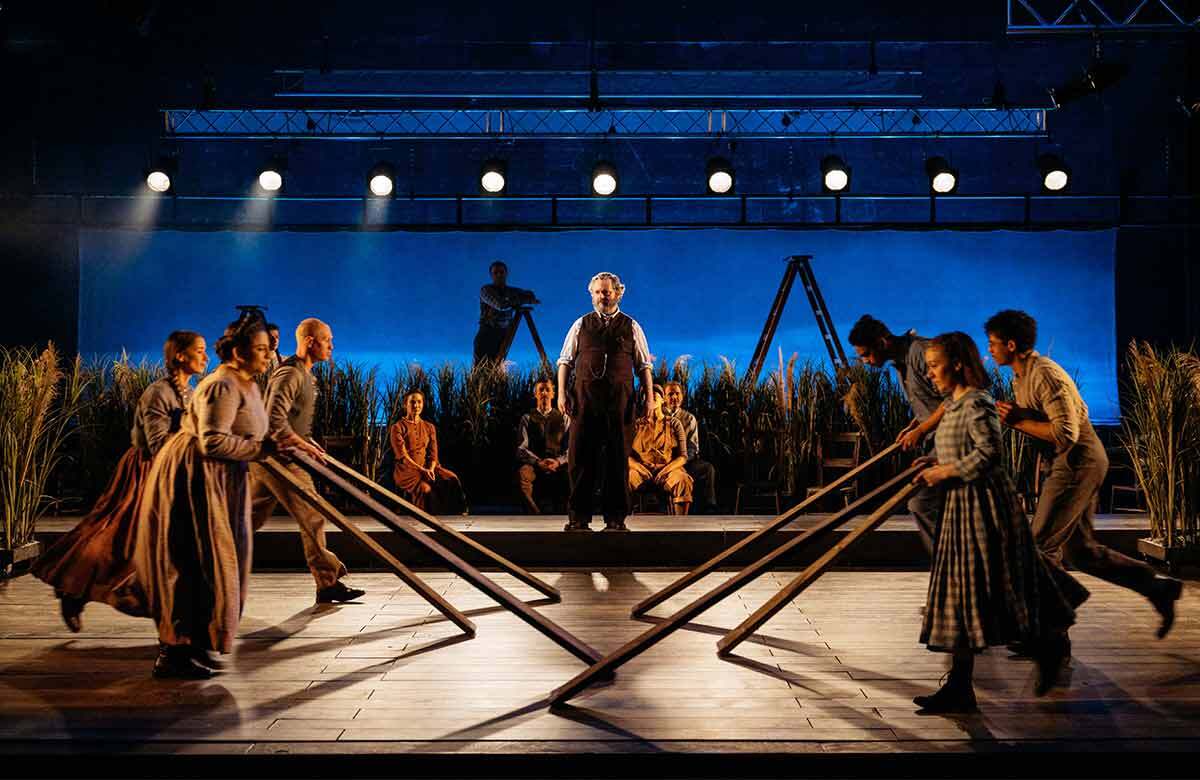
Director Francesca Goodridge manages the pace well: although Grover’s Corners is a tranquil town, the piece still feels vibrant and active, even as it slows down for its final, contemplative third. Movement director Jess Williams’ transitions emphasise the sense of community, as the cast work together to move the simple props, constructing ephemeral churches, public buildings and people’s homes, lending a meditative quality to the play.
In accordance with Wilder’s stage directions, the minimalist set works well: it’s amazing what can be achieved with a few planters and some planks of wood. But I’m especially impressed by the decision to use naturalistic props for the section when a ghost (I won’t reveal whose) goes back to relive a fondly-remembered birthday. Until now, everything has been mimed or suggested, but suddenly we have a real table, real chairs, actual bread dough being kneaded, bowls, cutlery, table cloths, the lot. I love the simplicity of the symbolism, as the ghost appreciates the details that the living take for granted.
Our Town is a triumph, a testament to what can be achieved when rich people give back to the communities that raised them.
Da iawn, Welsh National Theatre. And diolch yn fawr, Michael Sheen.
5 stars
Susan Singfield
 Bouquets & Brickbats