Quentin Tarantino

Munich: The Edge of War

06/02/22

Netflix

History has not been kind to Neville Chamberlain. He’s generally depicted as the naïve fool who, despite good intentions, utterly failed to put the stops on Adolf Hitler. It’s interesting to note that this Netflix film, based on a novel by Robert Harris, chooses to view his actions in the lead up to World War 2 in a more sympathetic light. Could it be that the man actually knew what he was doing?

This is a handsomely mounted production that struggles to create any real sense of suspense, because… well, unlike say Quentin Tarantino, director Christian Schwochow decides to stick closer to the truth. Plot spoiler: Hitler does not get mown down in a hail of bullets by the film’s heroes a la Inglourious Basterds. Just so you know.

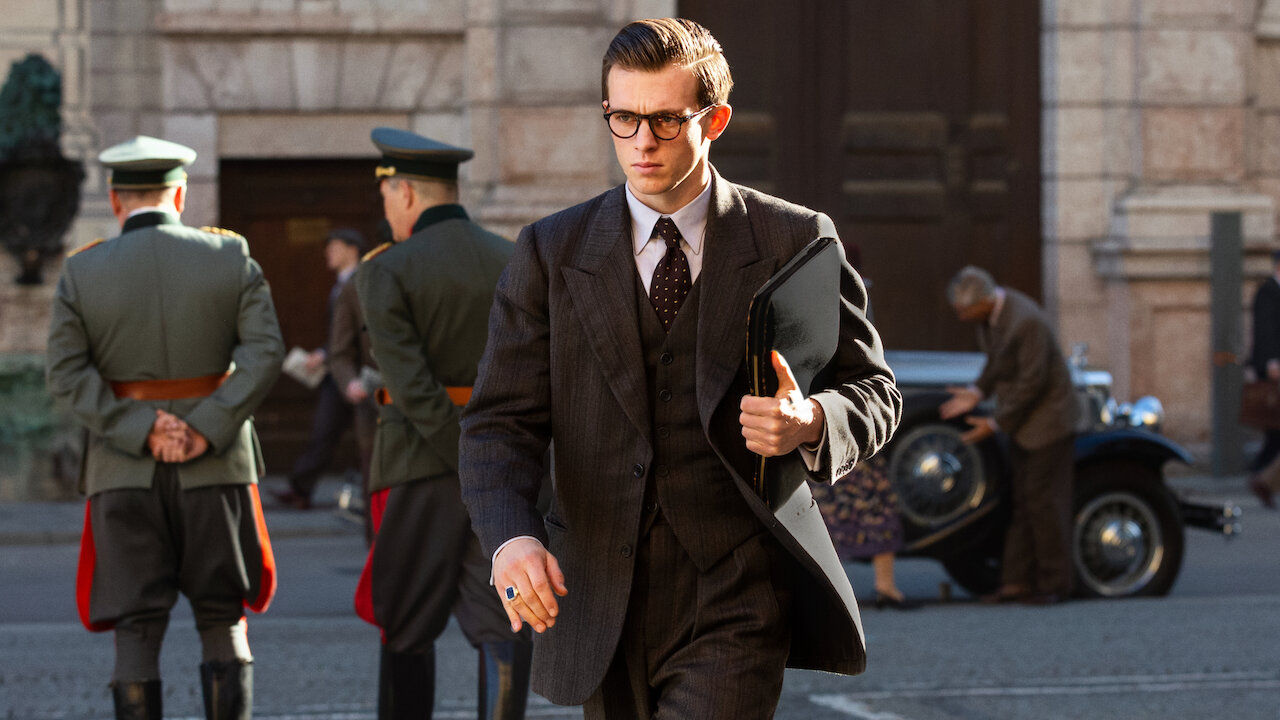
We first meet Hugh Legat (George McKay) and his friend, Paul Von Hartmann (Jannis Niewöhner), in 1932, when they are celebrating their graduation from Oxford, along with Paul’s Jewish girlfriend, Lena (Liv Lisa Fries). Paul is singing the praises of a certain Adolf H, who – he genuinely believes – represents the best future for his homeland. Hugh is understandably horrified. Shortly thereafter, Hugh visits Paul in Munich, where the latter seems even more bullish about his adulation for the Führer – and the two friends fall out with each other.

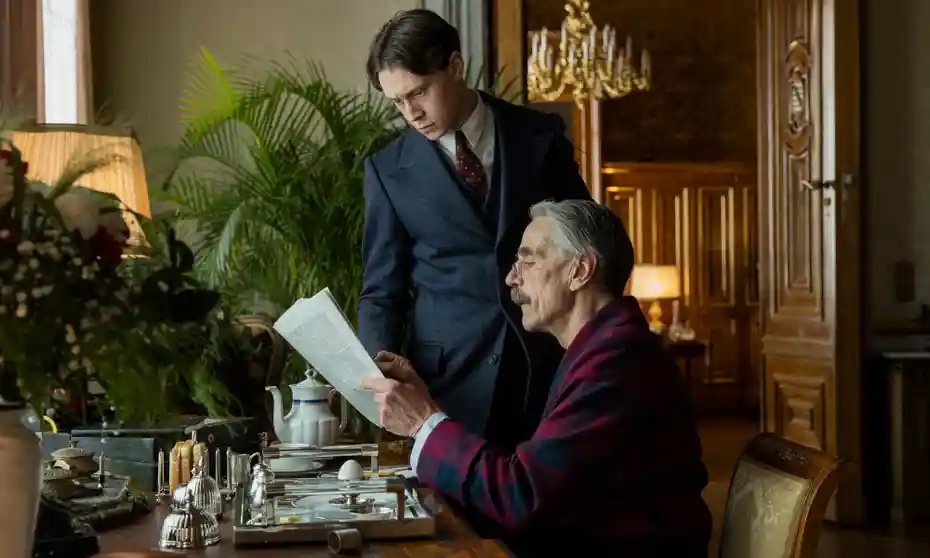
The action moves on six years, and Paul’s views have changed for the better. He’s realised that his earlier beliefs were short-sighted to say the very least and is now involved in a clandestine plot to bring Hitler down before he can do any more damage. When he discovers that his old pal, Hugh, has become private secretary to Neville Chamberlain (Jeremy Irons), Paul spots an opportunity to get to the British PM, in order to urge him not to sign the upcoming Munich agreement.

Hugh, somewhat reluctantly, finds himself once again on his way to Germany.

McKay, having spent a lot of time running like the clappers to avoid impending carnage in 1917, finds himself doing something similar here, only this time, he’s attempting to head off an entire World War. (So no pressure there.) He’s very engaging as a young man trying to do his level best, whilst struggling with tantrums from his wife, Pamela (Jessica Brown Findlay), who seems to take it personally that her husband thinks preventing a World War is more important than ensuring he’s home for dinner every evening.

Niewöhner has a smouldering James Dean-ish quality that augers well for his future, while Irons is typically assured in his depiction of Chamberlain, giving us a bumbling, frightfully British sort of chap, who is obsessed with making recordings for the good old BBC and won’t tolerate anybody speaking out of turn. Ulrich Matthes, meanwhile, gives us one of the most terrifying screen Hitlers I can remember.

Matters become more complicated when Paul discovers that a childhood acquaintance, Franz Sauer (August Diehl), is now a leading officer in the SS and that the two of them are going to be spending a lot of time together. What’s more, Sauer is also clearly suspicious about his former schoolfriend’s intentions and has an unfortunate habit of turning up in all the wrong places.

Munich: the Edge of War offers an entertaining couple of hours, but the protagonists never seem to be really imperilled. While this may work in the source novel, it prevents the film from ever going into the kind of overdrive its final stretches require.

3.6 stars

Philip Caveney

The Lighthouse

05/02/20

It’s always frustrating, isn’t it, when others commend the work of a particular director and – for the life of you – you just don’t see what they love about it?

I’ve felt like that about Quentin Tarantino, pretty much since Pulp Fiction onwards; more recently, I really didn’t care for Robert Eggers’ debut film, The Witch, which many respected critics hailed as nothing short of a masterpiece. Now here’s his sophomore effort, The Lighthouse, which arrives in cinemas virtually creaking beneath the weight of the many superlatives that have been heaped upon it. Of course I have to give him a second chance, right?

This doom laden two-hander, shot in grainy black and white on 35mm stock and projected in a claustrophobic 1:19:1 aspect ratio, concerns the story of two ‘wickies,’ despatched to a remote lighthouse off the coast of New England, where they are to live and work for a month. Thomas Wake (Willem Dafoe) is an old hand, who lords it over new recruit Ephraim Winslow (Robert Pattinson), making him take on most of the menial duties while he reserves the tending of the light itself as his own personal privilege. He also mentions that Winslow’s predecessor went mad after seeing some ‘enchantment in the light’ and hints that something bad happened to him.

The two men embark on their dull and thankless routine, which is depicted in punishing detail. Wake is a drinker of alcohol and, though Winslow resists the temptation to join him at first, he soon succumbs. When a terrible storm maroons the men long past the time when they should have been heading back to the mainland, madness and depravity rapidly descend upon them…

Sadly, I am left completely unstirred by what ensues. Here is a ‘horror’ movie that completely fails to generate any sense of threat, an allegory that cloaks its meaning to an irritating degree. What we’re left with is a study of two tedious examples of toxic masculinity, who spend most of the time in silence and then ramble away in what Eggers insists is an aproximation of the language of the late 19th century, but which is mostly rendered unintelligible by the over-enthusiastic sound effects. They fight a bit too. And sing. And dance.

Winslow’s character has recurring dreams (possibly memories, it’s never entirely clear) of discovering a mermaid and having sex with her – sadly that appears to be the only role for a woman in this film – and there are visions of tentacles, floating logs and a severed head that might just belong to Winslow’s predecessor.

There are various attempts to allude to classical elements. The killing of a bird presaging disaster is surely a nod to The Ancient Mariner, while a climactic image seems to refer to the myth of Prometheus. But honestly, there’s so little incident in this film’s one hour, forty-nine minute run, that I spend most of my time feeling as bored as its two protagonists. Dafoe and Pattinson are both excellent actors, but neither is given enough to do here (unless you count Wake’s unbridled flatulence) and, when the final credits roll, I leave wondering, once again, what it is about Eggers that generates so much adoration?

I really wanted to like this film. And I gave it my best shot. Honestly.

2 stars

Philip Caveney


Once Upon a Time in Hollywood

15/09/19

We’re deep into our annual scramble at the Edinburgh Fringe, but there’s a problem. Once Upon a Time in Hollywood has opened and I need to see it. Not, I should hasten to add, because I’m a fan of Quentin Tarantino. Quite the opposite. Indeed, I’d go so far as to say that – in my opinion – he’s the most overrated film director in history. But, The Cameo is screening the film in 35 mm, using a projector that was made some time in the 1940s and that’s something that the geek in me needs to see. So, a two-hour-and-forty-one minute slot is located in our schedule, and here I sit as the lights dim and the screen kicks into life.

The first thing to say is that the film looks incredible. Light projected through celluloid will always be superior to a digital print. That’s a fact. And I will also add that the film’s musical score is also pretty fantastic, featuring a plethora of sparkling 60s pop classics. But I’m afraid that’s the last good thing I have to say about Once Upon a Time in Hollywood.

The plot: actor Rick Dalton (Leonardo DiCaprio) was once a big name in Hollywood, due to regular starring roles in Western TV shows, but now his star is beginning to wane. He lives in a big house on Cielo Drive and is driven around by his gofer, Cliff Booth (Brad Pitt), who lives in a lowly caravan a short distance away. Booth too is on his uppers. Once a respected stuntman, he is now reduced to fetching and carrying for Rick. Oh, and the rumour is that back in the day, he murdered his wife. Next door lives the director du jour, Roman Polanski (Rafal Zawierucha), fresh off the hit film Rosemary’s Baby, and his pregnant wife, Sharon Tate (Margot Robbie). And meanwhile, up at Spahn’s Ranch, the Manson family are gearing up for some very dark deeds…

Look, the truth is, I really should like this film. The era fascinates me and so does the central story around which this is based. But what I see onscreen is an interminable trudge through a series of over-extended background stories, with Tarantino spending far too long on telling them and being far too pleased with his evocations of 60s cinema and television. Margot Robbie barely gets any lines of dialogue (which sadly enforces Tarantino’s reputation as a misogynist), the great Bruce Lee is depicted as an absolute dick, and a whole troupe of respected actors – Bruce Dern, Dakota Fanning, Timothy Olyphant, Kurt Russell, Al Pacino – are brought onscreen to perform five minutes of pointless ‘acting,’ before being summarily dismissed.

And then there’s that fairytale ending, applauded by many film critics as ‘audacious,’ but which to me seems merely dumb and kind of borderline offensive. Tarantino has previous form here as anyone who saw Inglourious Basterds will know.

Look, the man has many fans and this film has already been widely praised by other critics, so maybe I just need to accept that his style of filmmaking is not for me. But nobody is ever going to convince me that he is a director in control of his own process. Two hours and forty one minutes? Really?

But that 35mm print. Now that is class.

2.5 stars

Philip Caveney