
Pulp

Road

27/02/25

Bedlam Theatre, Edinburgh

We enter the auditorium to the strains of Jarvis Cocker warning a rich girl of what it’s really like to be common, to “watch your life slide out of view / and dance and drink and screw / because there’s nothing else to do.” Okay, so tonight’s play – Jim Cartwright’s Road – is set in the mid-80s, a whole decade before Pulp’s song was released, but the lyrics couldn’t be more apt. It’s a fitting anthem to what is essentially a series of bleak vignettes: snapshots of the residents of a Lancashire road as they navigate their way through another grim weekend, trying to find some glimmers of joy in Thatcher’s broken Britain.

This is a sprawling, kaleidoscopic play, but EUTC’s students do an impressive job of wrangling it into shape, creating a vibrant, cohesive show. I especially enjoy their commitment to world-building, with actors in character as the audience files in, as well as throughout the interval, when some chat to people in the toilet queue, while others invite us to join them on stage to dance at Bisto’s Beatoven Disco with DJ Ronan Lenane. (There’s also a pre-show in the bar, but there’s not a lot of room in there, so we don’t get to experience what that’s like.)

I have mixed feelings about Cartwright’s script. Groundbreaking when it premiered in 1986, there’s no denying its continued relevance, as the UK struggles with a cost-of-living crisis and a hollowed-out job market. It’s an elegy for the working-class, and I like its bold spirit and the stylised way the characters voice their despair, saying all the things that usually remain unspoken, masked by politeness and a “chin-up” mentality. However, while the issues sadly haven’t aged, the writing style has: it seems heavy-handed compared to more recent polemics, hitting the audience repeatedly over the head with a message we understand from early on.

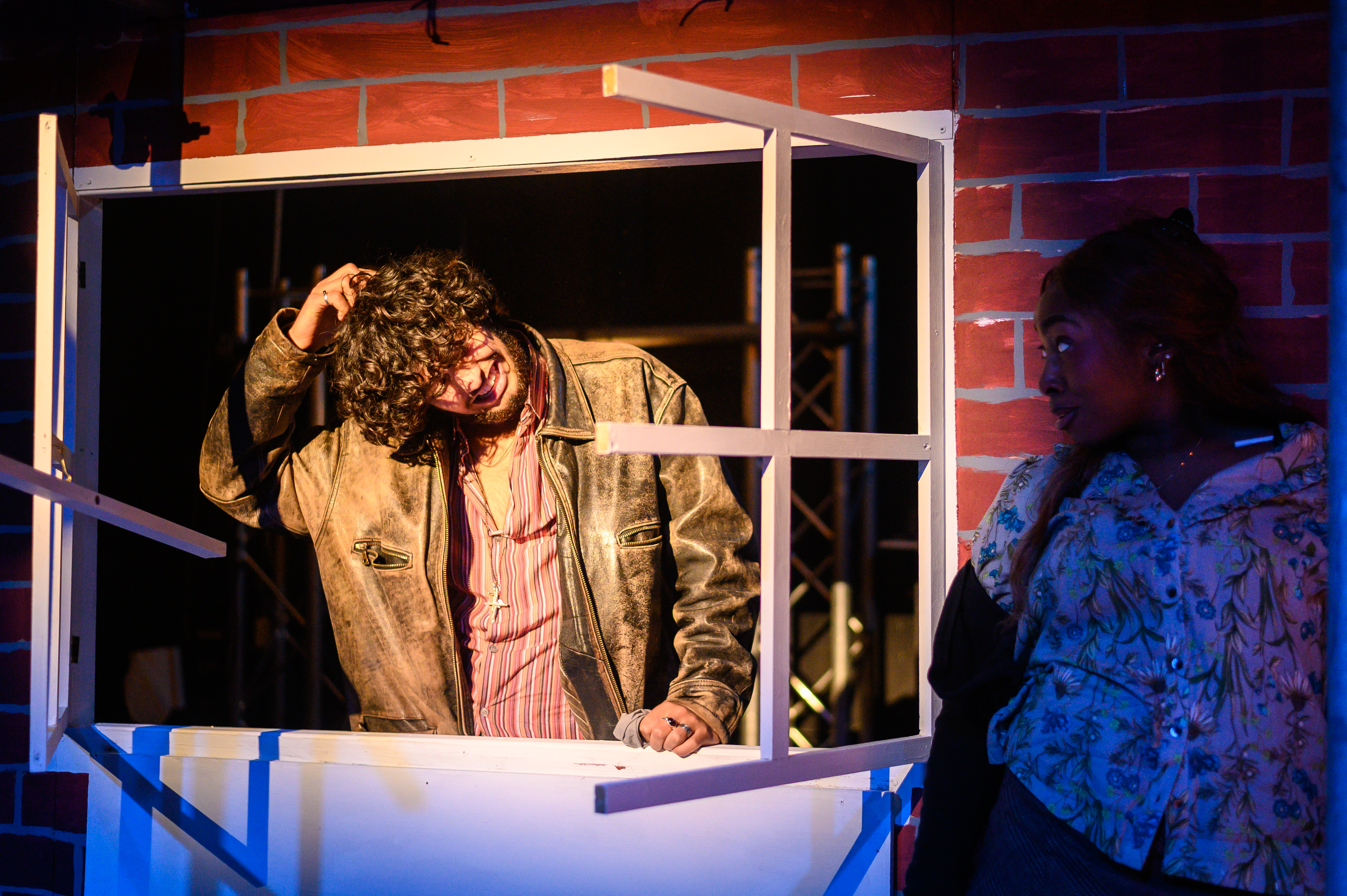
Nonetheless, this is an impressive production, and the array of talent in the room is undeniable. Under Moses Brzeski-Reilly and Dan Bryant’s inventive direction, Bedlam’s performance space is almost unrecognisable. Instead of the usual end-on stage, we have a thrust, the audience positioned around three sides. The fourth side sports a door, a big window and some scaffolding, and the gallery above is also pressed into use. The square performance space is divided into four distinct areas, the road, a ginnel, a living room and a bedroom, the latter pair representing the interiors of several different homes. Miki Ivan’s complex lighting design is crucial in guiding the audience to the various locations.

The sound design – by Millie Franchi – is admirably detailed, the ambience convincing and evocative. However, thanks to a combination of the thrust staging and the venue’s vaulted ceiling, there are moments when I find myself struggling to hear what some of the characters are saying, especially those who are facing away from me on the far side of the room.

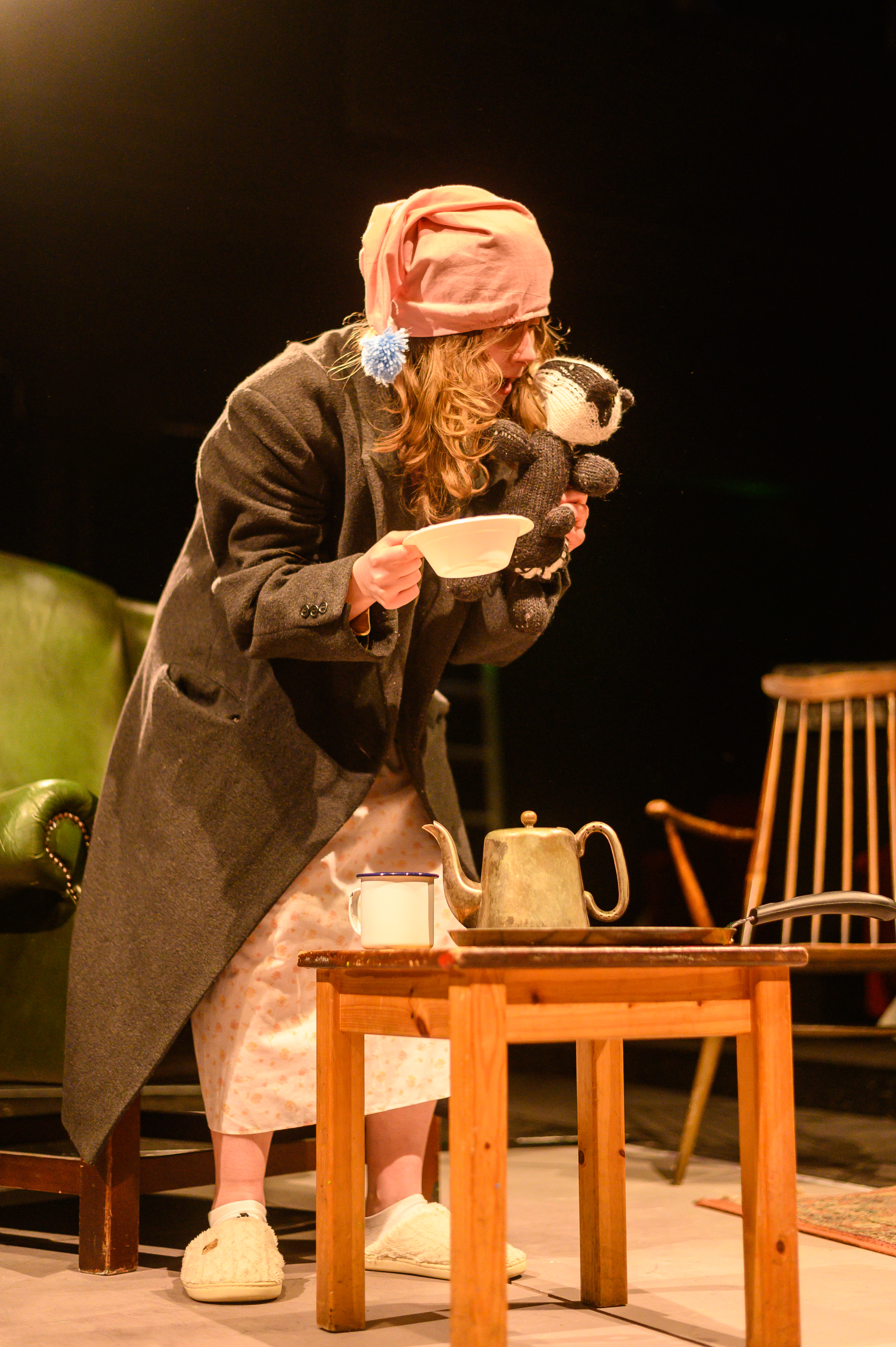
It’s hard to single out individual performers in an ensemble piece like this, but there are a few standouts. Ava Godfrey, Amelia Duda, Will Grice and Sam Gearing absolutely nail the climactic scene where Louise and Carol’s double date with Brink and Eddie transforms from a nihilistic drinking session into an almost spiritual attempt to conjure up some happiness. Ava Vaccari is compelling as Molly, an elderly woman suffering from Alzheimers, while Noah Sarvesvaran provides the centre point as Scullery, the drunken vagrant who guides the audience through proceedings.

Once again, EUTC have succeeded in putting their own inimitable stamp on a classic production. There are just two more chances to see this before it closes, so why not head on down to Bedlam and join in the mayhem.

4 stars

Susan Singfield
Saltburn

22/11/23

Cineworld, Edinburgh

Emerald Fennell’s second film shares some DNA with her debut: they’re both stories of revenge writ large, of simmering grievance metamorphosing into violence. But, while Promising Young Woman was an out-and-out success, Saltburn is more of a mixed bag.

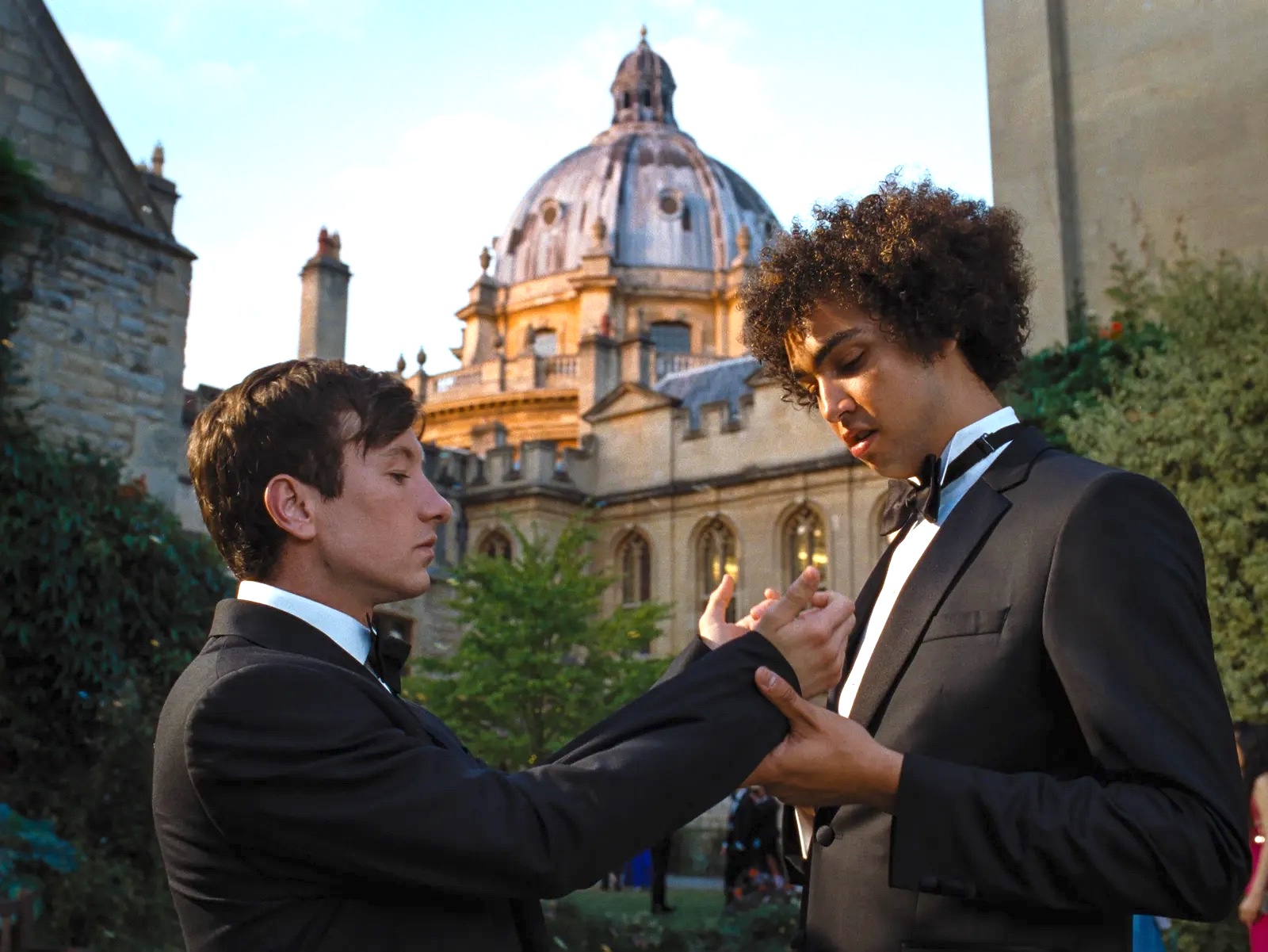
Oliver (Barry Keoghan) is a fish out of water at his Oxford college. Not only has he made the terrible faux pas of devouring every book on the summer reading list, he’s also got a Scouse accent and his tuxedo is rented. “The sleeves are too long,” sneers his tutorial-mate, Farleigh (Archie Madekwe). “Still, you almost pass.” Frustrated by his outsider status and bored rigid by Jake (Will Gibson), apparently the only other non-posh person in the city, Oliver becomes obsessed with Felix (Jacob Elordi), insinuating himself into the young aristocrat’s circle. Felix warms to Oliver, taking him under his wing and inviting him to spend the summer at his family home. Oliver is delighted: the titular Saltburn is a bastion of excess and he is more than ready to indulge himself. But, as the weeks slip by and real life looms, things begin to take a darker turn…

The first third of this film is anachronistic. It’s supposed to be set in 2006, but the Oxford we see here feels like a throwback to the 1920s. Although there’s no denying that the university is still disproportionately posh, by the time the movie’s events occur, about 50% of Oxford undergraduates came from state schools (the figure is 68% now) – and, even among those who were privately educated, only a tiny number were as privileged as Felix and his friends. I find myself rolling my eyes at the idea that Oliver and Jake might stand out amongst their peers, or that anyone would notice them enough to bellow “scholarship boy” as they pass by. It’s unnecessary too: Oliver’s desire to move in Felix’s orbit doesn’t need to be dependent on the absence of any other working or middle-class people.

When the action moves to Saltburn, things improve dramatically – although the sense of stepping back in time might be heightened if Fennell were more effective in capturing the early noughties in the opening stretch. Here we meet Felix’s parents, Sir James (Richard E Grant, on top form) and Elspeth (played with obvious glee by Rosamund Pike). “Mummy” is the best thing about the whole movie, delightfully lacking in self-awareness, blithely callous in every word and deed. She gets the funniest lines too, and Pike delivers them with deadly precision: when Elspeth hears of her erstwhile friend’s death, for example, she responds with a scathing, “She’ll do anything to get attention.”

If the revenge, when it comes, is faintly ridiculous, then it’s found a suitable home in Saltburn, where everything is magnified, where there’s too much space, too many artefacts, too many people and too much money. The house and grounds provide a perfect backdrop for this illustration of careless privilege, and Linus Sandgren’s cinematography is almost hallucinogenic, reinforcing the sense of dislocation from the outside world.

Of course, there are many ways to read this sly, allusive story, with its Brideshead references and satirical tone. The most generous interpretation is that the joke is on the upper classes, depicted here as shallow and vacuous, playing games with other people’s lives to relieve their louche ennui. But it also comes across as a warning to the toffs to beware the pesky proles. Give us an inch and we’ll take a mile; we just don’t know our place. Fennell (whose own rarefied life is far closer to the Cattans’ than to Oliver’s) reveals an unfortunate blind spot when it comes to class. Elspeth references Pulp’s Common People early on, refuting the idea that the lyrics refer to her. “No, it wasn’t based on me. She had a thirst for knowledge. I’ve never wanted to know anything.” But there are a few lines later in the song that are perhaps more relevant: “Like a dog lying in a corner, they will bite you and never warn you. Look out! They’ll tear your insides out.” There appears to be an underlying (perhaps unconscious) snobbery at play.

Despite its dodgy subtext, Saltburn is a curate’s egg of a movie, with some very good parts indeed, and the final sequence – set to Murder on the Dancefloor – is utterly glorious. I look forward to what Fennell does next, albeit with some trepidation.

3.3 stars

Susan SIngfield