Pitlochry Festival Theatre

A Streetcar Named Desire

26/10/24

Lyceum Theatre, Edinburgh

It’s sometimes hard to believe that Tennessee Williams’ A Street Car Named Desire was first performed in 1947. This powerful mixture of one man’s toxic masculinity overpowering a woman’s fragile mental condition feels somehow utterly contemporary in its telling, and this perfectly-pitched adaptation by Pitlochry Festival Theatre is compelling in every scene.

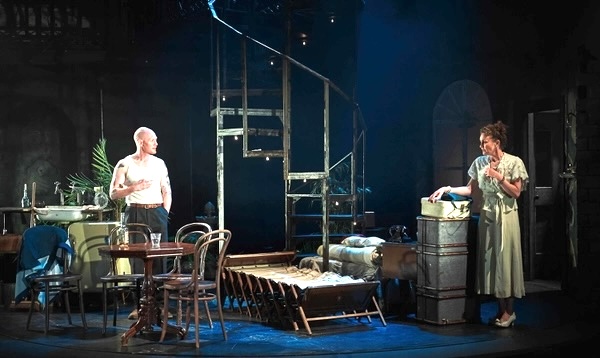
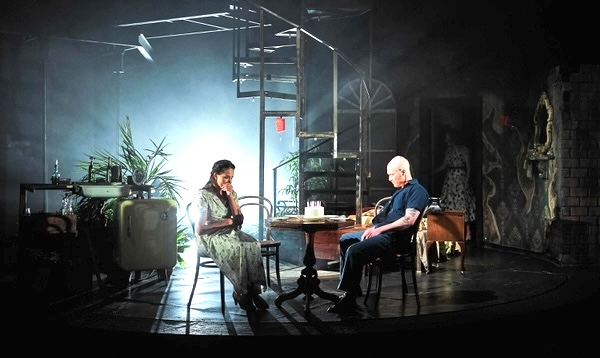
Stella (Nalini Chetty) and Stanley Kowalski (Matthew Trevannion) live in a cramped, two-room apartment in the French Quarter of New Orleans. Stella is pregnant and she’s understandably taken aback when her older sister, high school teacher Blanche DuBois (Kirsty Stuart), arrives unexpectedly, lugging a massive trunk and lacking the necessary funds to pay for a hotel room. Blanche announces that, after the death of their mother, the family plantation, Belle Reve, has been ‘lost to creditors,’ and Blanche has nowhere else to turn.

Stanley is immediately suspicious about Blanche’s rambling explanation for her presence, particularly when he hears about the loss of the DuBois family property, which he has always believed he is owed a share of. When Blanche begins a tentative romance with his card-playing buddy, Mitch (Keith Macpherson), he determines to do a little snooping…

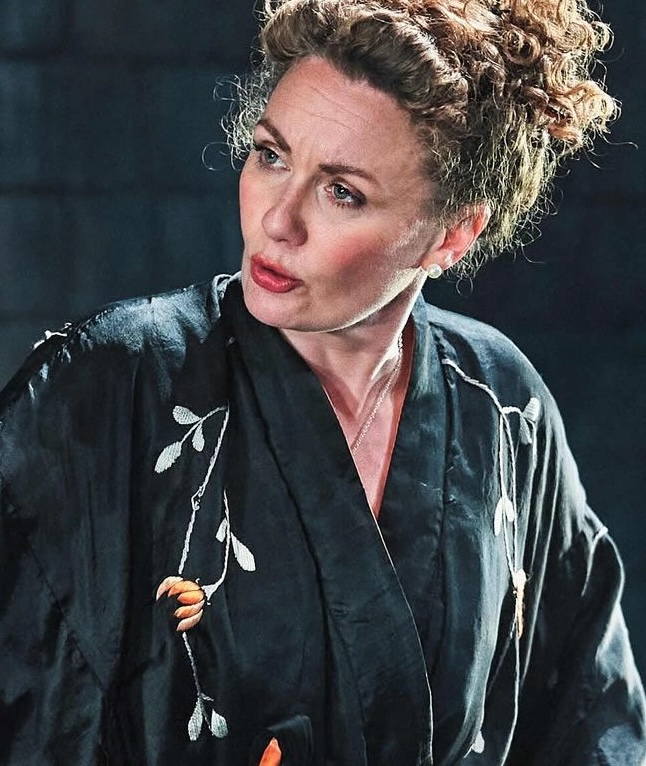
Stuart is superb in the role of Blanche, nailing the woman’s ever-shifting moods with consummate skill, one moment critical and demanding, the next coquettish and playful. Sound designer Pippa Murphy adds to her disturbed moods by overlaying scratchy soundscapes as Blanche is haunted by something terrible that happened in her youth. As the loathsome Stanley, Trevannion has a field day, strutting and bellowing around the cramped environment like a rooster, asserting his dominance over everyone who has the bad fortune to come into pecking distance. Chetty, meanwhile, navigates the turbulent waters between Blanche and Stanley, seemingly unable (and unwilling) to resist her husband’s rapacious demands. No matter how many times he attacks her, she always goes back for more.

Designer Emily James has chosen to situate the Kowalski apartment on a huge turntable and this is a masterstroke. As it rumbles around, presenting different views of both the interior and exterior of the apartment, it increasingly resembles a deranged carousel with the players caught in its unhealthy embrace, unable to get off the ride until it arrives at its ghastly destination. Director Elizabeth Newman eschews the victim-blaming that so often blights interpretations of this play and turns up the heat on the sweaty, malevolent scenario, so that the play’s final half makes intense, disturbing viewing. Those who are triggered by scenes of sexual violence should be warned that there are some challenging moments here, but for me, it’s like passing a car wreck on the motorway – I cannot tear my gaze away.

If you’re thinking, ‘Well, I’ve seen this play before,’ perhaps you should think again. This is a mesmerising slice of theatre, that feels as important now as it ever did.

5 stars

Philip Caveney

Shirley Valentine

13/06/24

Lyceum Theatre, Edinburgh

In Edinburgh, the weather is dreich, the rain falling endlessly from grey skies – but in the welcoming environs of the Lyceum Theatre, the sun blazes down onto fine white sand and shimmering Mediterranean waters. It’s here that Shirley Valentine has just experienced a personal revelation. The clitoris really does exist! Who knew?

Willy Russell’s celebrated play gets a welcome revival in this delightful production from Pitlochry Festival Theatre. Many will be familiar with the 1989 film adaptation starring Pauline Collins, where the story is opened out to include the various other characters whom Shirley describes in such hilarious detail, but here it’s presented in its original form – a funny, acerbic monologue in three acts.

We first encounter Shirley (Sally Reid) as she prepares a dinner of “chips ‘n’ egg” for her husband, Joe, and considers the best way to inform him that she has fed the mince he’s expecting to a vegan dog. Meanwhile, she chats to her oldest friend, the wall. In the second act, she’s anxiously preparing to head off on the Greek holiday she has also neglected to tell Joe about.

And, in the final act, she’s there: on an idyllic island, getting to know boat owner, Costas, and coming to terms with a newly-discovered sense of personal freedom.

Of course, the play stands or falls on the strength of its performer and Sally Reid does a fabulous job here, encapsulating Shirley’s strengths and weaknesses, her ability to move from mocking good humour to tragedy in the blink of an eye, the beat of a heart. She also manages to nail a Scouse accent while convincingly frying eggs. No easy matter. And Russell manages that rare thing, a male playwright effortlessly capturing a female personality with what feels like absolute clarity, managing to find the humour in her weary worldview without ever making his subject feel like a caricature.

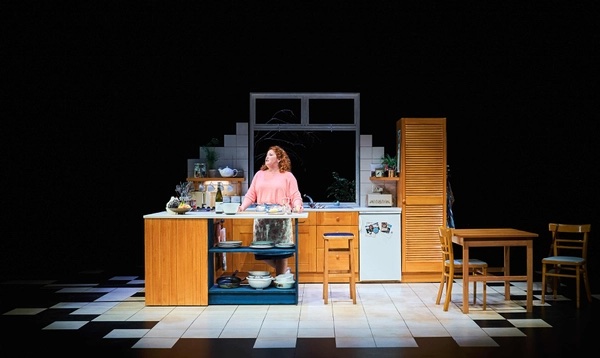
Emily James’ set design mirrors the play beautifully. Shirley’s Liverpool home is solid and brutally realistic, the walls constricting her. The Greek beach, however, comprises sequinned blocks, all shimmery and dreamlike – a mirrorball of possibilities. Director Elizabeth Newman keeps everything nicely nuanced throughout. I’ve seen other productions of the play that amp up the laughs until the bittersweet charm of it is all but swamped, but here is comes through loud and clear. Those looking for the perfect alternative to a disappointing summer need look no further than the stage of the Lyceum, where Shirley Valentine offers a warm and vibrant alternative.

4.6 stars

Philip Caveney

Sunshine on Leith

08/06/22

King’s Theatre, Edinburgh

In Edinburgh, you’re never more than six feet away from a Proclaimer. Or, at least, from someone proclaiming their love for the Proclaimers. The affection is well-deserved. Craig and Charlie Reid are responsible for a multitude of absolute bangers: deceptively simple tunes, combining heart and anger, warmth and sadness. It was inevitable someone would say, ‘Hey, we could make a musical from these.’ (Cue: Stephen Greenhorn.) And equally inevitable that the resulting project would be a hit, a regular on stage since its 2007 debut, with a successful film adaptation to boot.

So there are no surprises here. We’re familiar with the show; of course we are. Nonetheless, there’s a palpable thrill in the air, because we know we’re in for a treat. This two-venue production – co-directed by Elizabeth Newman and Ben Occhipinti – is laden with symbolism: the first show since Pitlochry Festival Theatre’s revamp, and the last before Edinburgh’s King’s Theatre closes for its own refurbishment. It’s the perfect choice for both, a celebration of Scottish talent and a love song to the people of Caledonia.

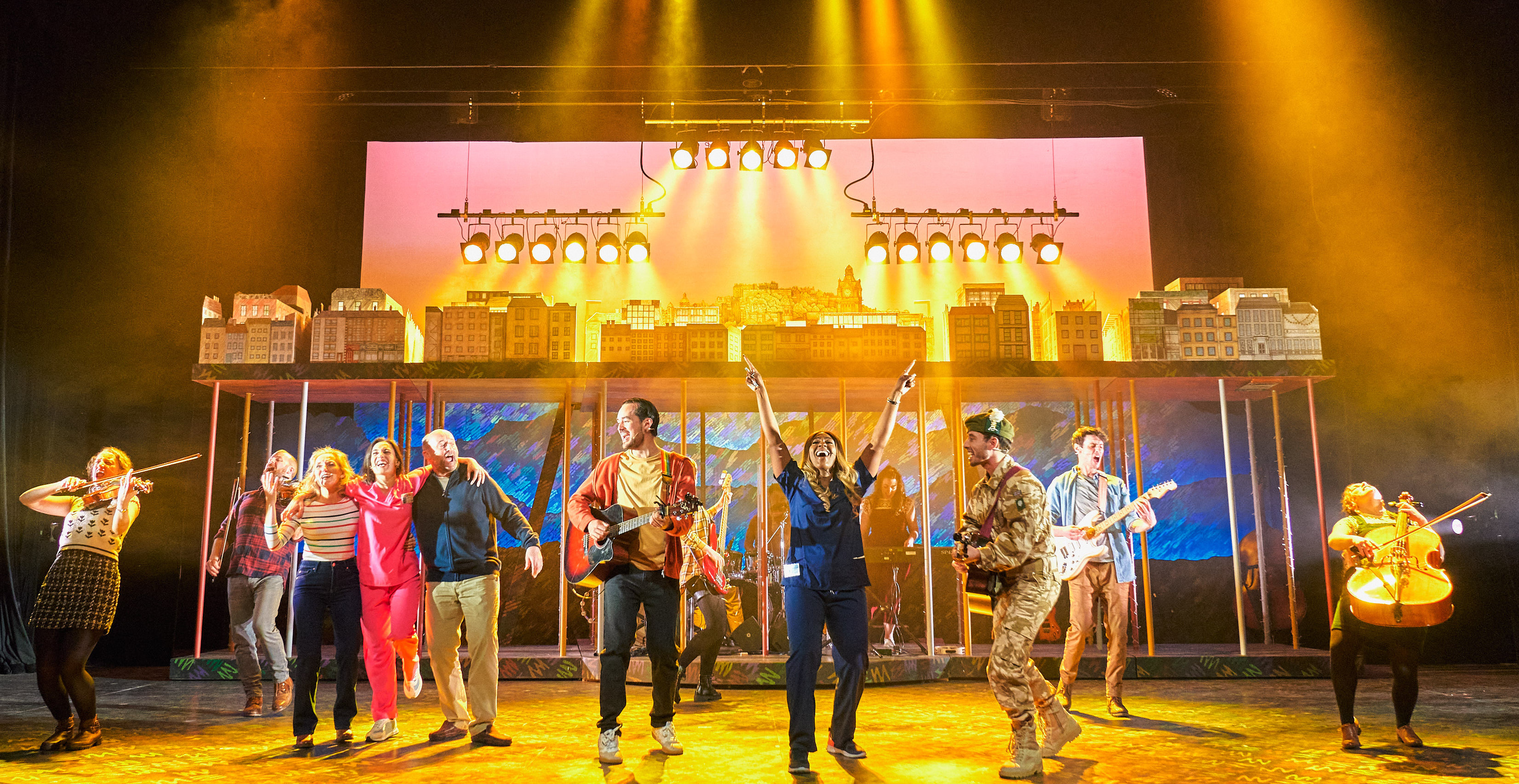
There’s a low-key, homespun ambience, which works well, creating a sense of familiarity between the performers and the audience. There are no flamboyant costumes here, no fancy pyrotechnics. Instead, like the Proclaimers’ songs, it’s quietly clever – no showing off. The band doubles as the ensemble, and they appear to be a happy team, grinning at one another and at us, and vibing unselfconsciously. There are no barriers, which cements that feeling of intimacy, enabling us to empathise with the characters. This is no mean feat in a large, traditional theatre like the King’s, with its proscenium arch and imposing loges, all designed to accentuate the separation of stage and auditorium. It’s really very impressive.

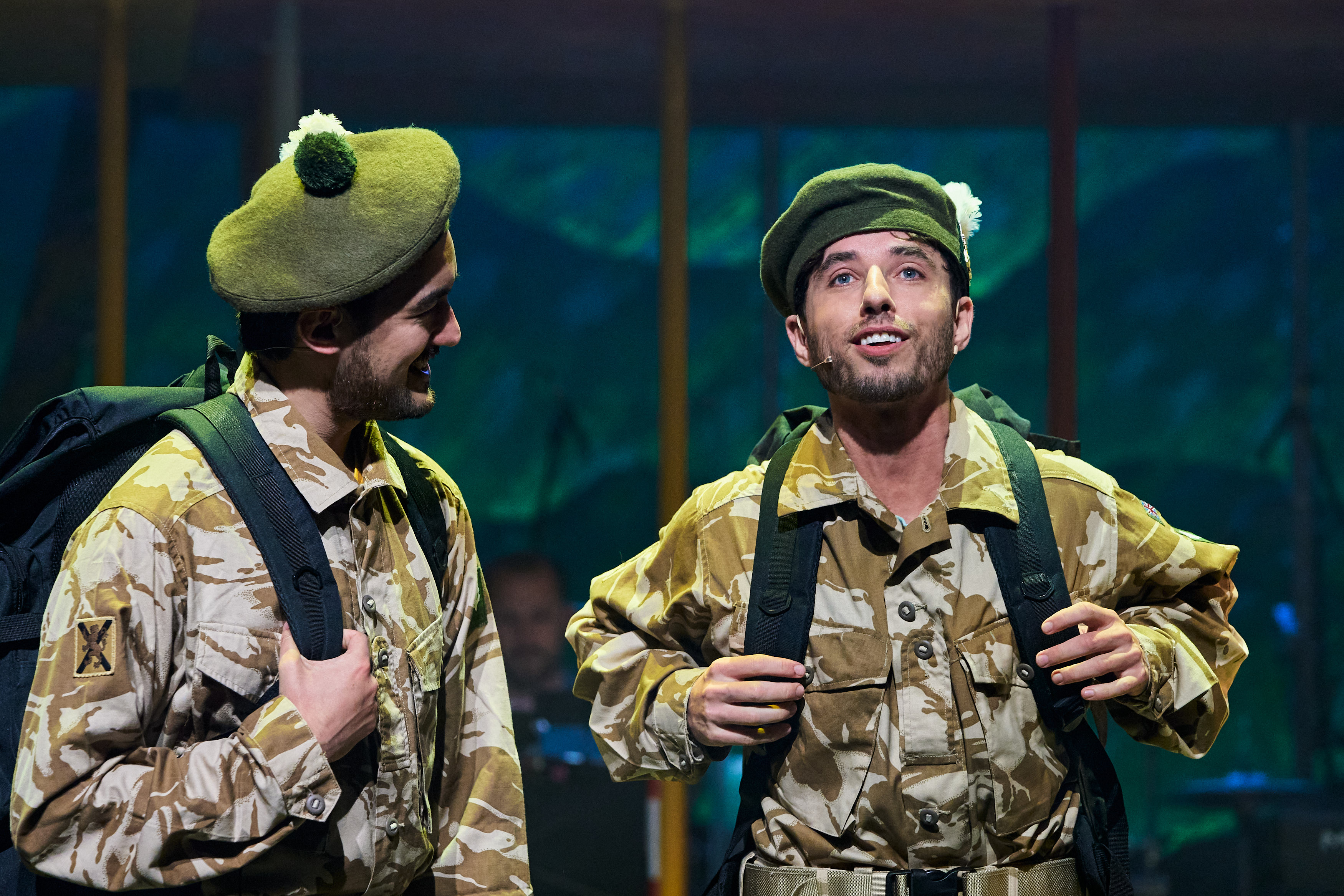
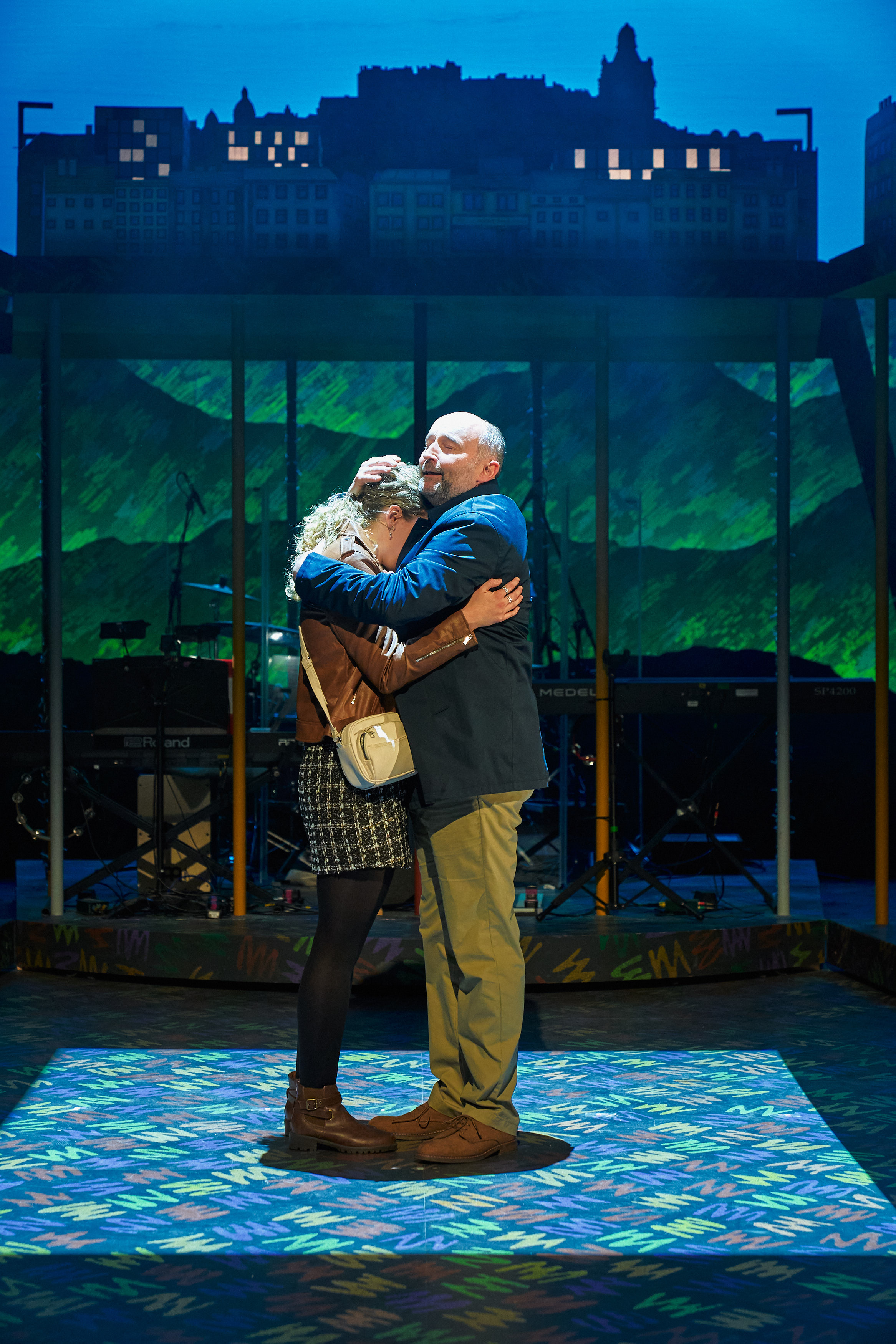
The story is a Willy Russell-esque account of working-class life, told with affection and a strong sense of place. Ally and Davy (Keith Jack and Connor Going) are back in Leith, having been honourably discharged from the army, just in time for Davy’s parents’ thirtieth wedding anniversary party. Ally’s been going out with Davy’s sister for years, and he’s hoping now’s the time to settle down, but Liz (Blythe Jandoo) isn’t quite ready for that. She’s been stuck at home while he’s been away, and she’s restless, keen to stretch her wings. Her nursing pal, Yvonne (Rhiane Drummond), meanwhile, has fallen for Davy – and what is Davy’s dad, Rab (Keith Macpherson), hiding from his wife, Jean (Alyson Orr)? It’s a simple tale, but surprisingly affecting, and I find myself tearing up on more than one occasion. No spoilers, but the line “Because they wanted me” just hits me every time, and Orr’s rendition of the titular song is genuinely heartbreaking.

Adrian Rees’ set looks great. A miniaturised Edinburgh skyline is mounted on stilts, while the action occurs below – a neat representation of Leith and Edinburgh, the city looming over the town. There are ladders leading up to Blackford Hill; from here, we join the characters looking down on their home turf, trying to get a handle on their place in the world. The set comes apart, so that sections can be moved to create walls, but this is a distraction for me. It seems unnecessary and, although the transitions are thoughtfully choreographed, there’s too much clutter and stage traffic for very little gain.

In the end, this is all about the music (directed by Richard Reeday), and it’s a fabulous combination of the raucous and the refined. There are some issues with the sound – mics occasionally cutting out, and some imbalance between the vocals and the instrumentals – but none of it really detracts from the serious talent on display.

Sunshine on Leith has a relatively long run, so you’ve got until the 18th June to catch it here in Edinburgh – and to say “bye the nou” to the Old Lady of Leven Street.

4.3 stars

Susan Singfield