28/01/22
Cineworld, Edinburgh
Pedro Almadóvar’s latest film is as fascinating as you’d expect; the veteran director is no stranger to serious stories, improbably furnished with lush images and unlikely melodrama. In this sense, Parallel Mothers is more of the same. But it is, of course, gloriously original too, and very much its own film.
Actually, maybe that’s not quite right. Maybe this is really two different films, because the two main strands are very disparate and never really converge. They’re parallel, if you like.
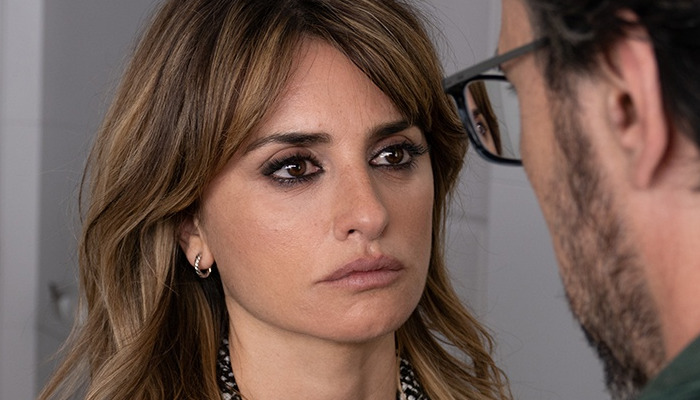
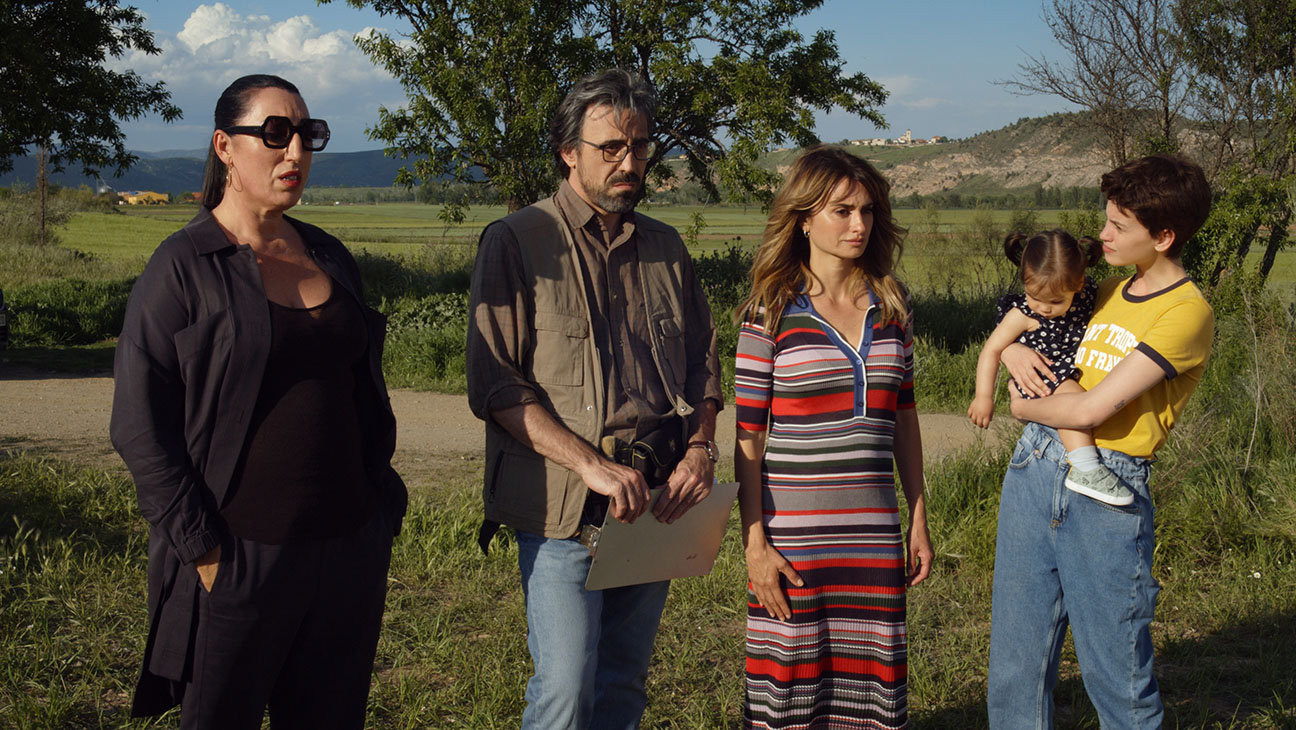
We open with the first – and arguably most interesting – strand. In a studio in Madrid, Janis (Penélope Cruz) is taking photographs of Arturo (Israel Elejalde), an eminent archaeologist. She seizes the opportunity to ask for his help: she wants him to excavate a potential grave-site, where, she believes, her great-grandfather is buried, along with nine other early victims of the Franco regime. The impact of the past on the present is superbly realised, and reinforces the importance of Spain’s Law of Historical Memory, which – shockingly – only began the process of identifying and exhuming mass graves in 2007. I’m embarrassingly ignorant about the Spanish Civil War; this movie has already made me read up on the basics, and I’m keen to learn more, so – for me, at least – it’s proved successful in raising awareness, which is clearly part of Almadóvar’s aim.
The second strand is more domestic. Janis and Arturo have a casual relationship, which results in a very-much-unplanned pregnancy. She’s delighted; he’s not. He’s married; his wife has cancer; he doesn’t want to start a family. They part amicably. Janis doesn’t mind the idea of raising a child on her own; after all, her own mother did it, and her grandmother too.
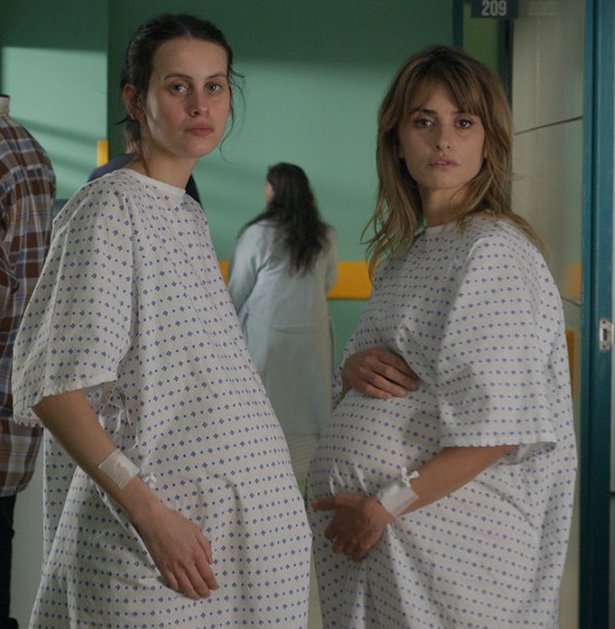
In the maternity hospital, Janis’s roommate is a frightened teenager. Ana (Milena Smit) doesn’t want a baby. She’s got all the material support she could need: her mother, Teresa (Aitana Sánchez-Gijón), is a wealthy actress with a big house, and there are staff too: a housekeeper and a nanny. But the emotional support is lacking, and she turns to Janis for comfort. The two women are very different, but their situations similar enough to allow them to bond.
Until something unforeseen happens…
The film ends with a quotation from Eduardo Galeano: “No history is mute. No matter how much they own it, break it, and lie about it, human history refuses to shut its mouth.” This is true of the bodies piled in anonymous graves, and it’s true of the contemporary secret Janis uncovers too.
There are more parallels: between Lorca’s exposé of “the grotesque treatment of women in Spain” in Doña Rosita the Spinster (Teresa’s latest role) and Ana’s tragic backstory; between Janis and her own free spirit of a mum, dead at twenty-seven from an overdose.
There is also humour, and beautiful domestic scenery. Ana and Janis bond over stereotypical ‘women’s work’ – the food imagery is very evocative, and I leave the cinema feeling hungry.
And yet…
This film is gorgeous to watch, thanks to José Luis Alcaine’s cinematography, but there’s no getting past the fact that some plot points are skated over. Without giving any spoilers, I can’t say too much, but there’s a gaping hole where officialdom and bureaucracy should be, and perhaps the tying up of the ‘mothers’ strand feels a little glib.
There’s no glibness in the final shot though; that’s as profound as they come. I’d have liked a better balance between the two strands, I think: the domestic story overshadows the historical one.
But, without doubt, this is a film to watch.
4.1 stars
Susan Singfield


 Bouquets & Brickbats