11/11/23
Cineworld, Edinburgh
Winner of this year’s Palme d’Or at Cannes, Justine Triet’s Anatomy of a Fall is a sly and unconventional crime drama that steadfastly refuses to follow the familiar tropes of the whodunnit, preferring instead to explore the psychologies of its characters. It manages to sustain an air of mystery without ever offering viewers anything resembling a plausible solution – and yet, somehow, this only serves to make the story all the more intriguing.
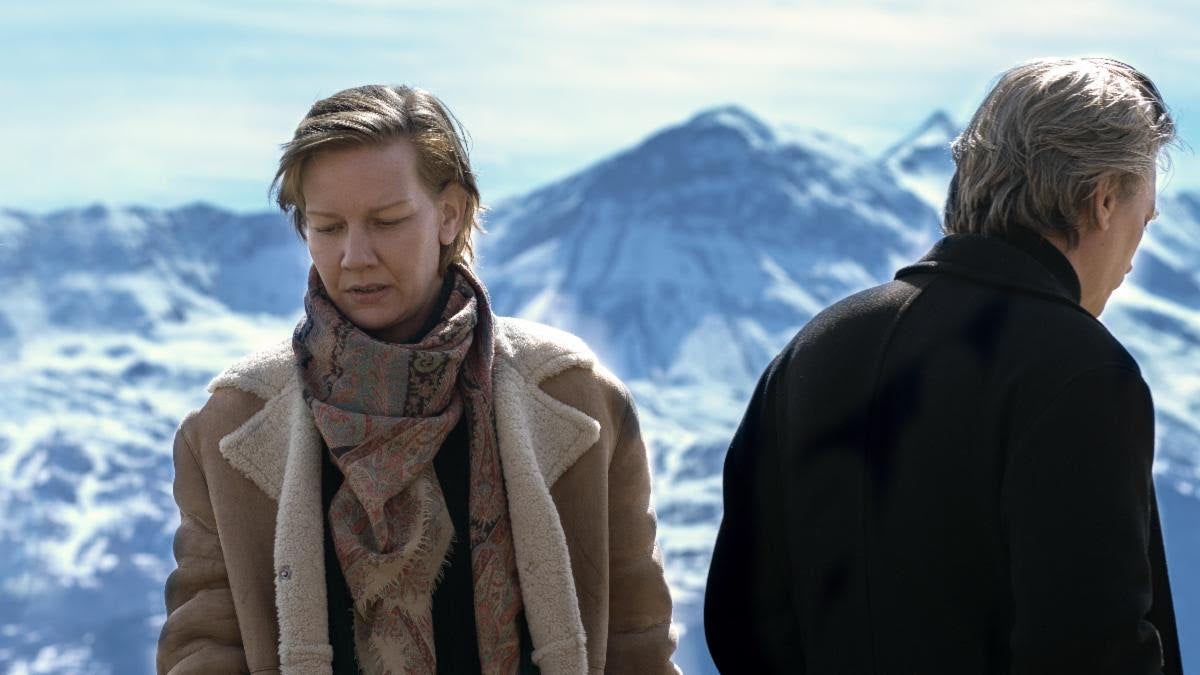
In her remote chalet in the French Alps, novelist Sandra Voiter (Sandra Hüller) is attempting to conduct an interview with graduate student Zoé (Camille Rutherford). There’s an obvious attraction between the two – Sandra is openly bisexual – but up in the roof space, Sandra’s husband, Samuel (Alan Davies lookalike, Samuel Theis), is asserting his presence by doing some noisy manual work. He’s also playing music at an ear-shattering volume, which makes the planned interview impossible. It is soon abandoned and Zoé leaves.
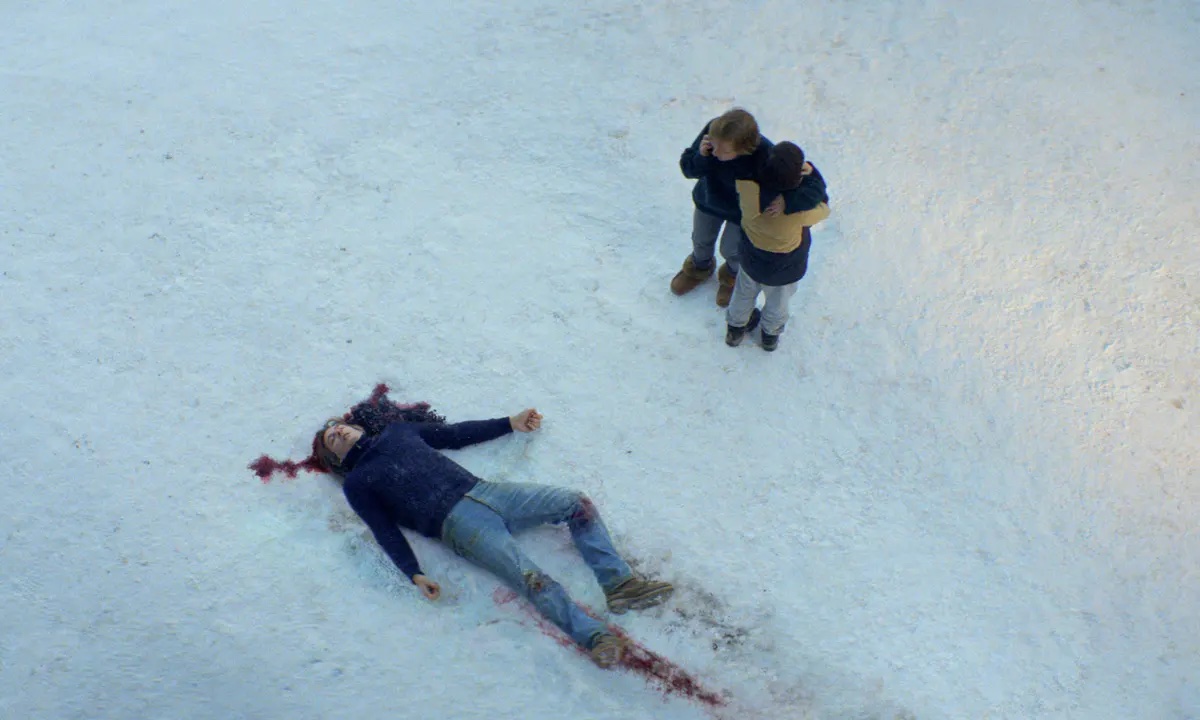
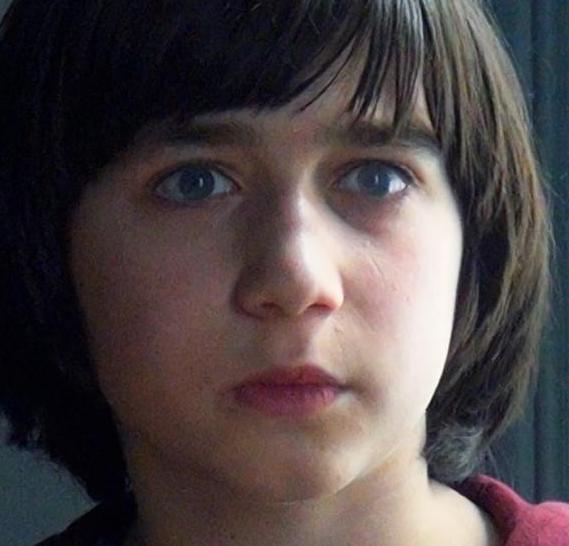
Shortly afterwards, Sandra and Samuel’s visually-impaired son, Daniel (Milo Machado Graner), takes his dog for a walk in the snow and, on his return, he (quite literally) stumbles upon the bloody corpse of his father, lying a short distance from the house. Samuel has fallen from the attic space, striking a shed on the way down.
But did he jump – or was he pushed?
Soon, an investigation is under way and Sandra is the only suspect. Her past actions are making her look ever-more unreliable, so her attorney (Swann Arlaud) is struggling to construct a credible defence – and it probably doesn’t help that he is attracted to her. Meanwhile, the prosecutor (Antoine Reinartz) seems to have made it his personal mission to see her behind bars.
The irony here is that the person with the clearest vision of what’s actually going on is a boy whose eyes don’t work…
Anatomy of a Fall is a strange beast indeed, a film that becomes increasingly compelling as it moves ever further away from anything approaching a straightforward resolution. The fact that the two main characters are writers of fiction – and the ways in which the narrative becomes increasingly more speculative as the case progresses – adds to the sense of intrigue. And then there’s a late-stage flashback, prompted by the discovery of an audiotape (recorded by Samuel), which sets everything spinning in an entirely different direction. Hüller offers a compelling performance in the lead role, but it’s young Machado Graner who makes the biggest impression, as the indefatigable Daniel, struggling to come to terms with the death of his father.
The nebulous nature of the plotting will doubtless have Agatha Christie spinning in her grave, but this feels like a fresh and unconventional approach to the crime genre and it’s easy to see why the film was chosen as the winner of one of cinema’s most coveted prizes.
4.3 stars
Philip Caveney
 Bouquets & Brickbats