Olivia Caw

Common Tongue

03/10/25

The Studio at Festival Theatre, Edinburgh

Writer-director Fraser Scott explores the knotty relationship between language and identity in this searing polemic, which – despite the complexity of the subject – is both accessible and very funny.

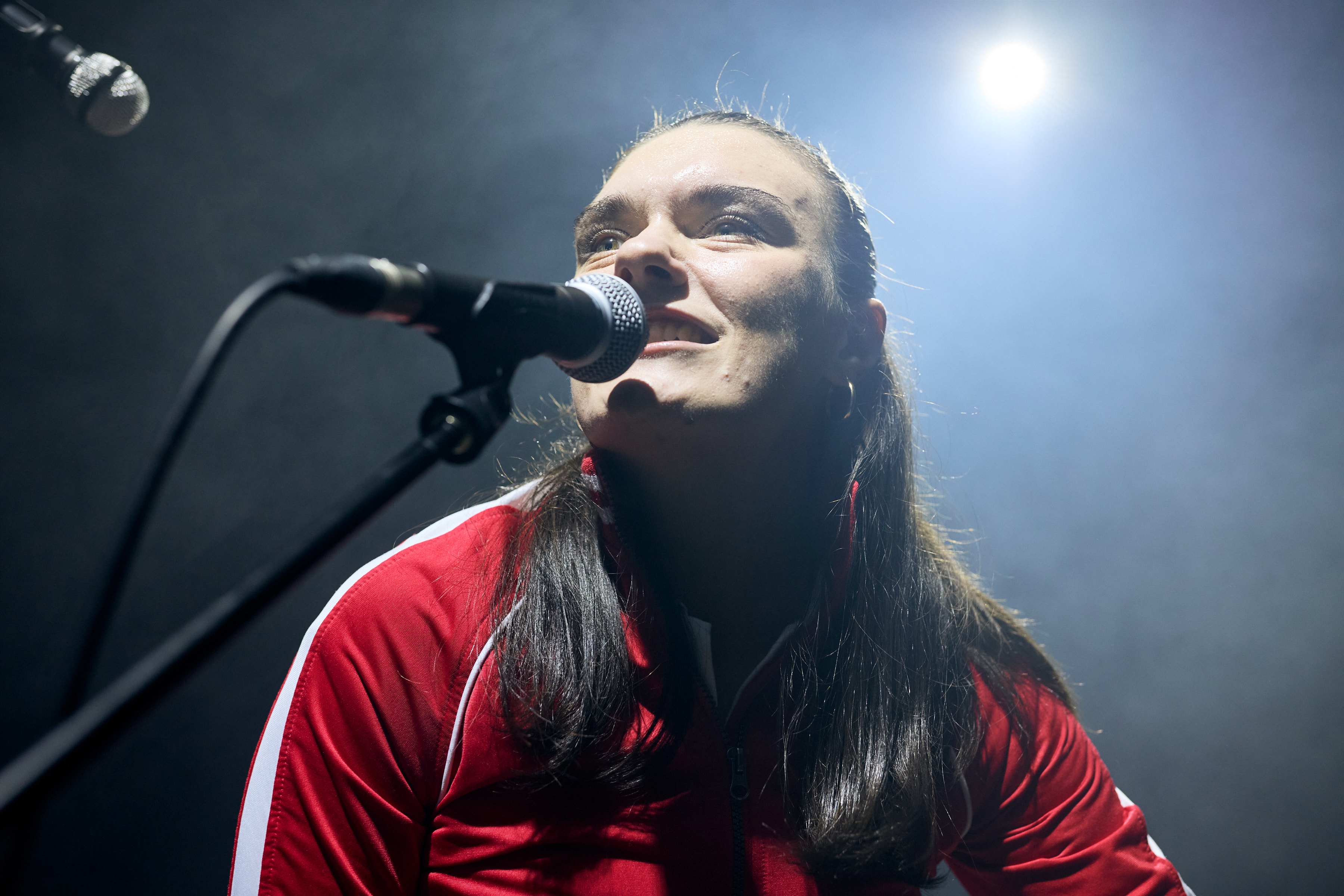
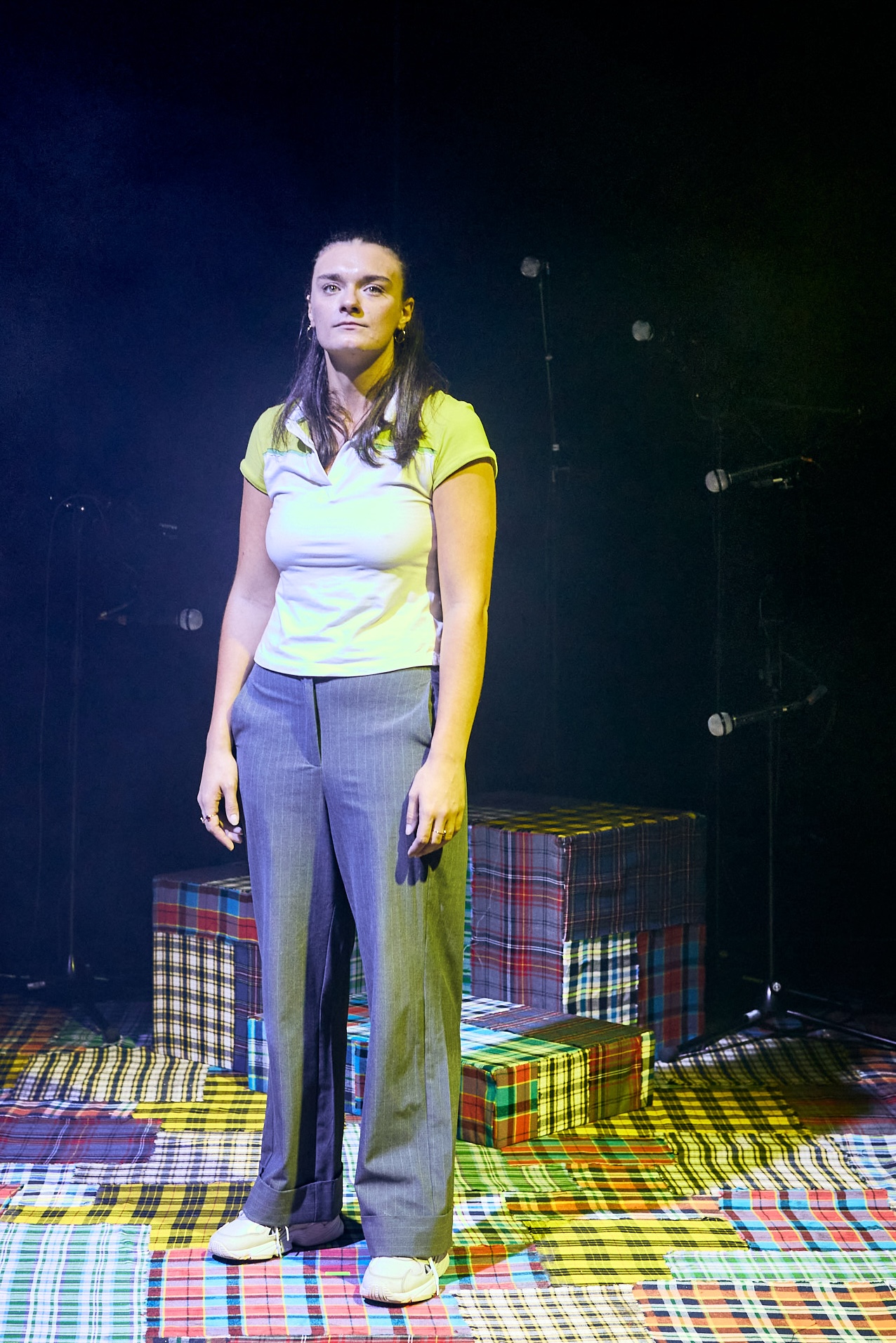
Bonnie (Olivia Caw) is fae Paisley, where she lives with her beloved Papa and speaks like him too. She’s sparky and clever and, as she grows up, keen to spread her wings and see the world.

Step one is St Andrew’s University, where her flatmates are all from England or Edinburgh – “aun a dinnae ken which is worse.” They tease Bonnie about the way she speaks, and she gives as good as she gets, mocking their accents in turn. But of course it’s not the same. The English girl who says, “You have to be okay with how we sound too,” is missing the point. The way she sounds isn’t always on the brink of being wiped out, has never been banned, will never disadvantage her. But Bonnie doesn’t yet have the words to articulate this point.

Step two is a year in the USA, where even those who enthusiastically claim their “Scotch” ancestry struggle to understand anything Bonnie says. She finds herself having to speak slowly and Anglicise her language, which seems harmless enough but it’s tiring. It takes its toll.

Back on home turf, a graduate now, killing time while she works out what she wants to do with her life, Bonnie is disconcerted by Papa telling her that she sounds different: “pure posh.” She realises she has to make a choice. Will she sacrifice her voice to achieve success in an unequal world, or will she roar at the injustice and fight to be heard on her own terms?

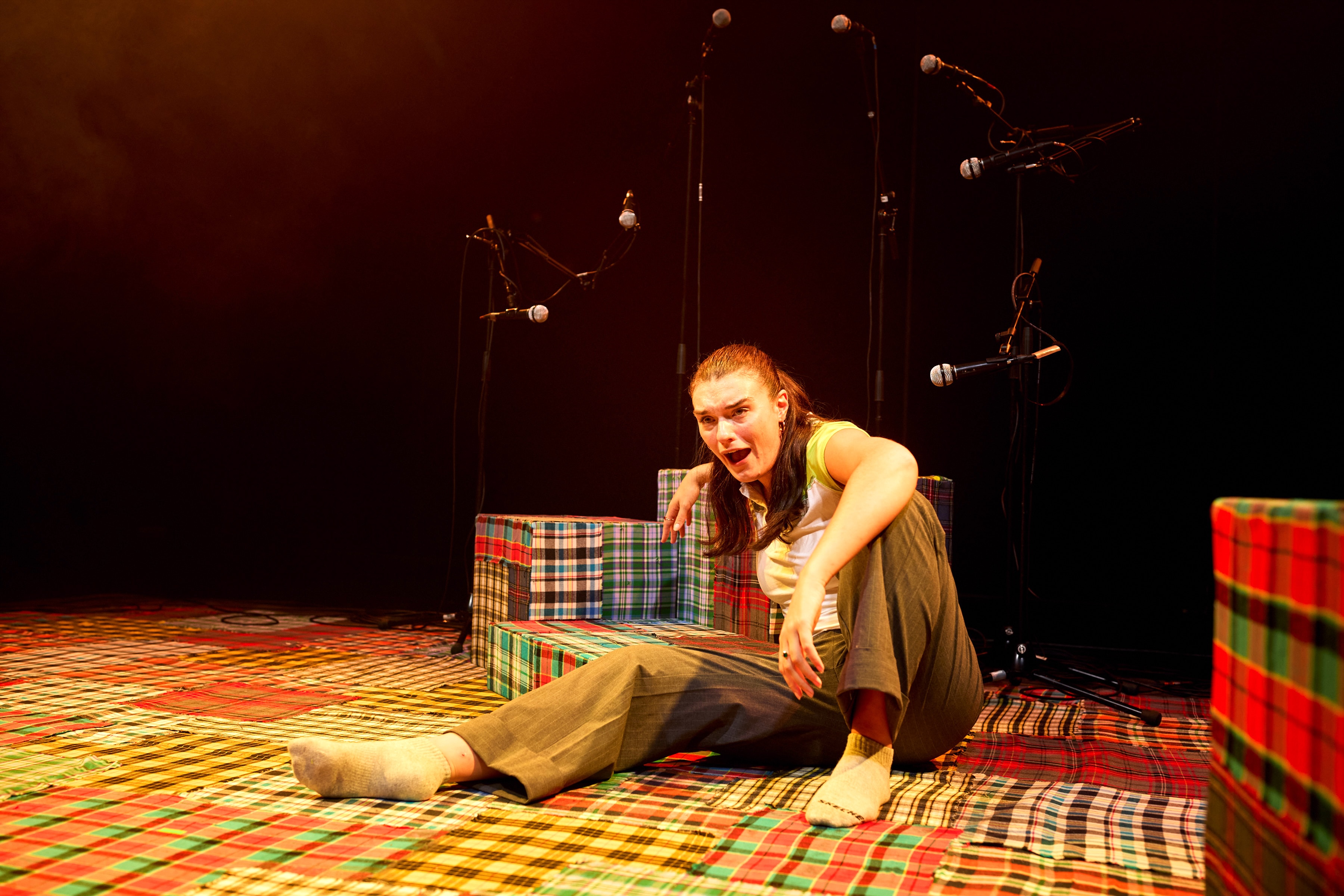
This is a demanding monologue and Caw’s performance is flawless, at once profound and bitingly funny: the jokes delivered with all the timing and precision of a top comedian; the emotional journey intense and heartfelt.

Patricia Panther’s sound design is integral to the production, and I especially like the use of multiple microphones, clustered to denote new places and people. Admittedly, there’s a lot of competition from Storm Amy raging outside and rattling the pipes, but it’s effective nonetheless.

Fraser makes his points cogently, probing both the Sapir-Whorf hypothesis (that the language we use shapes the way we think) and the repercussions of linguistic colonialism. As a Welsh woman, I’m familiar with historical tales of school-kids being punished for speaking Cymraeg, but the Scots issue is clearly ongoing. In fact, as I leave the theatre tonight, I bump into one of the teenagers who attends the drama club I teach. He tells me that he was sent out of class recently for saying, “I ken,” that his teacher deemed his language “cheeky.” I think his teacher needs to see this play.

Kinetic and engaging, Common Tongue has a lot to say and a braw way of saying it.

5 stars

Susan Singfield

4PLAY: 4 New Plays from 4 Edinburgh Playwrights

05/12/2406/12/24

Traverse Theatre, Edinburgh

As Scotland’s new writing theatre, the Traverse is the natural home for the 4PLAY collective to showcase their work. Over four nights, four emerging Edinburgh playwrights see their stories brought to life on the iconic Trav 2 stage – and all are greeted with delight by enthusiastic audiences.

First up is Fuckers by Ruaraidh Murray. From its opening moments, it’s clear that this is the no-holds-barred production its title suggests. In blackout, we listen to a noisy orgasm and then, as the lights go up, we’re confronted with a naked couple, daring each other to try a new sex act. As beginnings go, this is undeniably memorable! The pair are Andrew (Liam Ballantyine), a Scot, and Lois (Olivia Caw), an American, two performers who fall in love at the Fringe. But their sexual attraction is soured by their vaulting ambition, which o’erleaps itself and dooms their relationship. Directed by Eleanor Felton – aided by Sasha Harrington as a very necessary intimacy coordinator – this is a high-octane piece with an engaging energy. However, although the nudity works at first, establishing the physical nature of the affair, the constant dressing and undressing disrupts the flow and slows down the action, which is a real shame for such a kinetic piece.

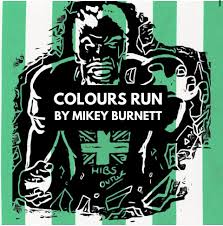
Colours Run, written by Mikey Burnett and directed by Grace Ava Baker, tells the story of self-professed Hibs-loving hardman, Pongo (Ruaraidh Murray), who may have finally taken his nihilistic antics a step too far. Fearing retribution after handing out one beating too many, he heads home, anticipating the knock at the door that could come at any moment. Pongo lives with his younger brother, Pete (Sean Langtree), who openly idolises his big bruv and does everything he’s told, which means that he rarely goes out into the real world. Both Murray and Langtree are utterly compelling in their respective roles, Langtree appealingly vulnerable, Murray cold and calculating. The section where the pair play Who Wants to Be a Millionaire is wildly funny – but in the play’s latter half, Burnett’s script takes a confident step into darker, more transgressive territory. The nail-biting conclusion (which seems to echo Of Mice and Men) is simply but brilliantly handled.

Butterflies and Benefits, written and directed by Andrea McKenzie, boasts a cast of five and looks at the lives of four young protagonists enjoying a hedonistic lifestyle in the Edinburgh of the 1990s. Maz (Amy Glass) is having a great time partying until she falls under the spell of Mik (Michael Francis), an opportunistic coke-fiend who cannot extricate himself from the grip of the drug. Pretty soon, Maz falls pregnant and her close friends Abs (Lex Joyce) and Dee (Isla Campbell) can only look on in dismay as Maz and Mik enter a spiral of destruction. The long trance/dance sequences scattered throughout the narrative occasionally impede the momentum, and a single scene featuring health worker, Doc (Laverne Edmonds), doesn’t do enough to earn the character’s place in the story. This is an all-too-familiar warning about the dangers of drug addiction and the importance of friendship.

Last, but certainly not least, is Cheapo by Katy Nixon. A tight two-hander, this is our favourite of the four plays, deftly exploring the impact of a traumatic event on a pair of frightened teenagers. Something happened to Kyla (Heidi Steel) at a recent party, and she needs Andrew (Dayton Mungai) to help her sort it out. But he knows that her version of events is just a form of self-protection, and he’s not prepared to go along with the lies she’s telling herself. In a not-especially-subtle-but-nonetheless-effective metaphor, they play a game of chess, arguing about their possible moves while fighting to avoid checkmate. Under Gwen M Dolan’s direction, the tension is undercut by some beautifully-realised flights of fancy, as the duo imagine how their lives might have played out in alternate realities. Nixon’s script is spare and succinct, without a wasted word. She’s certainly one to watch.

What a treat it has been to see this quartet of plays, exploring stories from the edges of society. We look forward to seeing what these playwrights do next, and also to 2025’s 4PLAY.

4 stars

Susan Singfield & Philip Caveney