Nicole Cooper

Cinderella: A Fairytale

29/11/25

Royal Lyceum Theatre, Edinburgh

Look, I love a good panto as much as the next drama queen. Still, I have to admit there is something very special about this chance to see a Christmassy rendition of one of the world’s most famous fairy-tales without the distraction of all the boo-hiss-he’s-behind-you-wink-wink-nod-nod stuff. Cinderella‘s plucky orphan narrative is a compelling one, not least because of its moral certainty, where the good are rewarded and the bad are well and truly punished: there’s vengeance at play here, as well as virtue. And, in this version by Sally Cookson, Adam Peck and the Original Company, that dichotomy is writ large.

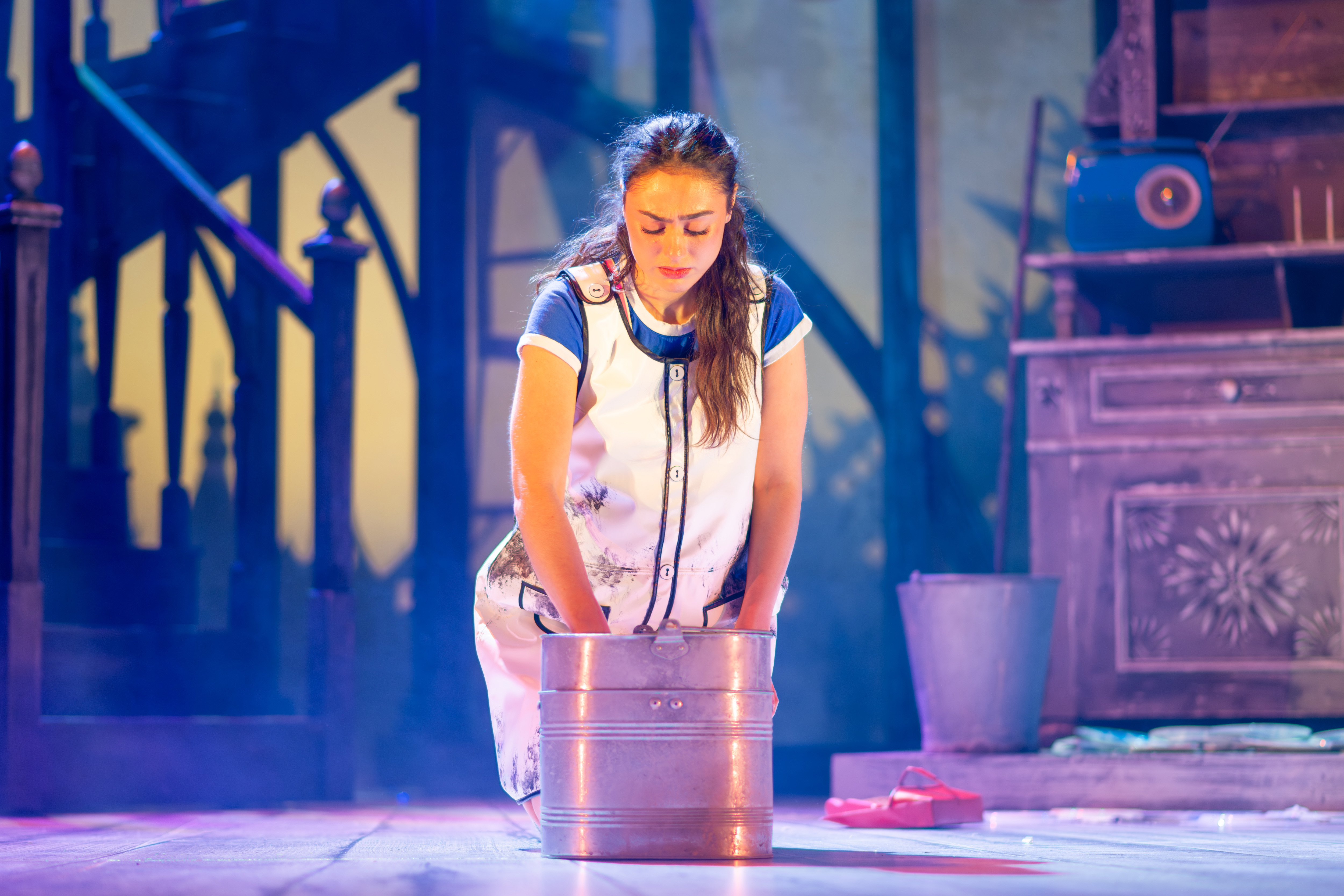
Ella (Olivia Hemmati) lives in a gloriously-realised enchanted forest, all dappled sunlight and multi-coloured birds. The home she shares with her dad (Richard Conlon) is one of those idyllic, romantically-ramshackle cottages where poor people live in story books, and she’s happy there. But when Father marries Mother (Nicole Cooper), everything changes: not only does her step-mum impose a whole raft of irritating rules, she also brings along her own two children, Sister (Christina Gordon) and Brother (Matthew Forbes), who are so priggish and uptight that Ella can’t stand them. And then, just as she’s getting used to the new regime, Father dies, leaving a grieving Ella at Mother’s mercy…

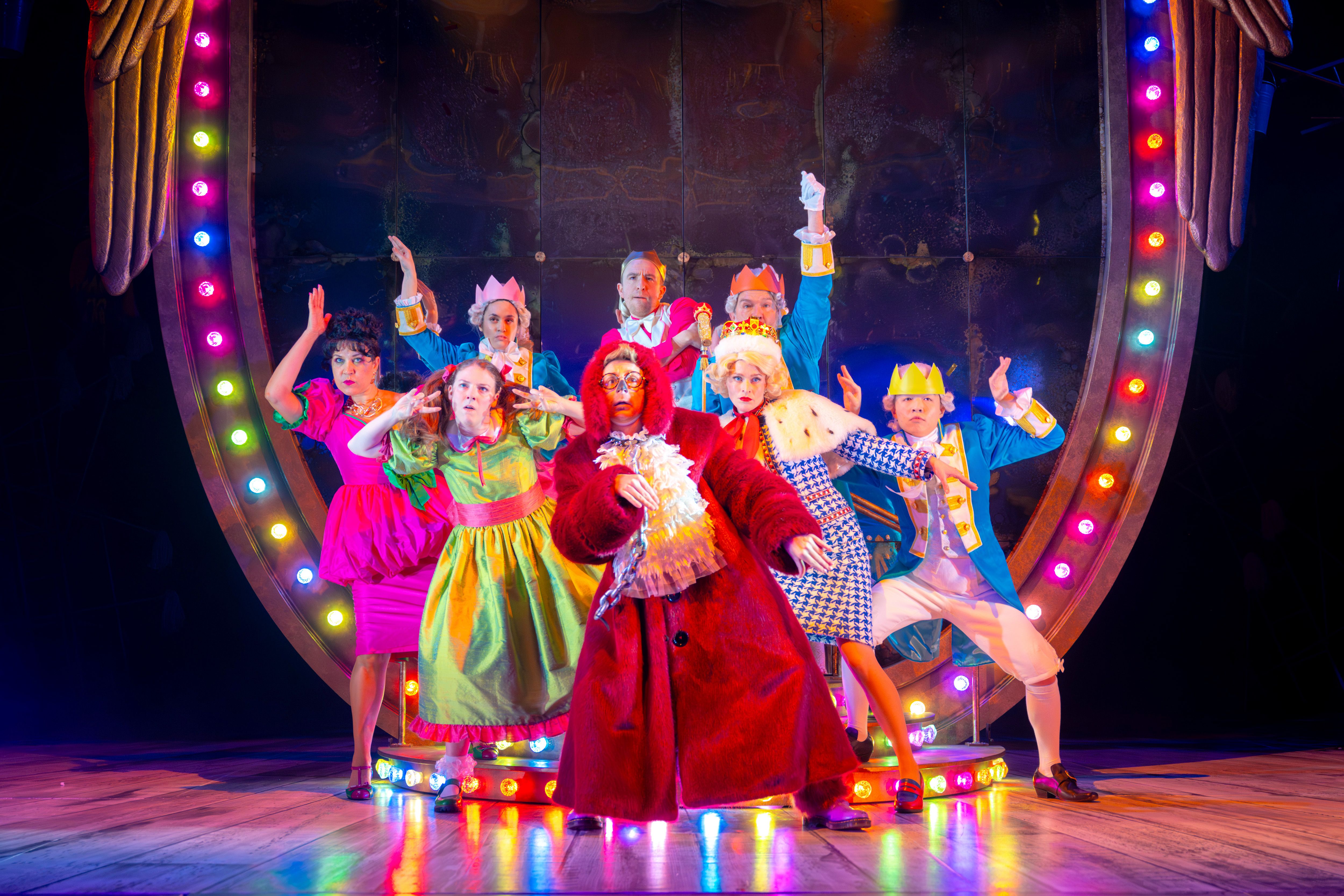
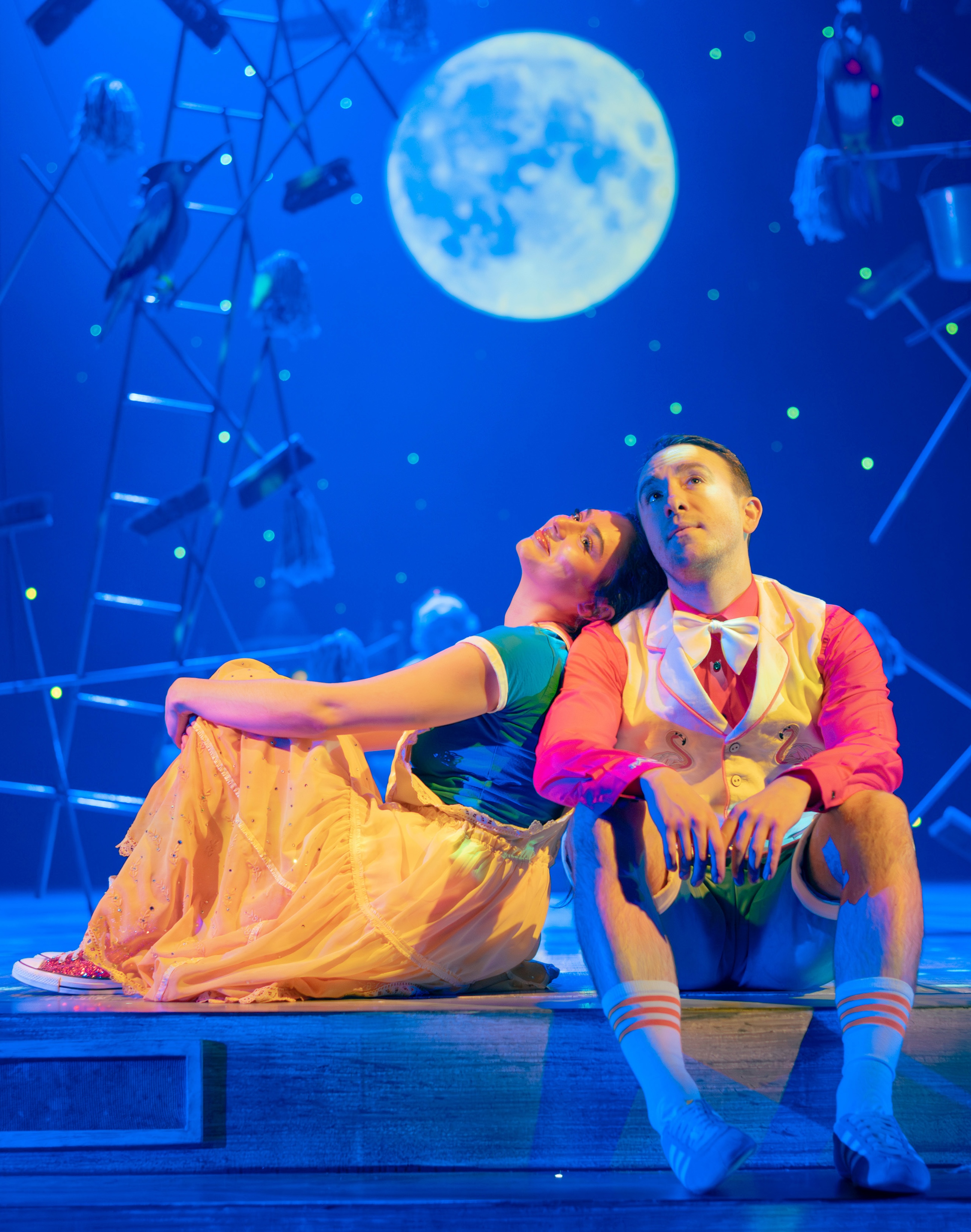
The strength of this show lies in its aesthetic: Francis O’Connor’s set and costume design evoke an ethereal other-worldliness, where magic feels eminently possible. The bird puppets (directed by Forbes and manned by Leo Shak, Stephanie Cremona and the cast) are fabulous, their rainbow plumes as appealing as they are fantastical. Even as a middle-aged woman, I’m completely captivated; how alluring must this staging be for the children in the audience?

The love story element is underplayed: Prince (Sam Stopford) is a nerdy teenage ornithologist and he and Ella strike up such a lovely, convincing friendship that the idea of their marriage seems jarring and incongruous. Director Jemima Levick wisely eschews any overt wedding pageantry, but I do wonder if it would be better to remove the romance entirely, focusing instead on the simple affection between the pair. After all, it’s not as if there’s the same financial imperative for this Ella, who seems to be living in a whimsical approximation of the contemporary world, as there was for her Grimm progenitor, who needed a husband to escape her servitude.

Cooper is obviously having a whale of a time as the odious Mother, camping up her tantrums and cruelty to create a deliciously-devilish interpretation of the character. The protracted toe-chopping sequence – the production’s only real nod to the folk story’s dark heart – is a gruesome highlight. Meanwhile, Gordon and Forbes’ Ugly Siblings are more sympathetic and nuanced than their traditional counterparts, frightened and corrupted by their toxic mum – and clearly redeemable. Carly Anderson has less to do as Queen, who appears here as a slightly-sozzled, benignly-bemused socialite. It’s an interesting take on the role but she is under-used.

Jon Beales’ music and Emily Jane Boyle’s choreography complement each other perfectly, enhancing the story and ensuring the pace never flags.

All in all, this is a delightful production, and one that is sure to enthral audiences of all ages this festive season.

4.2 stars

Susan Singfield

Lear

05/06/25

Traverse Theatre, Edinburgh

It seems at first an act of incredible hubris: to take one of Shakespeare’s most accomplished works, chuck out all those pesky words and attempt to tell the story entirely through movement. But only a few minutes into Raw Material’s adaptation and I am beginning to appreciate what a clever idea this actually is – one that opens out the play’s central story to encompass a whole range of different interpretations. Anybody who has watched helplessly as an aging relative slips inexorably into the fog of dementia, for instance, will find plenty to identify with here.

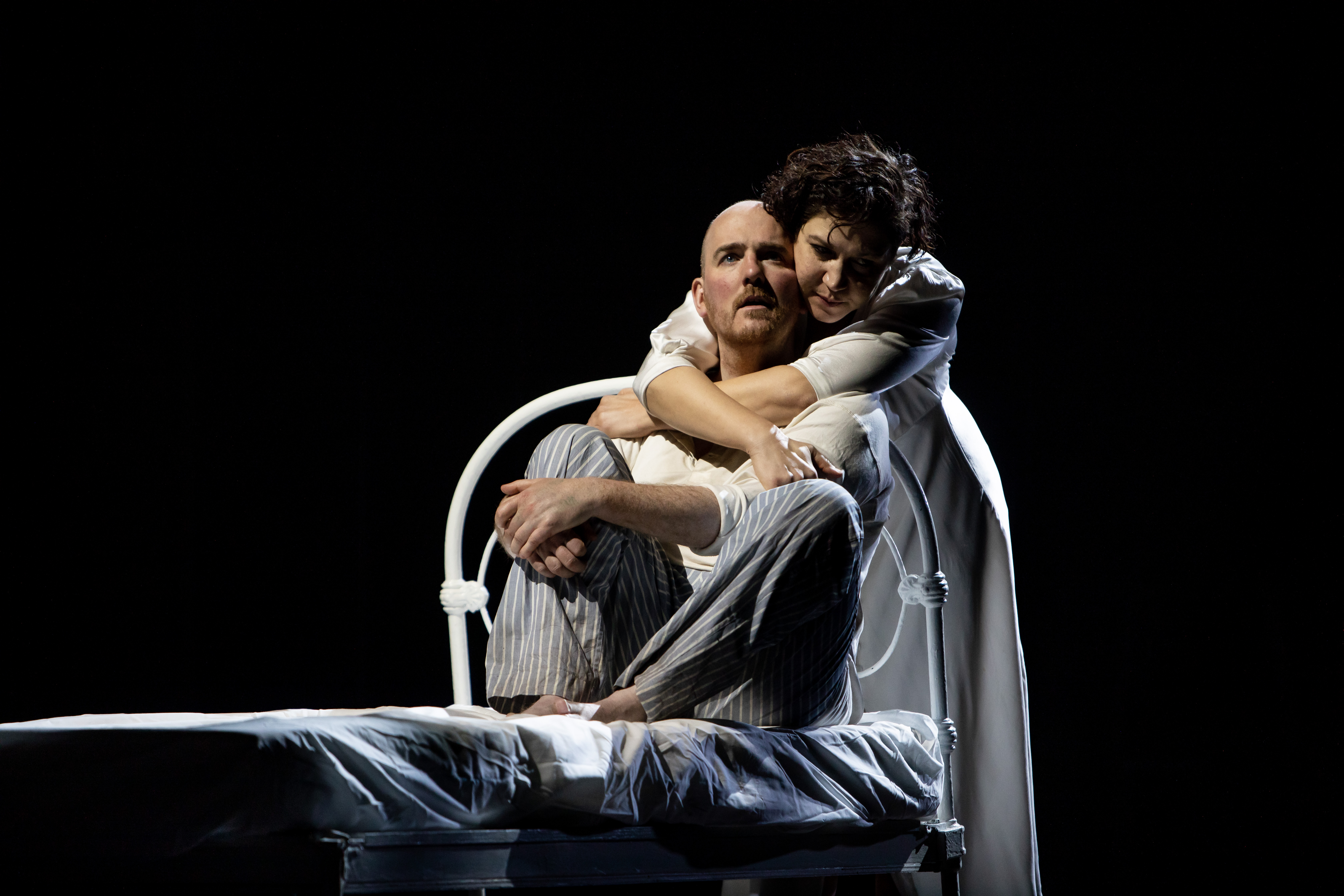
Anna Orton’s simple set comprises mostly heaps of sandbags, which we will soon discover are stuffed with what look like ashes and which, when scattered around the stage, seem to accentuate the central character’s failing grasp on reality. When Lear (Ramesh Meyyappan) first strides confidently into view, he is fearless, energetic, reenacting his past conflicts for the entertainment of his three daughters.

But we cannot fail to notice that he is already jumping at shadows, reacting to every bump and thud of David Paul Jones’s vibrant score, every flash and flicker of Derek Anderson’s vivid lighting design. Director Orla O’Loughlin keeps him centre stage while his daughters move around its periphery, cooly observing as he begins a slow but steady decline. As his grasp on the war-torn kingdom grows ever more precarious, so he goes to his daughters seeking refuge. Regan (Amy Kennedy) and Goneril (Nicole Cooper) are not the grasping, cruel sisters of the source play, but rather two concerned siblings that strive their hardest to accommodate their Father’s eccentricities. Cordelia (Draya Maria) keeps to the sidelines, always giving way to her more manipulative sisters – but her affection for her father is evident, making it clear that she will love him unconditionally.

And then the fog really begins to take hold as Lear don’s his Fool’s old hat and adopts the gurning, slapstick attitude of his former jester, Meyyappan pantomiming exquisitely as he slips effortlessly between the two characters, bicker and competing with each other for the sister’s affections. His bewildered daughters try their best to cope with their father’s mounting instability but once taken hold, these changes cannot be denied. In Lear’s latter stages, stripped to his underwear and no longer able even to wash himself, the character’s ultimate tragedy really begins to hit home.

Lear’s story is also true of so many people as they begin to slip helplessly into their twilight years – as they succumb to drug addiction – as they are weighed down by advancing depression – the transformation witnessed by their partners and their children. This daring adaptation nails such experiences with considerable skill.

Despite my initial reservations, I have to raise my hat to a fearless and thought-provoking piece of theatre.

4.2 stars

Philip Caveney

The Spark

04/04/23

Traverse Theatre, Edinburgh

It’s hard to believe it’s taken until now – the 2020s – for the term ‘perimenopause’ to enter popular discourse, although, ironically, my computer has just underlined it in red, signalling an unknown word – so maybe we’ve still got a way to go. Nevertheless, we’re moving inexorably away from hushed murmurings about ‘the change’ and oblique references to ‘hot flushes’, and instead naming all of the physical and mental symptoms of this life-altering process. It turns out it’s not just your periods petering to a halt. No such luck. Instead it’s some or all of the following: joint pain, exhaustion, menstrual cramps, decreased (or increased) libido, mood swings, anger, vaginal dryness, brain fog… it’s quite the gut punch. Almost literally.

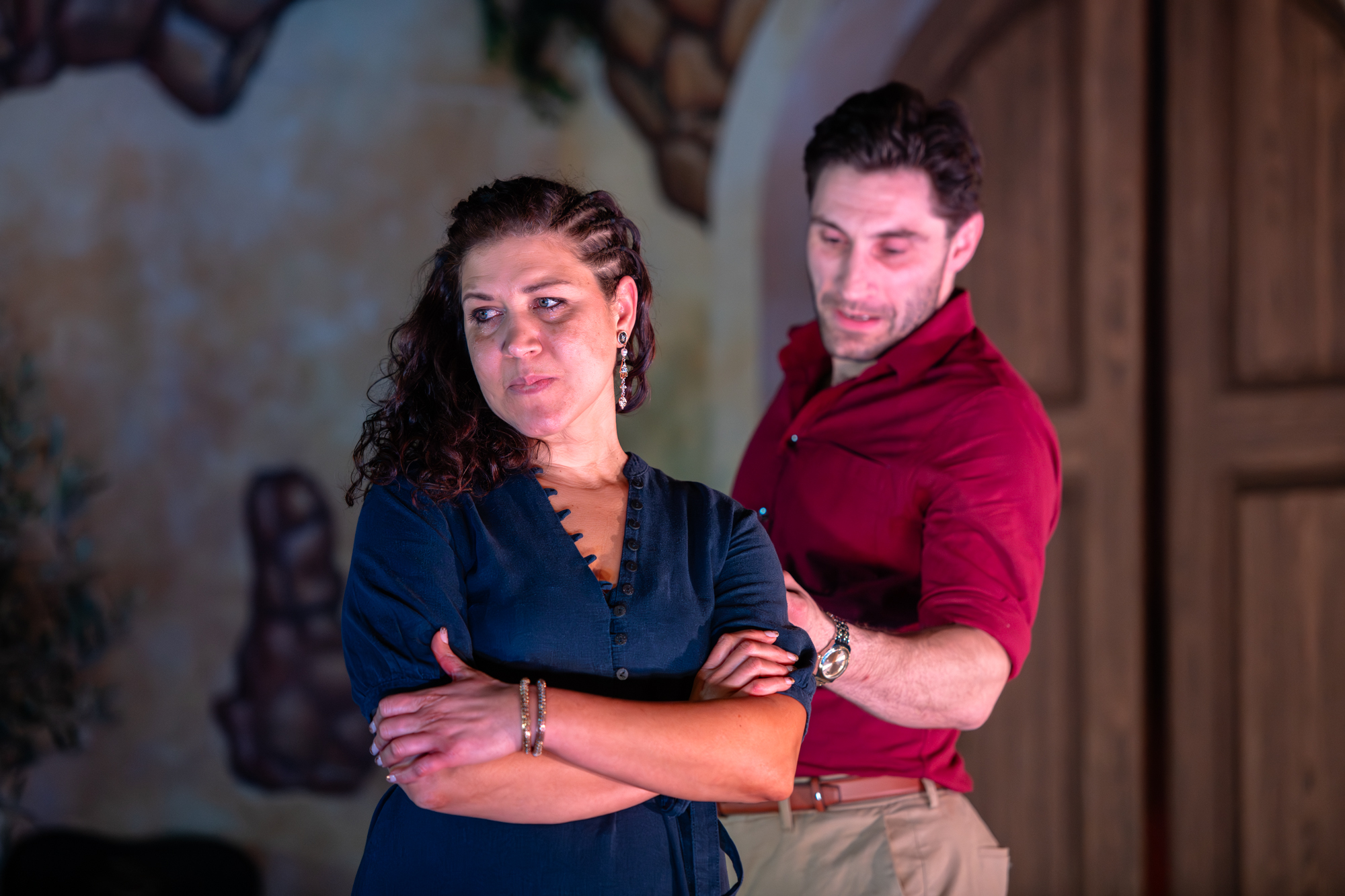
In The Spark, playwright Kathy McKean explores the impact of the perimenopause on a politician. Robin (the brilliant Nicole Cooper) is struggling in a system that seems designed to constrain her. And whereas, in her younger years, she might have bitten her lip and done what needed to be done in order to get ahead, she’s at ‘that age’ now, and the fuck-it factor has set in. No, she won’t stand by while a group of men harass a young girl at a bus stop. No, she won’t deliver the anodyne presentation her speech-writer, James (Johnny Panchaud), has concocted – a bowdlerised version of her own from-the-heart first draft. No, she won’t accept that she’s powerless to affect change. Because otherwise, what’s it all for?

Directed by Gordon Barr, the three actors effortlessly illuminate the chaos inside Robin’s head, as her adversarial discussions with both James and her long-suffering GP, Maggie (Beth Marshall), build to a cacophony. Maggie’s got enough problems of her own – and she blames Robin for some of them. After all, Robin was, until recently, the minister for health. She knows how over-worked the nation’s doctors are; how can she possibly think Maggie has time to deal with what seems on the surface like a pretty bog-standard set of symptoms? Except that Robin’s menopausal heat seems to manifesting itself outside her body, and who knows where that will end…

The writing here is sharp and the delivery fast-paced and engaging. The Spark seems like a fitting finale to what has been a particularly strong season of A Play, a Pie and a Pint. It’s not perfect – it’s a simple idea that builds well at first, but doesn’t deliver the shocking crescendo it perhaps should, and maybe takes aim at the wrong target (I can think of many institutions more deserving of a middle-aged woman’s ire than the parliament at Holyrood). But it’s good to see this subject aired, and in such a witty, thought-provoking way.

4 stars

Susan Singfield

Macbeth (An Undoing)

08/02/23

Lyceum Theatre, Edinburgh

Unlike the monarchs he wrote about, Shakespeare has reigned supreme for more than four hundred years: his plays, rich with examples of human fallibility, are endlessly relevant. But you’d think, wouldn’t you, that we’d run out of different ways to retell the same stories? I mean, the first time I ever saw Macbeth, way-back-when on a sixth-form theatre trip, it was set in a concentration camp (courtesy of Braham Murray at Manchester’s Royal Exchange). Next, I fell in love with Penny Woolcock’s 1997 film, Macbeth on the Estate, which transported the action to a maze of contemporary council flats, and I even enjoyed TV’s ShakespeaRe-Told, where chefs James McEvoy and Keeley Hawes killed off their rivals to take over a restaurant empire. More recently, Flabbergast Theatre’s wonderfully physical, visceral adaptation had me hooked, and there’s been a slew of others along the way. What I’m saying is: I know Macbeth. We all know Macbeth. It’s been done, right? What else is there to say?

And then along comes Zinnie Harris with An Undoing – and the whole thing is turned on its head.

Macbeth (An Undoing) starts from a simple premise: what happens if Macbeth and Lady Macbeth follow their natural trajectories? Because, let’s face it, although Lady M is arguably the best of Shakespeare’s female characters, she’s also the most frustrating, initially a force to be reckoned with – an interesting, complex woman – before disappearing for an age and then returning broken, for a brief goodbye, with very little to tell us why. What if, asks Harris, it’s Macbeth who crumbles? What if it’s Macbeth – whose conscience troubles him from the start – who unravels, while his wife continues unabashed, for a while at least, determined to make their plan succeed? It makes perfect sense, given their starting points.

At first, when the curtains open on a blank stage, and we’re treated to servant/witch Carlin (Liz Kettle)’s fourth-wall-breaking opening gambit, I think perhaps this will be a relatively straightforward version of the play, with just a little mischievous tinkering here and there. After all, “This story will be told, the way it has always been told. What use is it otherwise? The hags on the heath. The woman who went mad. The man who became a tyrant,” she tells us. And, for the first half, that’s sort of what we get: Macbeth at a gallop, mostly in the Bard’s own words, step-by-step through the plot. There are a few changes: we’re in the 1920s, or the early 1930s perhaps; Ladies Macbeth and Macduff (Nicole Cooper and Jade Ogugua respectively) are reimagined as sisters, and share some revelatory new scenes (An Undoing easily passes the Bechdel test); Lady Macbeth and her husband (Adam Best) don’t just want power for power’s sake – they have a meticulously-planned vision for a utopian Scotland. But, in the main, it’s as it’s always been, so that, in the interval, I find myself musing aloud, “How can there still be an hour and a bit to go? There’s not much story left…”

But then we get to the undoing…

Harris’s adaptation is bold, daring and witty. I love the idea of the witches as servants: it makes perfect sense. They’re the eyes and ears of the house, privy to the paperwork the Macbeths have drawn up, witness to intimate moments and careless asides. Invisible. Ignored. These witches are also a family – in fact, Kettle and Star Penders, along with impressive young actor Farrah Anderson Fryer, form the most functional family we see on tonight’s stage, with clear bonds uniting them. I also like the depiction of Malcolm (Penders again) as a petulant youth, patently ill-equipped for leadership and ripe for exploitation by the ruthless Macduff (Paul Tinto).

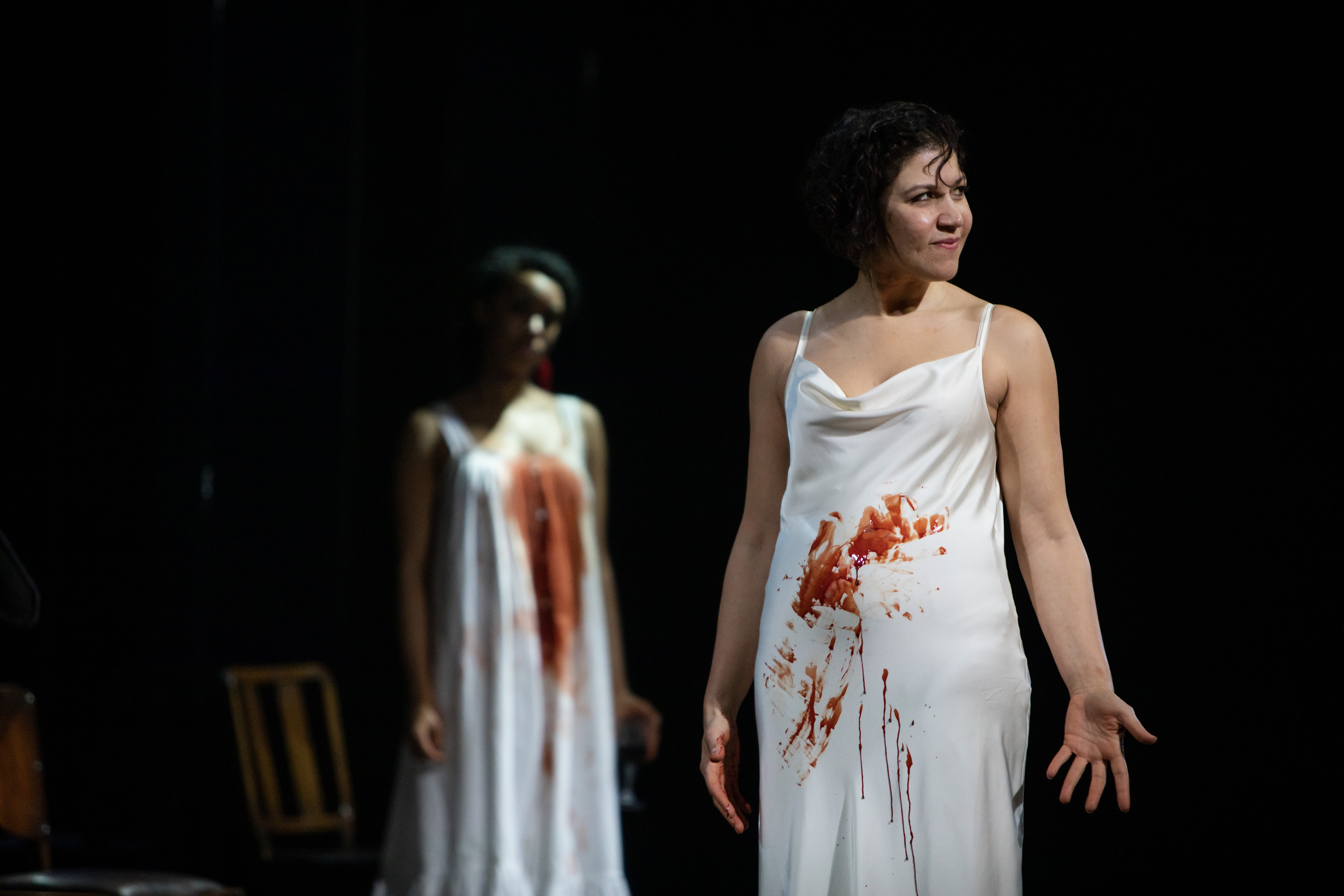
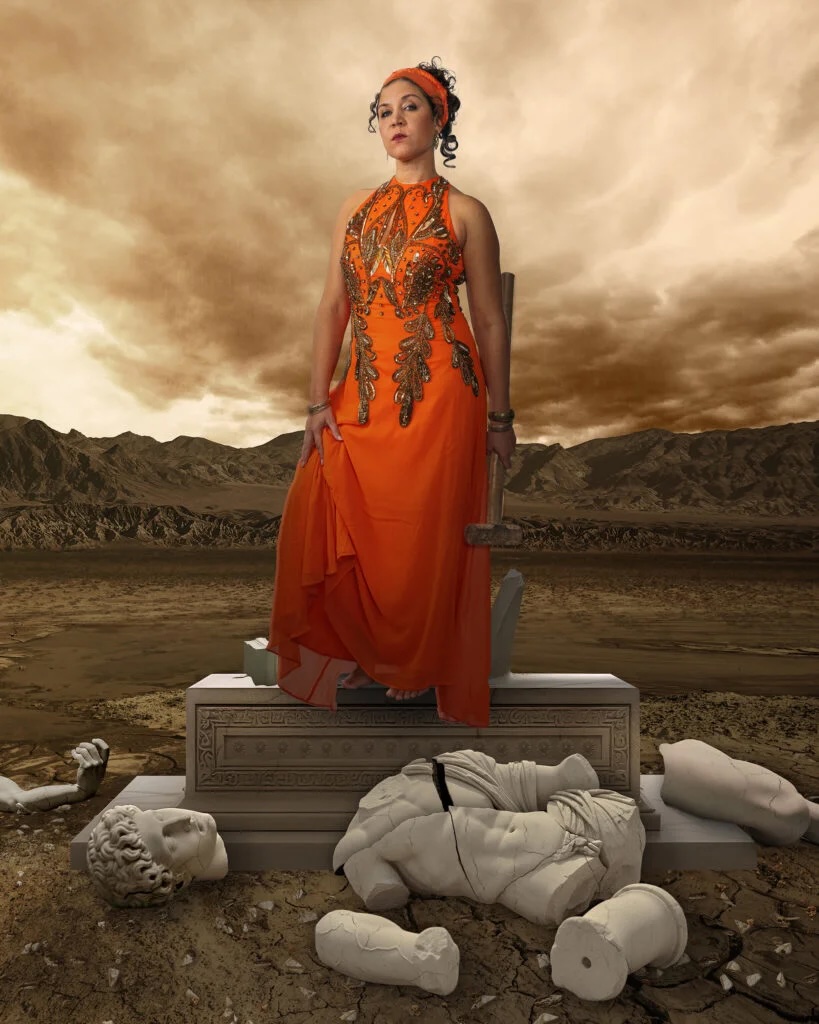
But this is, without doubt, Lady Macbeth’s play. It’s the part of a lifetime, and Cooper makes the most of it, imbuing her with strength and vitality – and just a hint of vulnerability. She’s ambitious and single-minded, but never merely cruel or heartless. We believe in her love for her husband and sister, and we believe in her idealism too. She’s angry when the lairds misgender her, referring to her as the King because they can’t conceive of a woman behaving as she does (even though, to be fair, she does ask to be ‘unsexed’). In a well-aimed swipe at other interpretations of the role, she’s also angry at being reduced to her infertility.

The set (by Tom Piper) is simple but extraordinarily effective, with warped mirrors concealing as much as they reveal, offering us multiple perspectives, and highlighting the Macbeths’ interdependence and duality. We’re there too, shimmering in the background, complicit and agog, just as Carlin accuses at the start.

The Lyceum is busy tonight – some of the boxes have even been pressed into use – and deserves to be so for the next month. You’ve probably seen Macbeth, but I doubt you’ve seen anything quite like An Undoing before.

4.7 stars

Susan Singfield