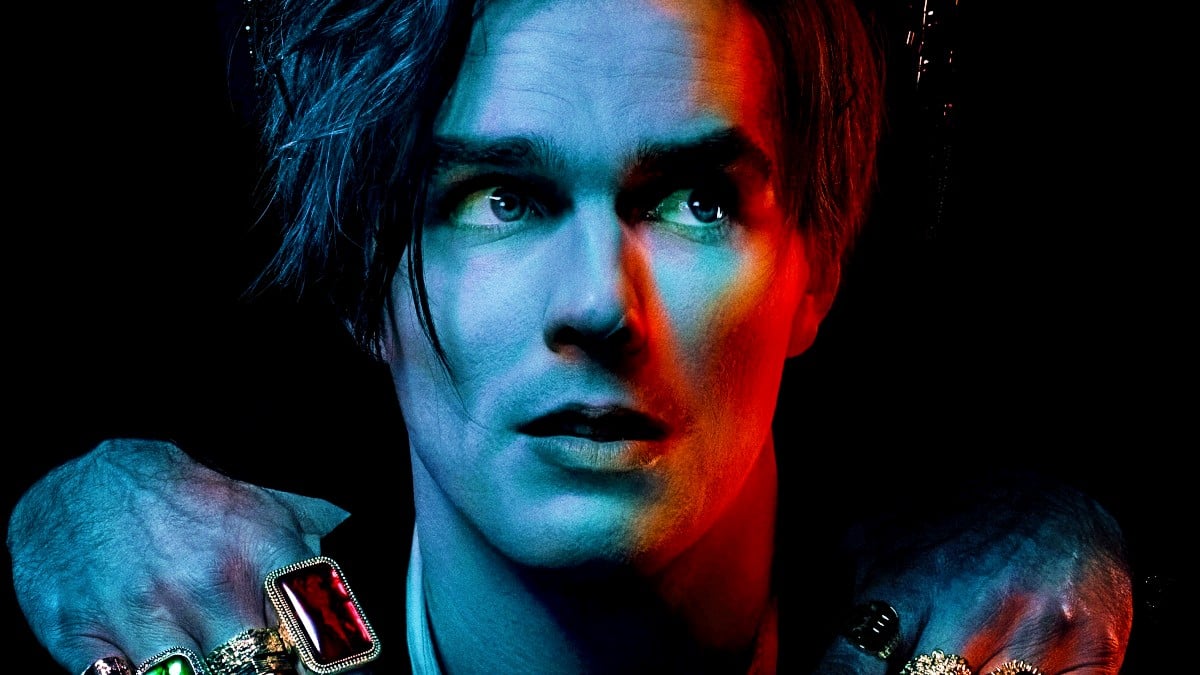

Nicholas Hoult

Superman

12/07/25

Cineworld, Edinburgh

Many cinema-goers have fond recollections of Richard Donner’s Superman (1978). Though the film’s special effects were nowhere near as sophisticated as they are now, the story had true heart and vivacity. We really believed a man could fly.

Since then there have been several attempts to relaunch the Man of Steel, all of them underwhelming.

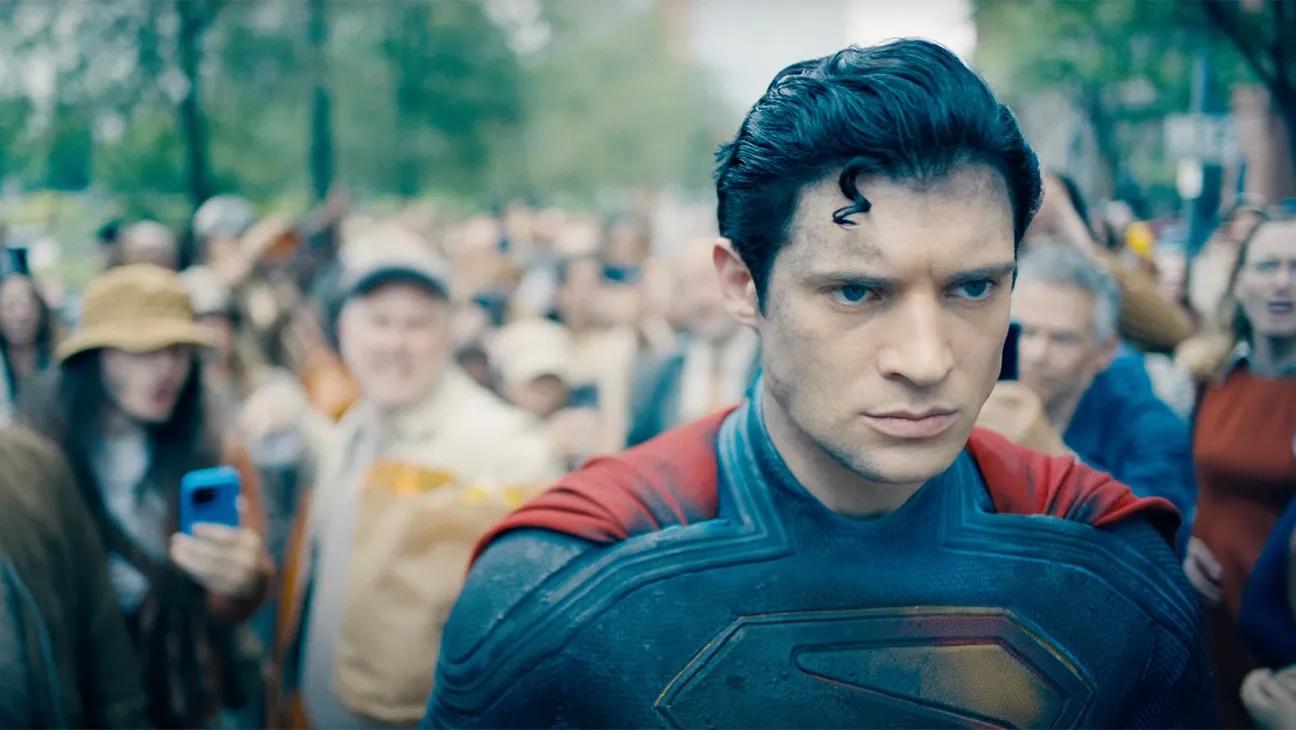
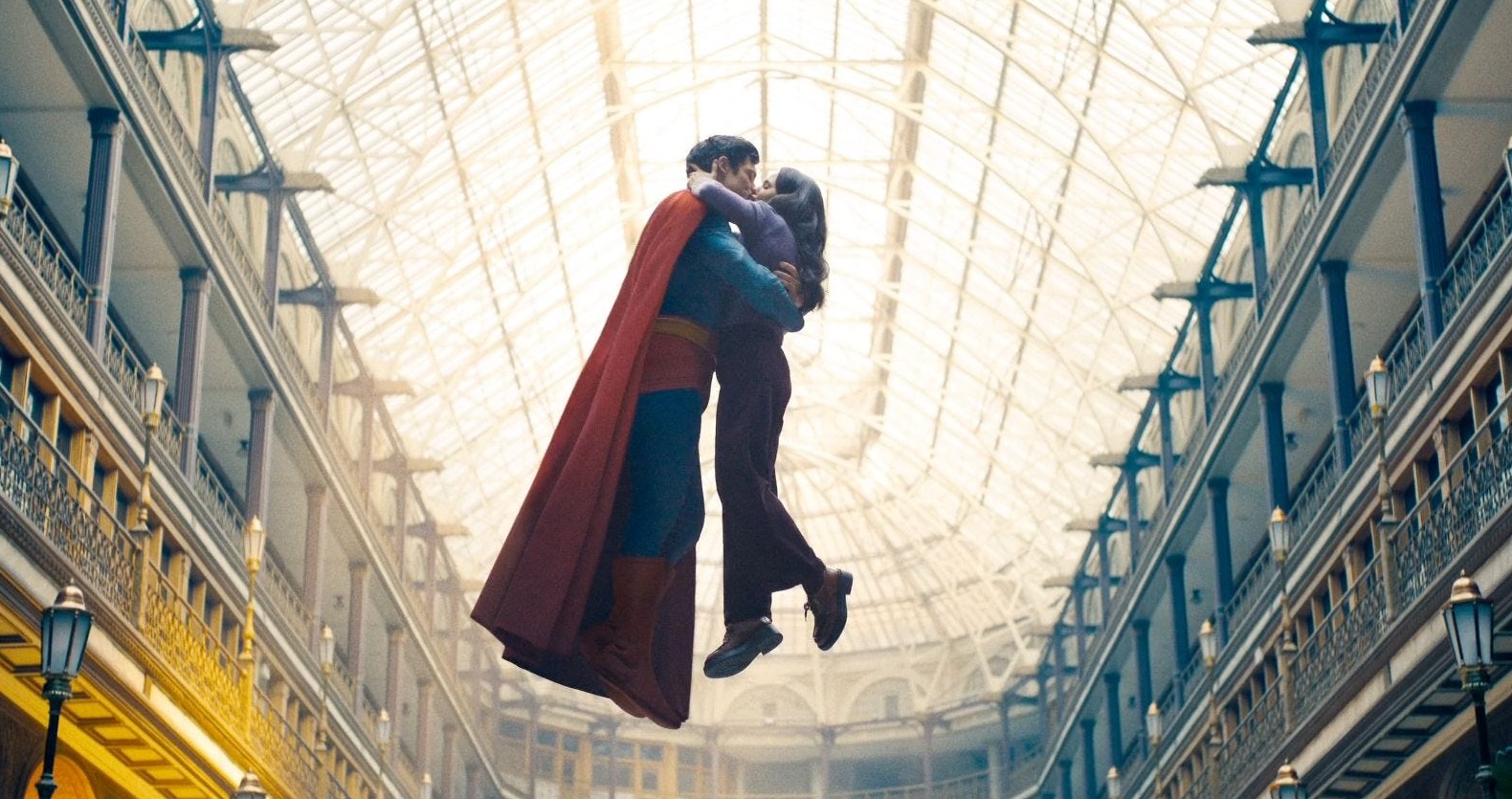
James Gunn, the head honcho of DC (and the man who gave the world Guardians of the Galaxy) now takes on the daunting task of bringing Superman up to date. It would be pointless to retread the origin story, we’ve seen it so many times it now feels like genuine history. So the film begins with some pithy headlines alerting us to the fact that there have been major changes since we last checked in. A fictional country, Boravia, has attempted to invade the neighbouring made-up land of Jarhanpur – and Superman (David Corenswet, last seen by B&B as the young projectionist in Pearl) has stepped in to prevent major loss of life. This is ruled as an illegal action by the American Government. Billionaire entrepreneur, Lex Luthor (Nicholas Hoult), who has been secretly orchestrating the invasion, unleashes the ‘Hammer of Boravia’ (actually Ultraman in disguise) to take on Superman in combat.

Poor old Soops has his arse royally kicked.

Lying in the Antarctic snow, he’s rescued by his faithful dog, Krypto, and dragged to the Fortress of Solitude, where a battalion of sophisticated droids are waiting to nurse him back to health. (Krypto, by the way, is based on the director’s actual dog, which may be taking nepotism a step too far.) In the ensuing struggle to put things right, Soops is assisted by Mister Terrific (Edi Cathegi), a member of The Justice Gang, which also includes Green Lantern (Nathan Fillion) and Hawkgirl (Isabela Merced). This rather obvious homage to The Fantastic Four seems to indicate that Gunn is suggesting that DC and Marvel should work together, rather than being in opposition – or is that just my interpretation?

It’s pointless to say more about the storyline, which is unnecessarily convoluted and features so many characters that the result feels cluttered, almost to the point of incomprehension. Yes, there are scenes here that are nicely done, but frankly not enough of them. I shudder to think about the millions of dollars that must have been poured into this enterprise, but there’s the overriding sense that an essentially simple story – flying guy fights to save humanity – is repeatedly steered into a labyrinth of quirky sub-plots. Gunn also wrote the screenplay. Perhaps he was unwilling to ‘kill his darlings.’ There are several attempts to mirror contemporary real-world incidents that don’t quite come off

Corenswet is decent in the lead role but doesn’t have the charm of Christopher Reeve, while Rachel Brosnahan makes an appealing Lois Lane. Hoult, in his usual winning form, strides around in perfectly-tailored suits as Luthor and handles the requisite villainy with aplomb. In many ways he’s the most interesting character in the film, which is a problem in itself. I can’t help thinking of the way Jack Nicholson’s Joker overshadowed the Caped Crusader in Tim Burton’s Batman. If the character the film is named after isn’t your main takeaway, then something’s not right.

Everything builds to a mighty tussle in Metropolis with Soops whizzing around trying to save human lives – and in one case, a frickin’ squirrel! A sequence where our hero visits his foster parents in Smallville results in some truly syrupy dialogue and I’m afraid to say that Krypto’s exuberant charm soon wears thin.

So, worth checking out? I’ll admit this film doesn’t really work for me and that’s a shame, not because I had such high hopes for it but because the future of DC films may be riding on its box office takings. Whilst applauding Gunn’s brave decision to go for a radical reinvention of the franchise, it just doesn’t tick enough boxes to make this a satisfying two hours in the cinema.

You’ll believe a man can plummet.

2. 8 stars

Philip Caveney

The Order

03/01/24

Cineworld, Edinburgh

The geographical landscape of this film is well-known to me – a Fulbright exchange saw me teaching high school in Walla Walla, Washington for a year in the 90s, and I visited many of the Pacific Northwest locations referenced: Spokane, Boise, Couer d’Alene, Whidbey Island. Thankfully, the film’s ideological and political landscape is far less familiar.

Directed by Justin Kurzel, The Order draws on a true story from 1983, when fascist Bob Mathews (Nicholas Hoult) began his violent mission to create an all-white promised land. In Zach Baylin’s script, a fictional FBI agent called Terry Husk (Jude Law) sets out to foil Mathews’ deadly plan. It’s a chilling tale, not least because it’s clear that not much has changed in the forty years since The Order was created. There are still way too many men like Mathews, spouting their twisted doctrines. Heck, one of them has made it all the way to the White House. Twice.

Adam Arkapaw’s bleached out cinematography evokes the feel of 1980s small town America: the vast swathes of uninhabited land; the isolated homesteads. These are the neighbourhoods where cops and criminals have known each other since kindergarten, have dated the same partners, understand each other even when they disagree. So when young police officer Jamie Bowen’s old school pal, Walter, goes missing, of course he wants to help. It doesn’t matter that they’re ethically opposed – Walter (Daniel Doheny) is a white supremacist, while Jamie (Tye Sheridan) is in a mixed-race marriage – Jamie is an Idaho boy through and through; these people are his kin.

Husk, on the other hand, is an Outsider with a capital ‘O’. Haunted by past failures, he is determined to stop the rot, to prevent any more carnage. He recognises the scale of Mathews’ ambition, but it’s hard to convince anyone but Jamie that The Order poses a real danger.

The success of this film is largely due to the contrasting trio at its heart: Law’s hard-bitten desperation; Sheridan’s hopeful naïvety; Hoult’s chilling fanaticism. All three deliver superb performances, and are perfectly cast in their roles.

Kurzel doesn’t hold back from the ugliness and real-world pain. There are the chases and shoot-outs you’d expect from any crime drama, but here they feel all-too believable, the impact evident on everyone involved, from the furrows on Husk’s forehead to the manic ecstasy of Mathews’ laugh.

It’s no accident that The Order feels so timely, as we stand on the precipice of a new era in US politics. Let’s just hope that there are enough Husks and Bowens to see us through.

4.2 stars

Susan Singfield

Renfield

16/04/23

Cineworld, Edinburgh

The vaults of Universal Studios contain a huge horror legacy, which remains largely unexplored. In 2017, a Tom Cruise-led reworking of The Mummy was intended as an introduction to a whole raft of films featuring Universal-inspired gods and monsters. I liked the film, but few others did and the resulting box office put a swift end to those plans. Of course, Dracula is the studio’s best-known bogeyman, so something was sure to happen eventually. With Renfield, director Chris McKay’s approach to er… revamping the Count is to focus on his eponymous insect-eating sidekick, whilst dialling the comedy – and the gore – all the way up to 11.

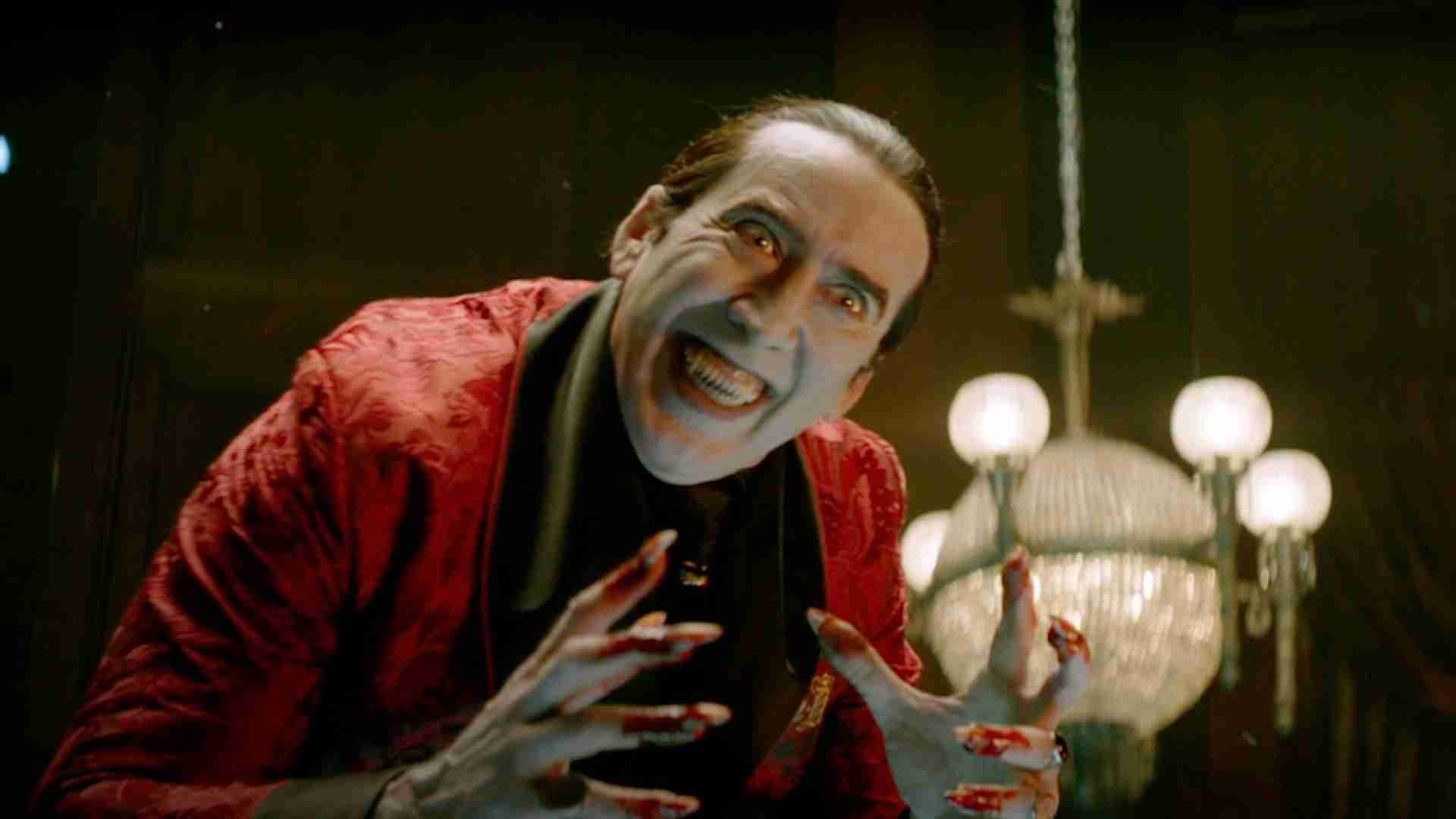
The result is an enjoyable, if somewhat uneven romp, that for the most part galumphs cheerfully through a whole series of decapitations, dismemberments and bodily explosions, without ever really pausing long enough to catch its breath. In this account of the classic tale, Renfield (Nicholas Hoult) has finally become disenchanted with his role as chief cook and bottle-washer to Count Dracula (Nick Cage, channeling a mix of Bela Lugosi and Lon Chaney). After ninety years in the post, Renfield realises that he’s trapped in a toxic relationship. But there are some advantages to being him. For instance, his constant diet of insects has given him the ability to harness prodigious strength and to perform gymnastic fight moves. (No idea why. Let’s move on.)

But he’s gradually coming around to the idea that there must be more for him in the duo’s latest haunt (New Orleans) than the irksome task of finding an endless supply of people for his master to consume.

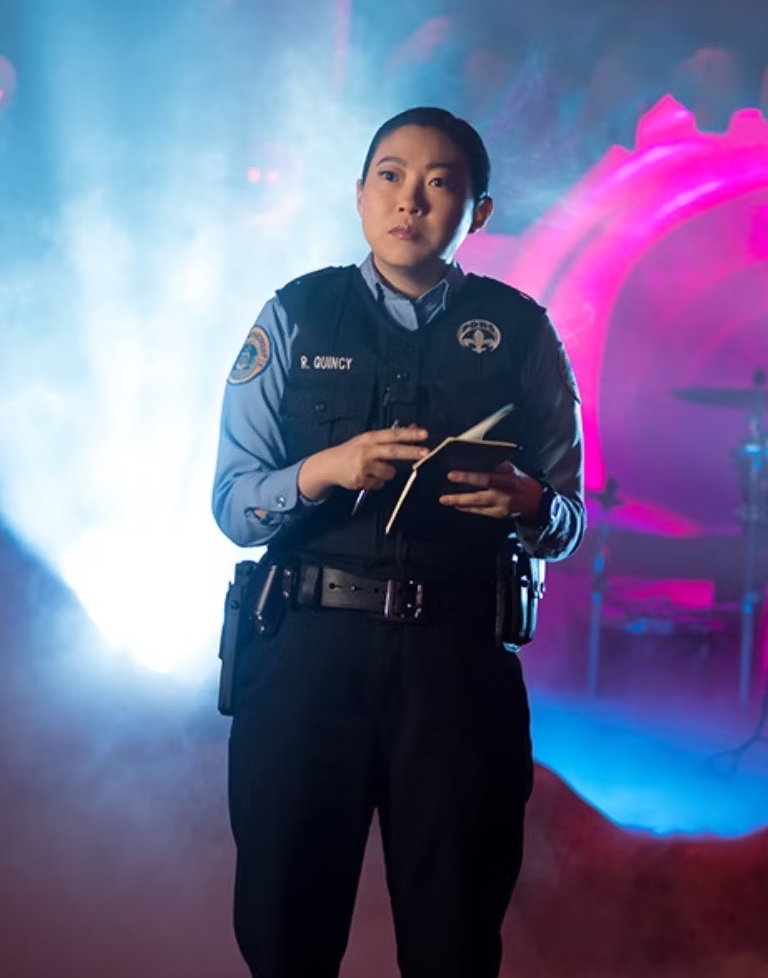
So he joins a 12-step self-help group for people in co-dependent relationships, where he meets others who – like him – are suffering through adversity. And then he encounters hard-assed cop, Rebecca Quincy (Awkwafina), who is struggling to make headway in a corrupt police force that’s actually being run by powerful Queen-pin, Bella Francesca (Shoreh Aghdashloo). Renfield and Rebecca are clearly attracted to each other, though the relationship remains curiously chaste. They team up to take on Bella Francesca, only to discover that her gang now has a new recruit – Dracula himself – and he’s determined that his former accomplice won’t get the better of him.

Renfield is good fun, provided the unrestrained splatter doesn’t put you off. (If the sight of a man being beaten to death with his own dismembered arms doesn’t strike you as outrageously funny, then maybe this isn’t the film for you.) Mind you, it’s not all rampant gore and cheap laughs. In an early section, there’s lovely use of footage from Todd Browning’s 1931 Dracula with Hoult’s and Cage’s faces spliced onto the bodies of Dwight Frye and Bela Lugosi. It gives a brief insight into the kind of film this might have been – but such subtlety is in pretty short supply and we’re soon catapulted back to the carnage.

Hoult has always been a likeable screen presence and carries this along by sheer force of personality, while Cage is clearly having a whale of a time with his role. Sadly, Awkwafina doesn’t get an awful lot to do except look sullen and shoot a lot of people. And it probably doesn’t do to dwell too much on the plot, which is every bit as cartoonish as the action.

Overall, this is fun, but at the end of the day, it must be said that there isn’t an awful lot to… ahem… get your teeth into.

3.7 stars

Philip Caveney

The Menu

06/12/22

Cineworld, Edinburgh

This dark and malevolently funny film, directed by Mark Mylod, expertly skewers the pretensions of fine dining and the people who indulge in it. It’s an assured piece of work, but, as somebody who enjoys the occasional bit of haute cuisine, I take its final assertion – that the only food worth getting worked up about is cheeseburger and fries – with a large pinch of smoked paprika.

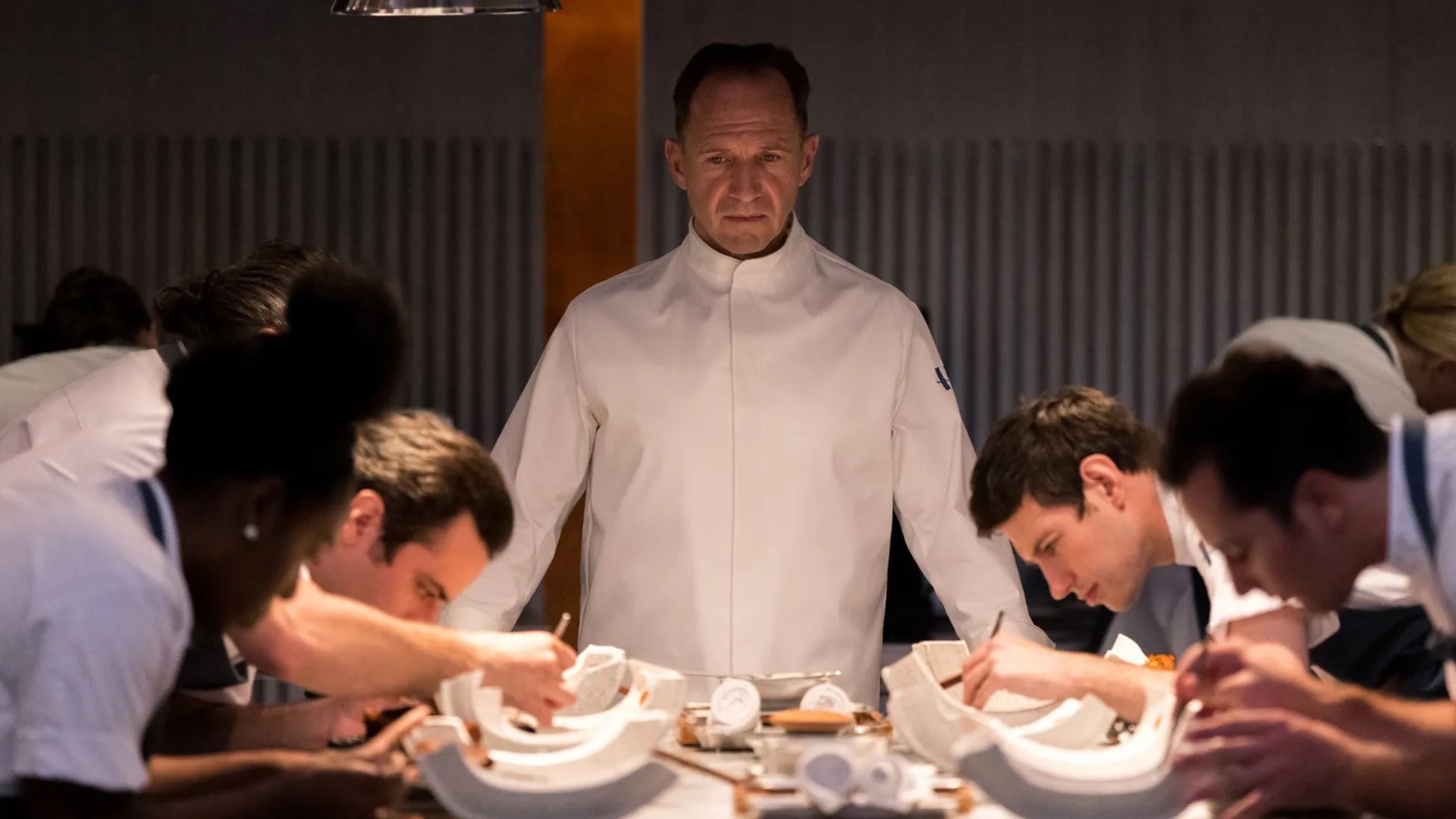
Tyler (Nicholas Hoult) is a lover of good cooking, sycophantically devoted to the work of culinary genius, Chef Slowik (Ralph Fiennes), about whom he has an encyclopaedic knowledge. When we first encounter Tyler, he’s waiting impatiently at a quayside with his date, ‘Margot’ (Anya Taylor-Joy), for the boat that will take the two of them over to Slowik’s private island. Once there, along with a group of other specially invited guests, the couple will experience the great man’s latest menu. Their dinner companions include a couple of influential food critics, a trio of investors, a B-list movie star and even Slowik’s mother, who appears to be hopelessly drunk as the guests take their seats.

Slowik’s devoted staff hurry obey his every word, while his second in command, Elsa (Hong Chau), wanders around the restaurant politely insulting the diners to their faces.

The ensuing events are presented as a series of courses, complete with onscreen descriptions and, as the time slips by, Slowik’s offerings become ever more absurd. (I particularly love the course that consists of a selection of accompaniments for bread that neglects to include any actual bread, no matter how vociferously the diners demand it.) But soon violence and bloodshed become major ingredients and the diners are fast losing their appetite. It’s clear that this is going to be Slowik’s swan song, a rebuke to a way of life that he has increasingly come to despise – and that it’s going to take considerable ingenuity to survive the final course.

An inventive satire packed with scenes of cruelty and humiliation, The Menu seems to take great delight in settling scores. There are some clever plot twists here – though not everything stands up to close scrutiny – and Fiennes excels as a man who has let his own burgeoning success push him to the very edge of sanity. Taylor-Joy is terrific too, as the only character in the film prepared to tell Slowik exactly what she thinks of his food.

It won’t be to everyone’s taste, but I thought The Menu was delicious. Bon appetit!

4 stars

Philip Caveney

The Banker

12/02/21

Apple TV

On the face of it, a ‘based on a true story’ film about two guys who decide to set themselves up as landlords sounds like it might make for fairly dull viewing.

But, when I tell you that the true story is set in America in the 1950s and 60s – and that the two guys in question are African Americans – you might begin to appreciate that there’s more to it than initially meets the eye.

In this Apple original, finally available after some protracted – and rather unpleasant – legal wrangles, Anthony Mackie stars as Bernard Garrett, a maths prodigy who, since childhood, has hankered after a career in real estate. He’s well aware, however, that the only way a man of his colour is likely to set foot in the swanky properties he longs to own, is if he’s wearing a janitor’s overalls. Undeterred, he sets to with a will and gradually begins to amass a portfolio. When he spots an opportunity to acquire the buildings where one of Los Angeles’ biggest banks is situated, he approaches wealthy club owner Joe Morris (Samuel L. Jackson) to help raise the necessary finance.

Joe himself owns quite a few properties around the city but has learned from experience that, even in liberal LA, nobody is going to allow two black guys to get away with something as audacious as openly owning such fancy real estate. So they hit on a plan: hiring Bernard’s employee and friend, the handsome, hapless and – crucially – white Matt Steiner (Nicholas Hoult) to be the visible ‘face’ of the enterprise. After some intensive coaching – which includes memorising complicated figures and (really important this) learning to play golf – the ruse works like a dream and soon Bernard and Joe (and Matt) are doing very nicely, thank you.

But then Bernard pays a visit to his father in his Texas hometown, and notices a nice little neighbourhood bank, all ready for the taking. Why not just buy the place? Then he can offer loans to the many black families in the area that can’t currently enjoy such a luxury. Joe is against the notion from the start, but Bernard manages to persuade him. Once again, they’ll put Matt in there as a figurehead. It worked before, right? But all three men are to discover that what works in Los Angeles just doesn’t fly in Texas…

The shameful truths behind this story are impossible to ignore. Certainly, for that first transaction, Bernard and Joe’s only crime is that their skin is the wrong colour. Think about that for a moment. Even in the supposedly progressive 1960s, two black men could not be seen to own expensive property. That is, although they could legally own it, in truth they couldn’t do so openly, because if it ever came to light, hundreds of horrified customers would close their accounts and run screaming in the direction of another bank. Kind of puts the great American Dream into sobering perspective, doesn’t it?

If I’ve made the film sound po-faced, it’s not. The screenplay, co-written by director George Nolfi, successfully mines what vestiges of humour there are in the situation, particularly in the early stretches when it all seems like a bit of a lark. Jackson’s caustic one-liners are particularly good. Of course, the treatment that Bernard and Joe subsequently receive at the hands of the American judicial system is anything but funny, though hearing that the case eventually helped to change the law does provide some consolation.

So if you’re ever going to watch a movie about two would-be landlords, this is definitely the one to go for.

4.2 stars

Philip Caveney

True History of the Kelly Gang

28/02/20

True confession. When I was a much younger man, I was obsessed with the story of Ned Kelly. I read several accounts of his exploits, which gripped my imagination and, in 1970, saw Tony Richardson’s underrated biopic, which – once I got used to Mick Jagger’s alarming ‘Oirish’ accent – had me fully onboard. I even watched Heath Ledger’s fairly forgettable attempt to embody Australia’s best known folk hero in 2003. What is it about the infamous outlaw that continues to exert such a powerful hold?

In True History of the Kelly Gang (loosely based on Peter Carey’s Booker-winning novel, which I’ve also read), director Justin Kurzel doesn’t so much reinvent Kelly’s history as place a bomb under all that we know about the man and blow it to smithereens.

To give him his due, the resulting film, which is neatly divided into three chapters, is for the most part gripping. We open in the 1860s, where a young Ned (Orlando Schwert) is living in the outback in absolute squalor. He’s in thrall to his manipulative mother, Ellen (Essie Davis), who is turning tricks for the local constabulary in the shape of Sgt O’ Neil (Charlie Hunnam) in order to put food into the mouths of her children. Ned soon finds himself apprenticed to the outwardly charming bush ranger, Harry Power (an excellent Russell Crowe), and is schooled in the ways of the outlaw and the doctrines of toxic masculinity.

In the second section, the adult Ned (George Mckay) returns from a long spell in prison to find his mother still ruling the roost and living with a Californian horse thief, who has enlisted Ned’s brother into his trade. During a visit to the local brothel, Ned meets up with Constable Fitzpatrick (Nicholas Hoult) and with Mary Hearn (an underused Thomasin McKenzie), with whom he promptly falls in love. This second section is already starting to feel rather strange. Ned appears to be dressed in suspiciously contemporary style: he sports a dodgy mullet and has a predilection for writhing around half naked, like an embryonic Iggy Pop. Kurzel seems to be invoking parallels with the British punk rock movement here and images of Kelly looking suitably aggressive in front of a Union Jack reinforce this notion. Still, so far, the conceit works brilliantly.

It’s in the third section where everything becomes spectacularly unhinged. Kelly’s sudden descent into apparent madness overwhelms the material. The Kelly gang run around in dresses – seemingly a reference to groups of Irish agrarian rebels, known as The Sons of Sieve. They blacken their faces, enlist followers and launch an ill conceived attempt to attack a train full of police officers. The famous suits of armour (always, I think, the most fascinating aspect of Kelly’s story) barely get a look in. Mayhem descends but, unfortunately, so does bewilderment.

In the end, it all feels too self-consciously weird – and apparent luminosity of the ranks of police officers, appearing in the climactic gun battle, is just too opaque for comfort. While I applaud Kurzel for having the guts to take on such a revered Australian institution in so fearless a manner, I have to conclude that this feels like a bold experiment that doesn’t quite work.

3.6 stars

Philip Caveney 

The Current War

26/07/19

This biopic concentrates on the rivalry between two famous inventors and their race to be the first to give America the ‘miracle’ of electric light. The film starts in the year 1800, with Thomas Edison (Benedict Cumberbatch) on the verge of a breakthrough with his direct current system. But then up pops George Westinghouse (Michael Shannon), already a rich man from the gas industry, who proposes an alternating current version, which, he insists, will provide a cheaper and more powerful solution to the problem.

In the ensuing struggle to win the contract to light up America, fair play falls by the wayside; meanwhile, a Croatian genius by the name of Nikola Tesla (Nicholas Hoult) struggles to make waves with a series of inventions that have the potential to eclipse the achievements of both Edison and Westinghouse combined.

It’s a fascinating but incredibly complex story, and Michael Mitnick’s script intially feels scattershot as it leaps frantically from location to location in an attempt to nail down all its disparate elements. But it’s worth sticking with, because – after a rather shaky start – the film hits its stride and becomes genuinely compelling, with director Alfonso Gomez-Rejon doing a creditable job of capturing the period. The film highlights a fascinating conundrum when Edison is approached to use his technology to create a ‘humane’ way of executing criminals.

There’s a starry cast here with the likes of Tom Holland, Katherine Waterston and Matthew Macfadyen relegated to supporting roles.

It’s clear where the filmmakers’ loyalities lie. Edison is exposed as a hypocrite, a man obssessed with winning at all costs, at first opposed to using his technology as a weapon, next electrocuting animals willy nilly in order to cast his rival in a bad light. Westinghouse, on the other hand, is portrayed as a much more reasonable type, a man willing to step aside from the glory in order to achieve the greater good. It’s also clear (correctly in my opinion) that Tesla is held up here as the true genius, a man who constantly found his ideas appropriated by his rich financiers and who died destitute, without ever achieving his extraordinary potential.

The Current War isn’t exactly a perfect film, but it does illuminate the difficult birth of something that we now all take for granted, an invention that genuinely transformed the world as we know it. It also depicts the depths that people will sink to in order to see their names go down in history.

4 stars

Philip Caveney

Tolkien

04/05/19

The Tolkien Estate have taken against this biopic of the famous writer in no uncertain terms, but it’s hard to understand exactly why. As embodied by Nicholas Hoult, he’s an admirable fellow: handsome, witty and completely loyal to his friends – all attributes that he would eventually hand on to his fictional characters in The Hobbit and The Lord of the Rings.

The film concerns itself mostly with the writer’s early years: his childhood in Sarehole, Worcestershire (which would become the model for ‘The Shire’); his time at a boarding house in Birmingham, after the death of his mother, where he meets and eventually falls in love with fellow orphan, Edith Bratt (Lily Collins); and his school years at King Edward’s, Birmingham, where he and three close friends found a secret society, the TCBS. This fellowship continues when the boys go on to University, and it remains strong until the First World War intervenes and changes everything.

Director Dome Karukoski and screenwriters David Gleeson and Stephen Beresford are keen to show how Tolkien’s horrific experiences at the Battle of the Sommes contributed to the imagery that would dominate his future books, and the sequences that depict mythical beasts rising from the carnage of trench warfare are perhaps the strongest scenes here, handsomely mounted and never overdone. Tolkien’s protracted courtship of Edith, while rather less spectacular, is also nicely handled, and Hoult and Collins make an engaging couple. There’s a nice cameo by Derek Jacobi as the Oxford Professor who encourages Tolkien to develop his flair for languages, and another from Colm Meaney as the Catholic priest charged with the responsibility of ensuring that things work out for Tolkien in the long run.

While it’s certainly a gentle and low key affair, I find the film absorbing and, ironically, much more interesting than the great books themselves, which – try as I might – I have never really managed to enjoy. Don’t tell the Tolkien Estate. They’ll probably sue me. For heresy.

4 stars

Philip Caveney

The Favourite

01/01/19

Since 2015’s The Lobster, Greek director Yorgos Lanthimos has established a reputation for quirky and enigmatic films that approach their subject matters from completely unexpected directions. Take The Favourite for instance. This sumptuously dressed costume drama offers us a story that seems as mad as a box of frogs – but it only takes a cursory Google search to establish that most of what happens here cleaves fairly close to established historical truth – proof if ever it were needed that fact can be a lot stranger than fiction. That said, Lanthimos finds ways of amping up the oddness to the max.

We are in the early 18th century, in the court of Queen Anne (Olivia Colman), a troubled monarch plagued by recurring bouts of gout, who wanders about the place like a sulky teenager. She is totally under the control of the manipulative Lady Sarah Churchill (Rachel Weisz), who – as well as being Anne’s secret lover – also uses her to further her strong political ambitions. Into the court comes Sarah’s cousin, Abigail (Emma Stone), whose family have fallen on hard times and who is now looking for gainful employment. Sarah grudgingly takes her in as a servant, but Abigail soon tires of a life of drudgery, and decides instead to insinuate herself into the Queen’s good graces, something she proves to be rather adept at.  It isn’t long before a powerful rivalry is ignited between Sarah and Abigail and it’s clear that both women are prepared to do whatever it takes to gain the upper hand.

Lanthimos manages to convey an atmosphere of cold suspicion beautifully and his regular use of a fish eye lens amplifies the claustrophobic ambiance of this troubled court. The film is built around three superb performances from the female leads, with Colman already nominated for a best actress Oscar, and Stone and Weisz for best supporting actress. Indeed, the three of them dominate the film to such a degree that few of the male characters get much of a look in, though I do enjoy Nicholas Hoult’s sardonic turn as Harley, leader of the Tories, who forms a sneaky alliance with Abigail in order to oust his political opponents from power. Those of a prudish persuasion should note that the film is rumbustious enough to fully earn its 15 certificate – some of the scenes here are a bit saucy, to say the very least.

With a running time of just under two hours, The Favourite positively gallops along, making me laugh out loud and, occasionally, gasp in surprise. It would be very hard to think of a more enjoyable way to begin a new year’s viewing.

4.7 stars

Philip Caveney
 

Mad Max: Fury Road

imagesimages-1images-2

17/05/15

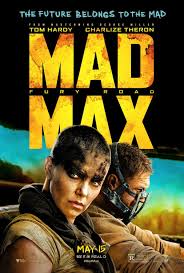
I have to declare from the start that this has been my most eagerly anticipated film of the year. I’ve been a devoted fan of the Mad Max franchise, from its humble B movie origins in 1979, through the awesome action tropes of The Road Warrior in 1981, and on to the inventive storytelling of Beyond Thunderdome in 1985. Through the intervening 35 years… can it really have been that long?… I, like many others have been keeping alive the hope that director George Miller would stop concentrating his talents on anodyne nonsense like Babe and Happy Feet and revisit his glorious, testosterone-fuelled past. And by jove, he’s finally done it – although this time out, he’s added a welcome dash of oestrogen too!

It’s a tough act to follow and a tough act for newbie Max, Tom Hardy, to step into Mel Gibson’s boots – so I’m delighted to report that this is a triumphant return to form and that Fury Road not only equals those earlier efforts but in many ways surpasses them. It’s a blitzkrieg of stunning vehicular chases, amazing stunt work and unforgettable dystopian visions, but it’s also backed up by a compelling central story. As ever in Miller-land, dialogue is kept to a minimum (Hardy doesn’t get to utter so much as a word for the first twenty minutes or so) but there’s so much going on up on the screen, you barely notice.

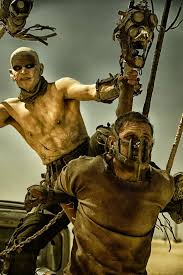
In a nightmarish, desert landscape, evil dictator Imortan Joe (Hugh Keays-Byrne) has founded an empire built on toil and the exploitation of the weak. (Max fans will remember Keays-Byrne as ‘Toecutter’ in the very first movie.) When one of Joe’s war parties brings in a bearded, half-conscious Max, the captive is summarily shaved, tattooed and branded, and is then assigned to ailing suicide-warrior, Nux (a barely recognisable Nicholas Hoult) as a living blood transfusion unit. However, when one of Joe’s most trusted lieutenants, Imperator Furiosa (Charlize Theron) decides to abscond with Joe’s five young wives (or his breeding stock, as he so delicately refers to them) Nux is one of the team despatched to bring them back and Max duly finds himself strapped to the front of a truck and hurled headlong into a terrifying chase. We’re taken along for the ride.

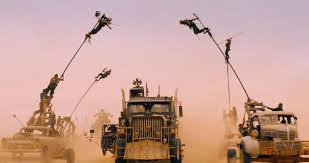
And what an unforgettable ride it is! The film leaps effortlessly from one frantic chase to the next, as Miller’s welded-together juggernauts collide, accelerate, swerve and explode in jaw-dropping style. There’s barely a sign of CGI to be seen, everything’s done pretty much for real and it’s little wonder that the closing credits feature what looks like hundreds of stunt performers. But it’s more than just action. Miller’s futuristic world is fully thought-through and dazzlingly captured amidst the stunning Namibian landscapes (this is the first of the series not actually shot in Australia) and there’s so much here to delight and surprise the viewers. Key among them are the manic lead guitarist chained to the front of a truck and pumping out death metal and fire in equal amounts; Joe’s breast-milk pumping parlour, where pregnant women are er… pressed into service; and the tribe of aged motorbiking female warriors who turn up to prove that when it comes to a fight, they’re more than a match for the younger men.

I loved this to pieces. The Mad Max films, though, are cinematic Marmite. If you don’t like what Miller does, this is going to feel like putting your head in a tumble drier and pressing the on switch. If however you like action cinema at its most inventive, this one is for you. One thing. The film was actually shot in 2D and for the 3D version, the process has been retroactively applied, which never makes for a good transfer; but trust me. You won’t need 3D for this. It’s eye-popping enough without.

5 stars

Philip Caveney
03/06/15

Ahem! Time to eat a few slices of humble pie. After my suggestion that there was no need to see Mad Max; Fury Road in 3D as it hadn’t actually been shot that way, a couple of friends contacted me to say they’d seen it in 3D and it looked pretty damned good to them. So I broke the habit of a lifetime and went back to the cinema to check out their claims. I have to admit that my friends were absolutely spot on. Not only does this movie bear repeated viewing (it really is that good) it also looks eye-poppingly brilliant in 3D and effortlessly leaps into the ranks of my favourite films in that format – Gravity, Hugo, Avatar and er… Piranha 3D. In fact, if i see a better film this year than MMFR, I’ll be very surprised.