

08/10/24
Traverse Theatre, Edinburgh
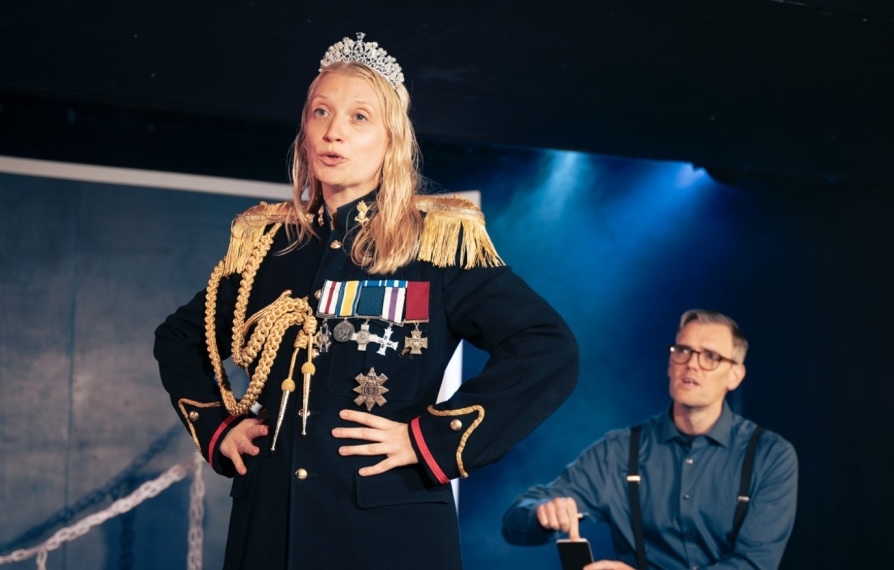
Berlin, February, 1922. Following a failed suicide attempt, Anna (Kirsty McDuff) is brought to a local police station. She’s dripping wet after trying to drown herself in a local canal. She is interviewed by Franz (Chris Forbes), a straight-laced police officer with a liking for equally straight talking. But when she claims to be the Grand Duchess Anastasia, the lone survivor of the assassination of her entire family by Bolshevik revolutionaries two years earlier, Franz isn’t quite sure what to believe. For one thing, Anna talks so lucidly about her glamorous past: her memories from the court of Nicholas and Alexandra, the glittering balls, the wonderful meals.
And for another, she is wearing an expensive-looking tiara that’s clearly been dented by a bullet…
Inspired by real events, Anna/Anastasia approaches its subject matter with an endearing sense of humour, playing Anna’s volatility off against Franz’s restrained, analytical approach. Franz, we are told, paints china swans as a hobby and keeps them up in the attic out of harm’s way. Anna, with her unrestrained bursts of exuberance, represents something he is unaccustomed to, something that threatens to bring all his most established convictions clattering down around him in pieces – and yet, as the years pass and Anna’s fortunes rise and fall, the couple keep re-encountering each other and a kind of guarded relationship develops.
The sprightly script by Jonny Donahoe (whose Every Brilliant Thing is a popular yearly visitor to the Edinburgh Fringe) maintains just the right mix of comedy and pathos, while the two performers make perfect foils for each other. McDuff stays in character the whole way through, inhabiting Anderson’s turbulent persona with considerable skill, while Forbes occasionally steps out of his main role to play a number of subsidiary characters – at one point breathlessly re-enacting the murder of the entire Romonov family single-handedly. Liz Caruthers handles the direction with an assured touch.
The story of Anna Anderson has formed the basis for many plays and films over the years and, though the mystery has recently been pretty much solved thanks to DNA testing, it continues to exert considerable powers over the public imagination. As Anna/Anastasia seems to emphasise, the actual truth of the story is somehow less important than the speculation it has always kindled – and the play’s bitter-sweet conclusion still manages to leave us wondering about the possibilities.
4.4 stars
Philip Caveney
 Bouquets & Brickbats