Neil McKinven

The Enemy

20/10/21

King’s Theatre, Edinburgh

Ooh. I’m VERY excited about this one. I’m an avid admirer of Ibsen – what self-respecting theatre-lover isn’t? I’m in awe of the way he combines theatrical innovation and political conviction with accessible story-telling. I’m also a fan of Kieran Hurley’s work (Chalk Farm, Mouthpiece and Beats are all excellent), so I’m fascinated to see what he and director Finn den Hertog do with the Norwegian’s masterpiece, An Enemy of the People.

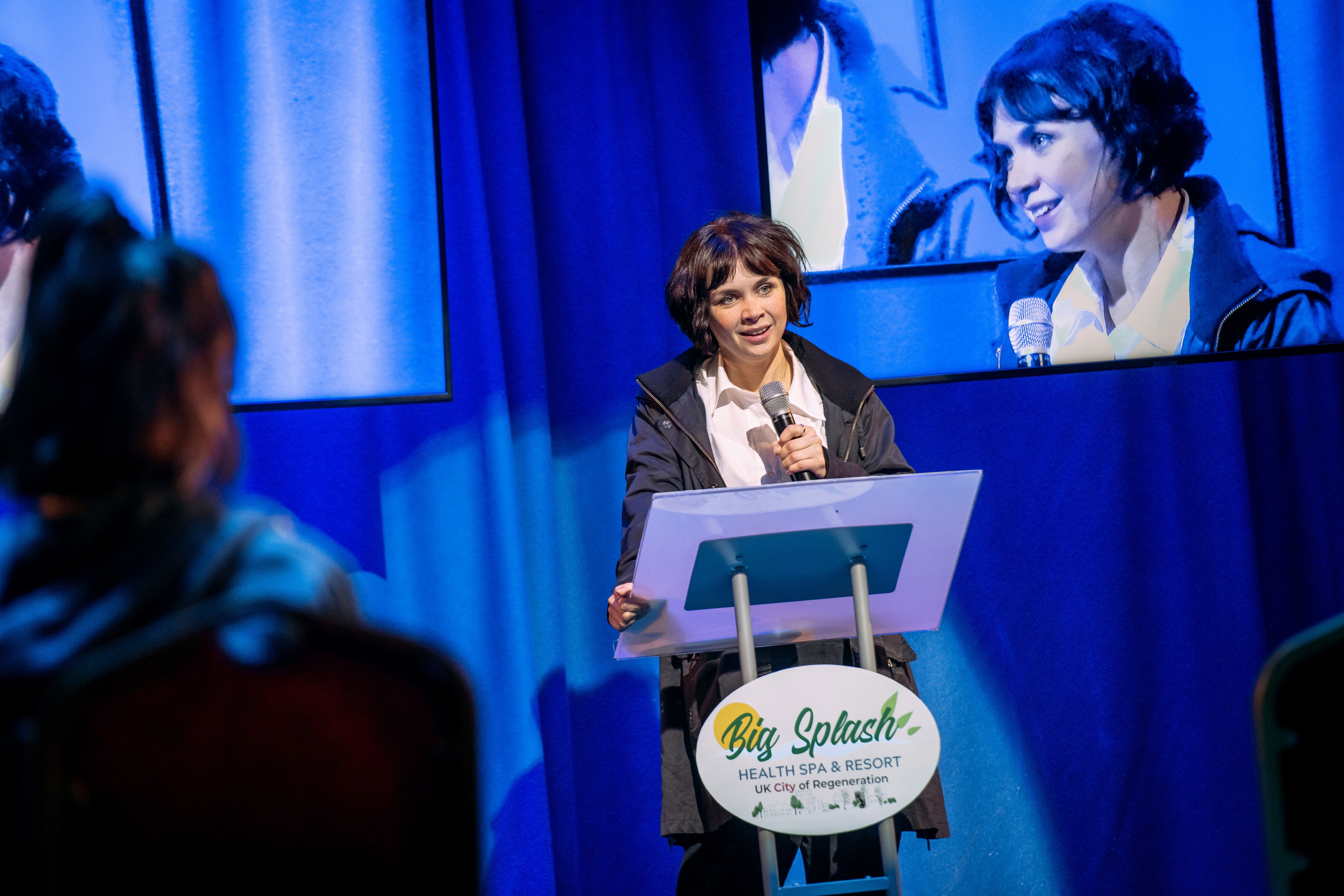
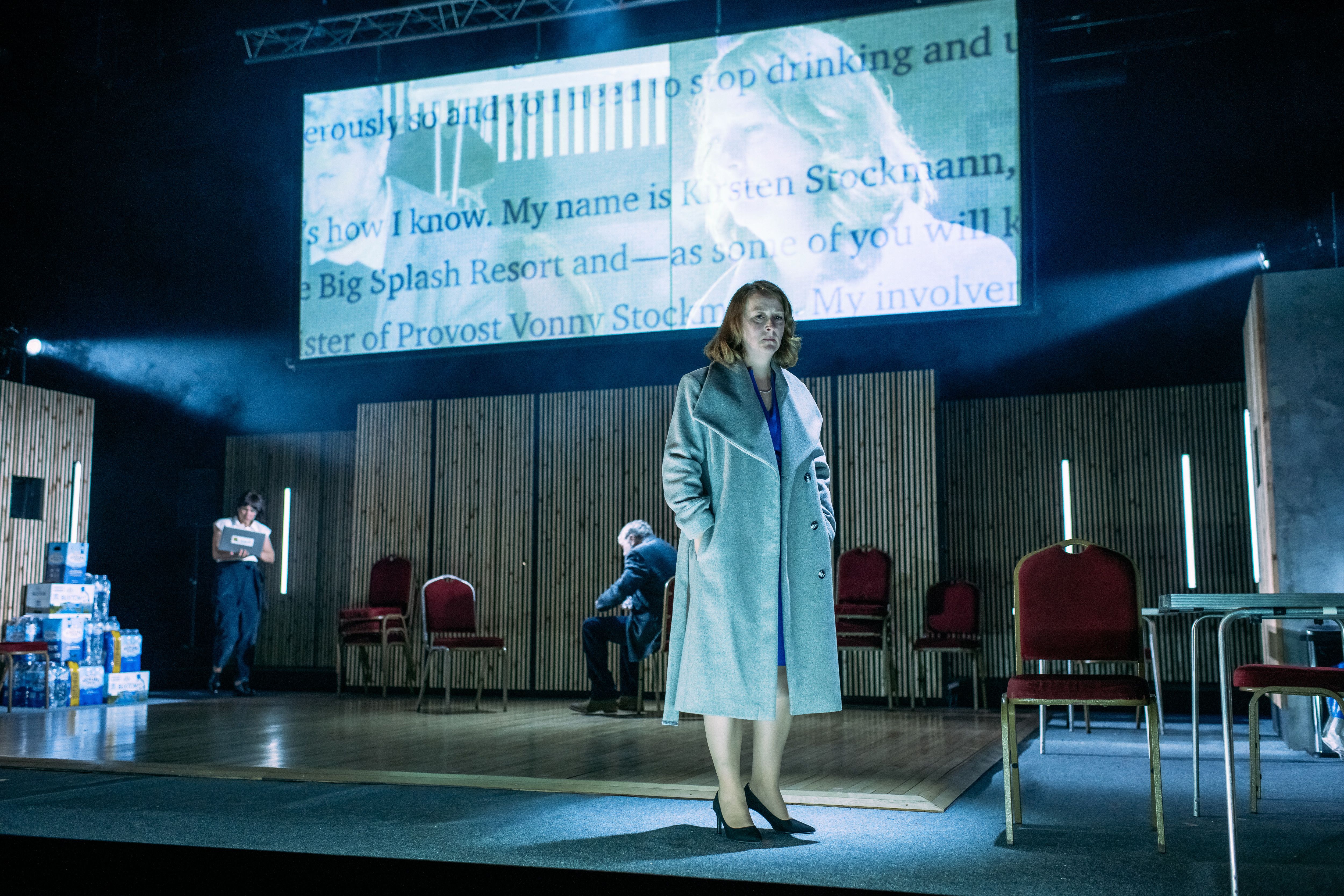
In fact, Hurley doesn’t change much at all, plot-wise. This 140-year-old play is uncannily prescient. The difference is all on the surface: in the modes of communication, and the cadence of the dialogue – and it’s beautifully done. The story shifts easily to a contemporary “once-great Scottish town,” where a new spa resort promises regeneration, and offers hope to the poor and dispossessed who live there. But Dr Kirsten Stockmann (Hannah Donaldson) is concerned: a sickness bug is spreading, and she’s almost certain the town’s water supply has been contaminated. But how? Could blame lie with council-approved shortcuts, aimed at bringing forward the resort’s opening? Maybe. If so, it’s more than a little awkward, because the provost is Kirsten’s sister, Vonny (Gabriel Quigley). Still, surely she will be grateful for the heads up, pleased to be able to avert a public health disaster, no matter what the cost? But no. Vonny has no qualms: without the resort, the people have nothing. They’re not sick because of poison, she tells her sister; they’re sick because they’re poor. She has a point.

Although the story remains unchanged, the staging is bang up-to-date: video designer Lewis den Hertog has created a multi-media piece à la Katie Mitchell, with ‘live cinema’ (where the onstage action is filmed and projected simultaneously onto a large screen) a key feature. There are pre-filmed sequences too, such as a jarringly upbeat advert for the new resort, and a series of enthusiastic vox pops on the local news. And there are text messages, and YouTube videos, and Skype and BTL comments a-plenty. It’s Ibsen with all the socials. It works. There’s a dizzying sense of things spiralling out of control, with Kirsten in the middle, alone, holding on to the damning test result – a dreadful talisman.

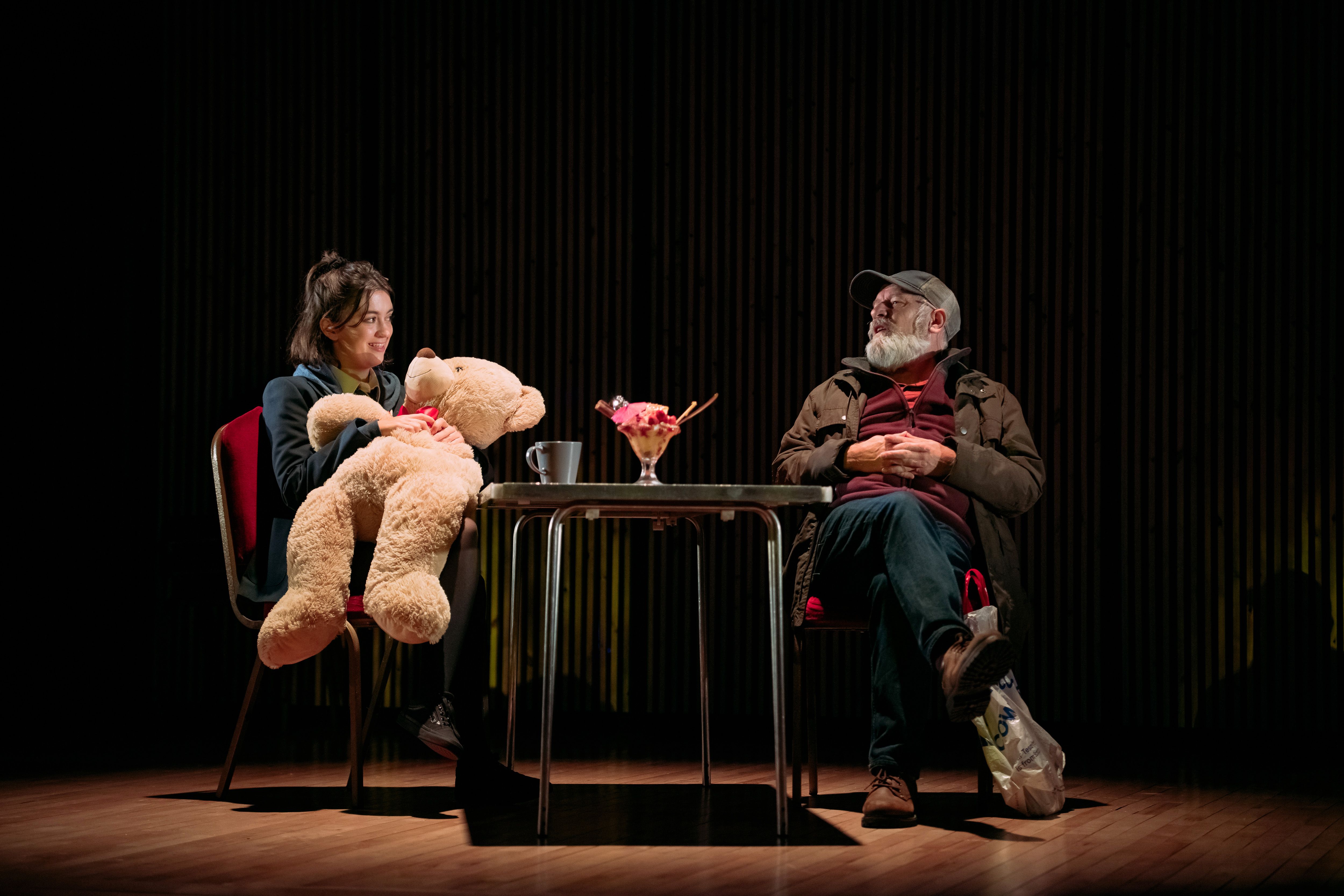
But Kirsten isn’t quite alone. She might have broken ties with her sister; her friend, Benny (Neil McKinven), and local celeb, Aly (Taqi Nazeer), might have sidled away – but her teenage daughter, Petra (Eléna Redmond) is firmly on her side. And so, perhaps, is Derek Kilmartin (Billy Mack), who has a proposal for Kirsten to consider…

It’s wonderful to see creative theatre projects taking shape again (I’ve nothing against old favourites, and it’s clear to see why theatres are being cautious post-pandemic, but it’s definitely time for something new). This particular project seems like a canny move, combining Ibsen’s timeless appeal with something bold and fresh. It’s almost guaranteed to get bums on seats, while simultaneously allowing playmakers the chance to experiment. Good call!

For the most part, it pays off. I have a little trouble hearing some of the dialogue, especially in the first act. I’m sitting quite far back in the stalls, which might have something to do with it, but I wonder if it’s more about the actors delivering their lines to cameras rather than to the auditorium. But this is my only gripe. The performances are natural and convincing, the relationships well-defined.

The message is clear: the truth matters, however unpalatable. It’s a timely homily. We need to heed the experts. The only problem is, we all think we’re Kirsten Stockmann.

4.3 stars

Susan Singfield


Rebus: Long Shadows

09/10/18

King’s Theatre, Edinburgh

Edinburgh’s most famous detective is making his theatrical debut, and I’m really looking forward to seeing how the iconic character fares in his home town. But we spend all day unsure if the play is going ahead after lead actor Charles Lawson was taken ill on-stage last night – the sort of dramatic twist nobody wants to experience. We wish him a speedy recovery. In the meantime, we’re relieved to hear that understudy Neil McKinven has stepped into the role, and that the show will go on.

Long Shadows is a new, original Rebus story, co-written specifically as a piece of theatre by Ian Rankin and Rona Munro. It’s a sensible decision: instead of shoe-horning a complex novel into a two-hour slot, this tale is suited to its form, and pared down, free of the literary clutter that scuppers so many adaptations. It fits into the novels’ time line though: this is retired Rebus, unable to let the job go, still haunted by the ghosts of all the crimes he didn’t solve.

In this incarnation, though, the ghosts are made flesh, with murdered teenagers Maggie (Eleanor House) and Angela (Dani Heron) given a formidably physical presence, a sort of chorus of the dead. I like this device: it gives the girls a voice, makes them real characters instead of mere victims, showing us their combined strength instead of focusing on their frailty. There’s also wit in using these ghosts as stage hands, making the scene transitions seamless, and emphasising the idea that the girls help shape the narrative.

We’re in cold case territory. DI Siobhan Clarke (Cathy Tyson), Rebus’s longterm sidekick, finally has the chance to see known killer, Mordaunt (played tonight by Andy Paterson), pay for his crimes. Technology has improved, and there’s DNA evidence tying him to Angela’s murder, twenty-five years ago. He’s got away with it so far, and Siobhan is determined not to let any loose ends threaten this opportunity to take him off the streets. She visits Rebus to see what he remembers, to see if he has any idea what the defence might have hidden up its sleeve.

Inevitably, all roads lead to Cafferty, Rebus’s Moriarty, played here with great aplomb by John Stahl. He’s exactly as I imagine him from the books, all machismo and panache, charm and thuggery. And Maggie’s death, seventeen years ago, is woven expertly into the mix, brought to mind by the arrival on Rebus’s stair of her teenage daughter, Heather. It’s a clever plot, with twists and turns that keep me guessing. I can’t deny it’s all quite expositional, a lot of telling-not-showing of the past; we’re watching people sit and talk about events rather than seeing them unfold before our eyes. But it’s enlivened by the presence of those ghosts, the gobby teenagers who won’t be shut up, and by strong performances all round.

McKinven does a sterling job. In the first act, he’s faultless: the role belongs to him. He does have a script in the second act, but he doesn’t refer to it often. It makes sense: the first act is much more of an ensemble piece, and McKinven, in his usual multiple roles, clearly knows this section well. But the latter half is essentially a three-hander between Rebus, Cafferty and Clarke; presumably McKinven has habitually spent this time in his dressing room, relaxing, before appearing briefly in the concluding scene. No matter, the script stuffed into his pocket doesn’t look out of place – Rebus is always carrying case files around. And he only seems to need it to place what’s coming next: he’s acting the dialogue, not reading it. And maybe, by tomorrow, he won’t need it at all. Either Lawson will be back, or McKinven will have learned the lines.

The set, designed by Ti Green, is perhaps my favourite thing about this whole production. I love the simplicity of it, the economy. There are no unnecessary props or pieces of scenery; it’s as uncluttered as the script. But it’s wonderfully evocative: Edinburgh’s tall grey walls and winding paths, tunnels and closes, stairs and bridges, all there at once, their purpose and atmosphere changing with the light. It’s almost breathtaking when the streets of the Old Town are turned instantaneously into a glass penthouse on the Quartermile by the stupidly simple method of lighting the side panels from behind. It’s a revelation as remarkable as those related to the crime.

So, a welcome addition to the Rebus pantheon, and certainly a must-see for fans of the irascible ex-detective.

4 stars

Susan Singfield