
movies

Mission Impossible: The Final Reckoning

22/05/25

Cineworld, Edinburgh

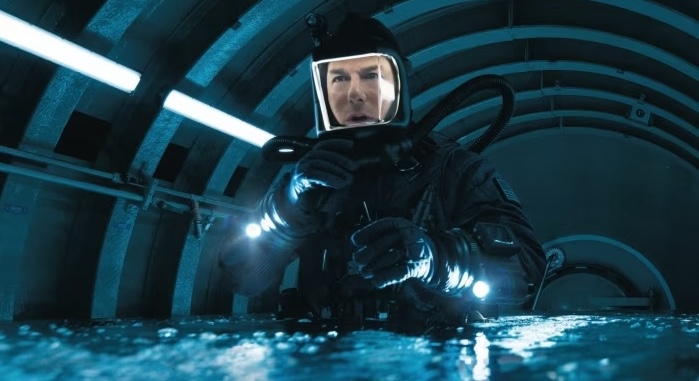
And so, it would seem, the end is nigh – though I’m cynical enough to believe that will depend entirely on The Final Reckoning’s box office. It’s been a long and varied ride for Mission Impossible. As I’ve observed before, most franchises start strong and have a couple of decent follow-ups, before eventually running out of ideas and becoming pale shadows of their former selves. MI – based on the popular 60s TV series – began its cinematic journey way back in 1996 (originally helmed by Brian de Palma) and then struggled through a bunch of variable sequels until director Christopher McQuarrie came on board for 2015’s Rogue Nation. In that film, all the disparate elements finally gelled.

For my money, 2018’s Fallout was MI’s pinnacle: tense, propulsive, gloriously inventive, it kept me hooked right to the final frame and earned itself a five star B&B review. 2023’s Dead Reckoning wasn’t quite as perfect and the fact that it was a Part One didn’t help, particularly when Part Two wasn’t set to rear its head for another couple of years. Realising, no doubt, that viewers’ memories will need a significant nudge, The Final Reckoning opens with a kind of overview: a greatest hits package offering glimpses of a younger, leaner Ethan Hunt going through his frenetic paces.

After that, we arrive in a darker, gloomier world than we’re used to seeing in MI, where super-powerful AI Big-Bad, The Entity has taken control of the entire planet’s nuclear weapons and appears to be on the verge of initiating World War Three. (Sound familiar?) Ethan Hunt is now in hiding after the shenanigans of Part One so the American President (played by Angela Bassett, who, let’s face it, is the leader we all wish America currently had) puts out an urgent plea for him to show himself and to bring along that mysterious key he got hold of in Part One.

Will Ethan step up to this new challenge? Well, what do you think?

Aided by Grace (Hayley Atwell), Luther (Ving Rhames) and Benjie (Simon Pegg), plus former adversary, Paris (Pom Klementieff), Hunt devises ever more ingenious ways of taking on the all-powerful Entity and, if the storyline is patently absurd, well of course it is. This is Mission Impossible, FFS!

To give Cruise and McQuarrie their due, they have put everything they’ve got into making this the ultimate MI adventure and, to a large degree, they’ve succeeded. There are some incredibly-assured sequences, not least a claustrophobic and nail-biting return to that Russian submarine we saw in Part One. There’s also a nerve-racking aerial routine, where Hunt clambers all over the fuselage of a single-engined plane (in mid-flight) in a desperate bid to come face-to-face with human villain, Gabriel (Esai Morales). The fact that Cruise has done all these stunts for real is, of course, admirable, though I do wonder what professional stunt performers must think about such grandstanding. (I note from the credits that Cruise actually employs a stunt double, which begs the question ‘What does that man do to earn his fee?’ Make the coffees?)

On the debit side, the film’s ponderous running time does leave me with the onerous task of choosing the right moment to nip out for a toilet break – and I’d argue that thirty minutes could easily be clipped from this, simply by removing some of those references to past adventures. Having a call-back to a character who actually appeared in the very first movie is a nice touch, but I ask myself how much does it actually add to the story?

Still, kudos to Team Cruise-McQuarrie, who have devoted so much of their time, energy and (let’s face it) money to this franchise. But it does seem like the right time to bow out. And I’m pretty sure I’m not the only film fan who wistfully remembers Cruise in films like Jerry McGuire, Rain Man and Magnolia, where he was actually required to act and turned out to be pretty damned good at it.

I’m already looking forward to seeing what he does next.

4 stars

Philip Caveney
Bridget Jones: Mad About the Boy

22/02/25

Cineworld, Edinburgh

Watching a Bridget Jones movie is like catching up with an old schoolmate – not necessarily someone you were especially close to back in the day, but with whom there’s enough shared history to make these meet-ups fun. No doubt this is particularly true for “women of a certain age” – Bridget’s age; my age – who’ve grown older with her as part of our cultural landscape.

Thankfully, Bridget (Renée Zellwegger) has finally grown wiser; I found her ditsy-fuck-up persona a wee bit irritating when I last saw her (in 2016’s Bridget Jones’s Baby). What was endearing in a woman barely into her thirties, contemplating the fact that she’s somehow suddenly supposed to be an adult, was just irksome in a pregnant forty-something with a kick-ass job. Now in her fifties, Bridget has settled into success: she’s proud of the skills that make her such an excellent TV producer, and she’s even prouder of Billy and Mabel (Casper Knopf and Mila Jankovic), her two delightful kids.

But this iteration of Bridget is a lot sadder too: she’s a widow. Her husband, Mark Darcy (Colin Firth), was killed a couple of years ago on a peace-keeping mission in the Sudan. The issue of mourning is nicely handled, staying just the right side of mawkish. We see Bridget and her kids slowly moving forward, acknowledging their grief while also trying to find joy. The new levels of emotional depth work well, but this is still essentially a rom-com, so there’s a raft of unsuitable guys for Bridget to dally with.

First up is her old flame, Daniel Cleaver (Hugh Grant). Bridget has him firmly in the friend-zone nowadays, and I like this development. He’s as much of a player as he ever was – his language inappropriate; his attitude to women still neanderthal – but he’s rendered (more or less) palatable thanks to his kindness to Bridget and his rueful acknowledgement of his own failings. Also, of course, Grant imbues him with a rogue-ish charm, so it’s hard to hate him as much as I might in real life.

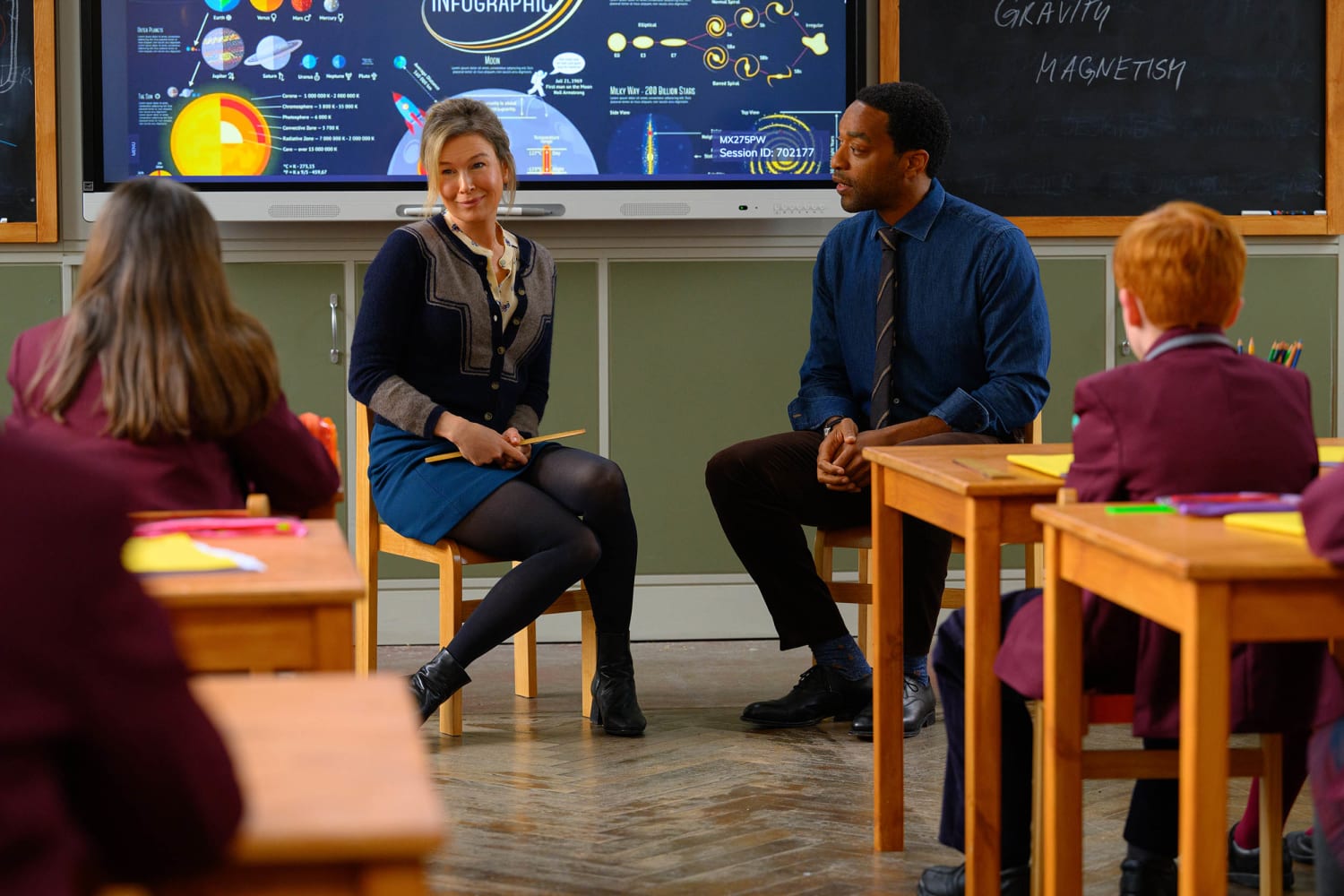
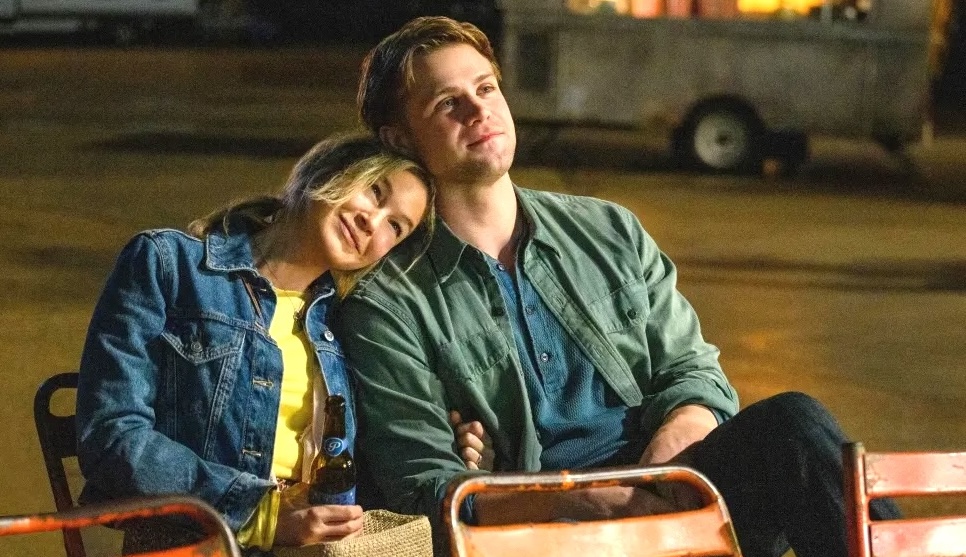
So, if Cleaver’s not a contender for a new relationship, who is? Enter Roxster (Leo Woodall) and Mr Wallaker (Chiwetel Ejiofor). The former is a twenty-nine-year-old PhD student, all rippling muscles and boyish smile; the latter is Billy’s uptight primary school teacher, a stickler for rules and punctuality – although he does turn out to have a decent set of abs as well. It’s no surprise that Bridget finds herself drawn to Roxster – nor that Mr W reveals a softer side, which makes her like him too. Which one will Bridget end up with? (Things might have moved on – at least Bridget doesn’t seem to hate her body any more – but the story hasn’t strayed so far from its ‘happy ending’ cliché that she might conceivably choose to be alone.)

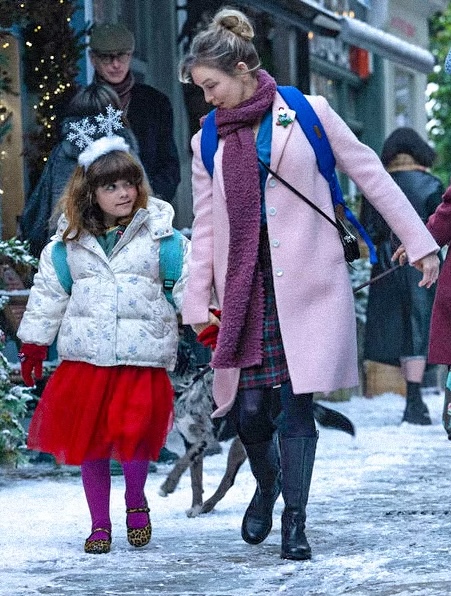
Zellwegger is as likeable as ever, and I have tears in my eyes as I see Bridget emerging from her misery to recover some of her ebullience – dancing and laughing and being silly. It’s great to see her old friends and adversaries pop up as well: director Michael Morris and scriptwriters Helen Fielding, Dan Mazer and Abi Morgan successfully present a parade of ‘greatest hits’ shout-outs without ever making them seem shoe-horned into place. Big knickers? Check. Penguin pyjamas? Check. Falling over? Check. Check. Check. Running after a lover in the snow? Big check.

In short, I like this film a whole lot more than I’m expecting to. Bridget will never be my bestie, but I’d love to check in with her when we’re both in our sixties, and see what scrapes she’s getting up to then…

4 stars

Susan Singfield

A Real Pain

12/01/25

Cineworld, Edinburgh

On paper, it sounds like a terrible idea: a comedy about chalk-and-cheese Jewish cousins on a tourist trip to a concentration camp. I’m sorry, what? But Jesse Eisenberg’s script successfully navigates the many potential pitfalls, and A Real Pain emerges as a thoughtful exploration of how we try to make sense of the horrors of recent history, expertly leavened by the mismatched buddy lols.

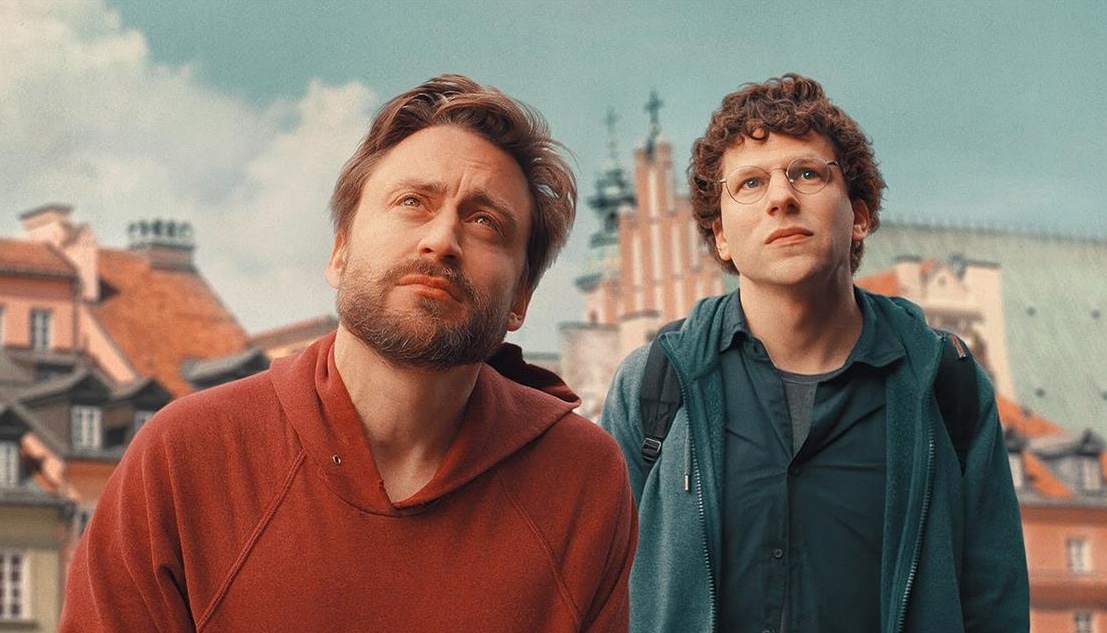
This is very much Eisenberg’s project: he also directs and co-stars as David, the uptight, neurotic half of the central pair. Kieran Culkin is Benji, the cousin he was inseparable from when they were young. Their backstory emerges through the dialogue: as they approach forty, we learn, David doesn’t want to hang out with Benji like he used to. He’s moved to NYC, where he has a wife, a child and a career to focus on. Benji, on the other hand, has yet to find his groove. Sure, he’s funny, charming and very popular, but he’s also living in his parents’ basement, depressed, without a steady job. Their paths rarely cross. But then their beloved Grandmother Dory dies, leaving money in her will for the two of them to travel to Poland, to see the house where she grew up and the camp that she survived. It feels like a canny final plan, to reunite her grandsons while also honouring the past.

It helps, of course, that Eisenberg and Culkin are both such strong actors, easily securing the audience’s sympathy. Culkin in particular shines here in the showier role, Benji’s vulnerability writ large, despite his devil-may-care attitude. Even as he’s selfishly appropriating the window seat – again – or disrupting a whole train carriage with a tantrum, it’s impossible not to feel protective of him, the carapace he’s constructed so obviously fragile. Eisenberg provides the comedic foil; he’s the helpless observer apologising for his cousin’s outbursts, blinking with embarrassment as Benji transgresses social mores.

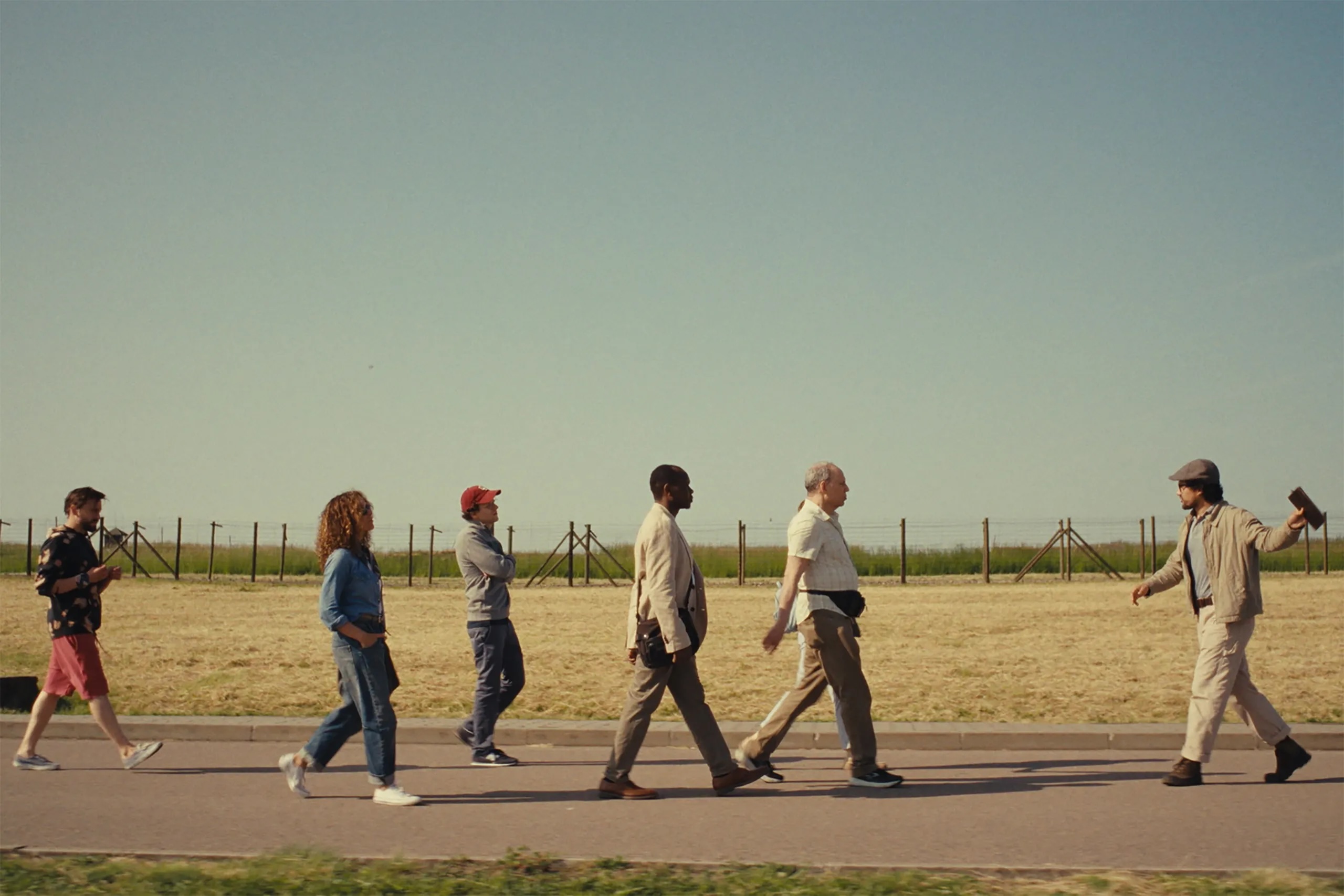
The supporting cast are also well-drawn, a convincing mix of characters, contentedly muddling along. British tour guide James (Will Sharpe) is an affable chap. He’s not Jewish but he is an Oxford graduate with a detailed knowledge of Polish history. The two solo travellers are Marcia (Jennifer Grey), a recently-divorced woman in her early sixties, and Eloge (Kurt Egyiawan), a survivor of the Rwandan genocide who has emigrated to the USA and converted to Judaism. Married couple Mark and Diane (Daniel Oreskes and Liza Sadovy) complete the group; like David and Benji, they’re visiting Lublin because it’s where their family comes from – and where many of them were killed.

The scenes in the Majdanek concentration camp are very moving. Eisenberg sensibly eschews any directorial flourishes here: there’s no music, no flashbacks, no fancy editing tricks. The bare walls speak for themselves, atrocities literally etched onto them in the blue stains left by poison gas. The tour group moves through in silence; their return bus journey passes quietly too, as they reflect on what they’ve seen – and what it means. Later, smoking a joint on the hotel roof, David points out three lights. “That’s the camp,” he says. “It’s so close” – a perfect example of the understated poignancy that makes the movie work so well.

A Real Pain is a clever film, a tight ninety minutes of carefully-structured storytelling, with never a dull moment. Eisenberg straddles the line between respect and irreverence, gently mocking people’s reactions without ever trivialising the Holocaust. It’s no mean feat to create such a heartwarming, thought-provoking tragicomedy.

4.4 stars

Susan Singfield