Morfydd Clark

Hamlet

08/02/26

Cineworld, Edinburgh

I’m a sucker for a modern interpretation of Shakespeare, illuminating the continued relevance of his themes. I’m also a menopausal woman who needs to pee quite frequently, so when I read that Aneil Karia’s Hamlet has a tight sub-two-hour running time, I’m sold. I might actually be able to sit through the whole film!

London, 2025. Hamlet (Riz Ahmed) is devastated by the death of his father (Avijit Dutt), the mega-rich owner of a controversial construction company, Elsinore. Numb with grief, the young heir is horrified when his mother (Sheeba Chaddha) announces she plans to remarry without delay – taking Old Hamlet’s brother, Claudius (Art Malik), as her new husband.

As if things weren’t difficult enough, Hamlet soon has a lot more to deal with, when his father’s ghost appears before him, accusing Claudius of killing him and urging his son to seek revenge. True to Shakespearean form, Hamlet devises a convoluted scheme to prove his uncle’s guilt. He’ll pretend to be mad, verbally abuse his girlfriend, and interrupt his mum’s wedding with a play that shows the groom committing murder. What could possibly go wrong?

In this version, Hamlet and his family are British Indians, and we’re in England, not Denmark. In my favourite change to the original, Fortinbras is no longer the defeated King of Norway, but instead the name of a collective of homeless people, who’ve been displaced by Old Hamlet’s cruel business practices. Here, Hamlet’s madness is not just a reaction to his own situation, but a response to the belated realisation that his family’s wealth comes from theft and exploitation. His struggle, in the end, is to restore social justice, as well as to avenge his dad.

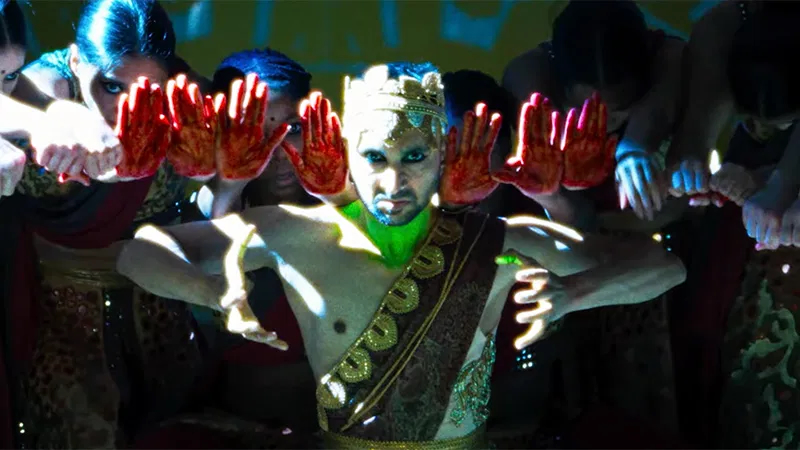
There’s a lot to like about this film. It’s exciting and propulsive, stripping Hamlet down to its most interesting parts, while retaining enough soul-searching to make us understand the young protagonist’s despair. I love the depiction of the players’ performing Old Hamlet’s murder, and the famous soliloquy (“To be or not to be…”) is utterly thrilling, as Hamlet – driving through London’s busy night-time streets – floors the accelerator and takes his hands off the steering wheel…

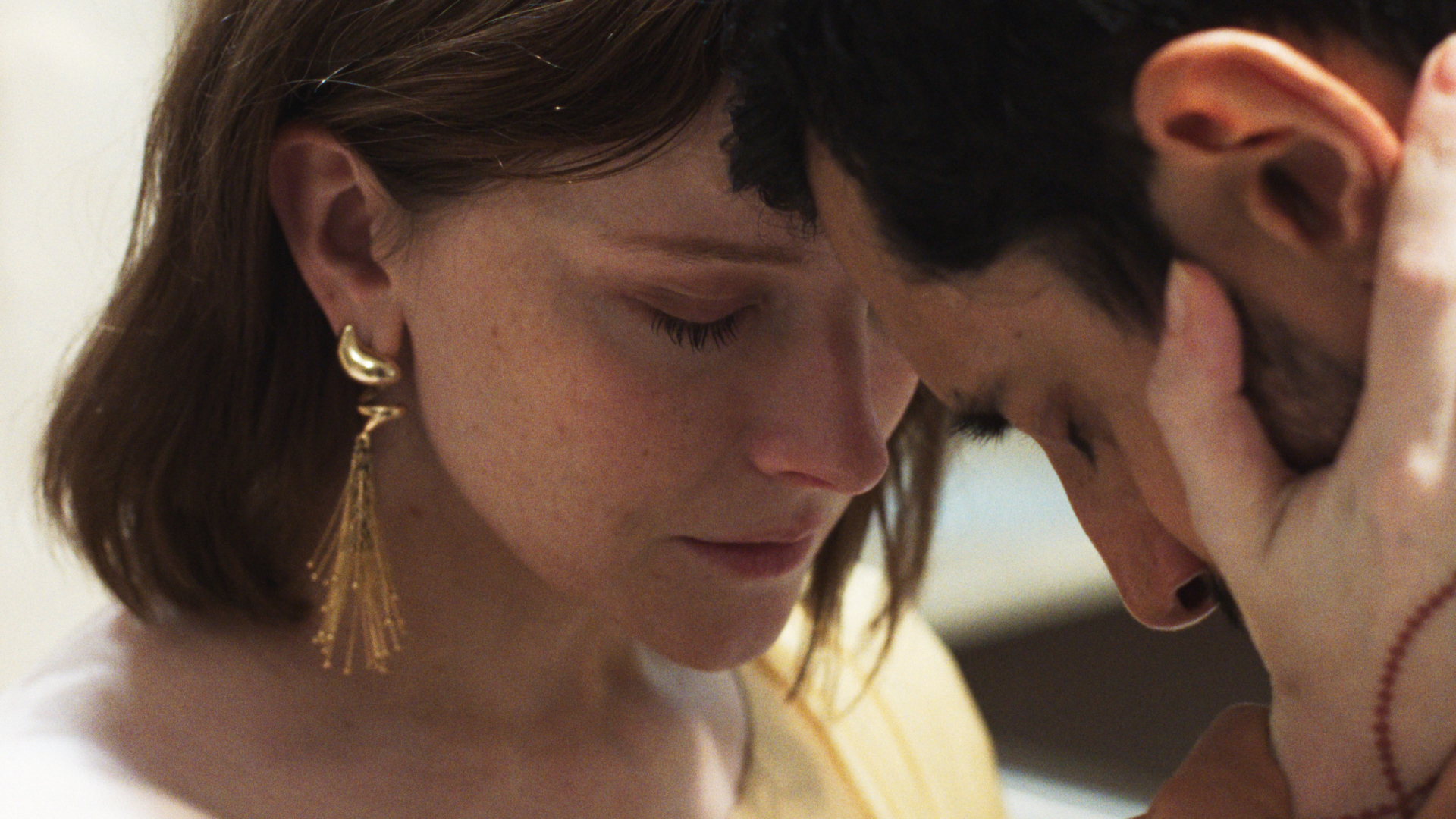
I’m not sure that the omission of Horatio works particularly well: the contrasting counsel of Horatio and Laertes (Joe Alwyn) adds an interesting dimension to the play that is lacking here. I also think that, in a contemporary adaptation such as this, Ophelia (Morfydd Clark) could be given more to do. On the other hand, I like the subtle changes to Gertrude’s character, cleverly rendering her innocent of any crime while also giving her more agency. Chaddha’s performance is nuanced and convincing – and Timothy Spall was surely born to play Polonius.

But this is Riz Ahmed’s film, and he’s as fine a Hamlet as I’ve ever seen: a flawed young man tormented by grief and guilt, behaving badly and impulsively, hurtling towards his own demise. It’s a tale as old as, well, four hundred years. And still it endures.

4 stars

Susan Singfield
St Maud

03/02/21

Amazon Prime Video

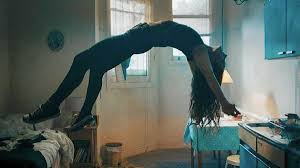
St Maud is another movie that got away. Released just before cinemas across the country closed their doors, we’ve been literally counting the days to its release on streaming networks. Finally, it’s available and though, inevitably, some of its visceral power must be diluted by viewing it on a smaller screen, it’s nonetheless an assured and confident debut from writer/director Rose Glass.

In a taut one hour, twenty-four minutes, the film manages to keep me guessing right up to the final shocking frame: is Maud simply deluded? Or is there something more to the series of religious ‘visions’ that afflict her on a day-to-day basis? The result, though unremittingly bleak, is undeniably compelling.

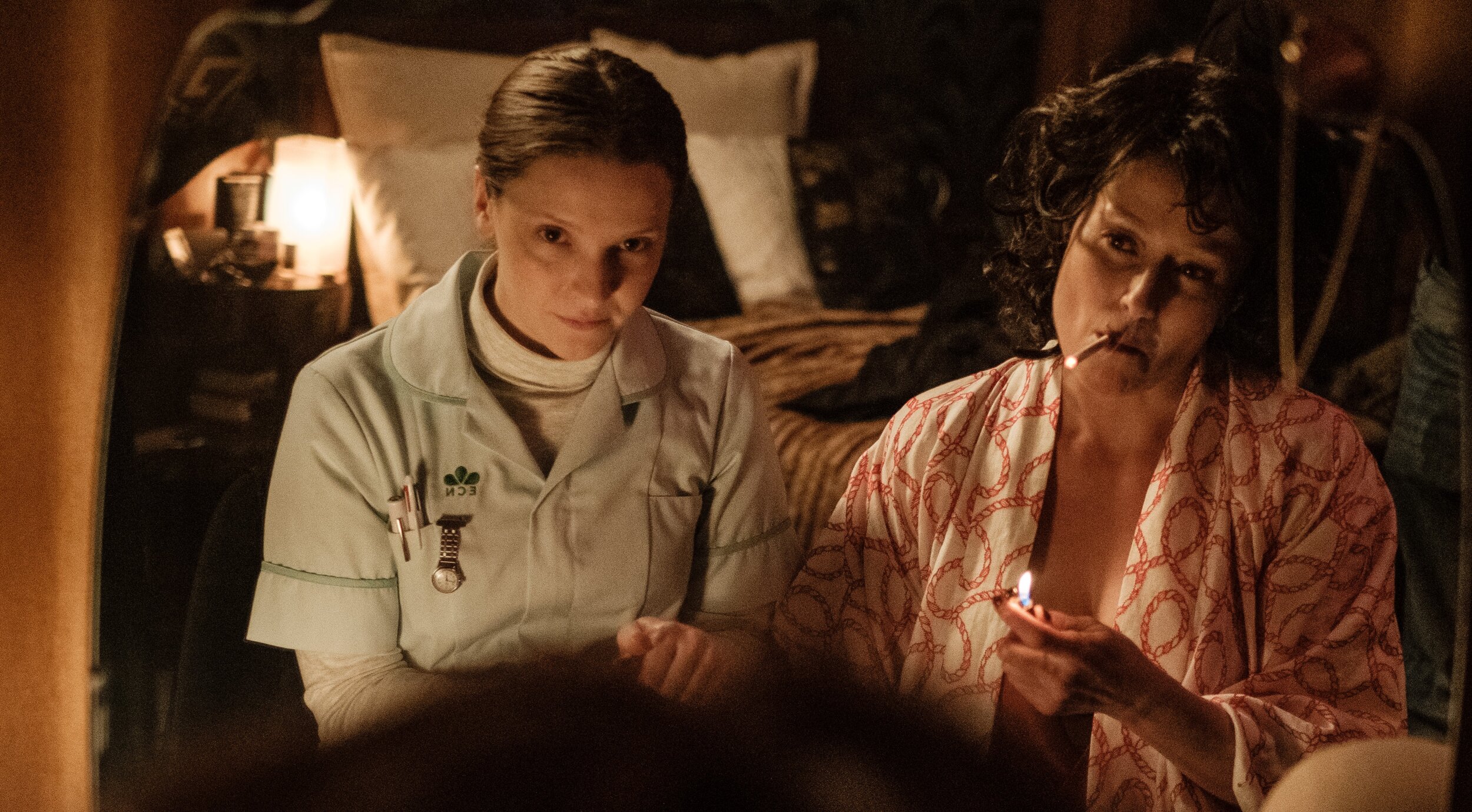
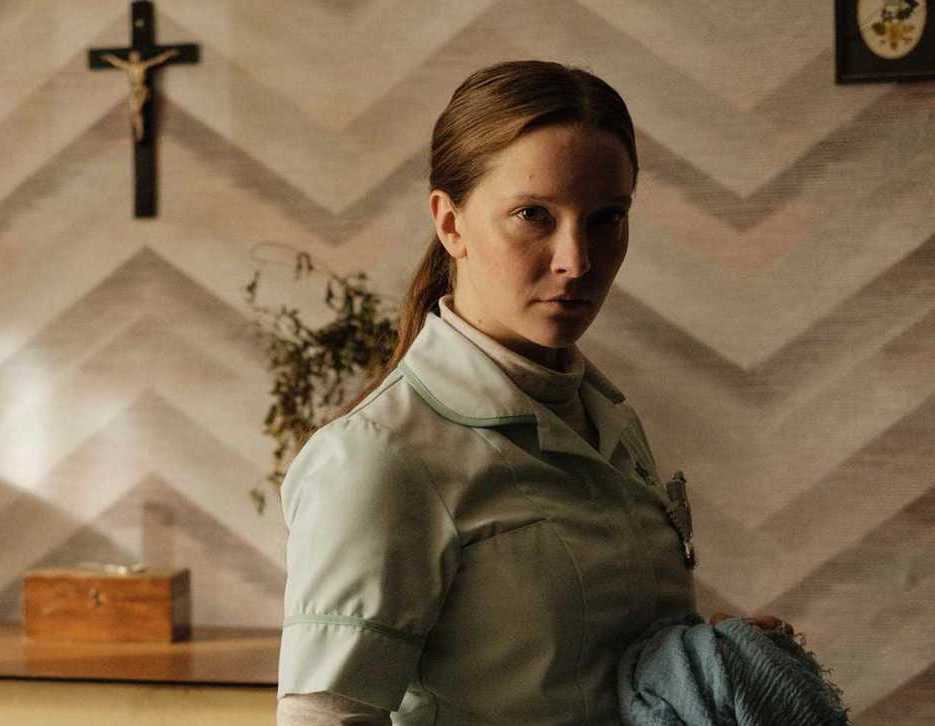
Maud (Morfydd Clark) is a former nurse, banished from the hospital where she formally worked for reasons that are only hinted at. We soon learn that ‘Maud’ isn’t even her real name, which explains how she comes to be working in the private sector, caring for the tragic Amanda (Jennifer Ehle) in her home. Amanda is a former dancer and choreographer, a leading light of the theatrical world, now gradually succumbing to the ravages of cancer of the spine, unable to stand, let alone perform a pirouette.

At first, Maud seems like the perfect carer – polite, attentive and gentle – but, as she and Amanda become closer, so Maud is increasingly convinced that Amanda is transgressing God’s laws. Initially, this merely encourages Maud to overstep the mark as a carer, meddling in Amanda’s personal life – but it’s only a matter of time before the mounting conflict results in tragedy.

Set in a sleazy, rain-splashed Scarborough, Glass takes every opportunity to depict the seaside resort as some kind of hell on earth, employing skewed perspectives, even turning the camera lens upside down at key moments in the narrative. The extended sequence where Maud attempts to go out for a ‘night on the town’ is unlikely to put the place on the tourist maps. Clark is phenomenal in the lead role, depicting Maud as an uneasy mixture of smiling geniality and twisted anxiety. I never know which aspect is going to emerge at any given moment, and it’s this uncertainty that keeps me on the edge of my seat throughout.

For Rose Glass, the timing has been disastrous, but it’s interesting to note that, despite everything, St Maud managed to find its way onto many critics’ top-ten films for 2020.’ I’m late to the game but have to agree: this is an astonishing first flight for a director. I look forward to seeing where she goes next.

4.4 stars

Philip Caveney

The Personal History of David Copperfield

21/01/20

I arrive at the cinema expecting great things. The trailer for Armando Iannucci’s The Personal History of David Copperfield promises a rollicking ride through one of Dickens’ best loved tales, and I’m excited to see how it unfolds.

The promise is kept: it is a rollicking ride. A bit too rollicking, if I’m honest, careening  through the 350,000 word novel at breakneck speed. Well, it’s a lot to fit into two hours. There’s nothing here I’d lose – no padding or filler required – but I’d be tempted to add an extra thirty minutes to the running time, just to give the story space to breathe.

Dev Patel is the eponymous hero of his own life, and very good he is too, all genial affability despite his social-climbing and urgent need to impress. Born a gentleman, he’s forced into poverty when his widowed mother remarries, and his stepfather (Darren Boyd) takes against the boy. Young David is not too worried at first: the poverty he’s witnessed so far – visiting Peggotty’s quirky, loving family in their upturned boat/house – has given him a romanticised impression of the working person’s lot. A back-breaking job in a bottle factory soon disabuses him of this worldview, and he determines to find a way to live a better life.

Tilda Swinton and Hugh Laurie form a show-stealing double-act as David’s aunt Betsey Trotwood and her cousin Mr Dick respectively; in fact, there are almost too many perfectly-captured vignettes featuring too many wonderful actors. There’s Anna Maxwell Martin playing school mistress Mrs Strong – whoosh! There’s Benedict Wong as the ever-thirsty Mr Wickfield, and Rosalind Eleazar as his daughter, Agnes – whoosh! Daisy May Cooper’s Peggotty is warmly, wittily portrayed; Morfydd Clark’s Dora Spenlow a frothy, silly delight. I do like the sense of breathless chaos: the lack of deference to period drama genre-norms; the diverse casting that proves it can (and should) be done. There’s just no time to focus in on anything before it’s gone.

In short, each scene is beautifully rendered; each character cleverly drawn. But the story feels a little superficial, with none of the darkness or political poignancy of Dickens’ semi-autobiographical novel.

3.8 stars

Susan Singfield