
12/12/25
Traverse Theatre, Edinburgh
Last year, 4Play comprised four full plays, performed over two nights. This time around, it’s a truncated affair, with excerpts rather than entire scripts. The first two pieces are only ten minutes long, while the second pair are given longer to develop their themes, each with a running time of approximately twenty-five minutes.
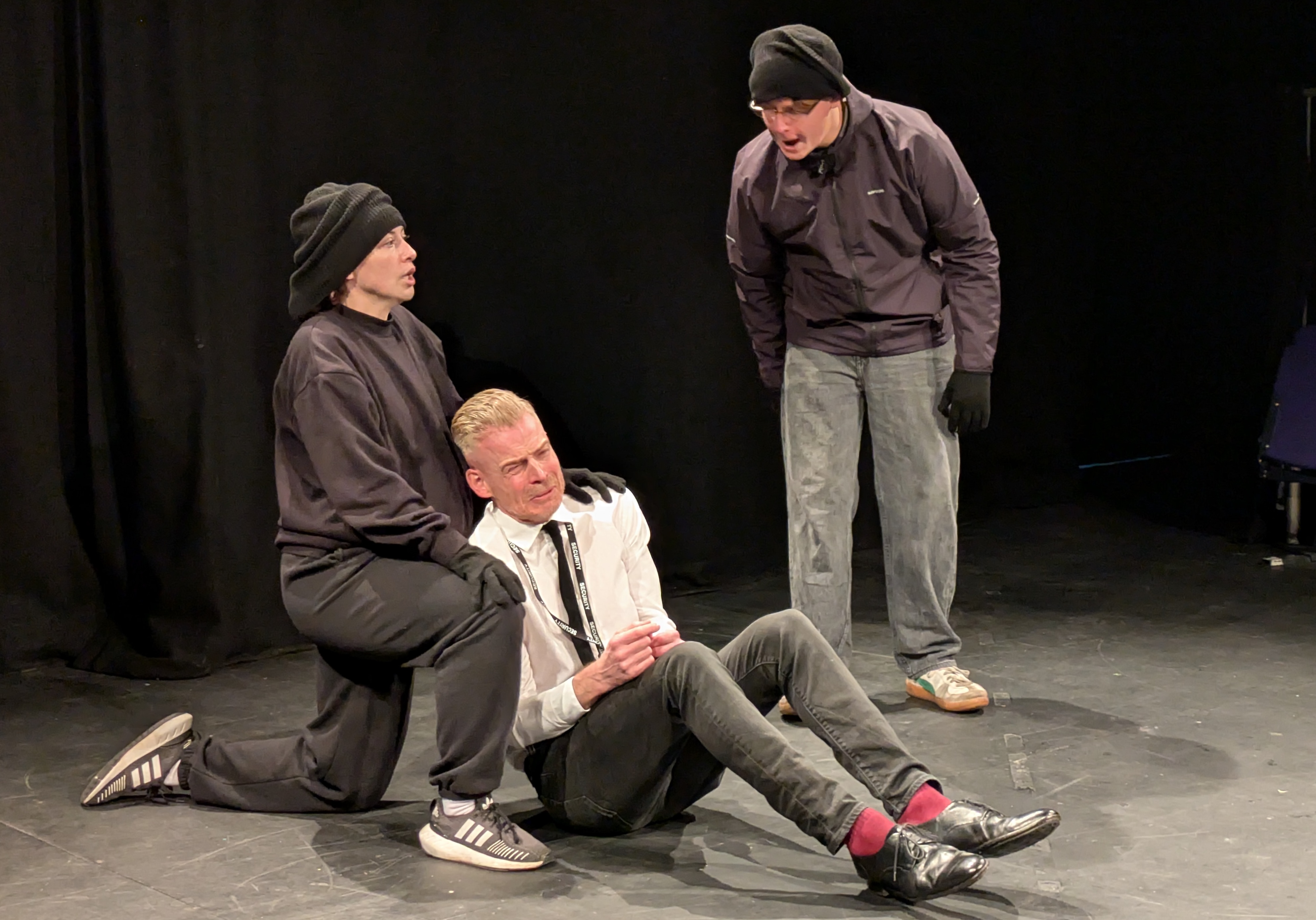
We open with a short extract from Ruaraidh Murray’s Chips, directed by Michael Nardone and Jake Sleet. Nothing to do with the California Highway Patrol, this is a fictionalised account of a true-life tale of… microchip theft. Apparently it was a thing in the 1990s. As if breaking, entering and taking apart computers wasn’t enough of a challenge, Kaz (Christie Russell-Brown) is heavily pregnant, and her partner-in-crime, Wan (Calum Manchip), isn’t exactly focused on the job…
The second piece is Brace, written by Geraldine Lang and directed by Matthew Attwood. Paul (Jack Elvey) and Lewis (Kieran Lee-Hamilton) are apprentice scaffolders, struggling to learn their trade without any real guidance. In their business, mistakes have material consequences, and it’s the people at the bottom of the pile who have to pay. Although I appreciate that the physicality of the boys’ work is key to the piece, I can’t help feeling that it’s a mistake to spend so much time constructing the scaffolding; I’d prefer to hear more dialogue and delve further into the plot.
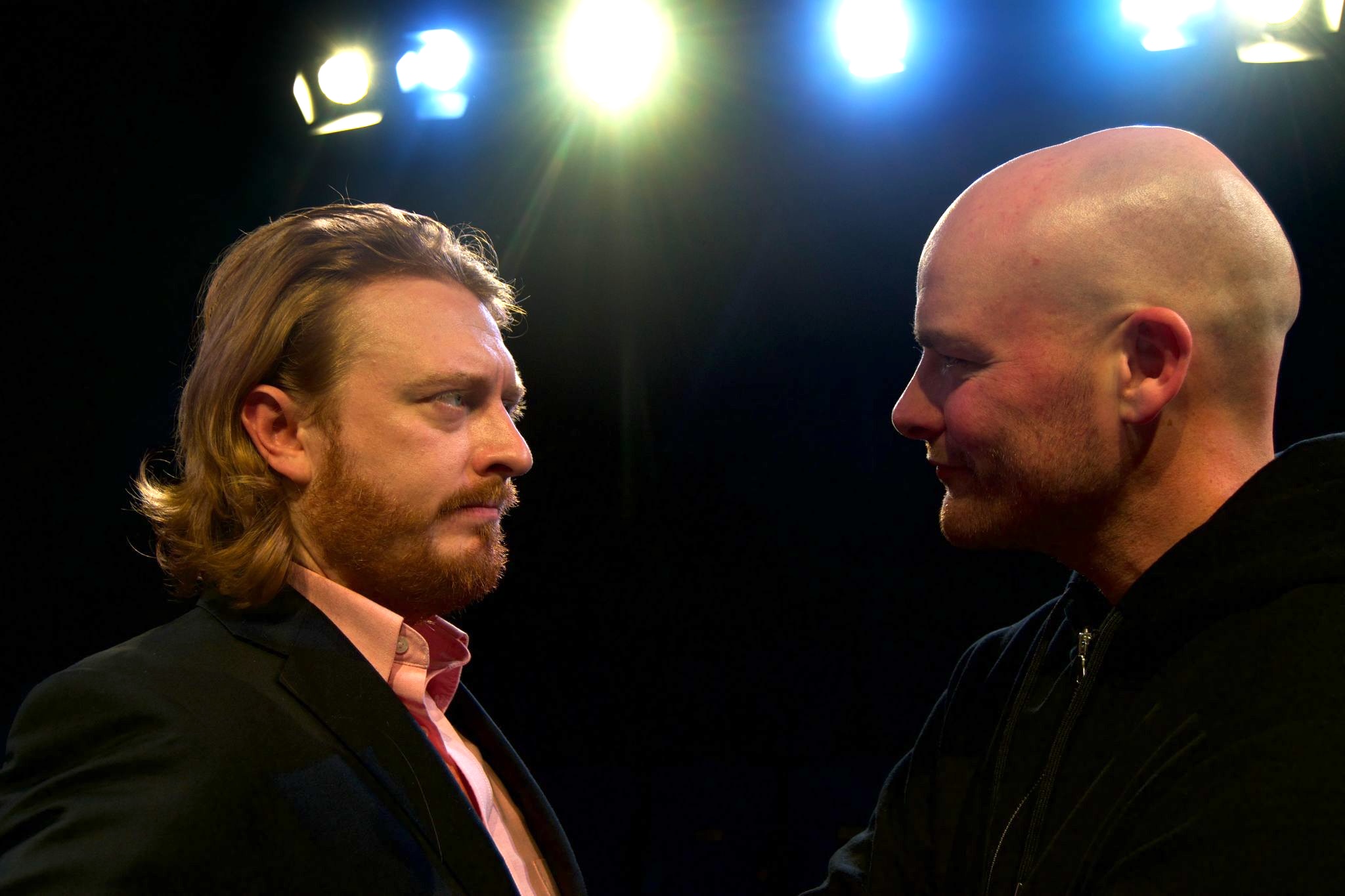
After the interval, it’s Sunday Palms, which is by far our favourite of tonight’s plays. From the opening soundscape – an oddly unsettling aural representation of a man returning home from work to his empty flat – to the awkward dialogue that follows the unexpected appearance of a childhood friend, Sean Langtree’s script is utterly compelling. Directed by Grace Ava Barker, the piece is immediately intriguing, and I’m fascinated to know where the story leads. Why is Brian (Daniel Campbell) so alarmed by Nathan (Langtree)’s presence? Whose victory does the title presage? Langtree’s Nathan is perfectly observed – just that little bit too needy, too edgy – while Campbell nails Brian’s discomfort, his attempts to hold to societal norms in the face of Nathan’s peculiar demands.
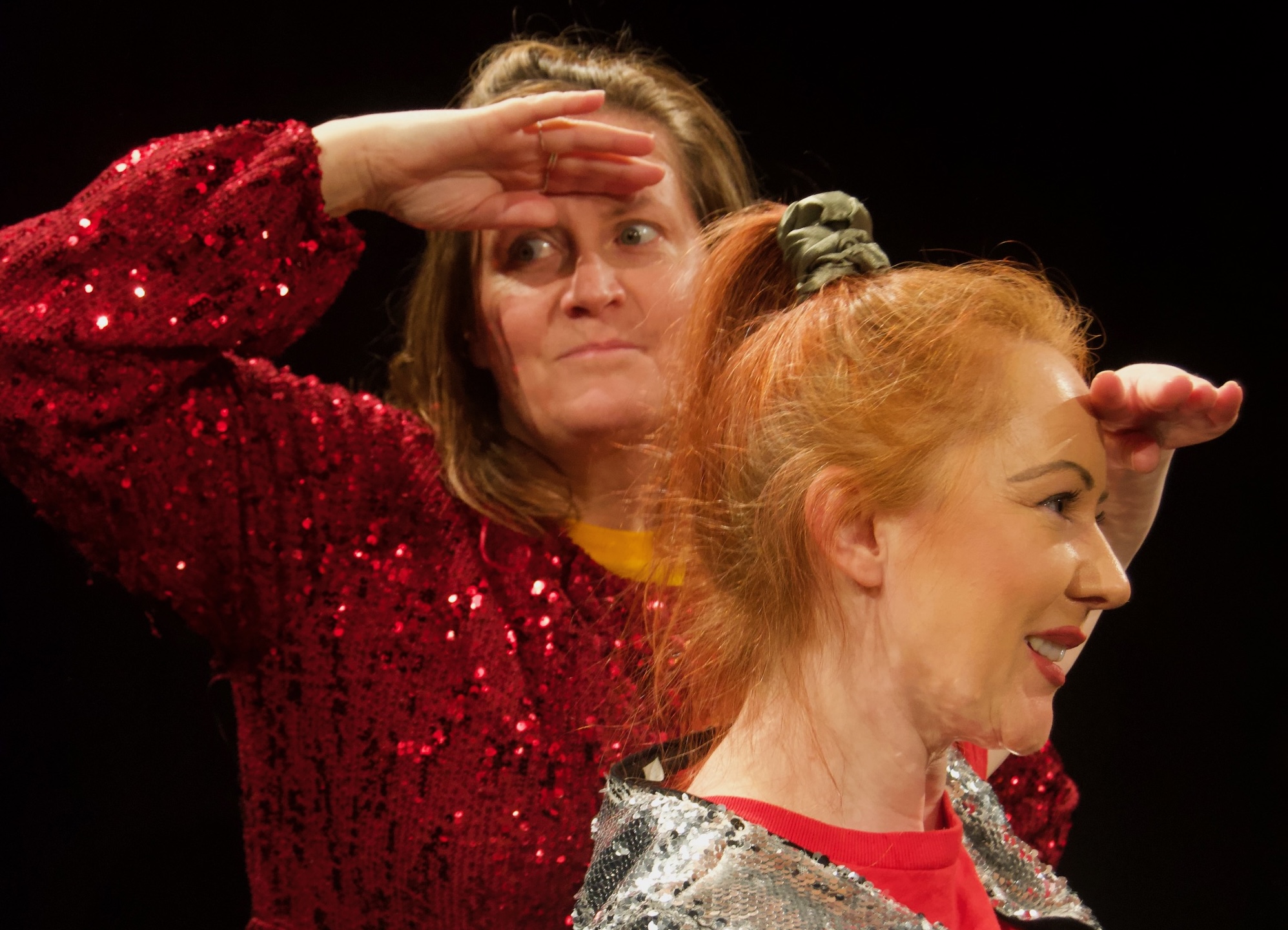
Last up, it’s Hunt by Andrea McKenzie, directed by Gwen M Dolan. We’re in the near future, and AI has taken over the cities. Mags (Deborah Whyte) and Joel (McKenzie) are yearning for a simpler life: to step away from their computers and connect with nature. The trouble is, they’re more familiar with tech than they are with tents, neither has remembered to pack the kettle – and how exactly do you light a fire? What’s more, Joel soon discovers that Mags hasn’t been entirely honest with her, and there’s more to this trip than she’s been told…
Reductions in length notwithstanding, 4Play – and other schemes like it – are vital to ensuring that new voices are heard in theatre. 4Play has had considerable success, introducing Katy Nixon’s Cheapo and Mikey Burnett’s Colours Run, which have both spread their wings and flown to critical acclaim. As Scotland’s new writing theatre, it makes perfect sense for the Traverse to support the event, and we’re delighted to have this opportunity to see emerging playwrights develop their skills.
3.2 stars
Susan Singfield


 Bouquets & Brickbats