Michael Cera

The Running Man

15/11/25

Cineworld, Edinburgh

A new Edgar Wright movie is generally a cause for celebration, even if The Running Man falls some way short of the dizzy heights he attained with films like Baby Driver and Last Night in Soho. And it certainly goes a long way to erase the memory of the shonky 1987 version of this story, which featured characters running around in multi-coloured jumpsuits and prompted author Stephen King to have his name removed from the credits. This adaptation, it turns out, comes with the author’s seal of approval.

The original novella is famously set in 2025: America has become a dystopian authoritarian police state, where the poverty-stricken working classes are ruled by corporate media networks, who keep them hooked on an endless diet of brutal reality-TV game shows. This used to feel like a big stretch but, with recent political developments in the USA, it seems an all-too credible premise.

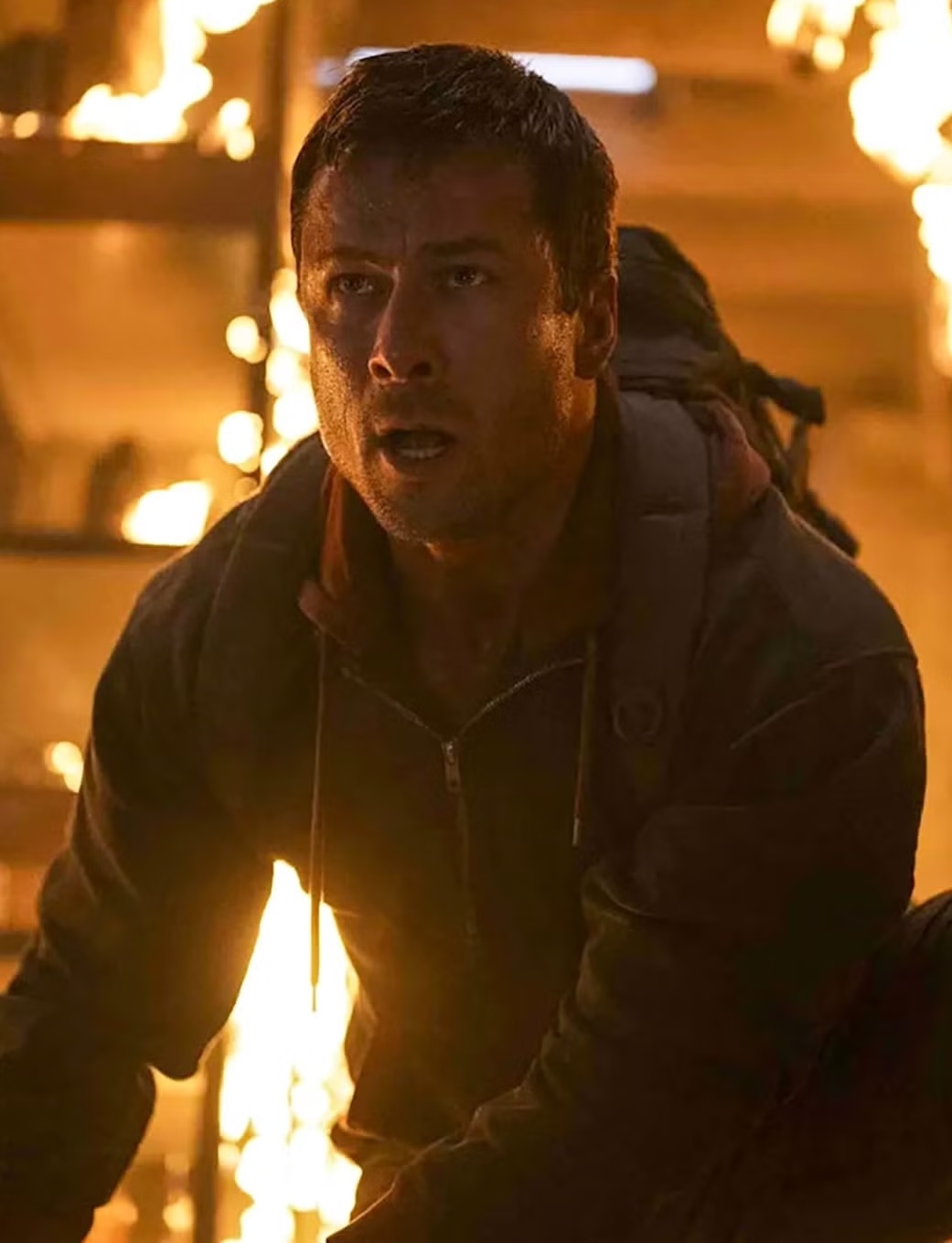
Ben Richards (Glen Powell) is a blue-collar worker, currently black-listed because of his tendency to voice his feelings about the rotten state of his day-to-day existence. His wife, Sheila (Jayme Lawson), works at a hostess bar in Co-Op City and the couple are desperately trying to scrape together enough money to buy medicine for their sick infant daughter. Ben tells Sheila that he’s seriously thinking of signing up as a contestant on one of those hazardous game shows, but promises her that he won’t try his luck on the one with the biggest payout: The Running Man.

But of course, it’s hardly a surprise that the show’s producer – the smarmy, toothy, super-positive Mike Killian (Josh Brolin) – thinks Ben will make an ideal player for the titular game and that he could be the very first person in the show’s history to walk away with the billion-dollar prize money. It’s a tempting proposition…

This is a big, brash, blockbuster of a film with enough world-building to make Co-Op City (a heavily disguised Glasgow) look queasily realistic. With the help of his old friend, Molie (an underused William H Macy), Ben manages to start off his run aided by a couple of fairly convincing disguises and some forged paperwork – but the odds are stacked and there’s a team of professional hunters hot on his trail. They know all the angles and it’s only a matter of time before they begin to close in. The result is a super-propulsive chase movie, which swings expertly from one action-packed sequence to the next, with Ben escaping death by a hair’s breadth at every turn. It’s thrilling enough to keep me on the edge of my seat for the film’s first half.

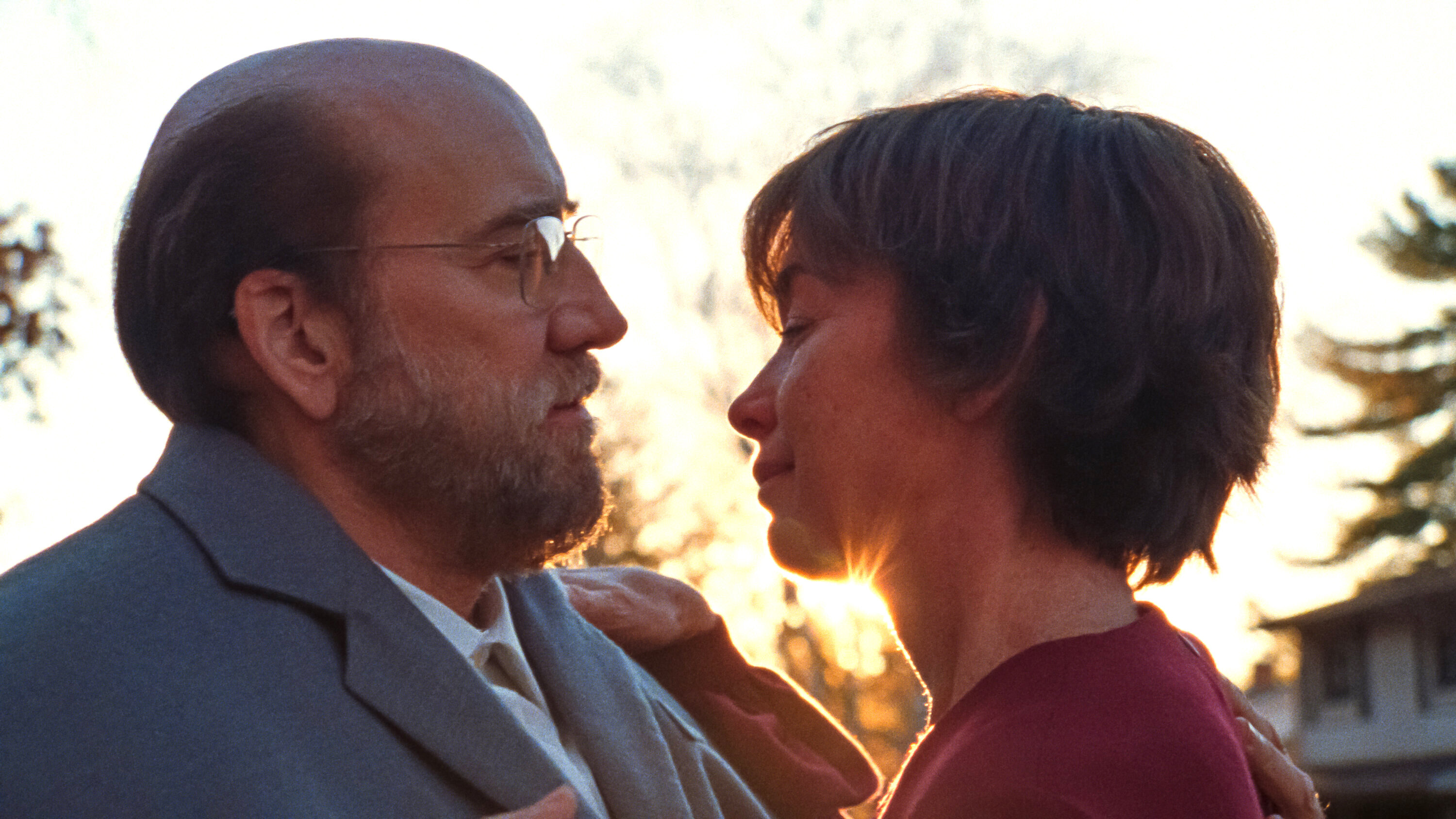
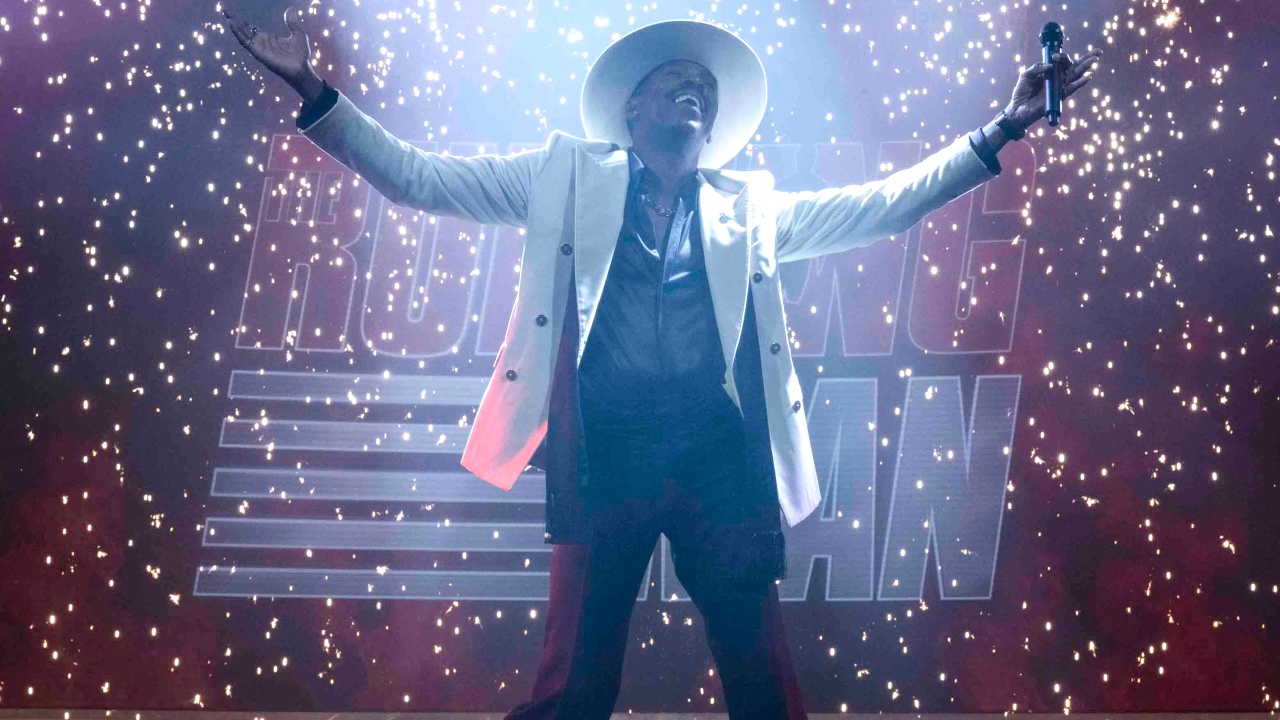
A later section where Ben ends up seeking refuge in the home of rebel Elton Parrakis (Michael Cera) is, for me, the film’s weakest hand. Parrakis has rigged his home with boobytraps and a long sequence where a group of hunters attempt to enter it plays out like Home Alone on steroids. While it’s undeniably fun, it serves to dilute the air of menace that the director and his co-writer, Michael Bacall, have worked so hard to create.

Furthermore, the film has no credible roles for its female characters. Sheila is only really present in the film’s early scenes and an attempt in the final third to introduce Amelia (Emilia Jones), a civilian whom Ben is obliged to take as his hostage, offers her too little to do and not enough reason for actually being there, right up the point where she is – quite literally – parachuted out of the story.

Nevertheless, this is eminently watchable stuff. It’s perhaps unfortunate that another of King’s ‘Richard Bachman’ books, The Long Walk, hit the screens only a couple of months ago and arguably made a better fist of adapting what is a very similar – if somewhat more sedate – concept.

But those who book tickets for The Running Man will surely find plenty here to enjoy. Sharp-eyed viewers may even spot a familiar face gracing America’s one-hundred dollar bills…

3.8 stars

Philip Caveney

The Phoenician Scheme

26/05/25

Cineworld, Edinburgh

Cinema fans can hardly have failed to notice that a new Wes Anderson movie is on general release. As ever, it features his usual bag of tricks: impeccably-framed images arranged in perfect symmetry on the screen; an extended set of famous faces, all of whom show up for every successive project and seem happy to put in cameo performances for shirt buttons; and, as ever, a plot that appears to have been created simply to redefine the term ‘off-beat.’

Anderson has long been a disciple of Verfremdungseffekt – the distancing technique devised by playwright Bertolt Brecht, employed to prevent an audience from easy identification with his characters. It’s always been there in Anderson’s work to some degree but, this time around, I can’t help feeling that it might have been too enthusiastically applied.

Call me old-fashioned, but I do like a character I can root for. Here, there really isn’t one.

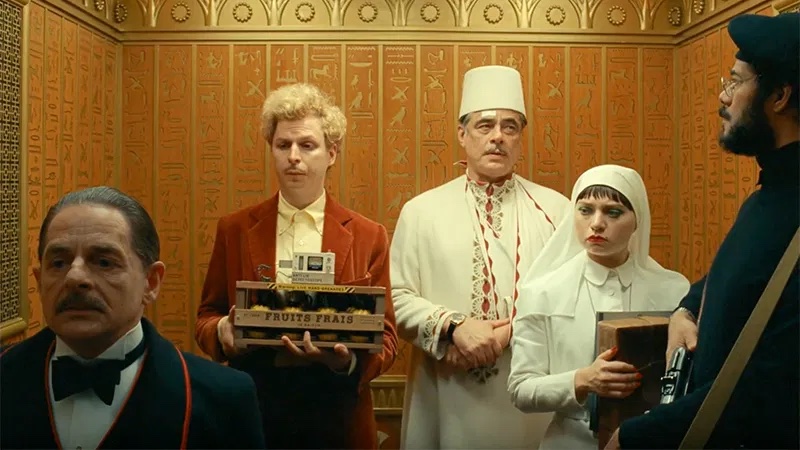
Wealthy and indomitable business magnate Zsa zsa Korda (Benicio del Toro) continues to thrive, despite the many assassination attempts that have been made on him by his rivals. After a near-fatal plane crash, he gets in touch with noviciate nun, Liesl (Mia Threapleton), who may just be his only daughter. (Korda has nine sons, several of them adopted, but he tends to spend as little time with them as possible.) Now, realising that he might be getting close to the end of his life, he has decided to offer Liesl a trial run as the sole heir to his considerable estate. He also takes on a new assistant, Bjørn Lund (Michael Cera), his last sidekick having been blown in half in the aforementioned plane crash.

The threesome must now travel around the fictional country of Phoenicia, where Korda has heavily invested in several major projects. A shadowy cabal of businessmen, led by Mr Excalibur (Rupert Friend), have raised the price of an all-important rivet used in the manufacturing process. This means that, unless Korda can persuade his business associates to take smaller profits, he is at risk of losing everything…

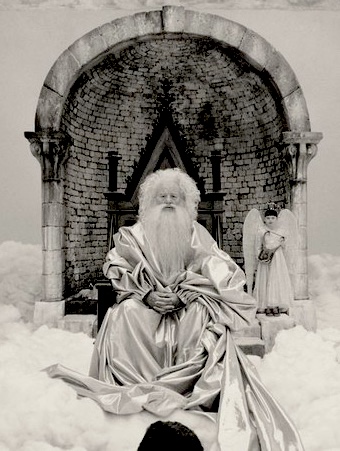
Even as I write this plot outline, I wonder why I’m bothering. Wes Anderson films are like art exhibitions. Some you love, though you cannot exactly pinpoint why. And others leave you flat for no easily-discernible reason. I’m not saying that The Phoenician Scheme is without merit. I sit watching it unfold, approving of its incomparable look and style, occasionally chuckling at some absurd lines of dialogue, even spotting the occasional movie reference. That Moroccan style club run by Marseille Bob (Mathieu Amalric), that’s a nod to Casablanca, right? And the black and white dream sequences, where Korda meets up with God (Bill Murray, naturally), are surely a reference to…

But this is pointless. I loved Anderson’s previous release, Asteroid City, which many viewers dismissed as another exercise in style over content. But this time, even I can’t seem to make myself care enough about the many characters I’m presented with. Korda’s growing relationship with Liesl could perhaps have been the hook that pulled me in, but that element feels somewhat under-developed.

That said, Anderson is one of the few film makers who walks his own path and refuses to compromise his vision. With names like Tom Hanks, Scarlett Johannsson and Benedict Cumberbatch ready and willing to bury their egos in walk-on roles, he’s in the rare position of being free to do exactly as he wishes.

So, why not give this a go? Chances are, you’ll completely disagree with me.

3.6 stars

Philip Caveney

Dream Scenario

20/02/24

Amazon Prime

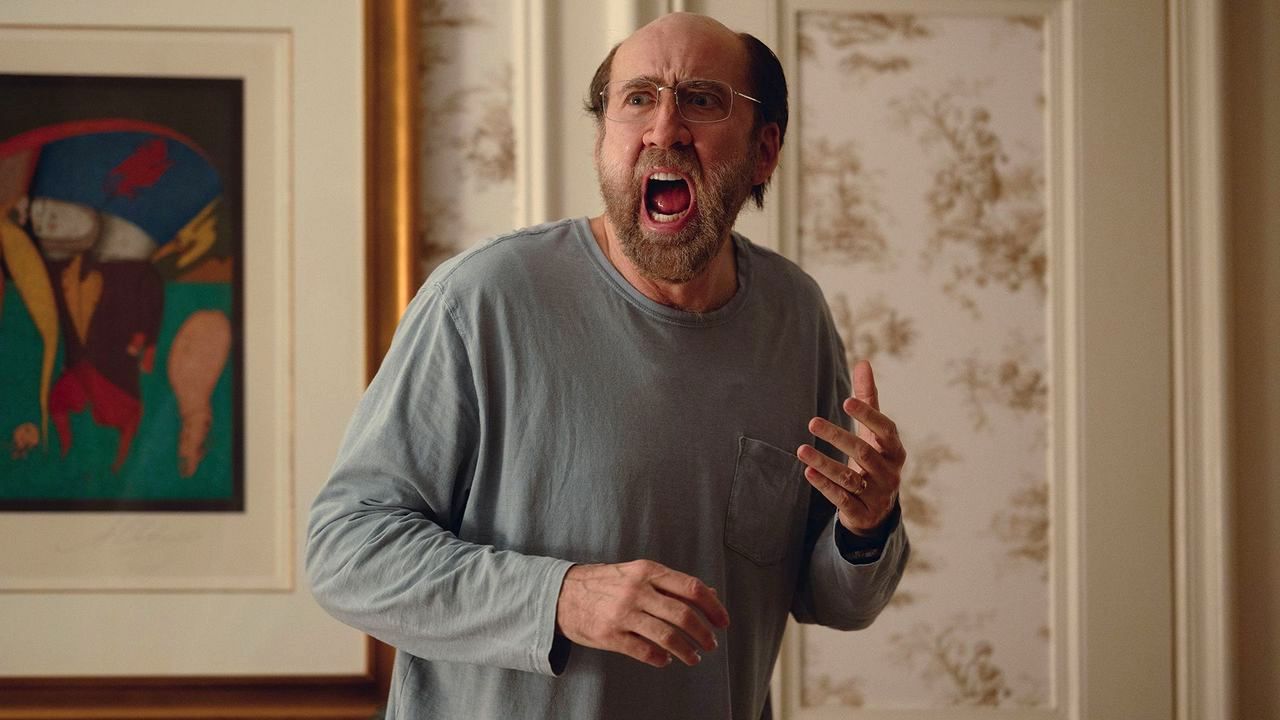
Over a long and varied career, Nicolas Cage has developed a reputation for embracing weird movie projects, and writer/director Kristoffer Borgli’s Dream Scenario certainly fits that description – even if Paul Matthews, a rumpled professor of Zoology at an obscure university, appears to be the most normal guy in the world. Released in 2023, the film barely got a look in at the multiplexes and, having missed it there, I’ve been eager for it to start streaming. It’s finally available to rent on Amazon Prime, and I have to say, it is worth the wait. This bizarre, complex and occasionally shocking film has more twists and turns than the proverbial python on itching powder.

It begins (hardly surprisingly, given the title) when Paul listens to an account of a dream that his daughter, Sophie (Lily Bird), has experienced the night before – a dream in which she is floating helplessly skyward while her father sweeps up leaves in the garden and pays absolutely no attention to her plight. Paul feels weirdly guilty about his inability to do anything to help her, but older daughter Hannah (Jessica Clement) and Paul’s wife, Janet (Juliet Nicholson), assure him he’s just being paranoid.

But then other people start having dreams about Paul and in all of them, he’s just standing there, watching. As these dream scenarios become more common, a bewildered Paul finds himself featuring in the dreams of most of the students in his classes, a situation that seems to make them more receptive to his usually rather dry lectures. It’s not long before he’s a social media sensation. He can’t help but enjoy this new-found celebrity, telling himself that his stalled academic career might receive an invigorating bump from this strange phenomenon. He even engages the services of a team of marketing people, led by the vacuous Trent (Michael Cera), who keeps trying to persuade him to forge a partnership with Sprite.

But then the dreams that feature him take a much darker turn and Paul finds, to his dismay, that his students – and most of his friends and colleagues – are no longer quite so keen on him…

Dream Scenario is a fascinating film, one that works on many levels. It’s tempting to see it as an allegory about the nature of fame in the 21st century, the ways in which the most innocuous events can go viral and affect people’s lives – and also, how easily circumstances can change, resulting in those same people being cruelly cancelled by their former admirers. I like the way in which I find myself increasingly unsure, as the narrative unfolds, as to what’s a dream and what’s reality, the lines between the two realms blurring. Always a gifted performer, Cage is particularly compelling here, capturing Paul’s bumbling persona, as well as his rising doubts and paranoia as he sees his hopes for a more fulfilling career dashed and compromised at every turn.

There’s an interesting coda that takes the whole idea in a slightly different direction, while at the same time remaining true to its central premise. I’m left with the distinct conviction that, had I managed to catch this on first release, it would have numbered among my favourite films of 2023. But, better late than never, I guess.

4.5 stars

Philip Caveney

Molly’s Game

04/01/18

As a screenwriter, Aaron Sorkin has certainly earned his stripes. From The West Wing to The Social Network, he’s proved his abilities as an ace screenwriter. For his directorial debut, he’s seized upon the real life story of Molly Bloom (not that Molly Bloom) portrayed here by Jessica Chastain on excellent form and based upon Bloom’s autobiography – which probably explains how she is be presented here as a bit of a saint, rather than the ruthless enabler she so clearly was.

The film opens with an extended voiceover that explains how Bloom’s youth is spent as a competitive downhill skier, schooled by her hard-assed father, Larry (Kevin Costner) and constantly in the shadow of her more successful brother, a downhill champion. When a terrible injury puts a premature end to her sporting ambitions, Bloom looks around for alternative forms of employment and more by accident than design, ends up helping to host a series of ‘slightly’ illegal poker games where celebrity players gamble (and generally lose) obscene amounts of money. When her boorish employer, Dean (Jeremy Strong) decides to cut her out of the games, she immediately sets up in competition with him, hiring swankier venues and stealing all of his regulars. From there, she goes all out to tempt in more affluent players. When, two years after quitting the business, she is arrested by the FBI she goes in search of a lawyer and finds Charlie Jaffey (Idris Elba) who despite his initial reluctance to represent her, is soon won over by Bloom’s charms… (Jaffey, by the way, isn’t a real character, but an invention, intended to represent the various lawyers she was associated with before coming to trial).

It’s perhaps inevitable that Sorkin the director fails to fully rein in Sorkin the writer – with a running time of two hours and twenty minutes, Molly’s Game becomes somewhat lumpen in the middle section and could surely have lost half an hour in the editing suite. Furthermore, those viewers (like me) who know or care nothing about the rules of poker may find their attention wandering during these stretches – but the film gathers momentum as it heads into its final stretch and has me hooked to its conclusion.

Sorkin’s dialogue is as delicious as ever, but if there’s an overall problem here, it’s simply that it’s hard to sympathise with any of the major characters – Elba’s fictional one aside. The once cute Michael Cera (of Juno) is really unpleasant as the mysterious Player X and even the usually affable Chris O Dowd is irritating as perennial loser Douglas Downey. And no matter how eloquently Chastain plays that lead role, its hard to feel warmth for a woman who doesn’t think twice about exploiting the needs of gambling addicts in order to earn herself considerable sums of money.

In the end, Molly’s Game is watchable if flawed. Poker fans will doubtless see this as a royal flush, whereas to me it’s more like three of a kind.

3.8 stars

Philip Caveney