Max Middleton

Into the Woods

22/01/26

Church Hill Theatre, Edinburgh

Although I’m not really a fan of Sondheim (he’s not exactly the king of singalong, is he?), I do love a good fairytale and who better to perform this mystical mash-up than the ever-impressive EUSOG?

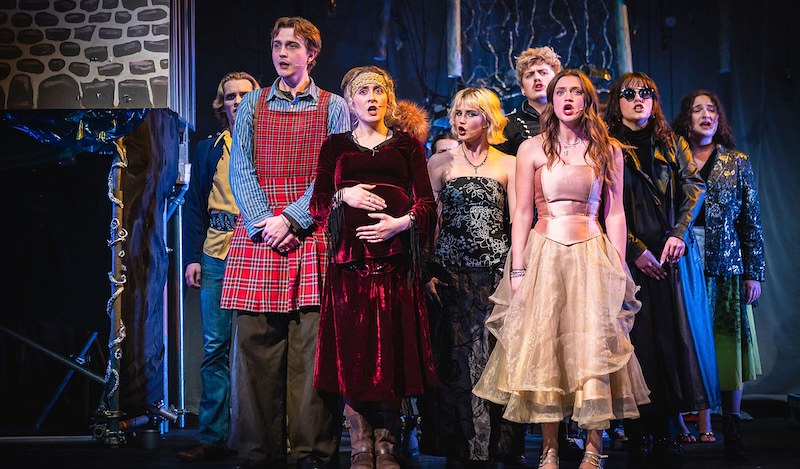
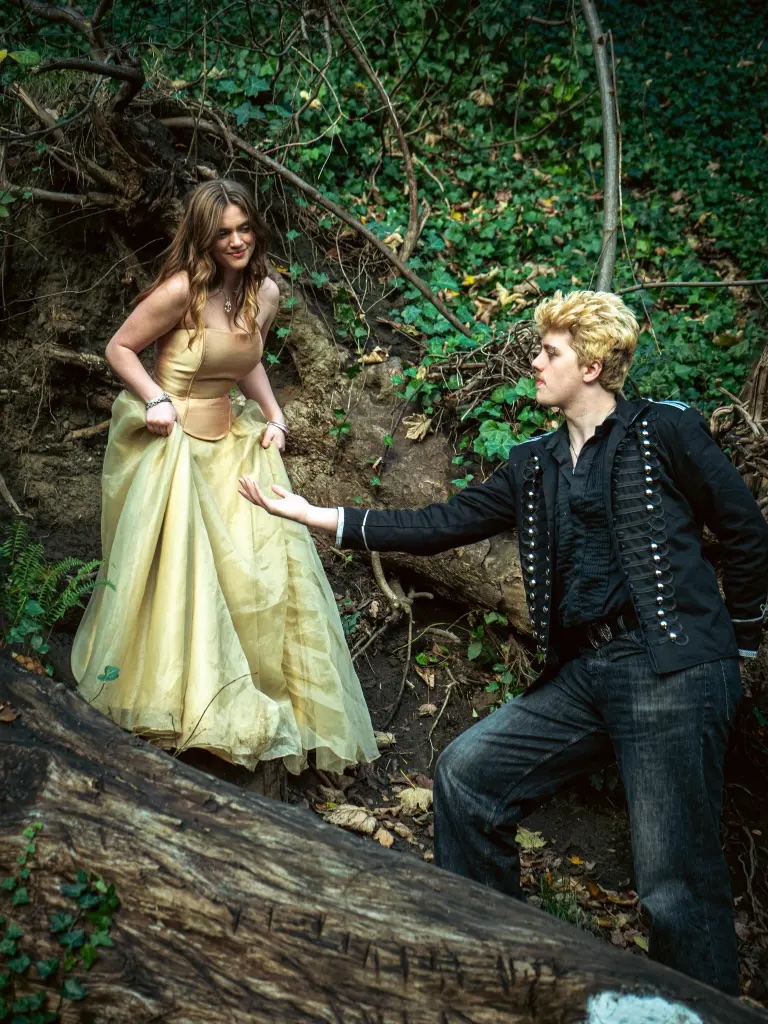
Co-directed by Tai Remus Elliot and Hunter King, Into the Woods brings together Little Red (Richeldis Brosnan), Cinderella (Maia Jones), Jack Beanstalk (Reuben Reilly) and Rapunzel (Aarya Gambhir). The named-for-a-cabbage, famed-for-her-hair princess plays a minor role, but her baker brother and his wife are central to the plot, as is the witch who keeps her imprisoned in a tower. Like her mother-in-law before her, the baker’s wife (Rosie Wilkinson) is desperate for a child – and just as ready to do a deal with the green-fingered witch who lives next door (Lauren Green). And so the baker (Shaun Hamilton) is duly dispatched to the woods, where he must find the four items the hag requires: a cow as white as milk, a cape as red as blood, some hair as yellow as corn, and a slipper as pure as gold. No prizes for guessing which characters are in possession of said treasures.

Ninety minutes of mayhem ensue, as the various stories overlap, causing Midsummer Night’s Dream levels of chaos in the woods. It all builds to the inevitable conclusion: the goodies gain riches, get married or have babies, while the baddies all die – or are at least brutally maimed. And all those who survive live happily ever after…

Until Act 2, when reality kicks in. “I was raised to be charming, not sincere,” says Cinderella’s prince (Max Middleton), apologising for his wandering eyes. The baker isn’t adapting well to parental responsibility and there’s a giantess on the hunt for the young lad who slew her spouse.

If the first act is stronger than the second (and it is), I lay the blame at writer James Lapine’s door. The play is too long: Act 1 feels like a complete story, and Act 2 just isn’t as inventive. I like the idea of subverting the famous stories, but the plotting is clunky and unadventurous.

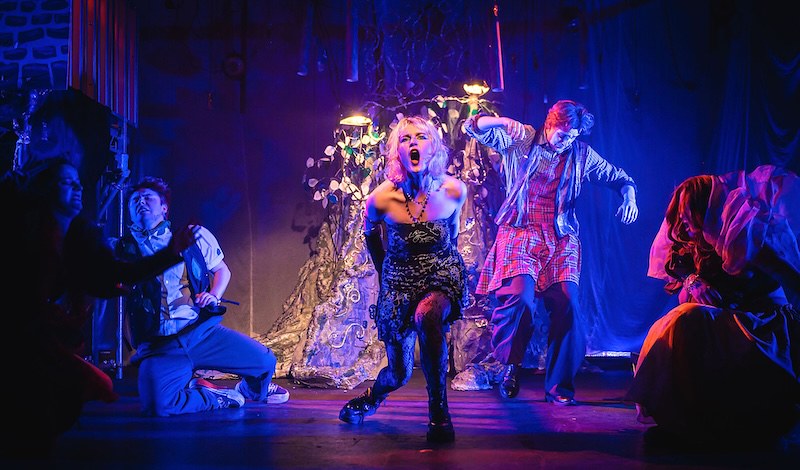
Nonetheless, this production is admirable, with some cracking choreography from Morgan Hazelip and Tilly Heath Born, particularly for Last Midnight, which Green performs with evident gusto. Of course, the music is key – and there is a lot of vocal talent among the cast, most notably Green, Wilkinson and Jones. The orchestra (led by musical director Abby Bailey) handles the tricky time-signatures with great skill. It’s a shame there are a few technical problems with the sound, so that the vocals are sometimes overwhelmed by the instruments.

Elliot and King really bring out the humour in the show, with the two princes (Middleton and Aisling Ní Dhochartaigh) given ample scope to explore the silliness of Agony.

The lighting design (by Lewis Eggeling, Sophie Bend and Kiran Mukherjee) creates a suitably mystical atmosphere, emphasising the wild unpredictability of the woods. There are some lovely touches, such as the hard-edged beams highlighting the separateness of the fairytales before they converge, and the gentle downlights, suggestive of sunbeams filtering through the trees. However, the balance between eerie shadows and visibility perhaps requires a little tweaking, as there are moments where the actors’ faces are obscured, making it harder for the audience to connect with their emotions.

The costuming is ingenious: the wolf (Naomi Jessiman)’s lace-frilled suit is particularly memorable, as is the witch’s dress with its drop-down cloak. So hats off to wardrobe (Sophie Slight, Eloise Robertson and Olivia Fialho Rosa).

All in all, this is a vibrant, sprightly production, as polished and ambitious as we’ve come to expect from EUSOG. There are only two more chances to see it, so do whatever it takes to acquire a ticket – sell your cow, steal a cabbage, find a hen that’ll lay you a golden egg – and get yourself to the Church Hill Theatre as quickly as you can.

4 stars

Susan Singfield
Spring Awakening

12/03/25

Bedlam Theatre, Edinburgh

It’s mind-blowing to think that Frank Wedekind’s Frühlings Erwachen was written in 1890, when Kaiser Wilhelm II ruled the Deutsches Reich, Queen Victoria was on the British throne and Robert Gascoyne-Cecil (nope, me neither) was our PM. In a world where women weren’t even allowed to show their ankles, it’s not surprising that it was sixteen years before someone dared to stage this controversial exposé of the dangers of repression, with its bold depictions of teenage sexuality – not to mention rape, suicide and abuse.

Steven Sater and Duncan Sheik’s musical adaptation premiered on Broadway in 2006, exactly one hundred years after Wedekind’s play finally opened at Berlin’s Deutsches Theater, under the direction of Max Reinhardt. Despite the addition of some banging rock songs and more than a few profanities, this modern version actually pulls more punches than the original, most notably by omitting the rape and softening the ending. Nonetheless, it still has the capacity to shock, and to remind us that we make sex dangerous by hiding it, by making it taboo.

Set in 19th century Germany, this is a story about a group of young people coming of age under the stifling weight of moral expectations. Wendla (Hattie Sumners) asks how babies are made. Scandalised, her mother (Sophie Davis, who plays all the adult women) first shouts and then equivocates, condemning her daughter to an ignorance which will have severe consequences. Meanwhile, Moritz (Shaun Hamilton) is struggling to keep up with his schoolwork, and fear of failure takes him to a devastating place. Melchior (Daniel Fischer) seems stronger than the others: thanks to a combination of intelligence and a liberal mother, he’s more knowledgeable than his friends, and therefore better equipped to cope with life. Still, the authoritarian regimes of school and church soon drag him under too; no one is safe in this society.

Theatre Paradok’s production succeeds in conveying those most fundamental of teenage emotions: exuberance and despair (I’m guessing the student cast don’t have to dig that deeply to remember how raw and overwhelming those feelings can be). Sheik’s eclectic soundtrack is beautifully interpreted by musical directors Nonny Jones and Ruairidh Nicholson, the choral numbers being particularly impressive. The live band – hidden in the wings – are terrific, and plaintive solos by Sumners, Gemima Iseka-Bekano (Ilse) and Hamilton evoke some strong responses.

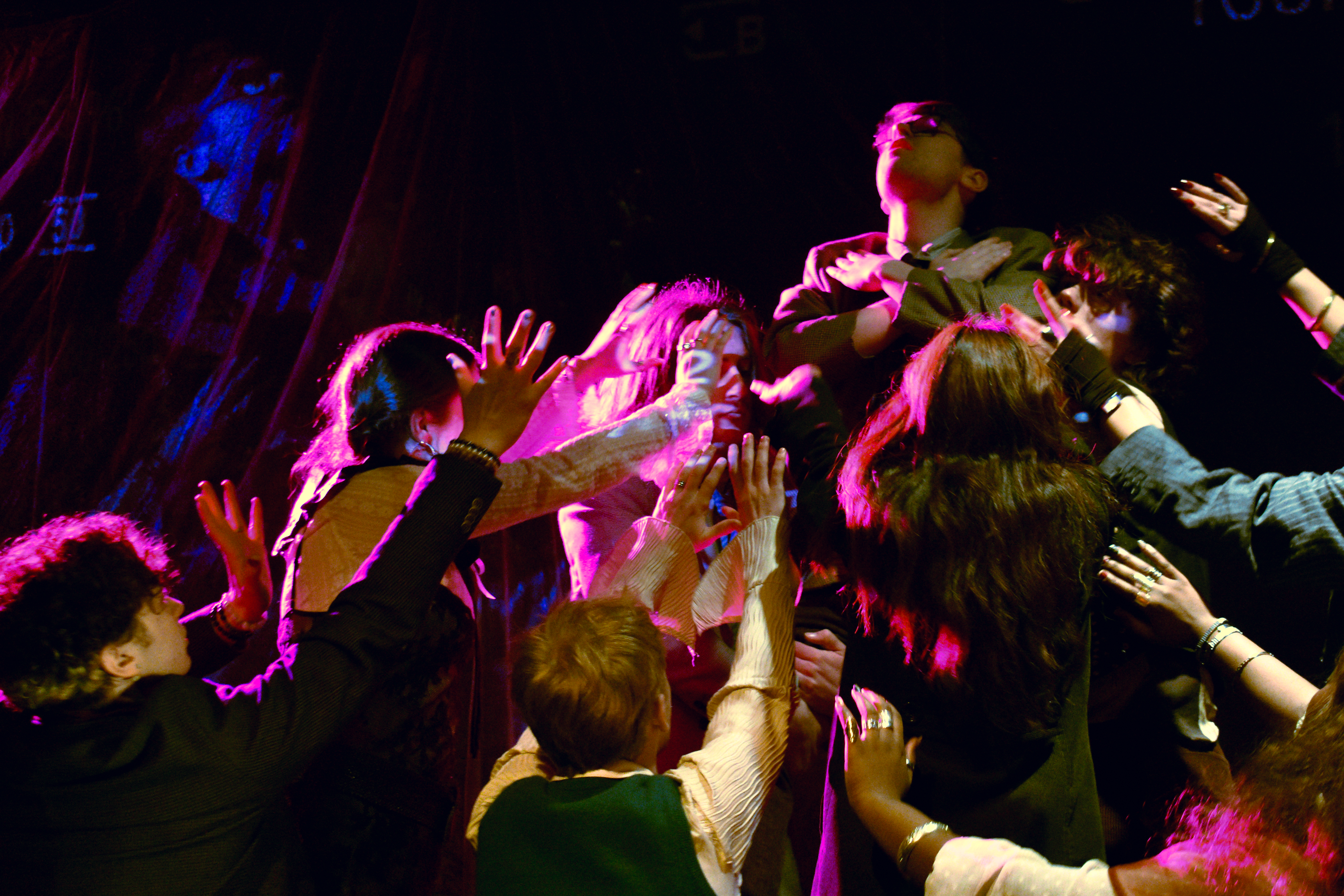
The show’s aesthetic is great. I love the androgyny of the costumes, with feminine dresses worn over masculine suits; the queer coding is fabulously done. The set is simple but very effective: items of underwear are stapled to a curtain framing a large gauze backdrop, onto which short animations and live videos are projected, creating an ethereal doubling effect and amplifying the characters’ emotions.

Directors Rue Richardson and Jane Morgan manage their large cast with aplomb. The play is dynamic and visually very appealing, from the arresting choreography (by Františka Vosátková, along with Richardson, Morgan and Andrea Adriana Prawono) to the boisterous shenanigans of the teenage boys. The gauze curtain makes metaphors literal: dead characters appear from ‘beyond the veil’, while ‘a veil is drawn’ over Wendla and Melchior’s lovemaking. However, Ernst (Michael Butler) and Hänschen (Max Middleton)’s homosexual relationship is placed boldly centre-stage – perhaps a subtle nod to the idea that some things shouldn’t be re-closeted.

I do have one criticism, and it’s the emergency exit door, stage left, which is open to the elements. Bedlam is a chilly venue at the best of times; tonight, with an outside temperature of 1°C, I could do without sitting in a freezing draught. And it’s not just the cold that’s a problem, there’s the noise of the city too: traffic and sirens and people passing by, all making a claim on my attention. I can see that the options are limited by the need to house the band, but – for the sake of one entrance and one exit – it’s surely not worth making the audience so uncomfortable.

Nevertheless, this production of Spring Awakening is a triumph: a lively, thought-provoking piece of theatre, as relevant now as it was more than a century ago.

4.2 stars

Susan Singfield