Mary Shelley

Frankenstein

25/10/25

Filmhouse, Edinburgh

Guillermo del Toro was always going to make his version of Frankenstein one day – the seeds were sown in his 1992 Spanish-language film, Cronos, the first of his features that I ever saw in the cinema and the one that convinced me he had a big future ahead of him. 

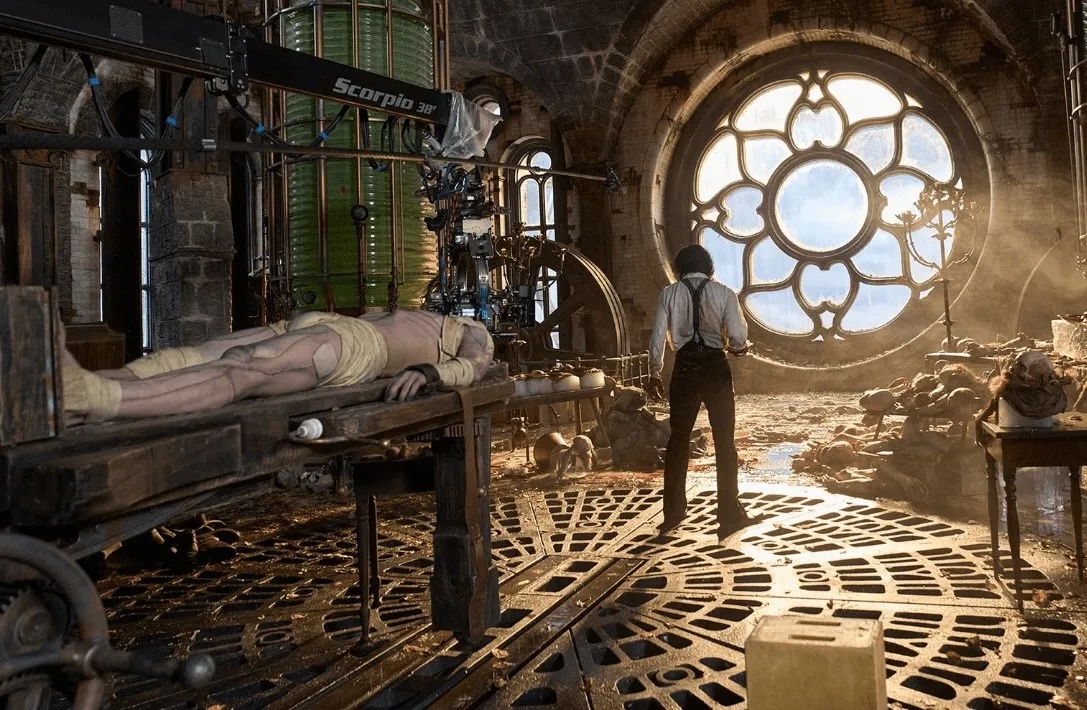
Now he’s finally got around to doing the job properly, courtesy of Netflix, who stumped up the $120m budget. For a while it looked as though there wouldn’t be any chance of seeing it in an actual cinema before the transfer to streaming. This would have been a crime because del Toro’s adaptation of the tale looks absolutely sumptuous on the biggest screen at Filmhouse and I’m delighted to see that the auditorium is  pretty busy for a Saturday afternoon showing.

Frankenstein is, of course, one of the most filmed books in history, but it’s probably fair to say that only a handful of the 423 movie adaptations (not to mention the 287 TV episodes – yes, I did Google it) have come anywhere close to capturing the essence of Mary Shelley’s seminal horror story. While del Toro does throw in a few original twists of his own (of course he does!), he sticks fairly close to Shelley’s narrative – indeed, he’s even credited her as his co-screenwriter. The tale is told in three distinct parts.

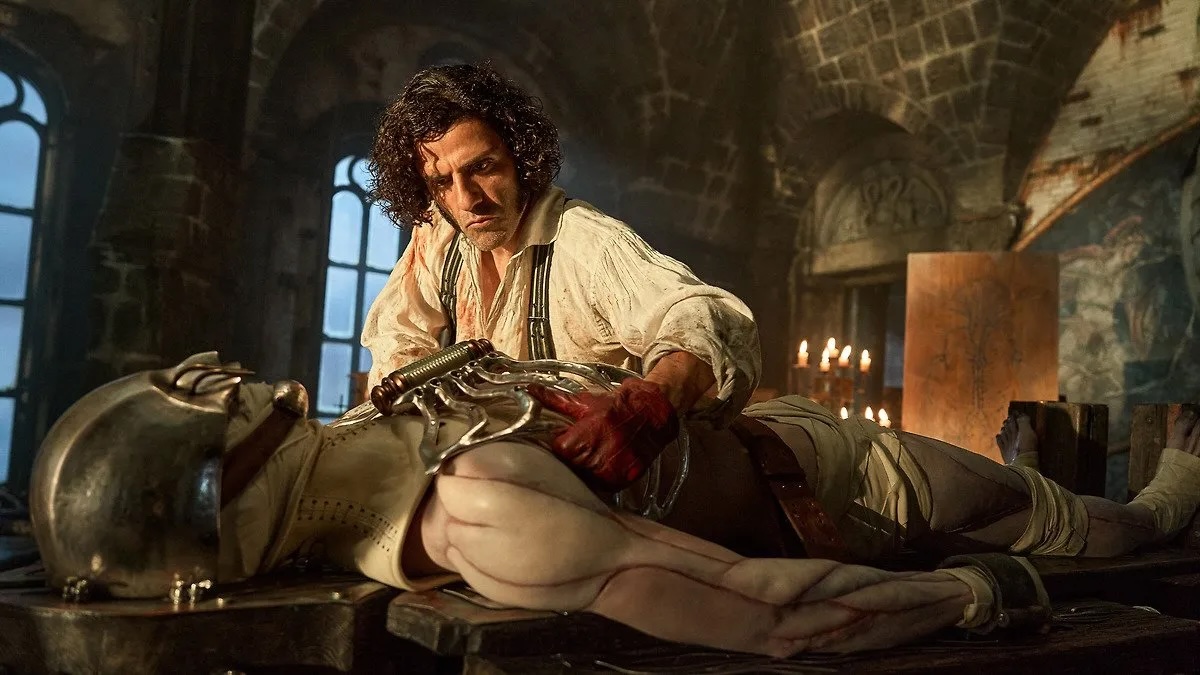
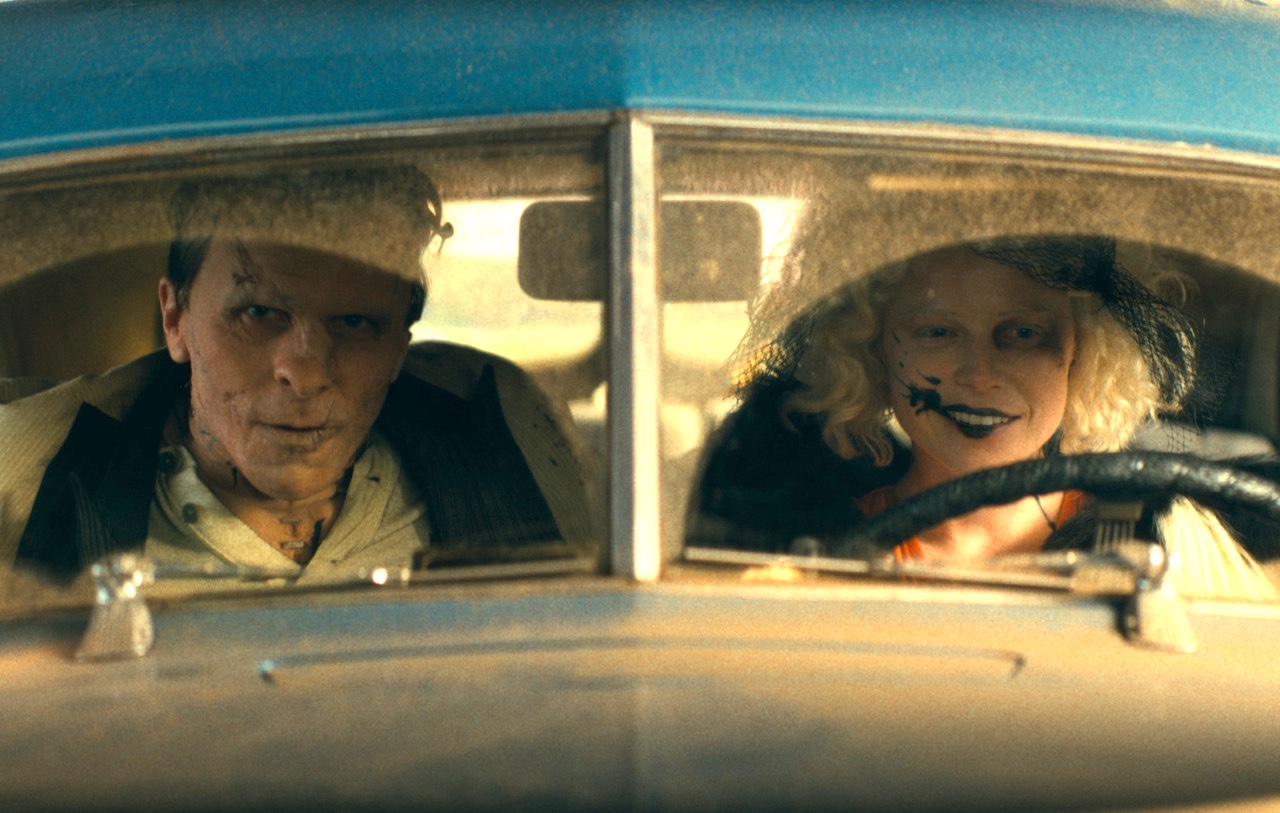
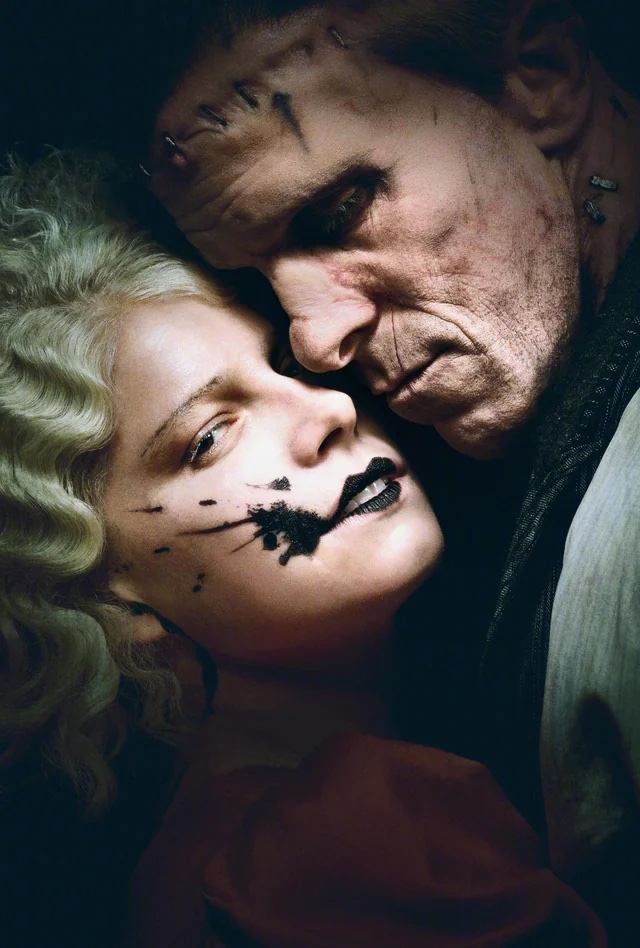
In the opening Prelude, we join Captain Andersen (Lars Mikkelsen) and the crew of his sailing ship, who are stranded on the ice in remote Arctic waters. There’s a sudden explosion nearby, from which the crew rescue Victor Frankenstein (Oscar Isaac), who has been pushed almost to the point of death by a monstrous assailant. After witnessing The Creature (Jacob Elordi) plunging into icy waters, they carry Victor onto the ship – but, once revived, he assures Andersen that his pursuer will not actually be dead and will surely come for him…

Before that happens, he needs to tell his story.

Victor then narrates The Creator’s Tale and we flashback back to his childhood where, under the rule of his despotic father, Leopold (Charles Dance), Young Victor (Christian Convery) first becomes obsessed with life and death. Keen-sighted viewers may spot something familiar about Victor’s barely-glimpsed mother, Claire. Something distinctly Oedipal is happening here.

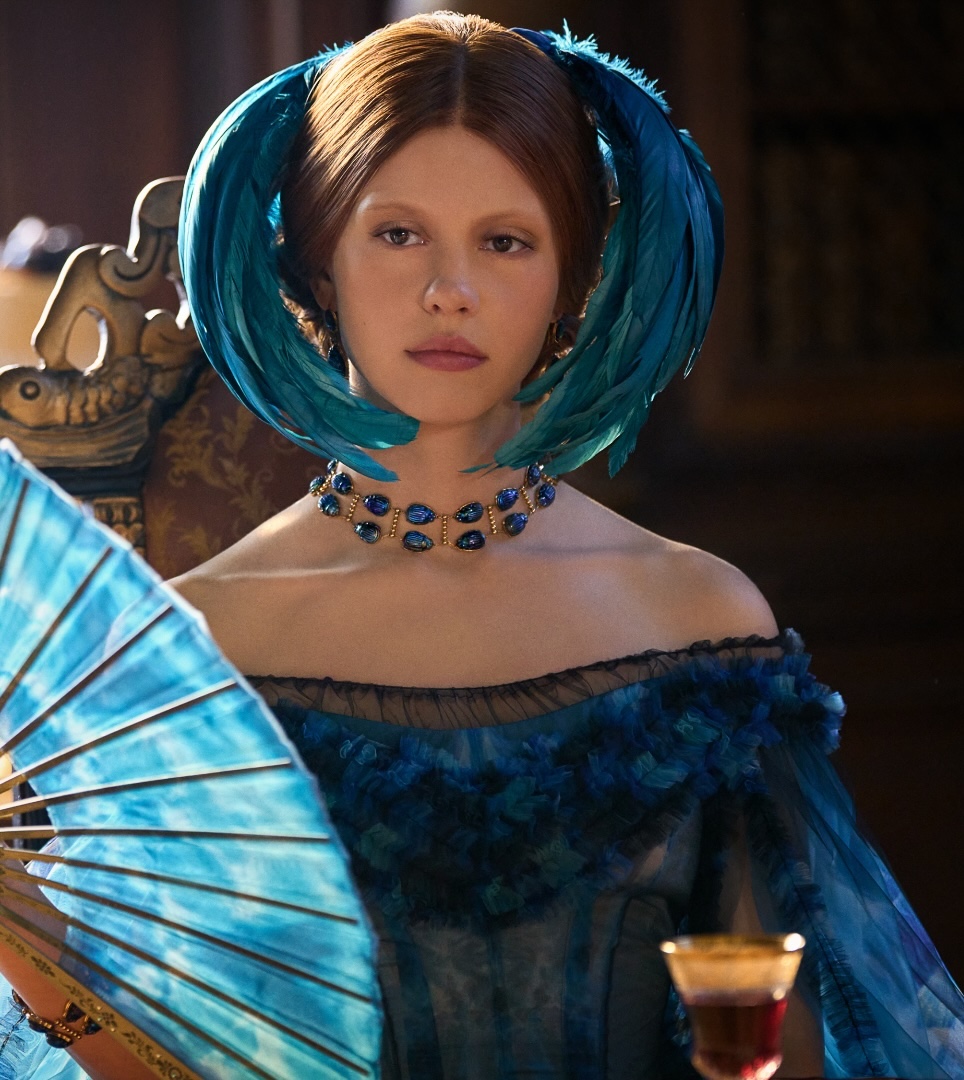
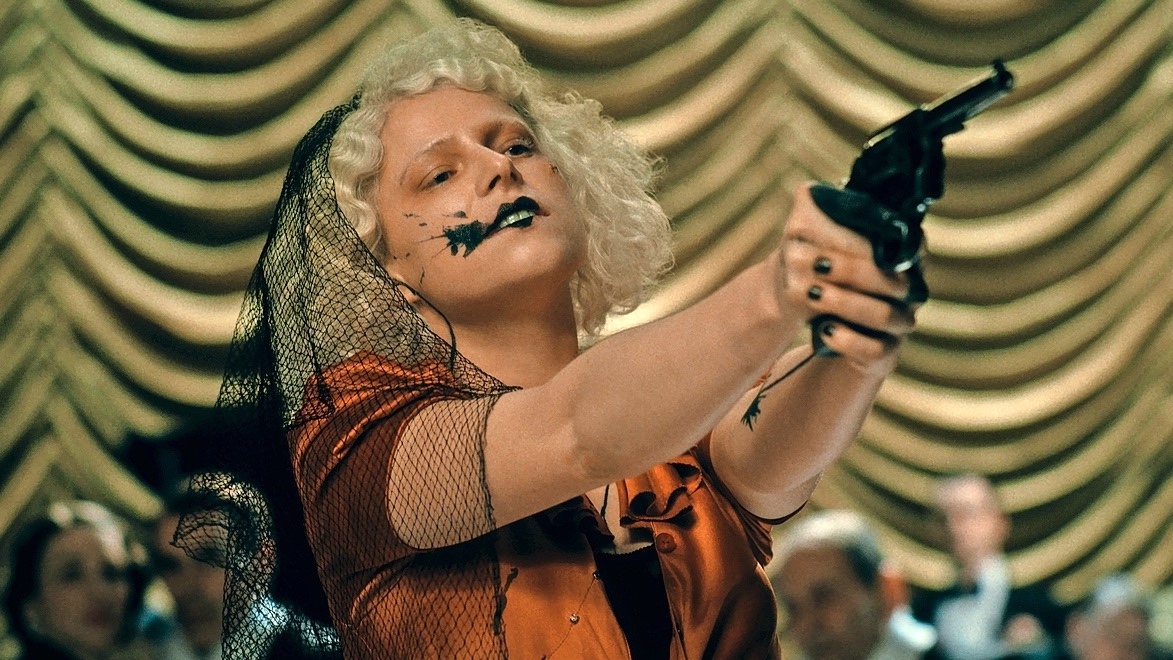
We then cut to some years later. A grown-up Victor is causing controversy at medical school in Edinburgh with the grisly experiments he’s conducting on cadavers (and I get to revisit some of the sets that were evident around my home city in September 2024). We are introduced to Victor’s younger brother, William (Felix Kammerer), and his fiancée, Elizabeth (Mia Goth). We also meet Harlander (Christophe Waltz), a character created for the film, a wealthy man who, for clandestine reasons, is perfectly happy to finance Victor’s attempts to take his experiments all the way.

But Victor’s account is later contrasted with The Creature’s Tale, where we learn of the years when the monster and his creator were apart: how The Creature lived in a barn alongside a kindly blind man (David Bradley); how he mastered the art of speaking (with a distinctly Yorkshire accent); and how he slowly began to realise how shabbily he’d been treated…

It’s not just because I’m a devout Guillermo del Toro fan that I think this film is a million times better than every other Frankenstein-generated movie I’ve watched down the decades. Isaac is a revelation in the title role, nailing both the character’s sense of privilege and his fatal short-sightedness. Elordi, meanwhile, offers a fresh take on the Creature that really brings out his innate vulnerability and his desperate need to relate to others, something that’s been attempted before with much less success. 

The film is packed with sumptuous locations and thrilling action set-pieces, that have it hurtling through its lengthy running time. Cinematographer Dan Lausten captures every scene with an almost luminous intensity, Kate Hawley’s costume designs are exquisite, and there’s a beautiful score courtesy of Alexander Desplat. If I have a minor niggle it’s that the CGI-generated wolves in one long sequence aren’t quite as convincing as they need to be – and perhaps both Mia Goth and Felix Kammerer might have been given a little more to do?

But these are nitpicks. As ever in these situations, I’m urging people not to wait for this to drop onto streaming, because this level of filmmaking deserves to be watched on the biggest, brightest screen available, one of – dare I say it? – monstrous proportions.

I’ll get my coat.

4.8 stars

Philip Caveney

Mary Shelley’s Frankenstein


21/10/19

King’s Theatre, Edinburgh

Frankenstein is an integral part of our cultural landscape, its imagery known to all, even those who’ve never read the book or seen a movie version of the tale. I love it, but it’s been adapted and interpreted so many times that I’m almost reluctant to see it again. What else is there to say? Playwright Rona Munro had the same misgivings: ‘What version of Frankenstein hadn’t I seen already?’

Her conclusion – a version that places a punky teenage Shelley (Eilidh Loan) on stage with her creations – is inspired, extending the duality so central to the novel. For who is Mary if not Victor Frankenstein (Ben Castle-Gibb)? Is she not the creature’s maker, alongside the young scientist? All the hubris Frankenstein displays (the frenetic, obsession with his work; the rejection of accepted norms; the willingness to unleash horror to realise his dreams) is Mary’s conceit too. And if the monster (Michael Moreland) represents the darkness in the doctor’s soul, he surely also embodies the destructive nature of the writer who conceived them both.

In a weird way, the horror is both negated and amplified by Shelley’s presence: we always know it’s a fiction, each death or salvation dependent on a scribble from a pencil pulled impatiently from the writer’s hair – and yet, as we’re reminded, this monster really lives; he is immortal, long outlasting both of his creators.

Becky Minto’s design is gorgeously stylised, all stark and glacial, with bare white roots and branches used to hint at wires, hearts and veins. The monotone costumes add to the abstraction; there’s a suggestion of the period, but no attempt at naturalistic portrayal. Patricia Benecke’s direction makes clear that this is an exploration of the novel’s heart, not a faithful retelling of the story as it stands.

Occasionally it feels a little rushed; the scene where the creature meets the old man (Greg Powrie) suffers particularly in this respect. And Natalie McCleary (who plays Elizabeth) feels a little under-used: she has a strong stage presence and her character could easily be given more to do. The only other issue for me is the excessive use of dry ice. It’s one thing to create a misty, creepy atmosphere, but come on… It’s October; half of the audience are struggling with colds. It doesn’t seem sensible to tickle our throats to this extent.

Despite these minor niggles, I’m really impressed by this play. Munro’s quirky adaptation exposes and illuminates ideas I hadn’t thought of in a story I thought I knew too well.

4.3 stars

Susan Singfield


Bram Stoker’s Dracula

30/10/18

King’s Theatre, Edinburgh

What better way to commemorate the night before Hallowe’en than with this production, which offers enough blood, mayhem and diabolical carrying-on to satisfy the darkest of appetites? Published in 1897, Bram Stoker’s tale of repressed Victorian sexuality forms one of the cornerstones of Gothic horror fiction, along with Mary Shelley’s Frankenstein, published eighty years earlier in 1818.

Of course, the main difficulty for anyone undertaking Dracula in this day and age is that the story is so familiar to audiences around the world, it is virtually impossible to create any sense of surprise. To give this production its due, it doesn’t really try to do that, offering a fairly close interpretation of Stoker’s original tale – unless, of course, we count the addition of a Lady Renfield (Cheryl Campbell) and a silver bullet trope that appears to have been borrowed from the werewolf tradition, which, the more I think about it, doesn’t really make an awful lot of sense. Plans I might have had to incorporate a ‘fangs ain’t what they used to be’ byline are, I’m afraid, somewhat redundant. Still, I’ve little doubt that Stoker would have approved of this interpretation of his most celebrated story.

Mina Murray (Olivia Swann) bids a fond farewell to her fiancé, solicitor Jonathan Harker (Andrew Horton), as he sets off to Transylvania to organise the impending relocation to Whitby of a certain Count Dracula (Glen Fox). Harker promptly goes missing and, while he’s away, Mina’s friend, Lucy (Jessica Webber), begins to exhibit some rather worrying symptoms. Why is she sleepwalking every night? And what are those peculiar marks on her neck? It’s not until Mina has travelled to Europe to collect an emotionally drained Jonathan that his journal explains what he has been up to – and it is clearly time to call in Professor Van Helsing (Philip Bretherton), who has previous experience of this kind of thing.

If Jenny King’s adaptation sometimes feels a little stilted, it’s Ben Cracknell’s galvanic lighting design that offers us most in the way of surprises, with jolting flashes of light revealing fleeting glimpses of carnage before we are plunged abruptly back into darkness. Illusionist Ben Hart throws in some impressive disappearing tricks, director Eduard Lewis supplies some eerie choreography, and Sean Cavanagh’s  clever set design manages to transform the stage of the King’s Theatre into a series of suitably atmospheric locations. It’s an ensemble piece, of course, but Jessica Webber gives a particularly assured portrayal of Lucy, sprightly and coltish in her earlier scenes and horribly transformed later on.

This is a decent, if not exactly transformative production, perfectly suitable for the Hallowe’en season, and with scenes that may unnerve some viewers.

3.8 stars

Philip Caveney

Mary Shelley

09/07/18

It’s one of the most fascinating stories in the history of literature – how an eighteen year old girl, albeit the daughter of two respected writers and the partner of an acclaimed poet, managed to create one of the most seminal novels of all time – a book that has never been out of print since its release in 1818, one that has been filmed and staged countless times… and a book, moreover, that is a brilliant metaphor for womankind’s lot in the male-dominated society of the period.

Here, Mary is played by Elle Fanning, doing that sleepy-eyed, sulky thing she does so perfectly, while the role of Percy Bysshe Shelley is played by Douglas Booth. Indeed, at times, it’s hard to decide which one of them is the most photogenic. When we first encounter Mary, she’s sixteen years old, living with her father, the bookseller William Godwin (Stephen Dillane), her argumentative stepmother, Mary Jane Clairmont (Joanne Froggat), and her stepsister, Claire (Bel Powley). Mary is obsessed with reading Gothic horror stories and is already making her first tentative attempts at writing fiction but, as her father tells her, she needs to stop imitating others and ‘find her own voice.’

On a rare visit to one of her cousins in Scotland, she encounters the handsome Percy Shelley and there’s an instant attraction between them. Summoned back to London because of Claire’s fictional ‘illness’, Mary is astonished when Percy turns up at her father’s bookshop, having enlisted William as his patron. It’s only a matter of time before Mary and Percy are in the throes of a full-blown romance. It’s not all plain sailing though. For one thing, there’s the fact that Percy already has a wife and daughter, a little detail that he has completely neglected to mention. But Mary manages to put her doubts aside. She’s smitten.

And then, to the complete disgust of polite society, the two lovers decide to run away together, taking Claire along for the ride. The three of them live a dissolute existence, struggling to make money and frittering away whatever they earn on alcohol and extravagant parties. Percy believes in free love and it isn’t long before, much to Mary’s dismay,  he’s drawing Claire into his amorous clutches. Then, the trio find themselves invited by Lord Byron (Tom Sturridge) to stay at his villa in Switzerland, where he and his personal physician, Dr John Polidori (Ben Hardy), are currently holidaying – and where all the elements are in place for the creation of a Gothic masterpiece.

Haifaa al Monsour’s film sticks fairly closely to the facts and, despite the odd contemporary-sounding phrase, Emma Jensen’s screenplay easily manages to hold the attention. If Shelley comes across as a privileged idiot, he’s totally eclipsed by Byron, who, as portrayed by Sturridge, is easily the most slappable person in nineteenth century Europe, prone to making vile utterances about the superiority of men and engaging in macho posturing. Indeed, amongst the young male characters, only Polidori emerges as genuinely decent, though the treatment he experiences at the hands of the two poets might give him good cause to be surly.

This is a good movie, handsomely staged and capably directed. It may be the first time that the extraordinary nature of Mary’s achievement has been fully realised onscreen. If the film is a little short on fireworks, it’s nonetheless offers a fascinating insight into the scandalous events that surrounded the creation of Frankenstein.

4 stars

Philip Caveney