Marilyn Monroe

Motorhome Marilyn

24/08/25

Gilded Balloon Patter House (Doonstairs)

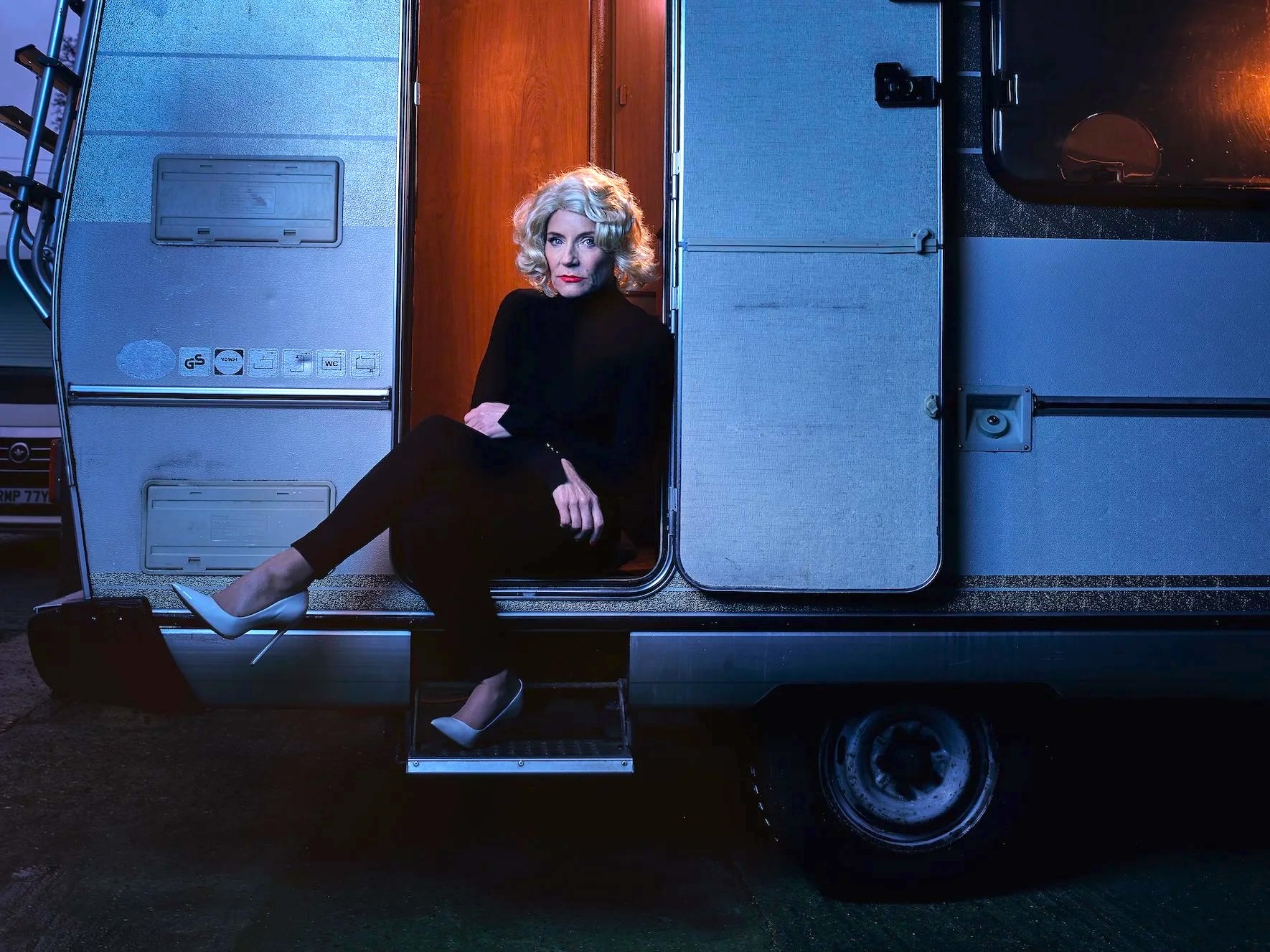
Our last Fringe show of 2025 is Motorhome Marilyn, a choice inspired by my mum, who listened to Michelle Collins talking about the play on Radio 4’s Woman’s Hour, and was taken with its backstory. Back in the late 90s, Collins was in LA, trying to build on her UK fame. While she was there, she noticed an old lady emerging from a dilapidated motor home, dressed as Marilyn Monroe. The image stayed with her for years until, in 2018, she mooted the idea for a play to her writer friend, Stewart Purmutt, and they started work on it. When Purmutt died in 2024, Ben Weatherill took over, and now Motorhome Marilyn – more than quarter of a century in the making – has finally parked up at this year’s Festival.

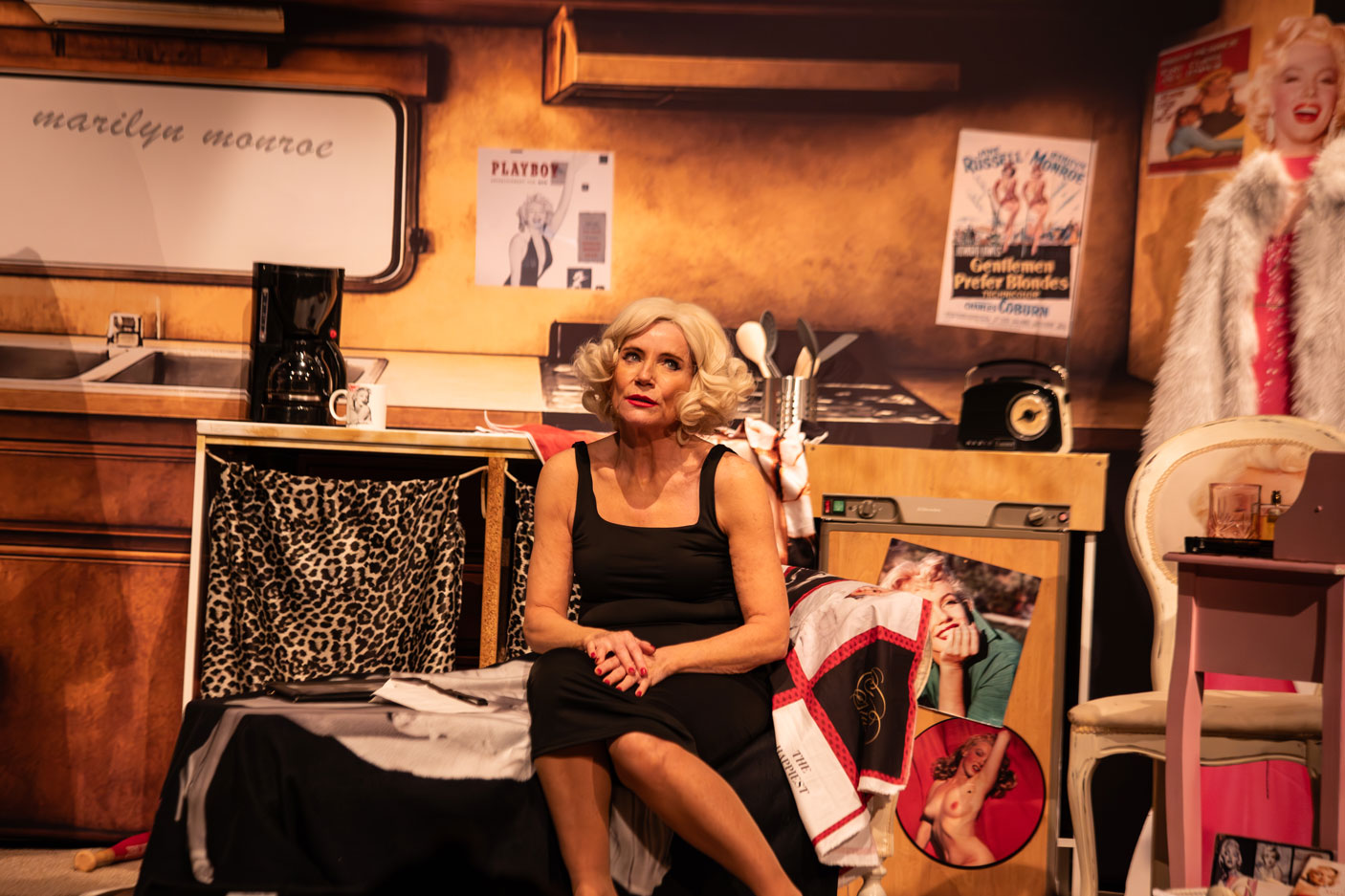
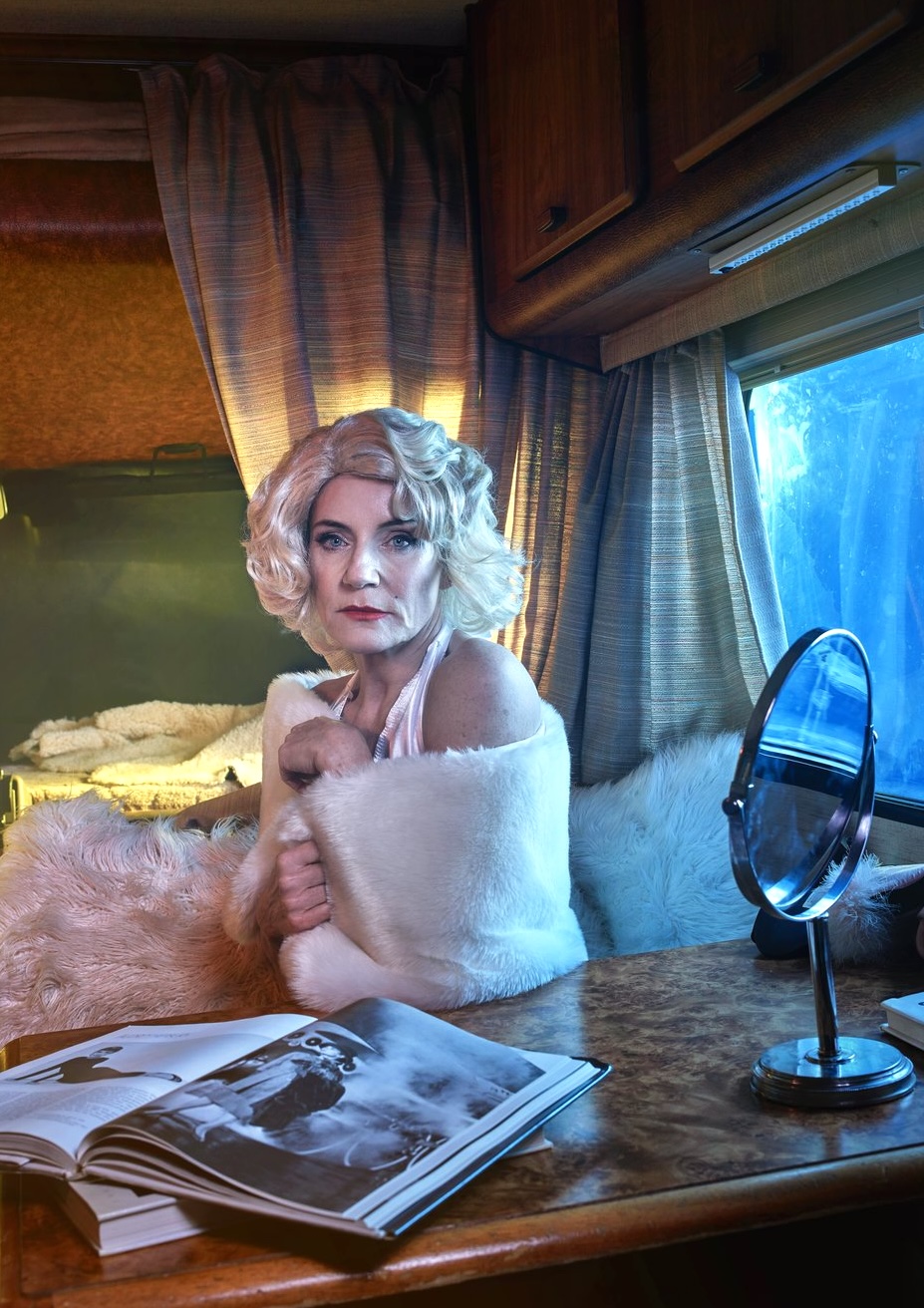
The set, by Joshua Beaumont and Matthew Emeny, is pretty lavish by Fringe standards. We’re inside a camper van, stuffed to the pop-top with Monroe memorabilia. There are posters, tea towels, mugs and cushion covers: if there’s an available surface, Marilyn’s face adorns it. And there’s Denise (Collins), a Marilyn lookey-likey, whose own identity has been subsumed over the years, so that she’s no longer sure who she really is.

There’s also Bobby, Denise’s confidante, who just happens to be a snake…

Directed by Alexandra Spencer-Jones, the story works quite well: there’s a Miss Havisham-like quality to Denise, who is tragically stuck in a role she’s aged out of. Her hopes for stardom have come to nought, but she’s nothing else to cling to, no option but to don that platinum-blonde wig and paint on a scarlet smile. Collins imbues the character with pathos, although there are moments when I’d like to to see her emotions heightened – with some Eastenders-style excessiveness, perhaps.

Occasionally, too much is spelled out for the audience: we are not left to infer anything, but spoon fed each detail. This detracts from the authenticity of the dialogue, which is a shame. Nonetheless, Motorhome Marilyn is a sometimes funny and always engaging piece of work, an ode to failure and broken dreams.

3.4 stars

Susan Singfield

Blonde

03/10/22

Netflix

Andrew Dominik’s Blonde, based on a novel by Joyce Carol Oates, is an art film with a capital ‘A’. Given a running time close to three hours and presented in a whole variety of aspect ratios, it purports to be the inside story of Norma Jeane Baker – or Marilyn Monroe, as she’s better known. One overriding message comes through loud and clear: if there were any joyful moments in the star’s life, they were few and far between. This is the tale of a young woman who is repeatedly betrayed and brutalised by just about everybody she comes into contact with.

We first encounter her as a little girl (Lily Fisher), living with her abusive, disturbed mother, Gladys (Julianne Nicholson), who nearly ends both their lives by driving headlong into the midst of a bush fire. As an opening, it’s powerful and arresting – but from this point, the story takes a seismic jump through time, where we discover Norma/Marilyn (Ana de Armas) chasing roles in Hollywood, largely by allowing herself to be thrown down onto the casting couch and horribly abused by unnamed ‘producers’. The problem here is that Dominik, who also wrote the screenplay, seems to assume that everybody watching is going to be so well versed in Monroe’s career that we’ll instinctively know who’s who. It’s not always easy to follow and, for those not in the know, it’s hard work.

The overall theme here is about father issues. From the beginning, Norma Jeane’s Mother shows her photographs of a mysterious man who, she claims, is her father, once a big star in Hollywood movies. Norma Jeane consequently spends most of her life searching for him, even calling her various partners ‘Daddy’. The story leaps back and forth in time and we’re given insights into her doomed marriage to Joe Di Maggio (or ‘Ex-Athlete’, as Bobby Cannavale’s character is billed) and her equally ill-fated relationship with ‘The Playwright’ (Adrien Brody, looking the dead spit of Arthur Miller).

This is hardly a fun-filled ride. We see a harrowing abortion scene, which definitely feels pitched as an anti-abortion polemic, and there’s an equally horrible account of the miscarriage Monroe suffers while married to Arthur Miller. A brief and sordid encounter between Monroe and ‘The President’ (Caspar Philipson) is about as repugnant a sex scene as I’ve ever witnessed.

As if in an attempt to lighten the mix, there are accomplished recreations of several of Monroe’s most iconic film roles, but the swings in tone are extreme and it feels suspiciously like being alternately sprinkled with sugar and dragged through a cess pit.

Ana de Armass offers an accomplished performance in the lead role, inhabiting Monroe’s manic persona with great skill – but Blonde feels increasingly like a big bumper pack of fireworks, occasionally shooting off fabulous cinematic dazzlers but, more often than not, offering a selection of damp squibs. What’s more, the film would benefit I think, from a more stringent edit, cutting out those slower sections where the story is allowed to drag.

It’s worth seeing, but be warned – it’s not the straightforward biopic that you might expect.

3.6 stars

Philip Caveney