
Margaret Qualley

The Substance

21/09/24

Cineworld, Edinburgh

Every once in a while, a film opens with a sequence so striking that the viewer becomes instantly aware that they are in the presence of a powerful new voice in cinema. The Substance is a perfect case in point. In close-up, an egg is injected with something that causes the yolk to spilt into two. Then we watch as a pair of workmen instal a new star on Hollywood’s Walk of Fame – and, in an ensuing time-lapse, we see that star deteriorating over the decades until it is a cracked, grubby version of its former self, suffering the final indignity of having a burger and fries spilled on it.

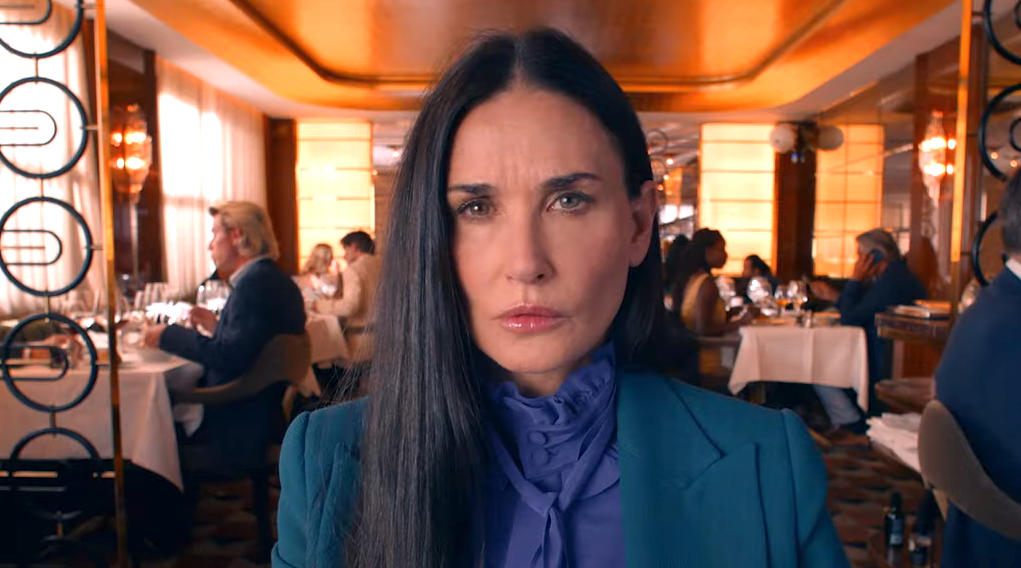
The star belongs to Elizabeth Sparkle (Demi Moore), once a bona-fide movie star, but now the leading light in the world of TV physical fitness shows. She’s fast approaching sixty and still looks great, working hard to keep her physique as she needs it to be. But her world is rocked when she overhears her toxic producer, Harvey (Dennis Quaid), talking on the phone, announcing that Elizabeth is now ‘too old’ for her role and that he wants a replacement as soon as possible – somebody younger.

Then, after a car crash (from which Elizabeth emerges unscathed), a handsome young hospital assistant slips her a note, alerting her to the existence of the titular drug, which promises to release a fresh new version of the user’s self. Like most Faustian deals, it comes with some very strict rules (bend them at your peril) but, in a shockingly visceral sequence, ‘Sue’ (Margaret Qualley) is born.

Now the two women must learn to co-exist, each one spending a week in the real world, while the other sleeps and regenerates. And of course, it’s all doomed to go horribly wrong…

This sophomore project from writer/director Coralie Fargeat – I have yet to see her debut film, RevengeThe Substance plays like a fable, a weird Grimms’ fairytale for the modern age. There are shades of The Picture of Dorian Gray here, allusions to Snow White and her stepmother’s ‘Mirror Mirror’ mantra, and several visual echoes of classic films like The Shining and Carrie. What’s more, the astounding practical makeup effects will remind many older film fans of early David Cronenberg and Brian Yuzna – though the eye-popping splatter sequences used here make movies like The Brood and Society look positively restrained by comparison.

But this is so much more than imitation. The Substance is an adept and powerful meditation on the subject of ageing and the ways in which women are constantly shackled and devalued by it – and how we all fall into the trap of enabling this sad state of affairs.

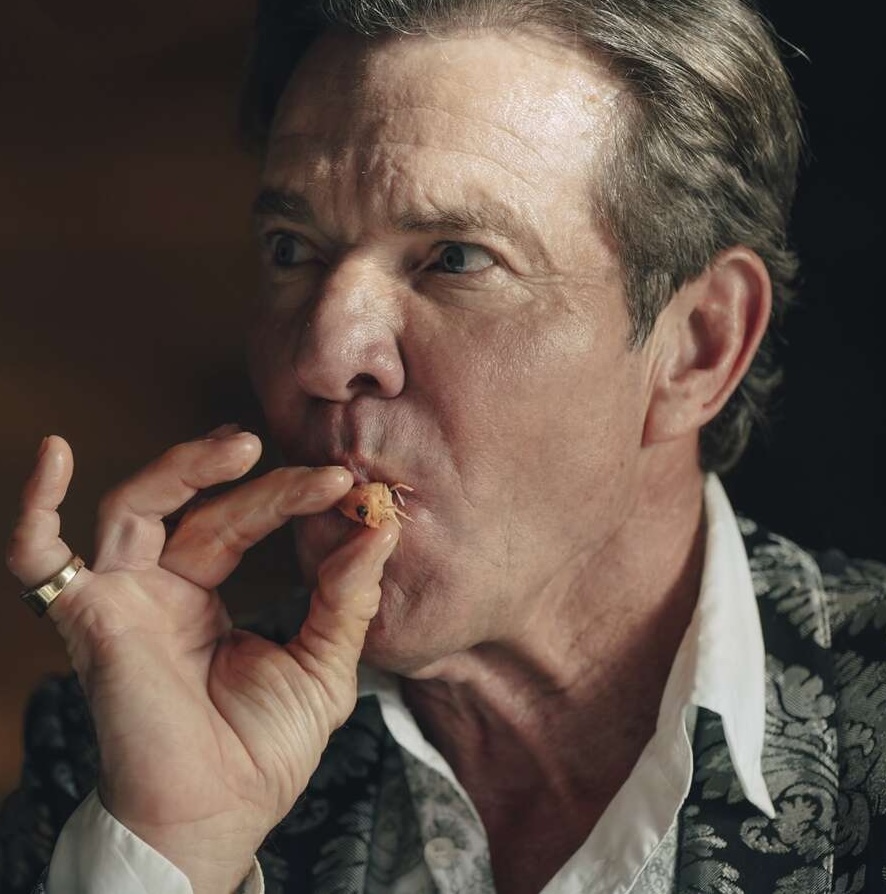
Moore is extraordinary in this film, delivering what might just be her finest screen performance (certainly her most unfettered), while Qualley makes the perfect foil. And Quaid, who I haven’t seen onscreen in quite a while, is gloriously, revoltingly odious here, making even the act of eating seafood a stomach-churning spectacle.

But it’s Fargeat who really deserves all the accolades. The Substance is surely one of the most provocative and affecting films of the year. I’m already excited to see where she will go next. But a word of warning: this won’t be for everyone. Those who shrink from body horror, blood and nudity are going to find plenty here to trigger them, particularly in the harrowing final stages, where Fargeat keeps pushing the gory imagery as far it can possibly go.

And then, she returns to that Hollywood star, and ties everything up in one delightful, blood-spattered package. If this sounds like your cup of haemoglobin, be sure to watch it on the big screen.

5 stars

Philip Caveney

Kinds of Kindness

28/06/24

Cineworld, Edinburgh

You have to hand it to Greek director Yorgos Lanthimos – he doesn’t let the grass grow. His sublime adaptation of Poor Things only aired in January, bringing with it a well-deserved Oscar for Emma Stone – and already, here’s his next creation, a more stripped-back, contemporary tale: a kind of portmanteau featuring three different stories with the same actors playing different roles.

Kinds of Kindness, co-written by Lanthimos with long-time collaborator Efthiminus Filippou, begins with The Death of RMF. This is the story of Robert (Jesse Plemons), a submissive office worker who is compelled by his ruthless boss, Raymond (Willem Dafoe), to carry out a series of humiliating duties. He finally baulks at committing an extraordinary act of violence and is consequently cast out of Raymond’s orbit. Seeking solace, he attempts to forge a relationship with chance encounter, Rita (Emma Stone), but soon makes an unsettling discovery…

In the second tale, RMF is Flying, Plemons plays cop Daniel, whose wife, Liz (Stone), is missing, shipwrecked on a desert island. When she finally returns, Daniel starts to notice changes in her character and, in order to test her, he asks her to to prove her love for him.

In the concluding story RMF Eats a Sandwich, Plemons and Stone play Emily and Andrew, disciples in a weird cult run by Omi (Dafoe again). The two of them have been assigned a difficult task – to locate a mysterious woman who has the power to re-animate the now dead RMF (Yorgos Stefanakos). Could veterinarian Ruth (Margaret Qualley) be the woman to accomplish the impossible?

If this all sounds incomprehensible on paper, fear not, because Lanthimos takes enough time to delineate every character arc with such skill that there is never any confusion about what’s happening onscreen, even when it’s totally mind boggling. These stories are allegories focusing on three of life’s greatest preoccupations: work, marriage and religion – and, as the bizarre events unfold, audiences are led fearlessly through a series of interactions that alternate between harsh reality and haunting dreamscapes.

If I claimed I understood everything that happens here I’d be lying. I only know that this is exciting, unpredictable filmmaking, and – as I was with Poor Things – I’m fascinated to see large numbers of people turning out to see what Lanthimos has come up with. I can think of few other directors who have this ability to push boundaries and simultaneously satisfy the box office. I’m already excited to see what he will come up with next.

While this may not be the exquisite slice of cinematic perfection that was its predecessor, it’s nonetheless the work of a gifted director at the top of his game. Don’t miss it.

4.6 stars

Philip Caveney

Drive-Away Dolls

16/03/24

Cineworld, Edinburgh

Since their auspicious debut with Blood Simple way back in 1984 (when I had the honour of interviewing them for Manchester’s City Life magazine), Joel and Ethan Coen have unleashed a whole barrage of brilliant films. OK, so there have been one or two misfires in there, but few filmmakers have been so consistently prolific and on the button.

A few years ago they decided to take a sabbatical and work on their own individual projects. Older brother Joel landed first with The Tragedy of Macbeth, which – despite having possibly the most self-aggrandising screen credit in history – turned out to be one of the finest Shakespeare movie adaptations ever. Now it’s Ethan’s turn and Drive-Away Dolls, co-written with his wife, Tricia Cooke, is the result. The central story is so sniggeringly phallus-obsessed it might just as easily have been written by Beavis and Butthead.

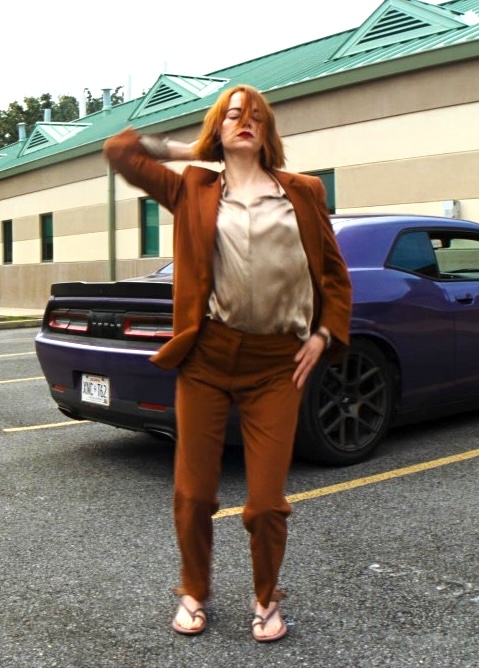
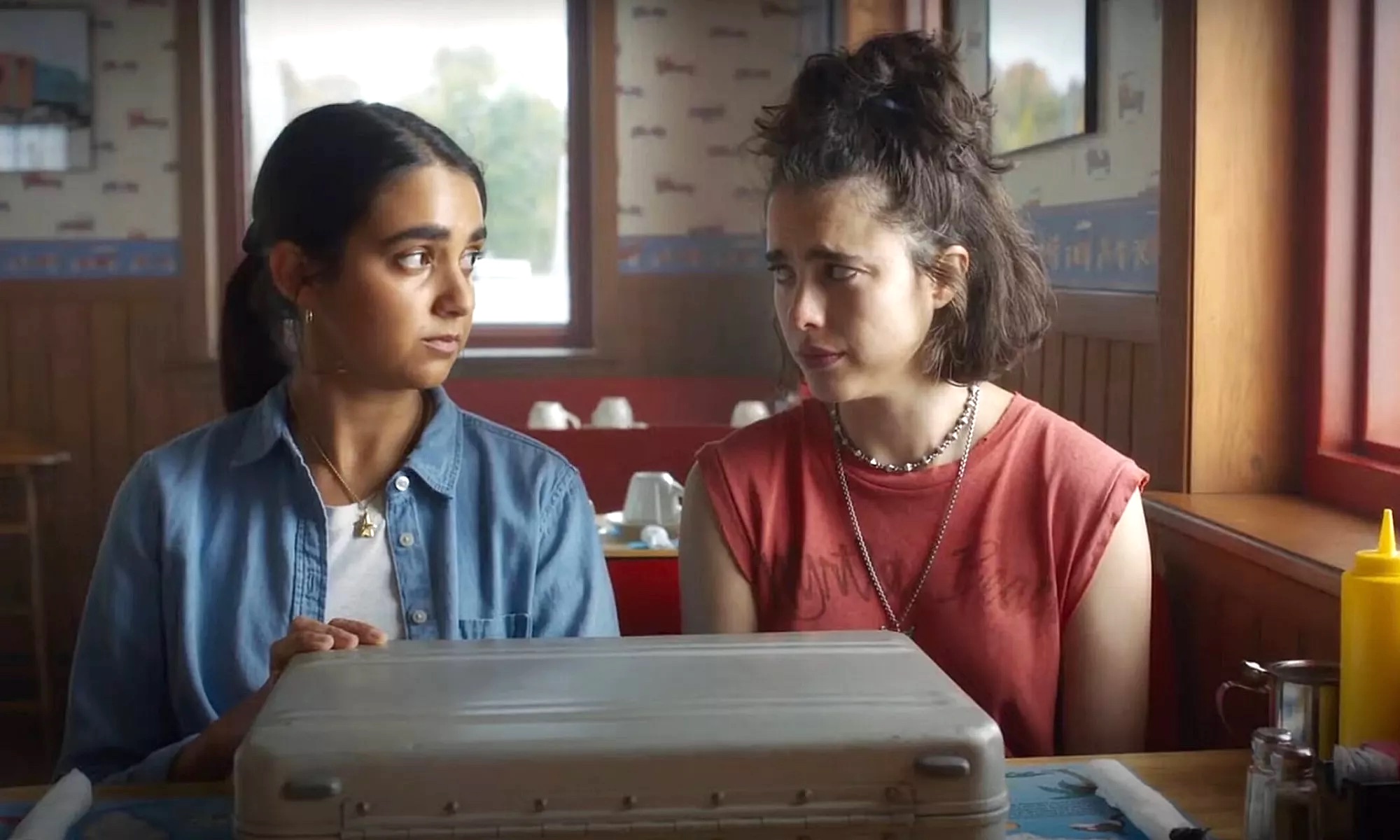
The ‘dolls’ in question are Marian (Geraldine Viswanathan) and Jamie (Margaret Qualley), two lesbian besties. Marian is reserved and socially awkward. She spends most of her spare time reading highbrow literature. Jamie is her polar opposite, with a propensity for raucous and ill-fated relationships. She’s in the process of messily breaking up with policewoman, Sukie (Beanie Feldstein), and urgently needs a change of scenery, so she talks Marian into taking her on a road trip to Tallahassee.

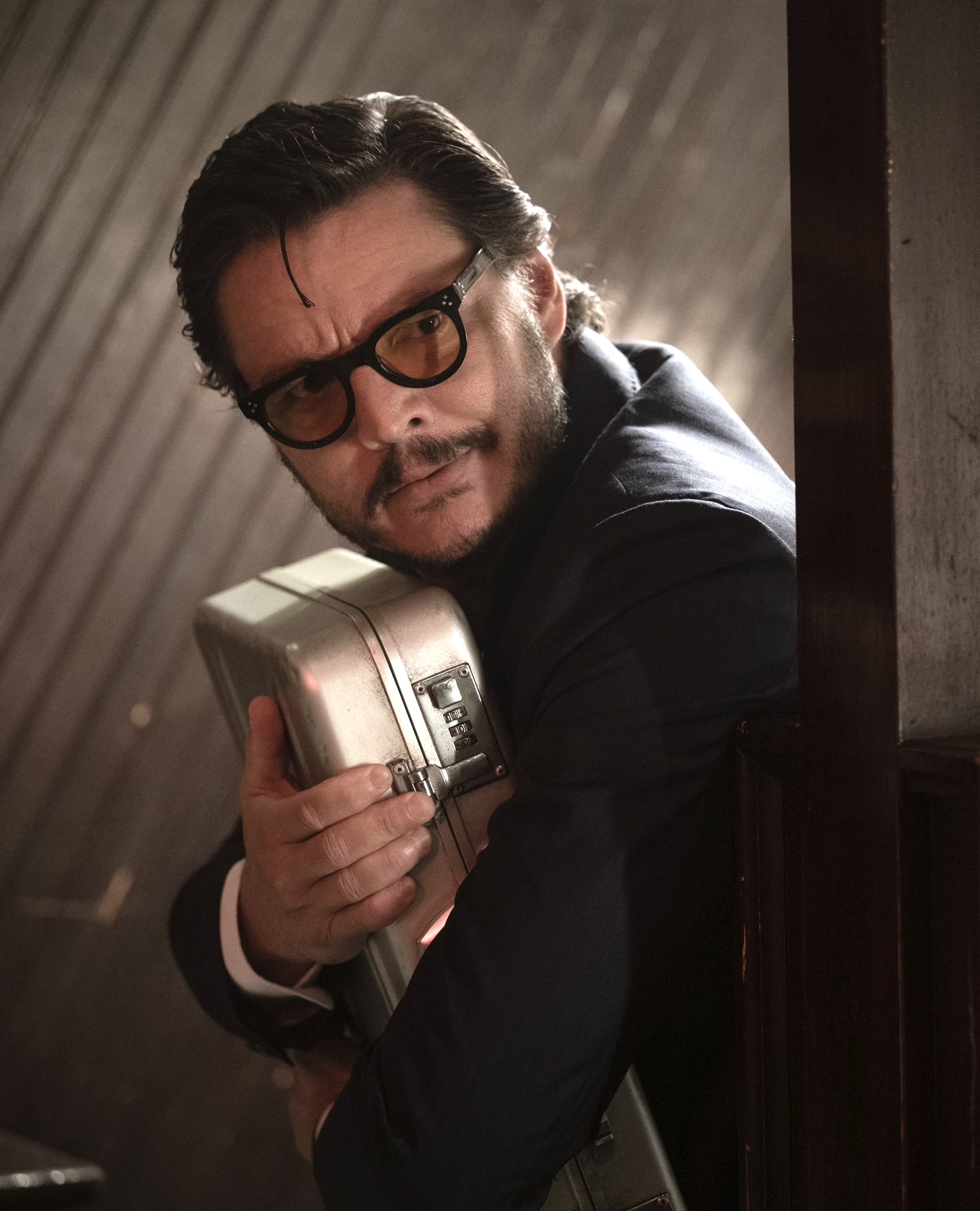
The women hire a drive-away vehicle from Curlie (Bill Camp) and set off on the long drive, blissfully unaware that they have got their wires badly crossed and that the boot of their car contains a metal attaché case containing something of great value. (This device feels so like the MacGuffin in Pulp Fiction, it surely has to be intentional.)

At any rate, Marion and Jamie are being pursued by a trio of bad guys, led by ‘The Chief’ (a criminally underused Colman Domingo), who want what’s in that briefcase. Rough stuff inevitably ensues…

While Drive-Away Dolls feels closer to familiar Coen territory than Shakespeare ever could, it’s exasperating to witness how consistently this fails to hit any of its chosen targets. Viswanathan and Qually are both engaging performers, but Qually in particular is stuck with the unenviable task of delivering slabs of frankly unbelievable dialogue, the kind of lines that no human character would ever utter. Furthermore, the women’s lesbianism is viewed purely through the male gaze: they are incongruously penis-fixated and the camera lingers on their bodies in a salacious fashion, which makes the whole thing feel dated as well as puerile. The villains are so inept that they fail to generate any sense of menace and, meanwhile, a string of A listers, including Matt Damon and Pedro Pascal (who presumably signed up for this on the understanding that it had the name ‘Coen’ attached), are reduced to cameo roles that give them little to do except die.

There are a few funny lines. A couple of weird psychedelic sequences, which seem to have drifted in from an entirely different movie, occasionally attempt to shift this ailing vehicle into a higher gear, but Drive-Away Dolls is a resounding failure that feels hopelessly stuck in first.

The news that the Coens are back together and already working on their next project can only come as a welcome relief.

2.5 stars

Philip Caveney