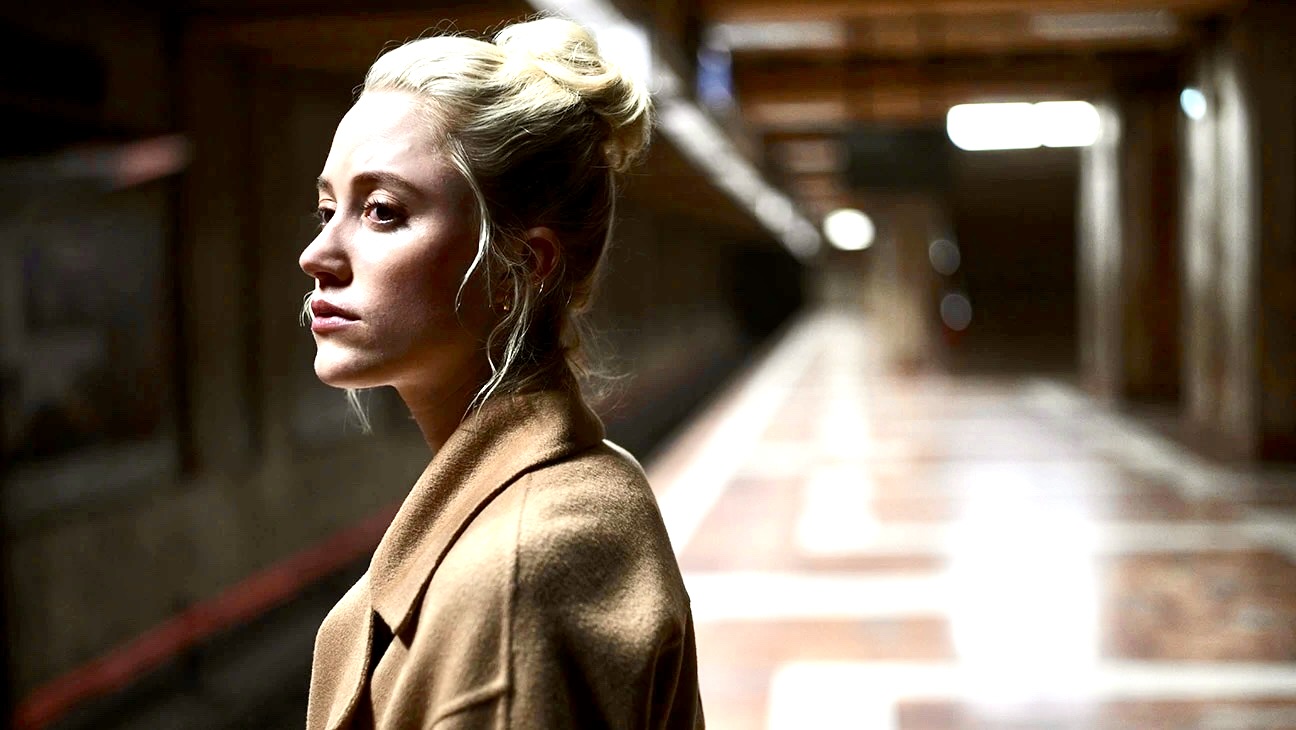
Maika Monroe

Longlegs

12/07/24

Cineworld, Edinburgh

A troubled FBI agent attempts to track down a mysterious killer. A series of bizarre clues links the killings to a whole list of young girls who have their birthday on the 14th of any given month. And the events play out in the remote backwoods of Oregon, where the landscape seems laden with the threat of unspecified terrors.

On paper at least, Longlegs has all the hallmarks of that increasingly common syndrome, Seenitallbefore. So it’s heartening that writer/director Oz Perkins has somehow managed to take all these familiar ingredients and cook up something that feels entirely original: a dark, smouldering slow-burn of a film that’s imbued with a relentless sensation of mounting dread.

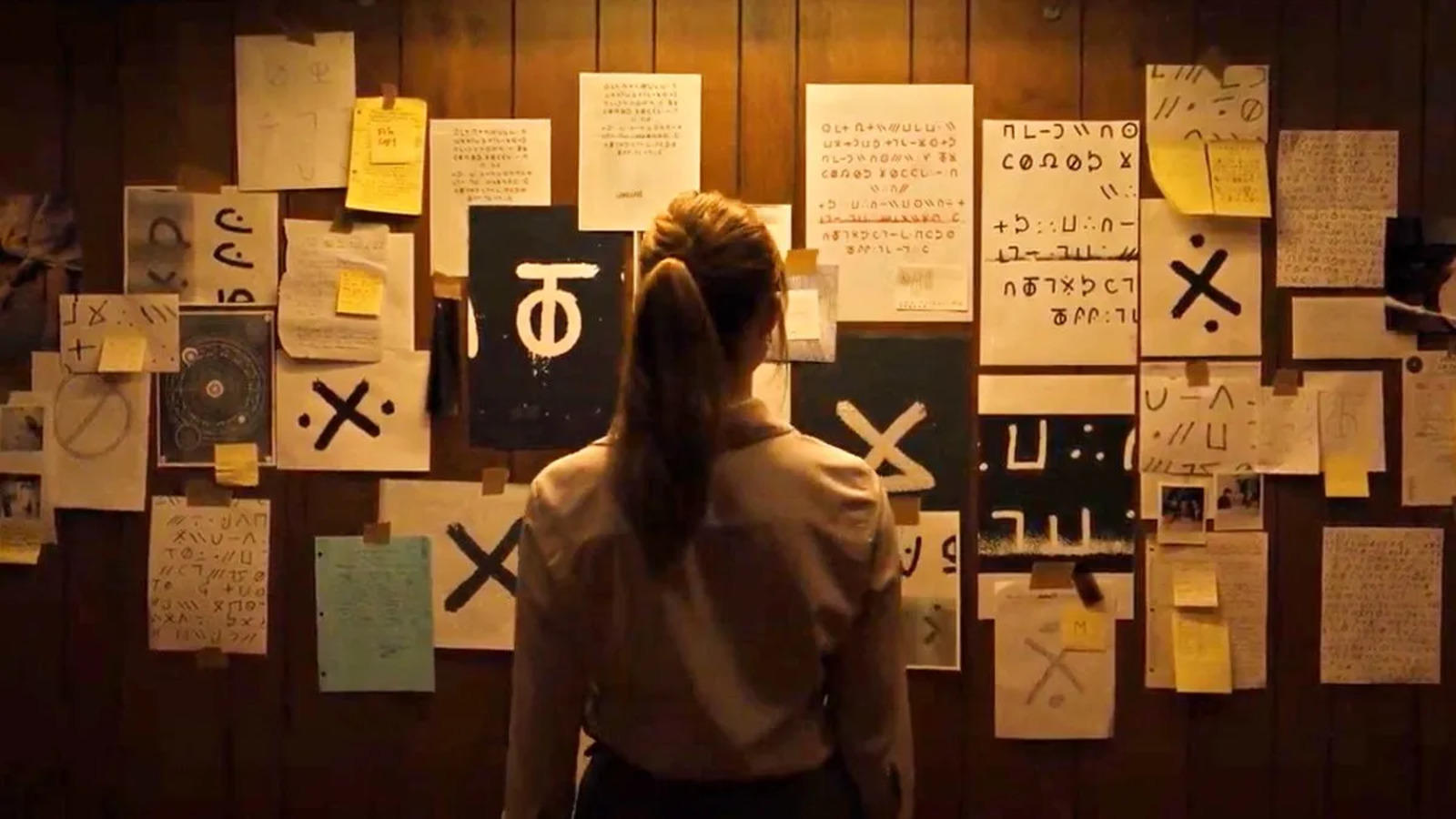
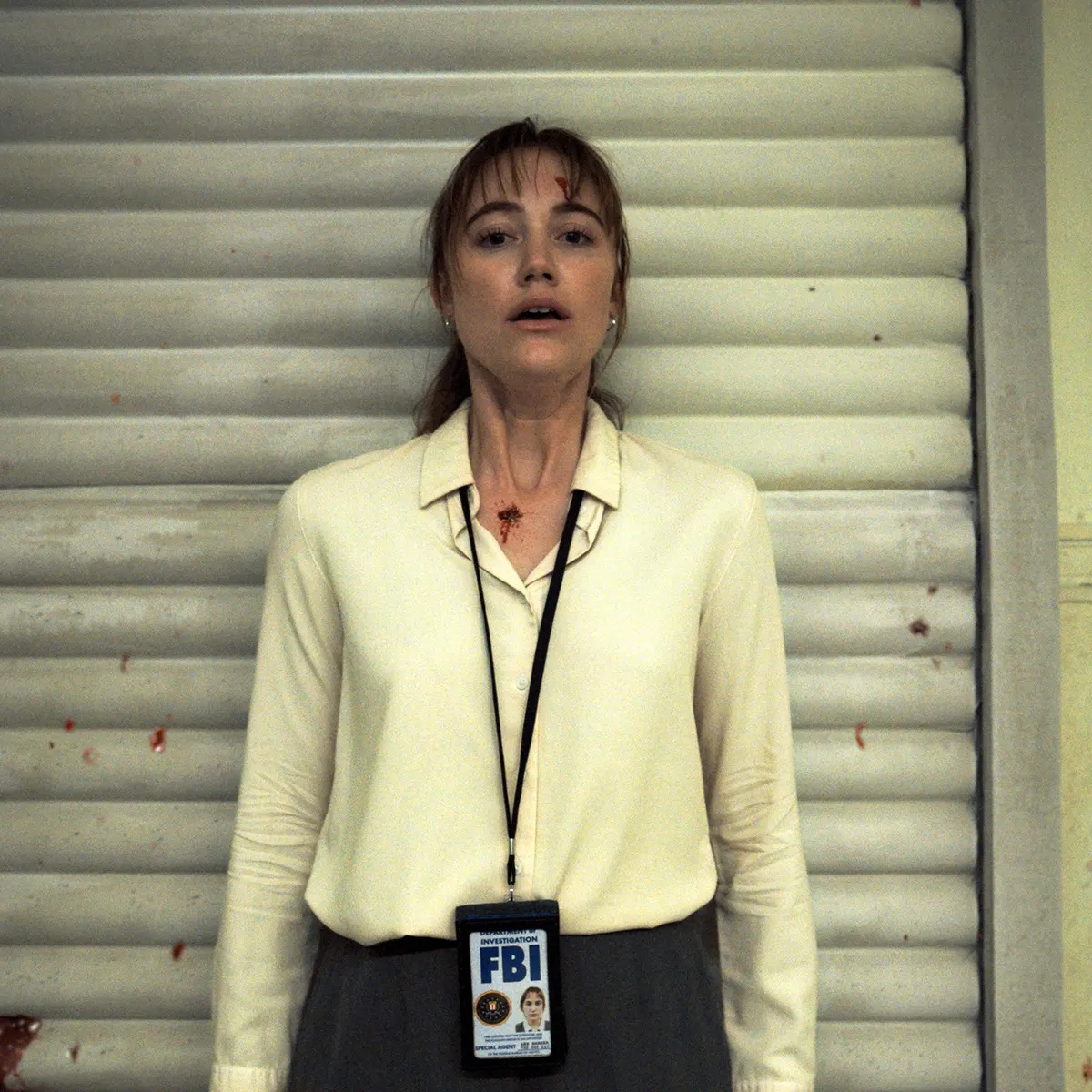
It’s the 1990s: there are photographs of Bill Clinton on the FBI’s office wall and mobile phones haven’t happened yet. Agent Lee Harker (Maika Monroe, last seen by B&B in the criminally ignored Watcher), is part of a team investigating a number of seemingly unrelated murders that go back to the 1970s. Her boss, Agent Carter (Blair Underwood), keeps tying to motivate her, but she is unresponsive to his approaches. She’s a quiet, brooding sort of person, with no apparent social life and strong links to her mother, Ruth (Alicia Witt), a backwoods bible-basher, who appears to be a total recluse.

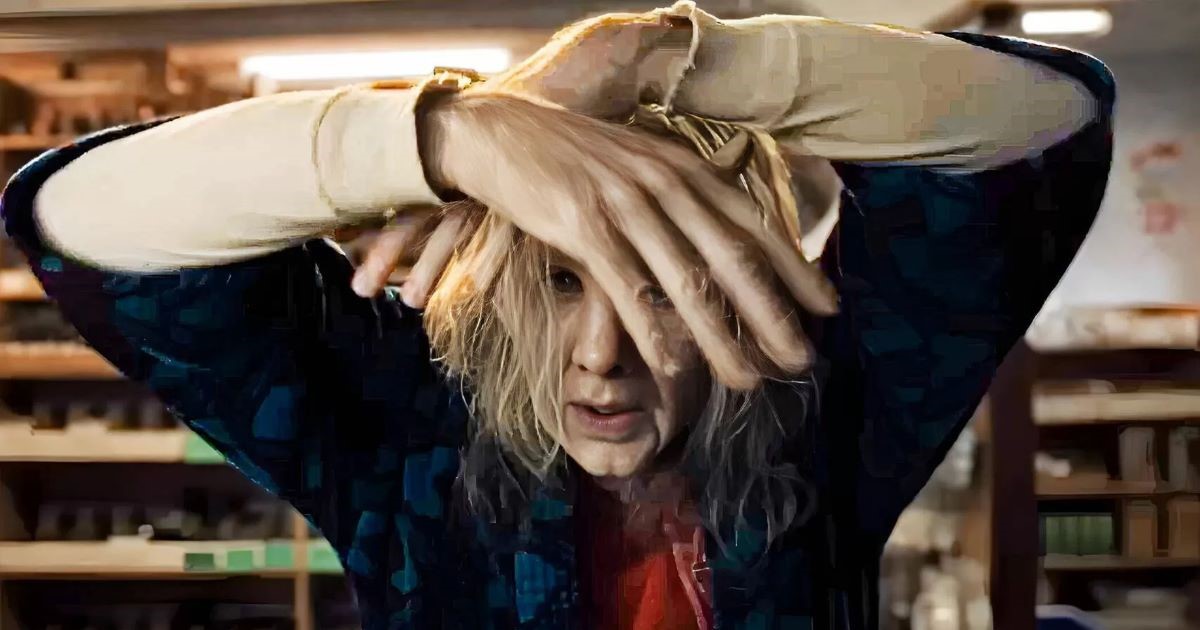
It’s hardly a spoiler to mention that, back in her childhood, Lee had a bizarre encounter with the titular villain of the piece, played by a mesmerisingly scary Nicolas Cage, layered in prosthetics and sporting a long blonde wig. As Lee begins to discover a chain of bewildering clues, she starts to suspect that this man is somehow involved in all of those apparently random killings, even though evidence suggests that he was never there at the time…

Longlegs defies rational explanation. This is a film that exudes a powerful sense of disquiet from the opening scenes onwards, and manages to hold me spellbound throughout. A tangible sense of fear spills from every image and, unlike some recent horrors, this doesn’t depend on explicit carnage to make its point. Sure, there is violence here, but most of it happens offscreen, Perkins tapping into the age-old truth that what really scares an audience is what it doesn’t quite see. And there’s some stuff about worryingly life-like dolls that really amps up the unease.

If the eventual explanation for what’s been happening is decidedly off-the-wall, it matters not because if the raison d’etre of Longlegs is to unsettle the viewer ( and I strongly suspect that it is) then it delivers on that premise big time.

Looking back to our review of Watcher in November 2022, I note that I lament the fact that we are the only two viewers in the screening. Happily, that’s not the case with this one, which is well attended, probably because of the many five-star reviews the film has garnered from independent horror sites. I enjoy (if that’s the right word) the movie’s uncanny ability to reinvent and reinvigorate some decidedly tired genre tropes, to produce a film that feels like it’s actually breaking new ground. Monroe is compelling as the tortured protagonist and Cage, once again, submits a performance that is spectacularly unhinged. Wait till you hear him sing!

Longlegs won’t be for everyone. Those of a nervous disposition might prefer to look elsewhere. But those who like to shudder will want to check this one out.

4.6 stars

Philip Caveney
Watcher

16/11/22

Cineworld, Edinburgh

Not to be confused with the recent Netflix series with a very similar name, Watcher is a psychological thriller in which a young woman begins to suspect that she is being targeted by a killer. Directed by Chloe Okuno, who co-wrote the screenplay with Zack Ford, this is a powerful slow-burn of a story, where the central character’s sense of mounting paranoia makes a viewer continually reassess what’s happening onscreen. Is it all just a series of coincidences? Or is the woman in serious danger?

Julia (Maika Monroe) accompanies her husband, Francis (Karl Glusman), to his home city of Bucharest, where he is starting a new job in marketing. His busy schedule means that he is often away from their rented apartment late at night, and Julia is pretty much left to her own devices. She’s trying to learn to speak Romanian, with the aid of an online language course, but she’s a novice and can barely understand what people are saying – her landlady, a barista, even her husband’s colleagues when she invites them to a dinner party. Meanwhile, a series of grisly murders is happening in the city, attributed to a killer whom the newspapers have dubbed ‘The Spider.’

And then Julia notices that, from an upstairs apartment across the street, somebody is watching her…

As is so often the case with a film like this, it would be wrong to give away too much of the plot. Julia’s sense of alienation is heightened by the fact that the filmmaker’s don’t offer subtitles for what the many Romanian characters are saying, and her only real friendship is with Irina (Madelina Anea), the young woman in the next apartment, who thankfully speaks English. Julia gets little help from Francis, who clearly thinks his wife is simply paranoid and has a tendency to gaslight her every time she mentions her concerns. As matters build steadily to a shattering conclusion, I find myself entirely swept up in Julia’s predicament. The final scenes actually have me holding my breath…

This is a fabulous, low-budget chiller that deserves an audience, so I’m horrified to note that, at the morning screening we attend, we are the only two people in the auditorium. Can the cinemas survive if people continually opt to stay at home and watch films on their small screens?

Meanwhile, Watcher is powerful reason to get off your sofa and visit your nearest multiplex.

4.6 stars

Philip Caveney

Greta

29/04/19

Neil Jordan is always an interesting director. From his debut with Angel in 1981, through Hollywood blockbusters like Interview With the Vampire, to little jewels like Breakfast on Pluto, he has steadfastly resisted being confined to a particular genre, instead choosing to nip effortlessly back and forth across various categories with alacrity. Greta sees him diving into an old-school psychological thriller, once again tearing up the rule book as he goes, and emerging with something gloriously off-kilter.

Frances McCullen (Chloë Grace Moretz) lives in a swish Tribeca apartment with her rich and spoiled flat mate, Erica (Maika Monroe),  earning her rent money as a waitress in a swish Manhattan restaurant. Heading home from work on the subway one night, she chances upon a handbag, which contains the ID for Greta Hildeg (Isabelle Huppert). Though Erica urges Frances to spend the bundle of money that’s also in there,  she decides to do the decent thing and return it to the owner, who turns out to be a lonely piano teacher. Frances has recently lost her mother, and she instantly warms to Greta’s maternal and affectionate manner.

Much to Erica’s disgust, Frances and Greta quickly form a friendship, but Greta soon begins to overstep the mark, coming on way too strong. When Frances makes a chilling discovery in Greta’s apartment, she attempts to call a halt to the friendship, but Greta does not want it to end and seems prepared to go to any lengths in order to keep Frances in her clutches…

This is by no means a perfect film – indeed, there’s a plot twist at one point that frankly beggars belief – but Jordan is very adept at using the tropes of more conventional horror movies to create almost unbearable levels of suspense, something he manages to maintain until the very final frame. It’s refreshing too to see a film that offers three terrific lead roles for women, while the male cast members are merely incidental characters. That said, I felt a tad sorry for Jordan’s old comrade, Stephen Rea, lumbered with a thankless cameo as a detective, stumbling towards his own destruction. Huppert is terrific in the title role (so good that I’m almost ready to forgive her for her involvement in the repellant Elle) and Moretz and Monroe also acquit themselves well.

Given the unfortunate timing of its release (pitched against the audience-gobbling behemoth that is Avengers: End Game) Greta has inevitably been somewhat lost in the shuffle, which is a great shame because – that dodgy plot device notwithstanding – there’s plenty to recommend in this wiry, old-fashioned thriller.

4 stars

Philip Caveney

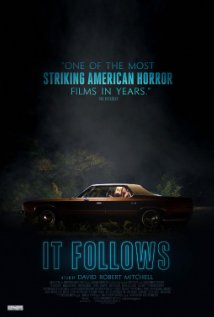
It Follows

MV5BMTUwMDEzNDI1MF5BMl5BanBnXkFtZTgwNzAyODU5MzE@._V1_SY317_CR2,0,214,317_AL_

01/03/15

The horror movie genre has been in a sorry state for some time now, lost in a welter of found-footage shaky-cam cliches that neither surprise nor scare the viewer – so it’s heartening to witness what feels like the beginning of a new wave of scare movies that offer something a bit more original. First up was Jennifer Kent’s antipodean frightener, The Babadook, which delivered a well needed kick to the ailing beast. Now comes It Follows, a film that despite owing a massive debt to the work of John Carpenter, nonetheless offers an interesting new direction, one that manages to generate genuine dread throughout the film’s duration.

Jay (Maika Monroe) is the unfortunate teenager who after indulging in a little casual sex with Hugh (Jake Weary) is rather bluntly informed that she has now inherited the unwelcome attentions of a shapeshifting creature that will pursue her (luckily it only moves slowly) and will kill her unless she first has sex with somebody else, thereby diverting the creature’s attentions to the new partner. The creature, which comes in a whole variety of guises, from an old lady to a urinating teenager,  is only visible to those who are being hunted by it.

You could look at this film as an allegory about STDs and you could also criticise its rather protestant approach to promiscuity (something else it has in common with Carpenter – in Halloween, the sexually active girls are murdered by Michael Myers, whilst virginal Jaime Lee Curtis survives) but what you won’t be able to deny is that David Robert Mitchell’s adept handling of the material wracks up almost unbearable levels of tension. The comparisons with early John Carpenter don’t stop there – the gliding steadicam shots along suburban streets evoke the semi-legendary setting of Haddonfield, while the wiry synthesised score also recalls that director at the height of his powers. It’s hard to believe that this is accidental, more likely a homage.

But while it wears its influences on its sleeve, I don’t want to deny Robert Mitchell’s undoubted skill at creating something refreshingly original in the world of horror. This is unsettling stuff that will make you feel very uncomfortable and that, after all, is the name of the game.

4.4 stars

Philip Caveney