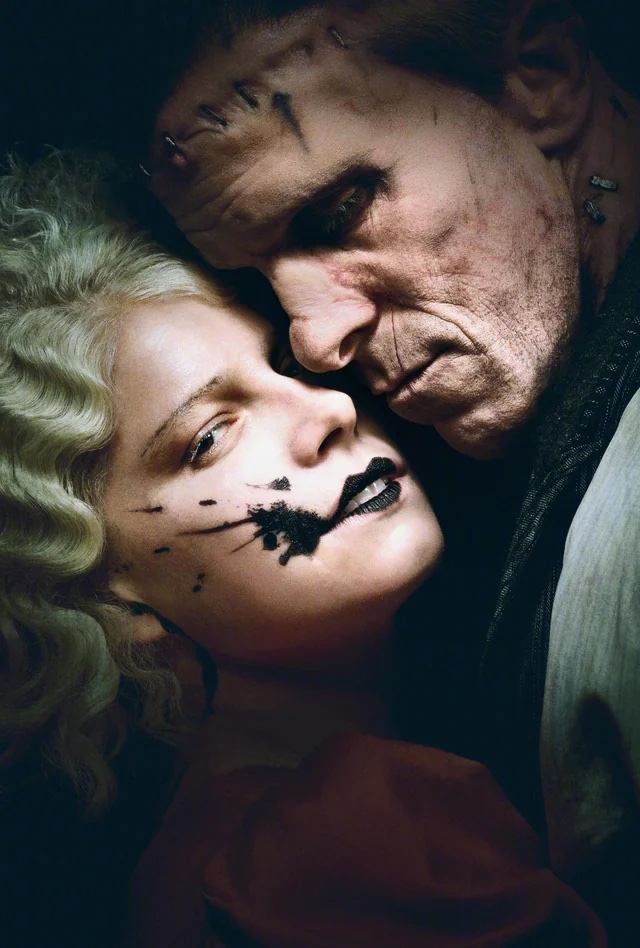
Maggie Gyllenhaal

The Bride!

10/03/26

Cineworld, Edinburgh

Maggie Gyllenhaal’s previous film, The Lost Daughter, seemed to be loved by all and sundry – despite being, in my opinion, a bit slight. The Bride! couldn’t be any more different if it tried. This is a film so sprawling, so packed with bonkers invention, that it almost feels as if it’s about to burst off the screen and into the auditorium. It’s also one that embodies the term ‘divisive.’ It’s had some critics clutching their pearls and reaching for two (and even one) star reviews, while many viewers have denounced it in no uncertain terms. How dare Ms Gyllenhaal defile the genius of Mary Shelley in such a way? Doesn’t she understand that Frankenstein is a great work of art that needs to be treated with respect? 

We open with Mary Shelley herself (Jessie Buckley) in close-up monochrome, berating the fact that she didn’t live long enough to continue her famous story, and proclaiming that she will create a sequel by hook or by crook. Somehow, she manages to home in on Ida (Buckley again), a woman misbehaving in a Chicago bar in 1936. A quick case of possession occurs, which has Ida acting lewdly and shouting abuse (in a variety of voices) at Lupino (Zlatko Buric), the gangster who runs the city. For this misdemeanour, Ida is promptly pushed down a flight of stairs to her death. Bye bye, Ida… or is it?

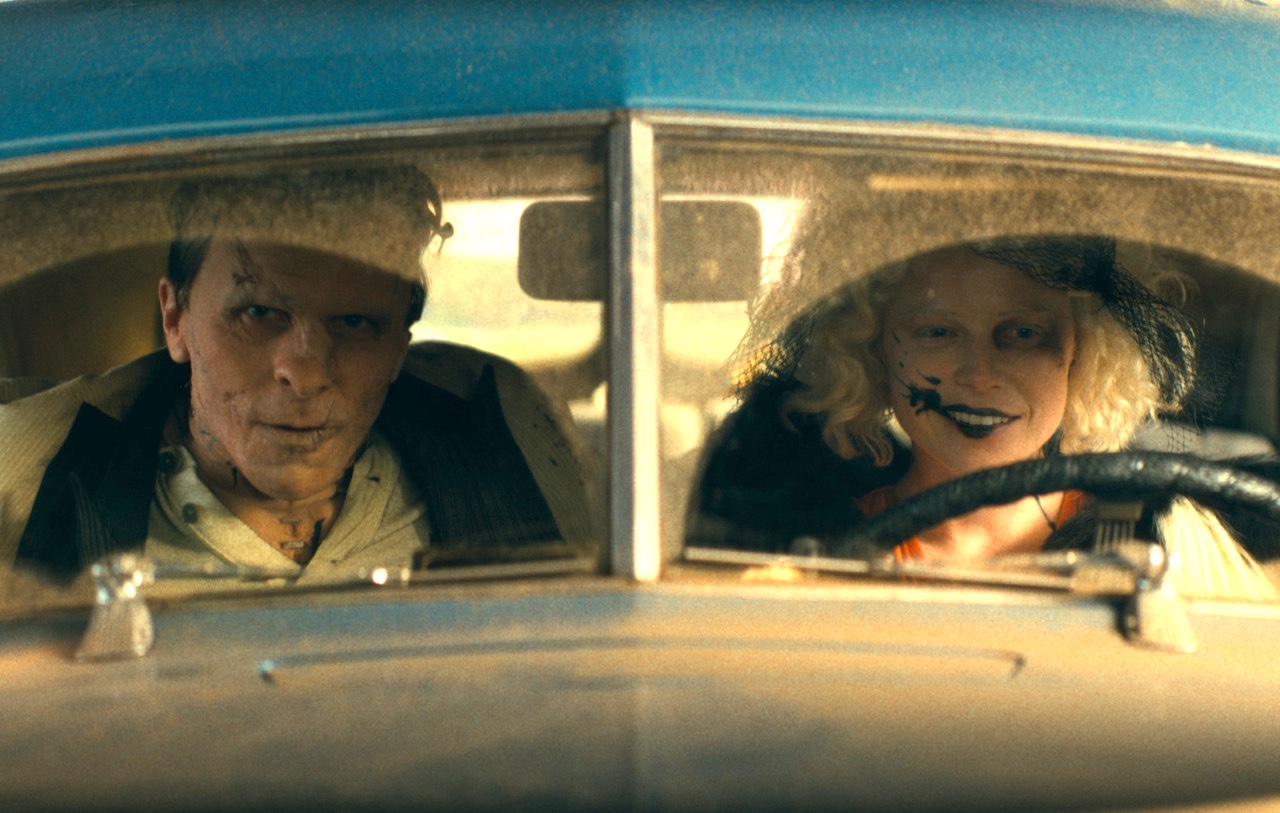
Shortly thereafter, ‘Frank’ (Christian Bale) arrives in the city in search of Dr Cornelia Euphronious (Annette Bening), a scientist famed for her experiments with reanimation. Frank has been around since the 1800s and is starting to feel a crippling sense of loneliness. Would Dr Euphronious be prepared to animate a female corpse for him, so he can finally enjoy a meaningful relationship? The good doctor understandably has some doubts, but luckily she acquiesces (otherwise this would be a very short movie) and Ida’s freshly-buried body and Shelley’s spirit are zapped into something larger than life. 

‘Penny’ – as Ida/Mary is now known – and Frank start to get to know each other and they go out nightclubbing in a sleazy part of the city. After Frank kills a couple of guys who attempt to rape Ida, the couple are forced to go on the run…

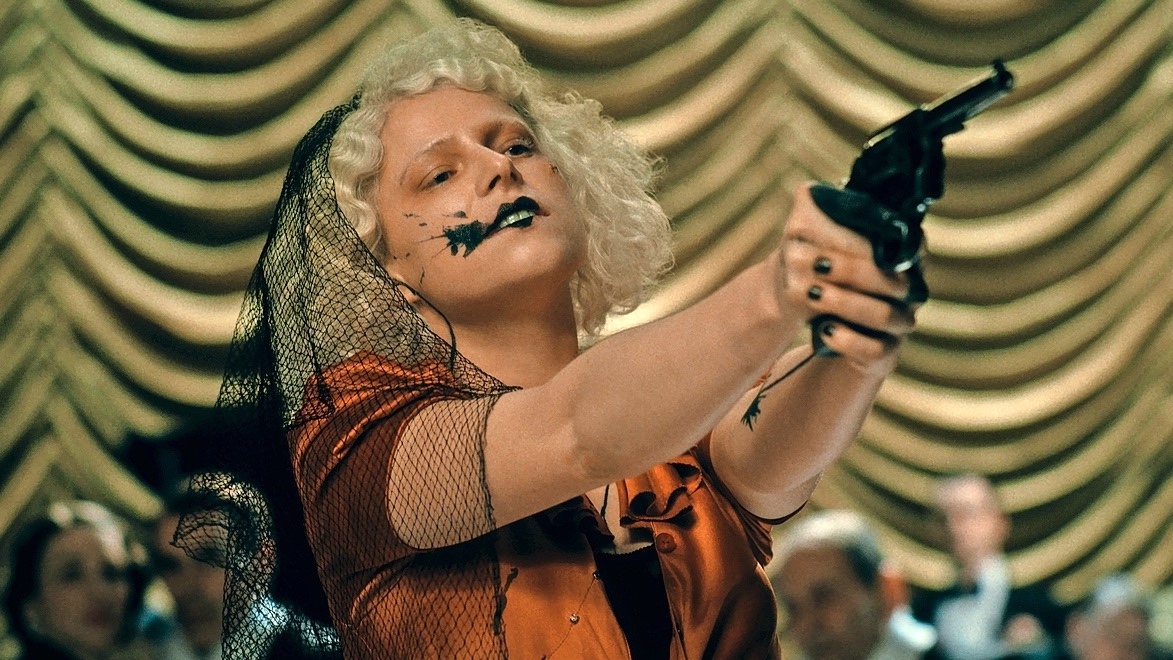
And yes, on paper, it does sound ridiculous – but then, so does Mary Shelley’s original story to be fair – and what my words can’t adequately convey is the sheer exuberance with which this is all done, a degree of WTF invention that leaps out of every frame. The Bride! is quite literally a fearless monster mash-up of epic proportions, with knowing nods to Bonnie and Clyde, Mel Brooks and the Hollywood musicals of the 1930s. Frank, it turns out, is a major fan of song-and-dance man, Ronnie Reed (Jake Gyllenhaal), and never misses the opportunity to catch one of his films at the cinema. In doing so, he unwittingly leaves a trail for detectives Jake Wiles (Peter Sarsgaard) and his much cleverer partner, Myrna Malloy (Penélope Cruz).  

I’ll be the first to admit that not everything Gyllenhaal attempts here quite comes off – she wrote the screenplay, as well as directing – and there are rough edges to some of the scenes of mayhem and bloodshed. Furthermore, if you’re one of those people who hates coincidences, be warned – there are a lot of them here. But overall, The Bride! offers such a wild, unpredictable thrill-ride that I quickly throw aside my qualms and  have a great time with it. Buckley is every bit as mesmerising as she is in Hamnet, while Bale’s interpretation of the Monster as a hesitant, apologetic creature, worn down by decades of travails, makes him strangely endearing. Lawrence Sher’s cinematography is stunning and there’s an intriguing score by Hildur Guõnodóttir. The whole enterprise is underpinned by a powerful feminist subtext, which reflects the era in which it’s set.

So, my advice would be to disregard the bad word-of-mouth and watch The Bride! with an open mind. The film’s opening weekend suggests that it’s going to lay a great big egg at the box office, but those who admire audacious creativity will find much to admire here.

4 stars

Philip Caveney

The Lost Daughter

02/01/22

Netflix

I really want to like The Lost Daughter. After all, it’s directed by Maggie Gyllenhaal, and stars two of my favourite actors, Olivia Colman and Jessie Buckley. The reviews I’ve read have all been glowing, so I’m expecting great things. And yet, in the end, it just doesn’t seem to have enough heft: it’s all build up, with weak foundations and no catharsis.

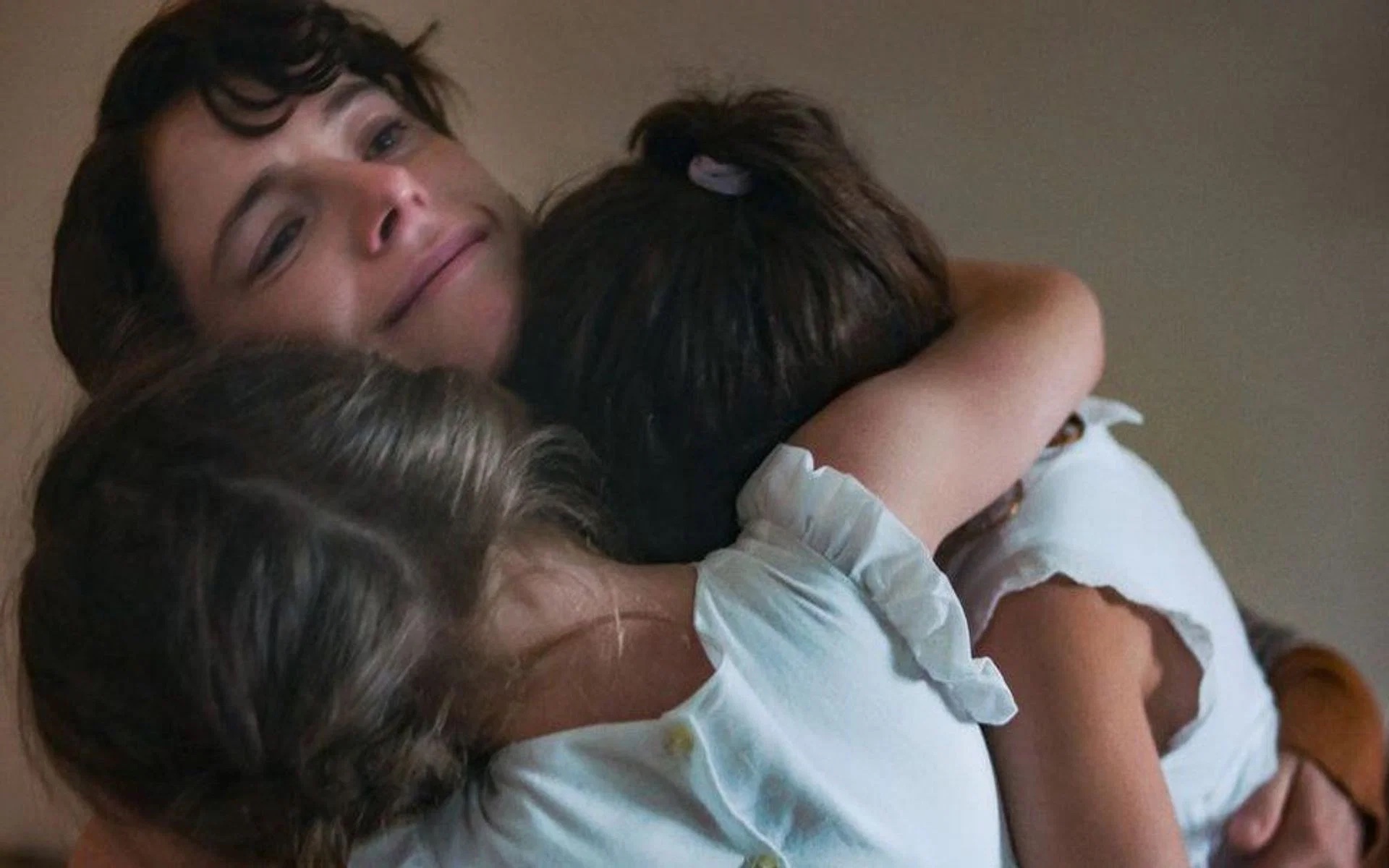
Colman and Buckley both play Leda Caruso. Buckley, of course, plays the younger iteration, a twenty-something post-grad student, struggling to balance her burgeoning academic career with the demands of her marriage and two young children. Time has rendered such issues less pressing for Colman’s Leda, who – approaching fifty – is now a professor, free to spend the summer alone on a Greek island, her adult daughters busy leading their own lives.

The movie opens with Colman’s Leda collapsing on the beach, so we know from the start that something isn’t right. In a series of flashbacks, we are shown what has brought Leda here, from the working-holiday immediately preceding her fall to the ‘crushing responsibility’ of motherhood that overwhelmed her younger self.

At first, the holiday seems idyllic. The island is undoubtedly beautiful; Leda’s apartment is charming; the sun is shining; the beach is quiet. There are hints that something is amiss: the mouldy fruit in the bowl; an insect buzzing on her pillow. But all seems well until a large, brash American family arrives, rudely interrupting Leda’s peace. When their matriarch, Callie (Dagmara Dominczyk), pregnant for the first time at forty-two, asks Leda to move her lounger so that the family can sit together, Leda stubbornly refuses. And an animosity is born that overshadows her whole stay…

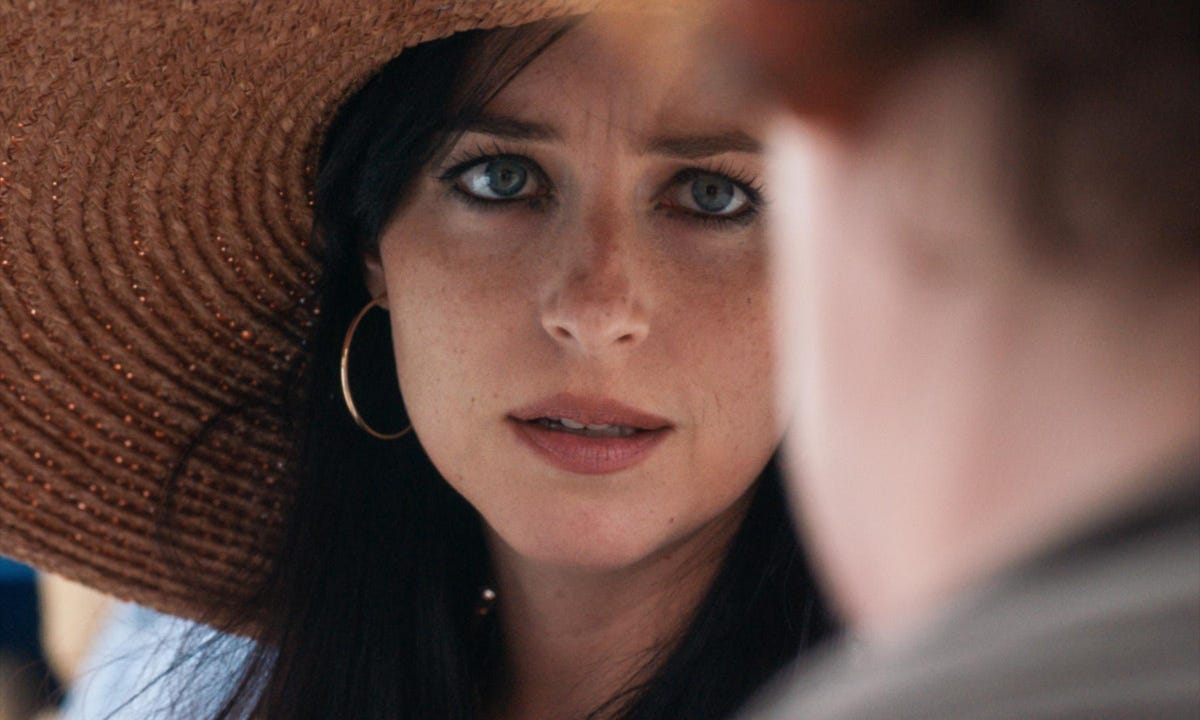
Despite her instinctive dislike of the family, Leda finds herself drawn to Callie’s glamorous sister-in-law, Nina (Dakota Johnson), whose relationship with her daughter, Elena (Athena Martin), reminds Leda of her own past. When Elena goes missing, Leda helps to find her, and the two women form an uneasy bond.

So far, so good. As a character study, this film is wonderful. Leda is a complex and interesting woman, whose conflicting desires and ambivalence towards parenthood make her an all-too-rare sight on our screens. But, though it pains me to say it, the casting doesn’t quite work. No one can reasonably argue that Colman and Buckley aren’t terrific actors, and they both deliver here, offering detailed and nuanced performances. But they don’t cohere: their Ledas are two different people. It’s not just the way they look; audiences are used to suspending their disbelief on that account. They sound so very different though – Buckley’s sonorous tones at odds with Colman’s girlish, higher-pitched voice – and their movement doesn’t match either.

Gyllenhaal’s direction isn’t bad. She utilises close-ups to excellent effect, and really ramps up the tension: a sense of all-pervading menace is cleverly evinced. But what’s the point, I wonder, if it never amounts to anything? I’m left frustrated by the damp squib of an ending, with nothing calamitous ever revealed or resolved.

A little internet searching shows me the missing piece: in Elena Ferrante’s source novel, Leda is from Naples (instead of ‘Shipley, near Leeds’) and the invading family is also Neapolitan. The sense of dread Leda feels when she encounters them isn’t just snobbery, it’s actual fear, based on her own past, and her own experience of a Mafia-style clan. Perhaps it’s this change that makes Leda’s sense of foreboding harder to understand – and weakens the story in the process.

It feels like a squandered opportunity.

3.4 stars

Susan Singfield

The Kindergarten Teacher

20/03/19

The Kindergarten Teacher is an enigmatic film. A remake of Navid Lapid’s Haganenet, this is a quietly unnerving, genre-defying drama, with a devastatingly understated performance at its heart.

Maggie Gyllenhaal is Lisa Spinelli, a kindergarten teacher longing for a more culturally enriching life. She loves art and poetry, but feels trapped by the mundanity of her suburban existence. There’s nothing wrong, exactly: she’s good at her job; she has a supportive husband; her teenage kids are decent, and doing okay. But there’s a spark missing. Her children seem happy to just pootle along, and she can’t hide her disappointment that they don’t aspire to anything great. “I noticed you’re good at photography,” she tells her daughter, Lainie (Daisy Tahan), “Why don’t you take dad’s old camera and set up the dark room?” But Lainie is dismissive: “I post lots of cool stuff on Instagram,” and Lisa is adrift, with only her weekly poetry class to fulfil her need for erudition. But she’s all drive and no substance: her poems are, it seems, derivative, clichéd. Her heart aches for creativity, but it’s out of reach.

So, when five-year-old Jimmy starts reciting oddly esoteric poetry, Lisa pounces on his potential. Habitually a quiet, undemanding little boy, he regularly enters a trance-like state, declaiming lines extraordinary for one so young. They seem to speak of experiences beyond his years, and Lisa gleefully transcribes them. He’s a child prodigy, she thinks, a Mozart of verse. And she’s determined to let neither the school curriculum nor his benignly neglectful family stifle the boy’s genius.

And, in order to protect it, she crosses a line.

It’s to writer/director Sara Colangelo’s credit that we never discover the root of Jimmy’s precocity: there’s a hint of the supernatural about the way the poems come to him, but it’s never really explained. This ambiguity serves the film well, complementing the moral uncertainty surrounding Lisa’s response to the gifted child; there are no easy answers here. It’s a deceptively simple piece, the very banality of Lisa’s decision-making process somehow highlighting the grotesque nature of her behaviour.

Parker Sevak’s delivery is remarkable for one so young; he shows us a Jimmy who is convincingly doubtful, yet easily manipulated. But Gyllenhaal is the beguiling core of this movie, demonstrating once again an astonishing level of complexity in her performance. There are so many layers to Lisa’s character, and we’re aware of them all: from her craven seeking of validation from hot young lecturer, Simon (Gael García Bernal) to her instinctive reluctance to allow her son to join the armed forces. We know that what she’s doing is wrong, but we can understand her, all the time.

This is a quietly powerful piece that will provoke discussion after the credits have rolled.

4.3 stars

Susan Singfield