

16/11/25
Filmhouse, Edinburgh
Die, My Love, based on Ariana Harwicz’s acclaimed novel, is another irresistible movie from Scottish director, Lynne Ramsay. With a script by Ramsay, Enda Walsh and Alice Birch, this unflinching study of a woman’s postpartum psychological breakdown is as compelling as it is harrowing – and Jennifer Lawrence is frankly wonderful in the lead role.
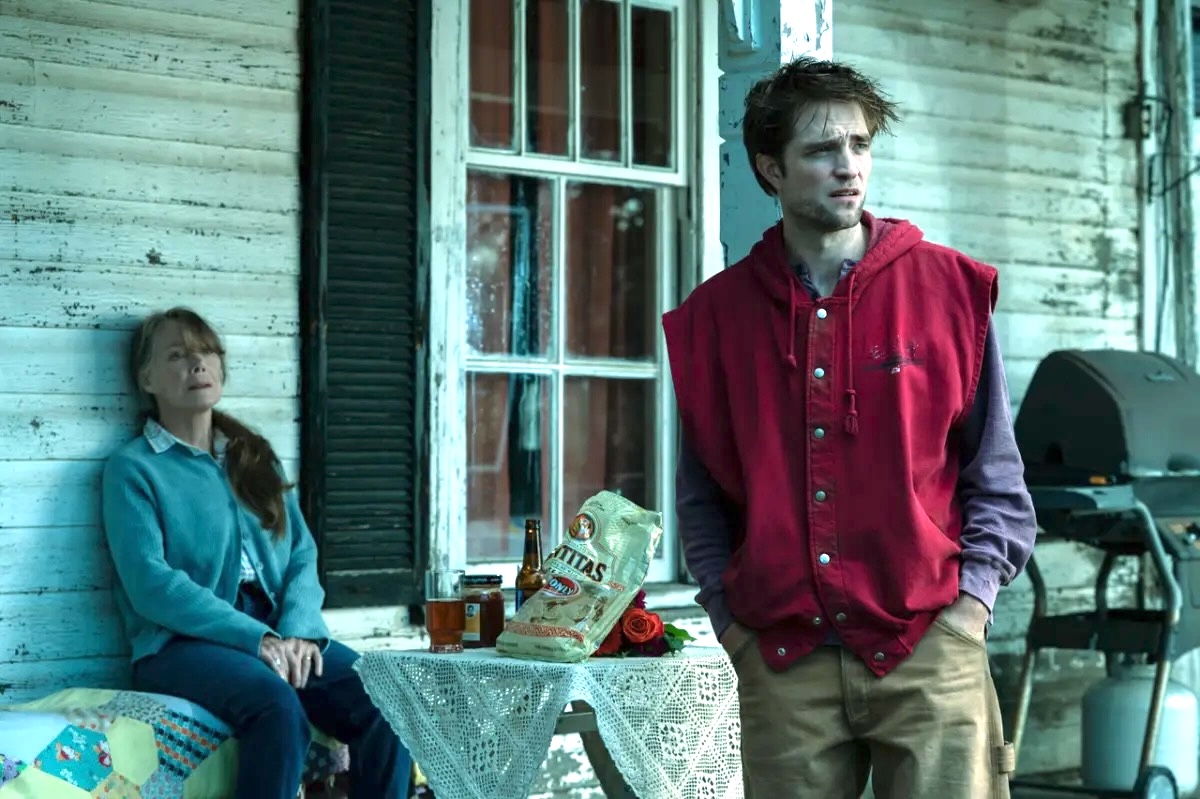
Grace (Lawrence) and Jackson (Robert Pattinson) are expecting their first baby and, in preparation for this new chapter of their lives, they move into Jackson’s deceased uncle’s house. They’re not fazed by the piles of leaves in every room, the old-fashioned decor or even a minor rat infestation: they’re young, excited and in love. They’ll make it work.
But once Grace gives birth to Harry, the spark between her and Jackson dies. She’s stuck at home: bored, resentful and unable to cope. Jackson’s job means that he can escape from the oppressive confines of their isolated house, but Grace’s work is writing; it doesn’t get her out and she can’t focus on it anyway. “I don’t do that any more,” she says.
She loves her baby but she feels trapped and abandoned. Jackson never wants to have sex with her any more, although the box of condoms in his car seems to be getting lighter by the week. She refuses to be just Harry’s mother: why can’t she also still be Grace-the-writer, Grace-and-Jackson, Grace-the-wild, the-impulsive, the-let’s-have-fun? With only Jackson’s bereaved mother, Pam (the fabulous Sissy Spacek), for company, Grace’s mental health begins to deteriorate, her behaviour becoming ever more erratic and dangerous.
Ramsay’s film is undoubtedly dark, but it’s bleakly funny too. Grace’s blunt responses to the platitudes she’s offered often fall into the “things-we-all-wish-we-could-say-but-can’t” category, and – if it weren’t for all the damage they cause – her devil-may-care actions are almost inspirational. I feel sorry for both Grace and Jackson, a couple trapped in a relationship that no longer works, dragging each other down in their attempts to meet society’s expectations of them. “Let’s get married,” says Jackson in desperation. Maybe a wedding is the glue they need to stick them back together?
Or maybe not…
More than anything, this movie reminds me of Charlotte Perkins-Gilman’s The Yellow Wallpaper; indeed, there are several overt references here to the 19th century short story, not least in Grace’s frantic stripping of the heavily-patterned wallpaper with her fingernails, or her crawling through the long grass just like Perkin-Gilman’s “creeping woman”. It’s not just the remote house and the remote husband, nor even the medicalisation of female emotions or the retreat into a fantasy world. More than any of that, it’s the mind-numbing boredom of the protagonist’s existence, and her refusal to accept this as her lot.
A real contender for my film of the year, Die, My Love is a bravura piece of movie-making: stark, beautiful and as uncompromising as its heroine.
5 stars
Susan Singfield


 Bouquets & Brickbats