Lung Ha

[Un]lovable: a Work-in-Progress Performance

13/02/26

Traverse Theatre, Edinburgh

Not So Nice Theatre Company presents a Valentine’s scratch-night with an acerbic edge, showing excerpts from five works-in-progress, all inspired by the prompt, ‘Unlovable’. In the run up to February 14th, the world is awash with heart-shaped tat and exhortations to be romantic. But sometimes life just doesn’t pan out that way…

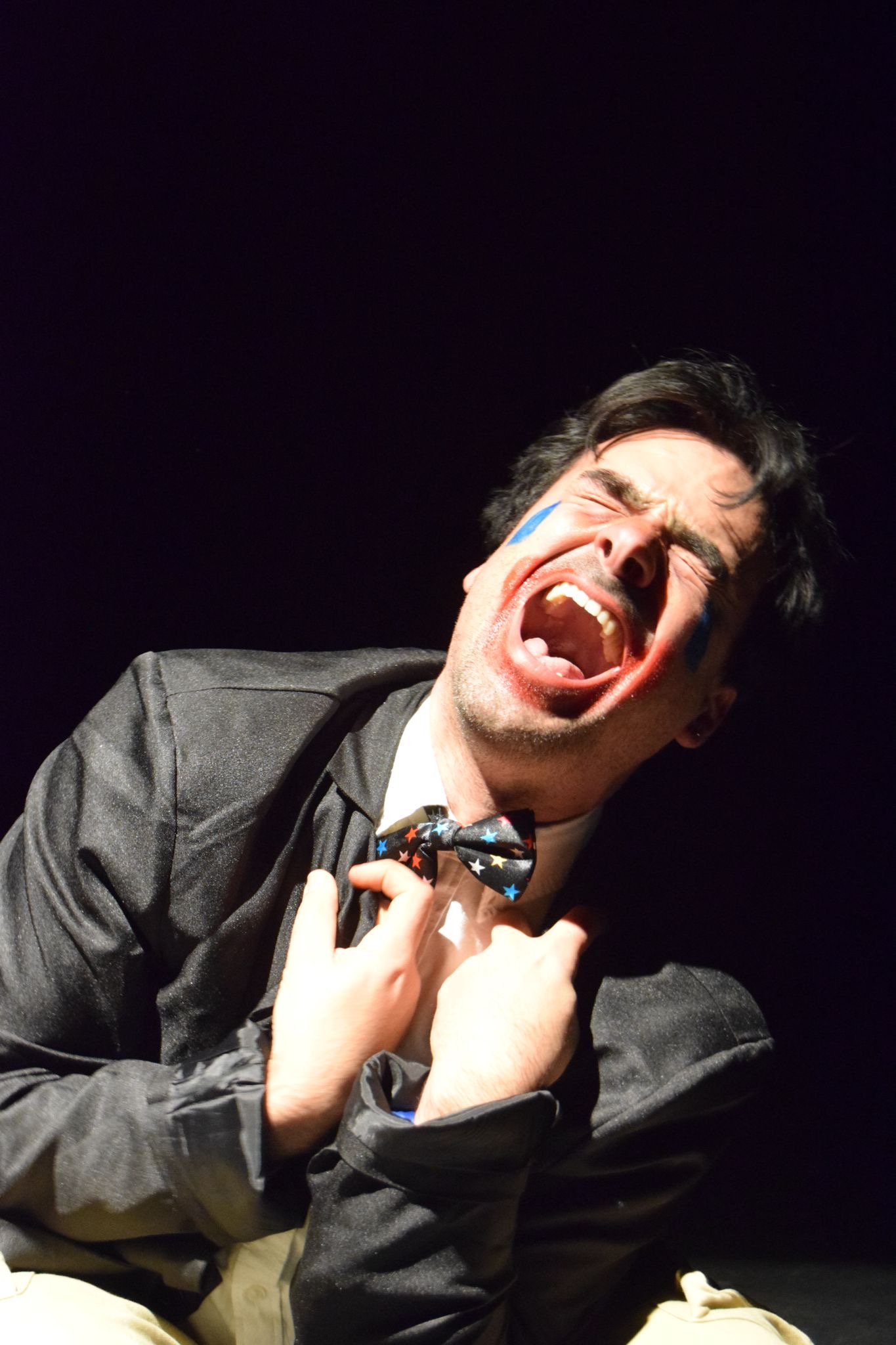
First up is Clown Divorce, written by Russ Russell and directed by Sarah Docherty. We first meet Clown (Chris Veteri) as he struggles to push a suitcase across the stage. The visual gag is funny precisely because of its predictability: as the drawn out routine builds to its inevitable conclusion, the laughs it receives are very well-earned. Along the way, we begin to notice small details. Clown isn’t wearing any shoes, his socks have blood on them – and where is his red nose? The clue is in the title. Clown has recently divorced, and has lost half of his identity in the process…

Next, we have Wish Me Luck by Melissa Ainsworth. Cassie (Hannah-Mae Engstorm) has just been dumped and is contemplating jumping in front of a bus. Not that she wants to kill herself, mind. She just wants to grab her ex’s attention. But passer-byJamie (Jamie Cowan) isn’t about to stand by and watch it happen. Not after everything he’s been through… Directed by Adele Tunnicliff, WML has an intriguing premise, but needs more time to do justice to the complex issues it raises.

The final piece of the first act is Ryan Lithgow’s three-hander Tit for Tat, starring Veteri (again) as Nathan, Stan Ross as Darcey and Samuela Noumtchuet as Ellie. Under Cormac Myles’ direction, this is a tense dissection of a relationship, the two men veering from hurt and hostility to an uneasy admission that their anger stems from a place of love. However, Noumtchuet is under-used as Ellie: the character’s sudden, unexpected appearance ought to herald a change in pace or tone, but the men’s dialogue continues in much the same vein as before, as they rehash their past.

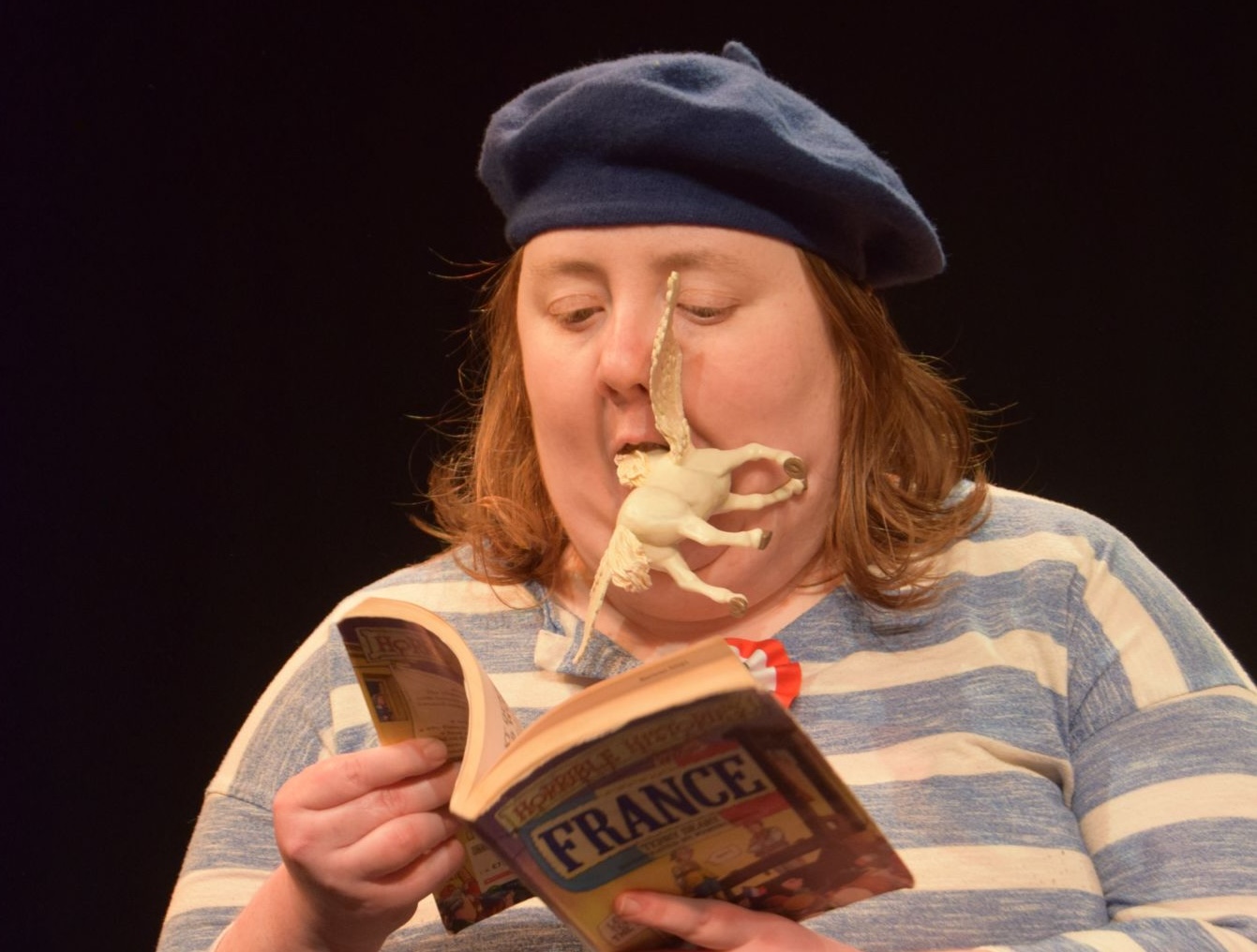
The standout piece comes after the interval: Emma McCaffrey’s funny and heartbreaking monologue, La Solitude, directed by Becca Donley. We’re well aware of McCaffrey’s prowess as a performer (we have seen them in Lung Ha’s Castle Lennox and Stella Quines’ Disciples) but this is our first experience of them as a playwright and I suspect it won’t be the last. The piece is beautifully written with just the right amount of levity to carry its serious points. At once laugh-out-loud funny, poignant and provocative, this is an intensely thought-provoking play. McCaffrey is Lee, a lively, engaging young woman, who – like McCaffrey – has autism and learning difficulties. We first meet her as a child, eight years old, receiving a diagnosis she doesn’t understand and which nobody explains to her. All she knows is that it makes her parents cry. As a teenager, she is isolated at school, infantilised by teachers and support workers, unable to make friends. And things don’t improve when she reaches adulthood: Lee can’t live independently, but that doesn’t mean she’s a child; it doesn’t mean she doesn’t want a job, a social life, or – heaven forfend – a love life. Why shouldn’t she?

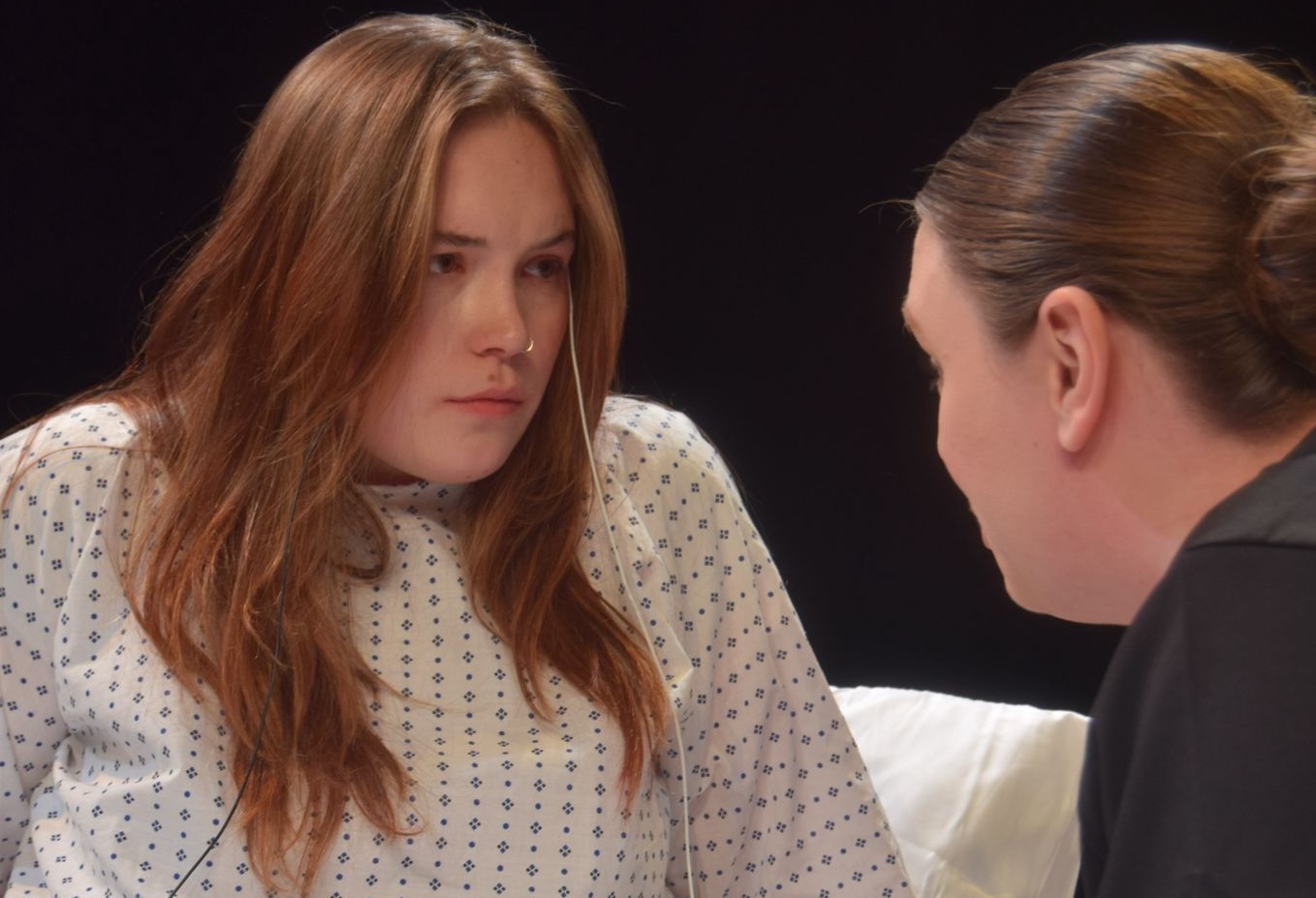
Last up, we have Defective, written and directed by Not So Nice’s own AD, Grace Ava Baker. We’re in the near future and Abigail (Indigo Buchanan) has just given birth. The Assessor (Eleanor Tate) has some bad news… With a premise akin to Minority Report, Defective explores the idea of original sin from a mother’s perspective. Is nature really so much more important than nurture? What price are we prepared to pay for a safer society? And whose word should we accept about our children’s destiny? Although the ending is a little muddled – without giving too much away, I don’t understand what Abigail does with that syringe – this is a compelling piece, raising some important questions about autonomy.

All in all, this is an thoroughly entertaining evening, a welcome antidote to all the red roses and slushy poetry.

4 stars

Susan Singfield

Alas! Poor Yorick

08/04/25

Studio Theatre, Edinburgh

As the name suggests, Alas! Poor Yorick is a reimagining of Hamlet, which centres on the minor characters of the gravediggers, those fellows of infinite jest who seem to revel in making the simplest actions long and needlessly complicated. John Gorick (as well as rhyming nicely with Yorick) doubles as the first gravedigger and a recalcitrant donkey, forever chasing an elusive carrot. Jon Haynes plays his assistant and (at one point) Hamlet himself, eager to orate over the burial place of the long-deceased jester, even if he does keep picking a soliloquy from the wrong blooming play.

Ridiculusmus enact their long-established brand of clowning, a Godot-like exploration of repetition, occasionally punctuated by absurd observations and deliberately naff jokes, though it must be said that tonight’s performance isn’t as sprightly as I would like, the extended riffs on the futility of existence feeling a little too creaky for comfort.

In the latter stages of the narrative, the arrival of players from the Lung Ha Theatre Company do lend the piece a splash of vigour and a startling change of pace. Emma McCaffrey plays a priest with an unGodly liking for the bottle, while Gavin Yule offers an interesting spin on Laertes. We’ve seen these performers in several very different productions over the years and their versatility is impressive.

If there’s a sticking point here, it’s that the clowning is a little muted and reserved and I’m not convinced that it quite comes off – and the vivacity of the final section only serves to highlight this.

Still, it’s always interesting to explore the possible backstories of Hamlet’s minor characters, and those particular Shakespearean fools/gravediggers will never seem the same again.

3 stars

Philip Caveney

Castle Lennox

31/03/23

Lyceum Theatre, Edinburgh

The titular Castle Lennox is a hospital, but not as we know it. Places like this – providing long-term residential care for people with learning disabilities, shutting them off from the outside world – no longer exist. Here, playwright Linda McLean explores the pros and the cons: the deep, affecting friendships forged and the toxic regime, rife with bullying.

It’s 1969 and teenager Annis (Emma McCaffrey) is proving too much of a handful for her stepmother (Fletcher Mathers). Annis is lively, independent and full of fun, and she also has a learning disability, which means she’s eligible for enrolment at Castle Lennox. Simultaneously entranced and terrified by its fairytale appearance, Annis enters with hope as well as trepidation. But the staff nurse (Mathers again) takes against her, and – as the years tick inexorably by – Annis’s spirit seems to be quashed. Thankfully, there are also some moments of joy, such as her tentative romance with fellow patient, William (Gavin Yule) – but is she too institutionalised to cope when, twenty years later, Castle Lennox finally closes down?

Castle Lennox, directed by Maria Oller, is a joint production between the Lyceum and Lung Ha, Scotland’s leading theatre company for learning disabled actors. It’s a superb example of how empowering and inclusive drama can be, a cleverly-woven narrative that both supports and enables its fine cast, as well as engaging a sold-out house. McCaffrey shines in the lead role, but fellow actors Yule, Emma Clark (Jo) and Nicola Tuxworth (Marie) also stand out, the latter clearly relishing her devilish character.

But, although the individuals are great, it’s the choral scenes that really make this piece. Movement director Janice Parker creates a bold dynamic, evoking the cheerful chaos of the laundry and Saturday tea parties, and the performers are all absolutely on their game, singing and dancing with gusto and aplomb. BSL interpreter Rachel Amey is nicely integrated into the production, subtly assuming the role of Annis’s dead mother, reassuring her daughter when she’s feeling low.

Karen Tennent’s nifty set places us first in an enchanted forest, where a grand gateway yields to an altogether more prosaic and clinical space, where white curtains segregate the patients from outsiders – and from each other. The costume design (by Alison Brown) also helps to locate us both in time and place, and I like the way Annis’s clothes become drabber as the institution wears her down.

All in all, Castle Lennox is a delight, well-deserving of the standing ovation it receives tonight.

4 stars

Susan Singfield