Longlegs

Keeper

22/11/25

Cineworld, Edinburgh

In 2024 Longlegs established Osgood Perkins as a horror auteur. If 2025’s The Monkey felt more like an audacious splatter comedy than anything else, it still delivered a fresh approach to his chosen genre. Keeper is perhaps closer in tone to the first film, a brooding atmospheric piece that takes its own sweet time to offer the viewer any real clues as to what’s actually going on. For reasons best known to Cineworld, it’s only offered in a late night screening, but I’m interested enough by what’s gone before to seek it out.

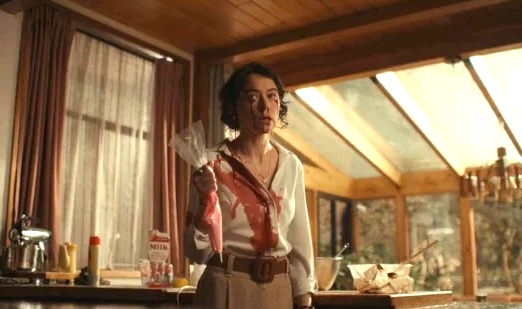
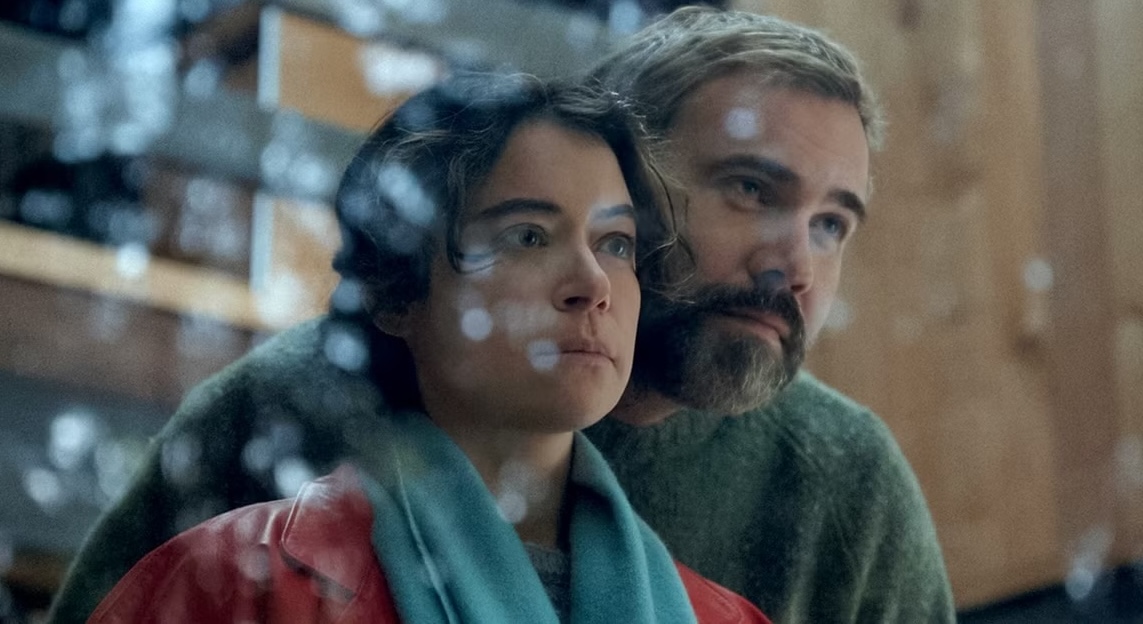
Liz (Tatiana Maslany), an artist, and Malcolm (Rossif Sutherland), a doctor, have been going out together for a year and, as a treat, he takes her to his secluded cabin in the woods for a leisurely weekend. As ever in these scenarios, Liz has no qualms about accompanying him, seemingly unperturbed by the fact that, despite being with him for quite some time, she really doesn’t know very much about him.

When they arrive, a chocolate-smeared package is waiting for them. Malcolm explains that the cabin’s ‘caretaker’ has baked them a special cake as a welcome present. Liz is understandably dismayed to discover that the cabin isn’t quite as remote as she’s been led to believe. There’s another one nearby, which – Malcolm explains – belongs to his cousin, who he rarely ever speaks to. But shortly thereafter, Darren (Birkett Turton) pays them an unscheduled visit and turns out to be a smirking, obnoxious creep. He’s accompanied by Minka (Eden Weiss), a young model who Darren claims can’t speak a word of English. But in a rare moment when they’re alone, Minka warns Liz – in English – not to eat the cake.

But Malcolm is insistent that she should sample a piece – it would be rude not to, he tells her – so she complies and, later, waking in the night, finds herself compelled to sneak downstairs and devour the rest of it…

Keeper is a weirdly compelling story written by Nick Leppard and inspired, I suspect, by the myth of Bluebeard. This is a film that exerts a powerful sense of dread throughout, one that chooses to derive its chills from things only half-heard and half-seen. Unexplained shadows move inexplicably across a scene, blurred visions exist somewhere between sleep and wakefulness and occasionally we’re unsure of what’s actually happening and what belongs in Liz’s dreams.

What is that out-of-focus shape lurking in the background of a scene? Who is that talking somewhere upstairs? And who are the mysterious women from different time zones who we keep catching glimpses of? Whoever they are, they’re clearly not happy.

Perkins handles the various elements with considerable skill and, for the first hour, manages to keep this pressure cooker of a tale bubbling nicely – but an attempt in the final third to offer a coherent explanation for what’s actually going on places the story in the realms of folk horror and is arguably not quite as assured as what’s gone before. 

Still, this is nonetheless big steps ahead of the usual slice-and-dice-cabin-in-the-woods fare we’ve seen so many times before and, even if I don’t get home till after midnight, it’s worth the price of admission. News that Perkins has another film arriving shortly confirms that he’s not one to rest on his laurels. I’ll be interested to see whatever he comes up with next.

3.8 stars

Philip Caveney
The Monkey

23/02/25

Cineworld, Edinburgh

Director Osgood Perkins scored a palpable hit last year with Longlegs, a slow-burn horror that simmered with an overpowering sense of dread. So the news that he is helming an adaptation of Stephen King’s The Monkey (itself inspired by WW Jacobs’ classic short story, The Monkey’s Paw) leads me to expect that this will deliver more of the same. So I’m taken somewhat off-balance when the film promptly reveals itself as an absurd black comedy with lashings of gore. The result is never particularly scary, but it does prompt a surprising amount of incredulous laughter.

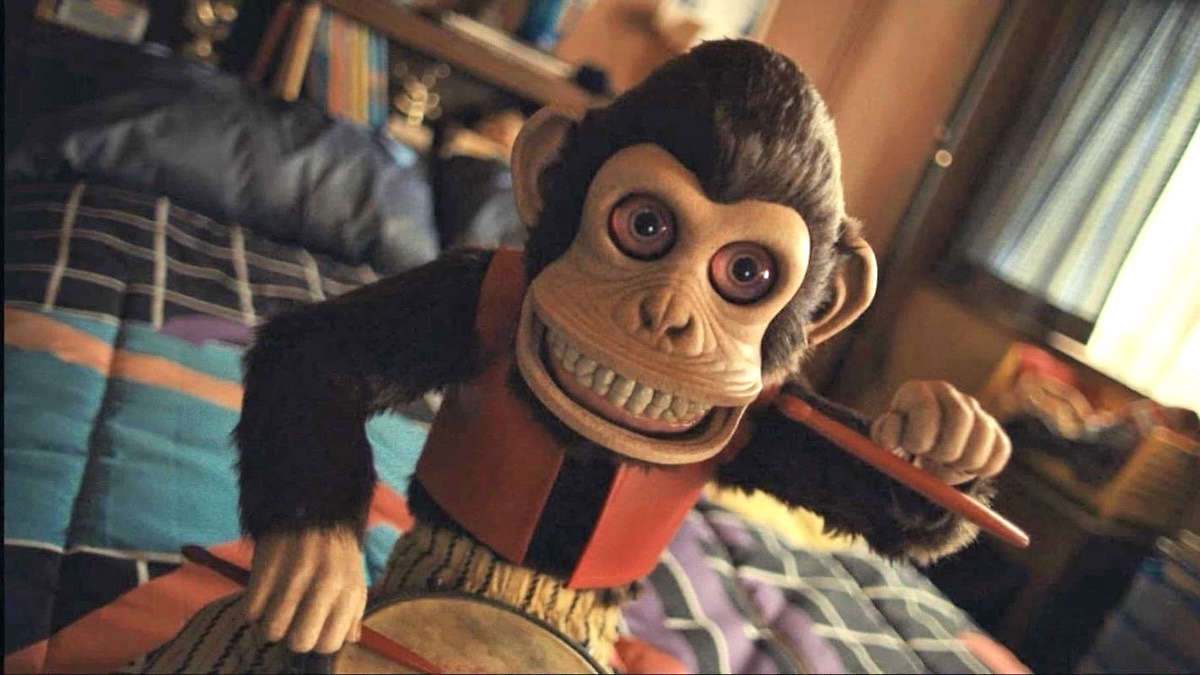
It begins in flashback, as the father of twin boys, Hal and Bill (both played by Christian Convery), attempts to gift an unwanted ‘toy’ to a thrift store, with unexpectedly gruesome results. The toy in question is the titular simian, a wind-up automaton that plays a drum to the tune of ‘I Do Like To Be Beside the Seaside.’ Once activated (by turning the key in its back), it has a nasty habit of ensuring that somebody in the immediate vicinity will get horrifically mangled, for no apparent reason other than it’s a nasty little pest who enjoys doing that kind of thing.

After their father ‘goes out for cigarettes and never returns,’ Hal and Bill grow up under the care of their understandably disturbed mum, Lois (Tatiana Maslany). One night, when searching through their absent father’s belongings, the boys discover the monkey in its box. Probably not a good idea to wind the key, you might think, but hey, kids will be kids…

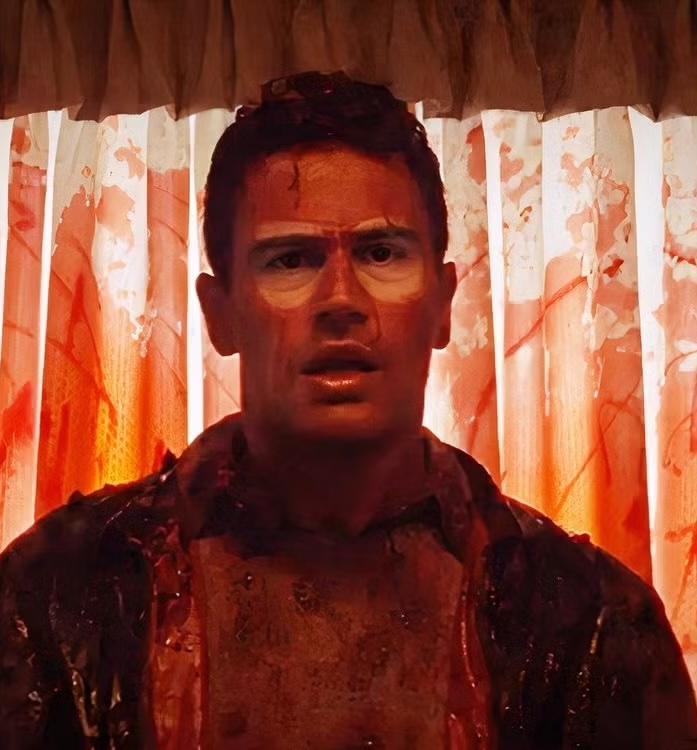
By adulthood, the two brothers (now played by Theo James) have drifted apart. Hal is the father of a teenage boy, but after his marriage break-up, only gets to spend one night a year with Petey (Colin O’Brian) and – wouldn’t you know it – that one night is when the malevolent monkey chooses to make its timely reappearance…

There’s much I like about this film: Nico Aguilar’s dark, brooding cinematography is suitably eye-catching and the gnarly splatter effects – created by no less than sixteen people in the arts department – take a wonderfully Heath Robinson approach to the task of dissembling human bodies. Much of the resulting mayhem is entertaining. The monkey itself is an engaging creation, positively oozing menace in every shot. But not everything in the production is quite so positive.

While a host of interesting characters manage to pop up to deliver Perkins’ sparky dialogue, no sooner have they appeared than they’re being messily spread across the screen and the effect is that this feels like a film that’s almost entirely peopled by bit players (or players in bits?). Perkins himself cameos as ‘Uncle Chip’ but gifts with only one line of dialogue before he gets turned to mush, while Elijah Wood doesn’t fare much better as Petey’s stepfather, Ted, though – to be fair – he’s one of the few characters who actually survives. Furthermore, a sub-plot featuring a man called Thrasher (Rohan Campbell) is so clumsily inserted into the action that for a while it only serves to confuse me, particularly when the actor is also obliged to play two characters.

I’m clearly not the only one with misgivings. Half an hour into the screening, three viewers get up and march determinedly out of the auditorium. Those with a predilection for comedy in a deep shade of anthracite may (like me) laugh out loud at what they’re watching and will possibly revel in the WTF final scenes.

But The Monkey is a tricky little beast and one thing is for sure: it won’t be for everyone.

3.7 stars

Philip Caveney

I Saw the TV Glow

31/07/24

Cameo Cinema, Edinburgh

I Saw the TV Glow, written and directed by Jane Schoenbrun, is a intriguing independent film. It begins in the late 1990s and shares some DNA, I think, with Longlegs, in that it has a powerful sense of disquiet running through its very core, an overpowering sensation that there’s something horribly wrong here, though it’s hard to pinpoint exactly what it is.

Owen (played in the opening sequences by Ian Foreman) is a repressed seventh-grader, living with his mother, Brenda (Danielle Deadwyler), and his strict, overbearing father, Frank (Fred Durst). Owen has been intrigued by trailers he’s seen for a new television show called The Pink Opaque, but it starts at 10.30pm, which is way past his bedtime. At a school event, he bumps into Maddy (Brigette Lundy-Paine) who is reading a book about the show and is clearly obsessed with it. She invites him to stay overnight at her place so he can actually watch an episode and he eagerly grasps the opportunity, telling his parents that he’s having a sleepover with a schoolfriend. The episode he watches blows Owen’s mind and he’s an instant convert to its powers.

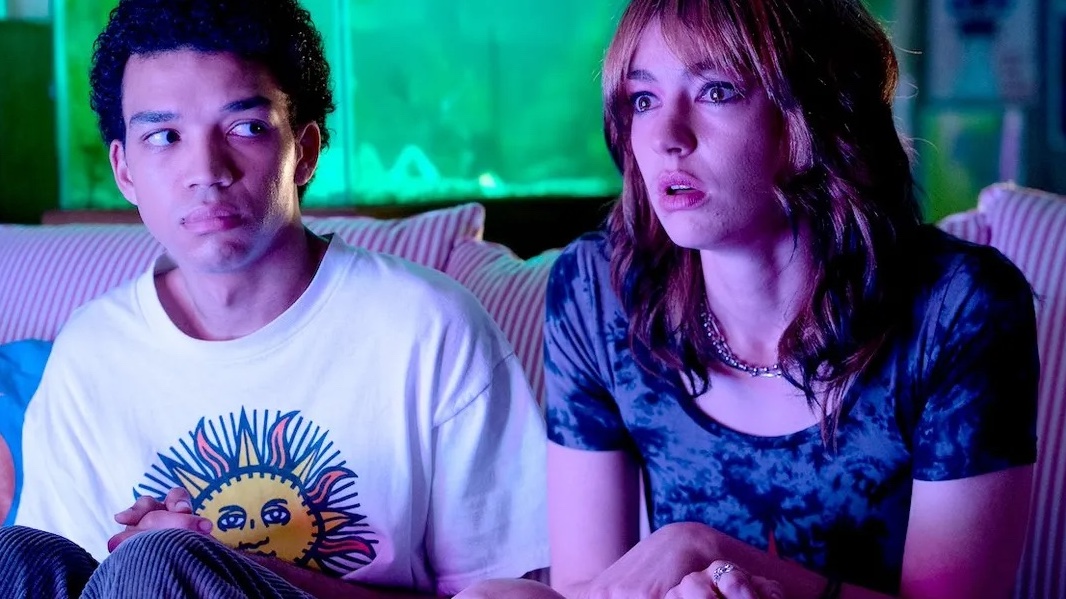
The action cuts to two years later. Owen (now played by Justice Smith) still can’t stay up to watch that show. His mother has died from cancer and his uncommunicative father spends his hours alone in his room, watching his own favourite TV programmes. Maddy starts to videotape episodes of The Pink Opaque and leaves them for Owen to pick up, so he can watch them in secret. And then, some years later, the show is cancelled after its fifth season – and Maddy disappears. Owen doesn’t see her again for a decade…

I Saw the TV Glow is a great big metaphor wrapped up in spooky bright pink trappings. It’s clear from the word go that Owen is unsure about who he is. There’s no romance between the two leads: Maddy makes a point of telling him, at their first meeting, that she is ‘into girls’ – though there’s little evidence to suggest she’s into anything aside from that TV series. Owen takes a dead-end job working in the local cinema, but the whole time he’s thinking about The Pink Opaque, about its cast of characters, who seem to know exactly where they belong in the world. After Maddy’s departure he is adrift: alone, forsaken, barely able to function in a world where he feels buried alive.

This film is all about the power of the images we hook into at an early age: the resonance they have in shaping our lives; the overpowering desires we have to be a part of them. Schoenbrun is trans and there are obvious parallels here with her lived experience, but anyone who has been infatuated with something in their youth – or felt like a a misfit – will be able to identify with the undercurrents that bubble away beneath the film’s dark, brooding surfaces. The occasional excerpts we are offered from The Pink Opaque are bizarre, dreamlike sequences, that put me in mind of early David Lynch.

As the years pass, Owen drifts – apparently, he acquires a family of his own, but we’re only told about them, we never see any of his home life. He is still essentially alone and when, years after its demise, he is finally able to stream The Pink Opaque on demand, he is bewildered by what he sees.

This is a compelling, brooding film, that will stay with you long after its heartbreaking conclusion – and Schoenbrun is surely a director to watch.

4.6 stars

Philip Caveney

Longlegs

12/07/24

Cineworld, Edinburgh

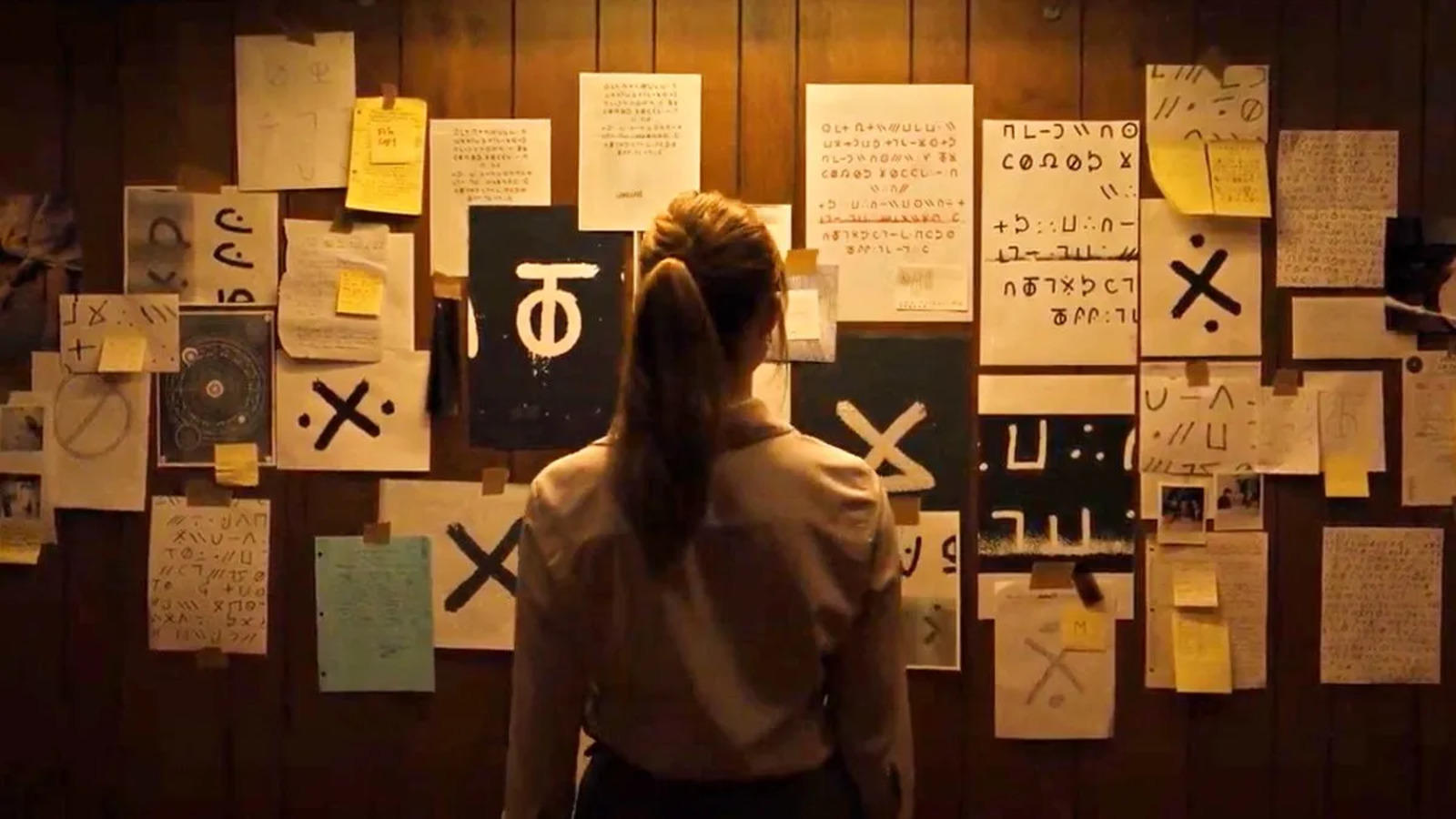
A troubled FBI agent attempts to track down a mysterious killer. A series of bizarre clues links the killings to a whole list of young girls who have their birthday on the 14th of any given month. And the events play out in the remote backwoods of Oregon, where the landscape seems laden with the threat of unspecified terrors.

On paper at least, Longlegs has all the hallmarks of that increasingly common syndrome, Seenitallbefore. So it’s heartening that writer/director Oz Perkins has somehow managed to take all these familiar ingredients and cook up something that feels entirely original: a dark, smouldering slow-burn of a film that’s imbued with a relentless sensation of mounting dread.

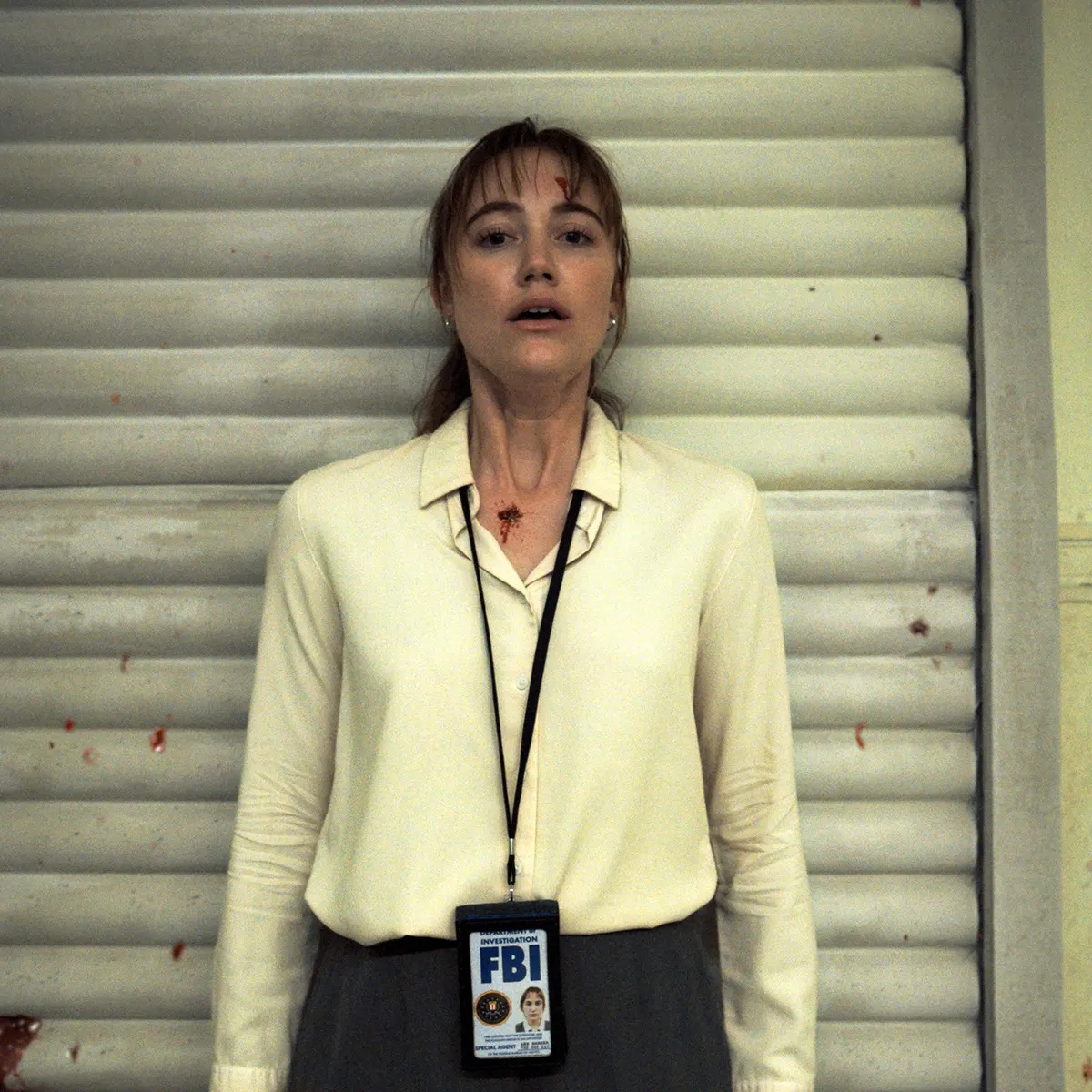
It’s the 1990s: there are photographs of Bill Clinton on the FBI’s office wall and mobile phones haven’t happened yet. Agent Lee Harker (Maika Monroe, last seen by B&B in the criminally ignored Watcher), is part of a team investigating a number of seemingly unrelated murders that go back to the 1970s. Her boss, Agent Carter (Blair Underwood), keeps tying to motivate her, but she is unresponsive to his approaches. She’s a quiet, brooding sort of person, with no apparent social life and strong links to her mother, Ruth (Alicia Witt), a backwoods bible-basher, who appears to be a total recluse.

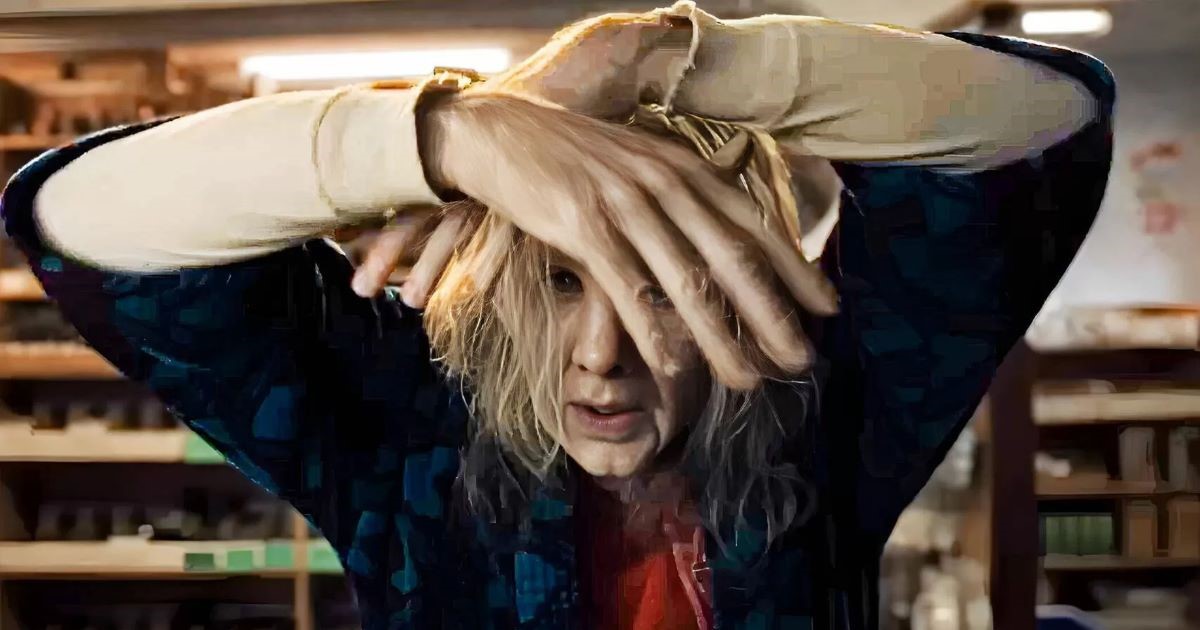
It’s hardly a spoiler to mention that, back in her childhood, Lee had a bizarre encounter with the titular villain of the piece, played by a mesmerisingly scary Nicolas Cage, layered in prosthetics and sporting a long blonde wig. As Lee begins to discover a chain of bewildering clues, she starts to suspect that this man is somehow involved in all of those apparently random killings, even though evidence suggests that he was never there at the time…

Longlegs defies rational explanation. This is a film that exudes a powerful sense of disquiet from the opening scenes onwards, and manages to hold me spellbound throughout. A tangible sense of fear spills from every image and, unlike some recent horrors, this doesn’t depend on explicit carnage to make its point. Sure, there is violence here, but most of it happens offscreen, Perkins tapping into the age-old truth that what really scares an audience is what it doesn’t quite see. And there’s some stuff about worryingly life-like dolls that really amps up the unease.

If the eventual explanation for what’s been happening is decidedly off-the-wall, it matters not because if the raison d’etre of Longlegs is to unsettle the viewer ( and I strongly suspect that it is) then it delivers on that premise big time.

Looking back to our review of Watcher in November 2022, I note that I lament the fact that we are the only two viewers in the screening. Happily, that’s not the case with this one, which is well attended, probably because of the many five-star reviews the film has garnered from independent horror sites. I enjoy (if that’s the right word) the movie’s uncanny ability to reinvent and reinvigorate some decidedly tired genre tropes, to produce a film that feels like it’s actually breaking new ground. Monroe is compelling as the tortured protagonist and Cage, once again, submits a performance that is spectacularly unhinged. Wait till you hear him sing!

Longlegs won’t be for everyone. Those of a nervous disposition might prefer to look elsewhere. But those who like to shudder will want to check this one out.

4.6 stars

Philip Caveney