Liz Kettle

Dracula: Mina’s Reckoning

11/10/23

Festival Theatre, Edinburgh

Bram Stoker’s Dracula is one of those novels, like Alice in Wonderland, that is more famous for its enduring imagery than for its story. Its iconic characters are part of the fabric of our culture, recognised instinctively, even by those who have never so much as picked up the book. Such tales are ripe for retelling, like ciphers waiting to be reshaped for our times.

Into that space steps Mina’s Reckoning, a reimagining of the world’s most famous vampire, written by Morna Pearson and directed by Sally Cookson. This all-female and non-binary production redresses the gender imbalances in the source material: here, the women are elevated from mere victims and damsels-in-distress and are actually afforded some agency.

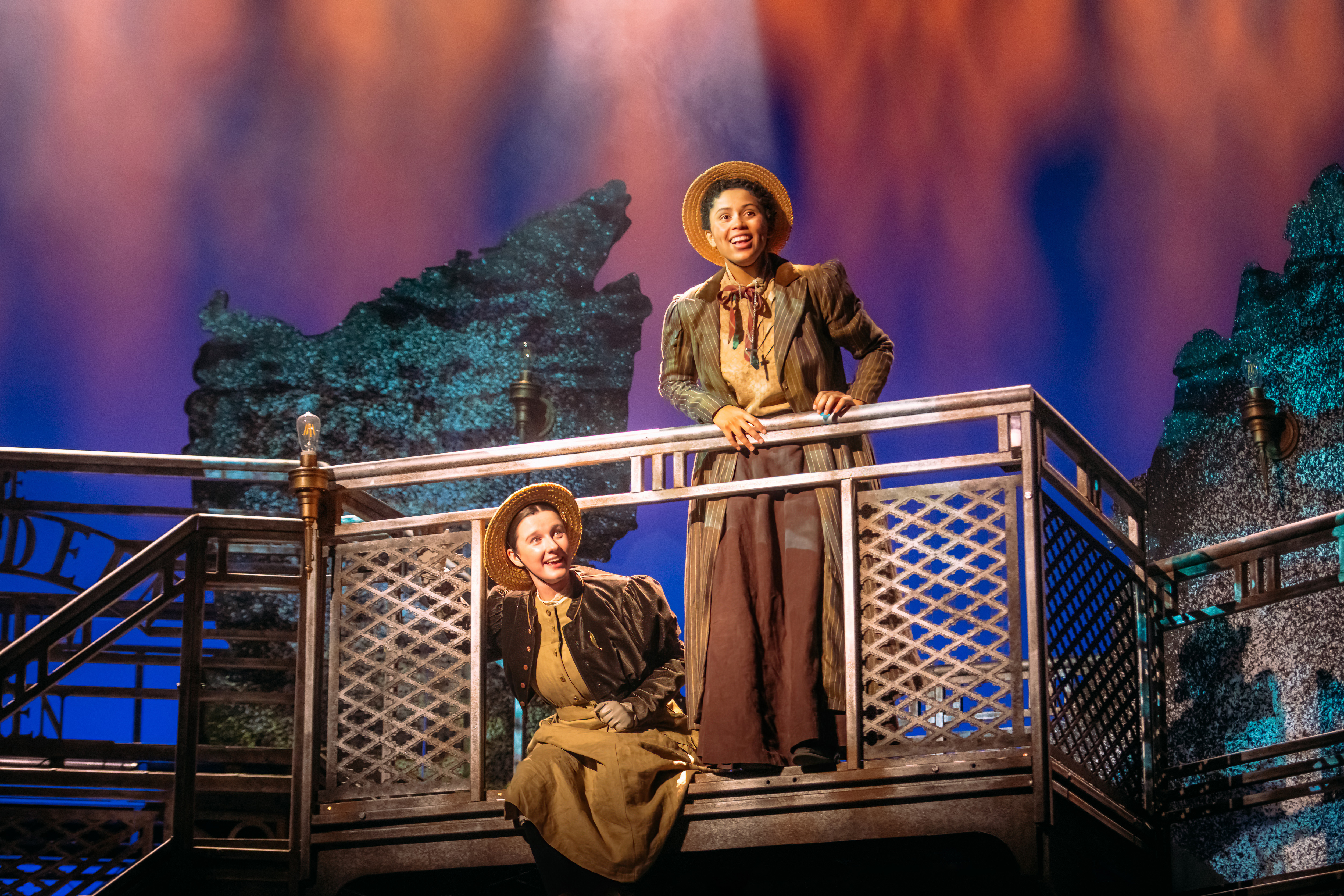
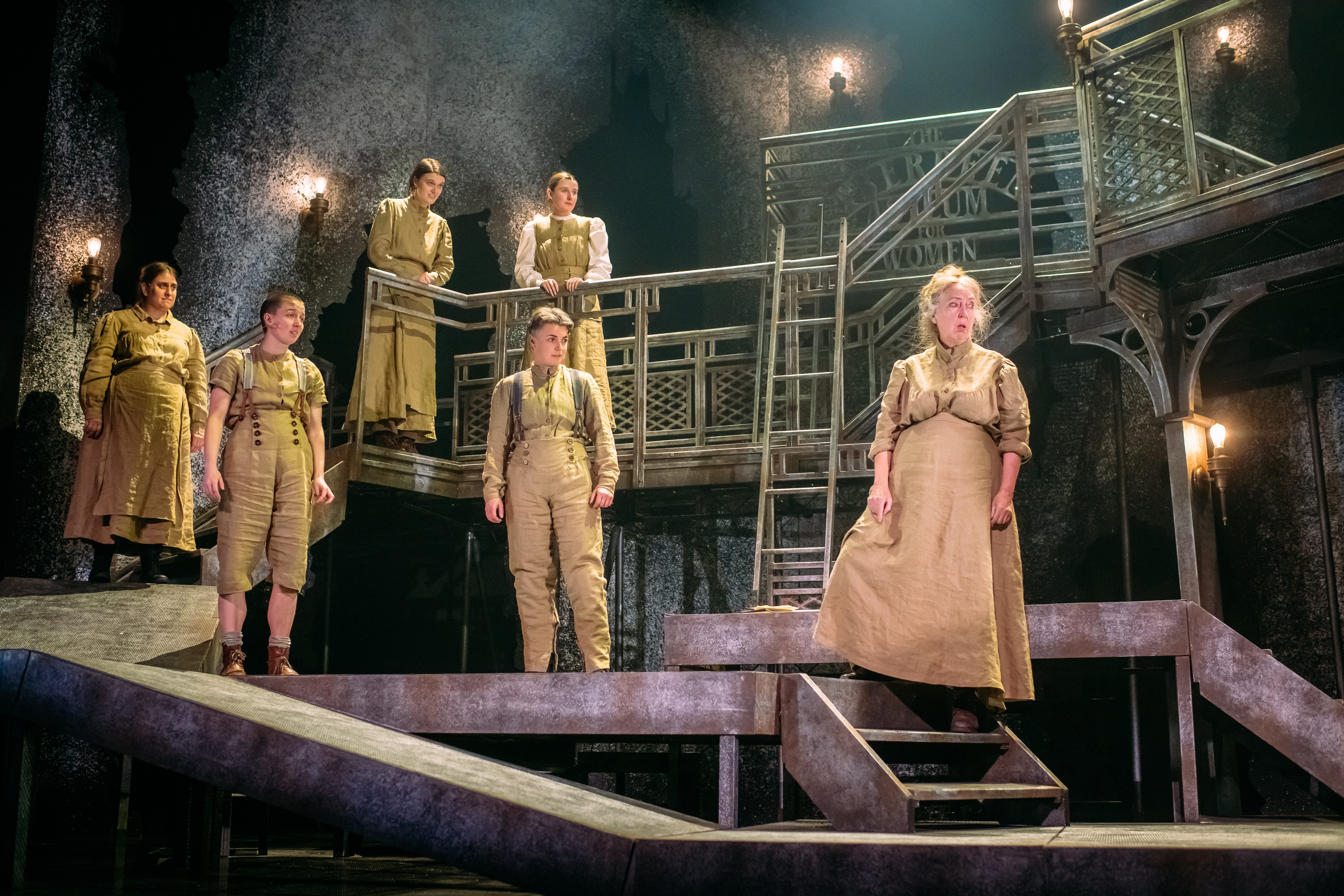
Whitby is out and north-east Scotland is in, justified by the fact that Scots writer Emily Gerard provided much of the inspiration for Stoker’s novel: it was from her work that he learned about the Romanian superstitions that inform some of the most compelling ideas in his book. More specifically, we’re in Cruden Bay, in a women’s asylum, where some of the characters speak in the Doric dialect. The Scots angle works well, the rhythms of the language creating an earthy poetry. The play opens with Mina (Danielle Jam) banging on the asylum door, demanding to be let in. She has Jonathan’s journals and wants Dr Seward (a wonderfully comic Maggie Bain) to help her ward off the evil that’s on its way.

The long first act sticks pretty closely to Stoker’s tale, albeit with more jokes and some judicious pruning (the boring suitor sequences are gone, thank goodness, and so are the details of Jonathan’s interminable journey). The second, shorter, act is much better, precisely because this is where the creative reimagining takes place, allowing Mina to come into her own. It’s a shame that the piece skews this way: it feels unbalanced. I’d like a shorter set-up and a longer unravelling.

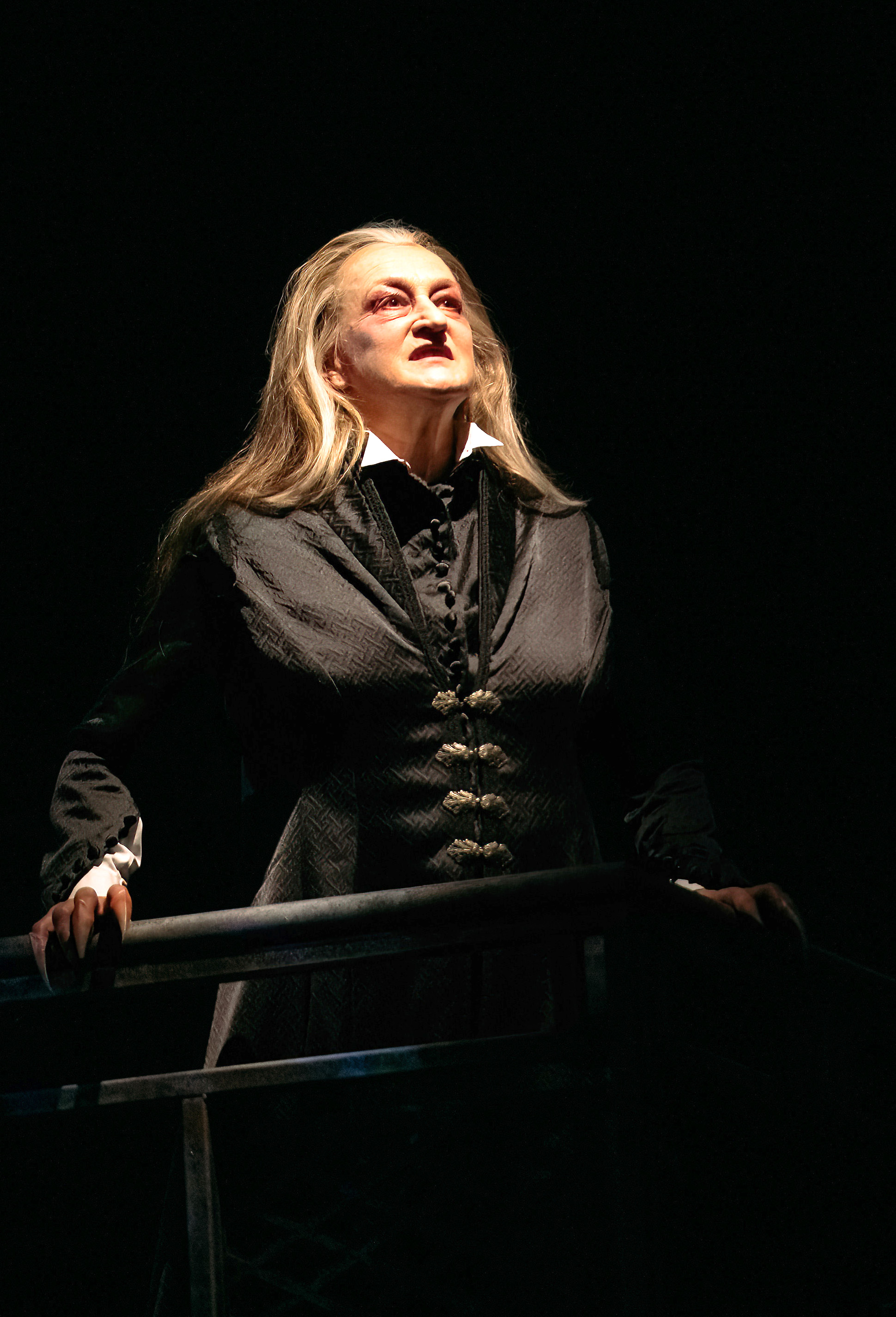
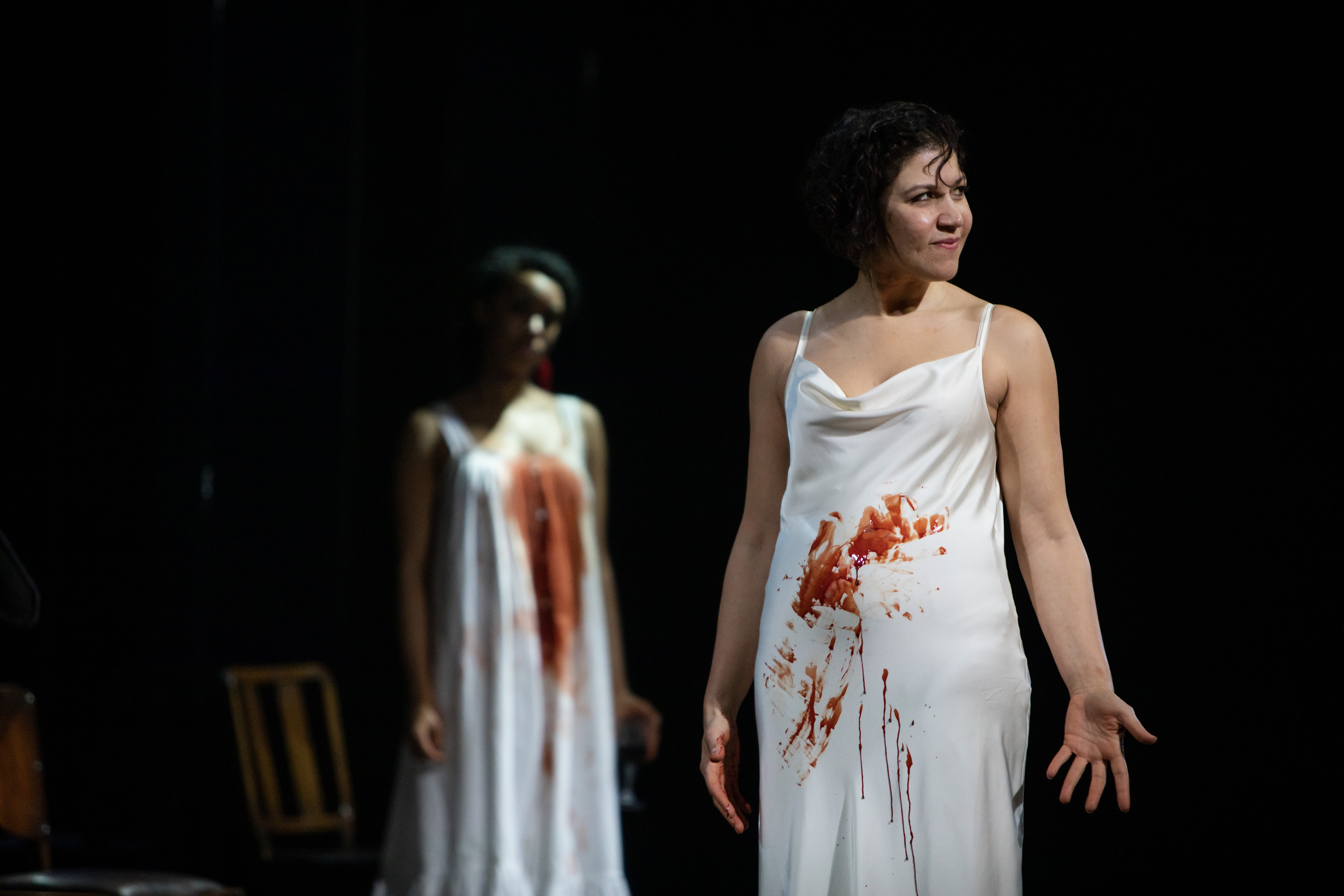
It’s a great idea to recast Dracula as a woman and Liz Kettle clearly relishes the role. She’s a bold presence, at once attractive and repellant, exactly as the Count should be. Here, the blood-sucker is more nuanced than her original incarnation, both supervillain and saviour. As Mina seals her Faustian deal, we recognise what Dracula is offering her, and understand exactly why she makes the choice she does.

Kenneth MacLeod’s set is both the production’s strength and its weakness. It’s clever and imposing, evoking the chillingly austere asylum as well as the grand gothic castle – all staircases and hidden corners – and I like the use of Lewis den Hertog’s video projections and Aideen Malone’s lights to stain the walls red with blood, turning them into journals, then night skies, then stormy seas. However, the set’s cage-like qualities – the bars and rails imprisoning the women – also create a sense of distance, so that it’s hard to feel close to the characters and to empathise with them. What’s more, it makes the whole play less scary because we’re not immersed in the ghoulish goings-on.

Benji Bower’s music is wonderfully eerie and evocative but the sound drowns out the dialogue at times, which is a shame, as it obscures some of the finer details of the plot. Likewise, the ensemble work is excellent, but comes at the expense of the individual characters, as the inmates of the asylum blend together.

Albeit a little uneven, there’s a lot to like about this NTS and Aberdeen Performing Arts production, in association with Coventry’s Belgrade Theatre. The powerful image of Kettle, striding the ramparts – grey hair flowing, coat tails billowing – is one that will stay with me for a long time.

3.8 stars

Susan Singfield
Macbeth (An Undoing)

08/02/23

Lyceum Theatre, Edinburgh

Unlike the monarchs he wrote about, Shakespeare has reigned supreme for more than four hundred years: his plays, rich with examples of human fallibility, are endlessly relevant. But you’d think, wouldn’t you, that we’d run out of different ways to retell the same stories? I mean, the first time I ever saw Macbeth, way-back-when on a sixth-form theatre trip, it was set in a concentration camp (courtesy of Braham Murray at Manchester’s Royal Exchange). Next, I fell in love with Penny Woolcock’s 1997 film, Macbeth on the Estate, which transported the action to a maze of contemporary council flats, and I even enjoyed TV’s ShakespeaRe-Told, where chefs James McEvoy and Keeley Hawes killed off their rivals to take over a restaurant empire. More recently, Flabbergast Theatre’s wonderfully physical, visceral adaptation had me hooked, and there’s been a slew of others along the way. What I’m saying is: I know Macbeth. We all know Macbeth. It’s been done, right? What else is there to say?

And then along comes Zinnie Harris with An Undoing – and the whole thing is turned on its head.

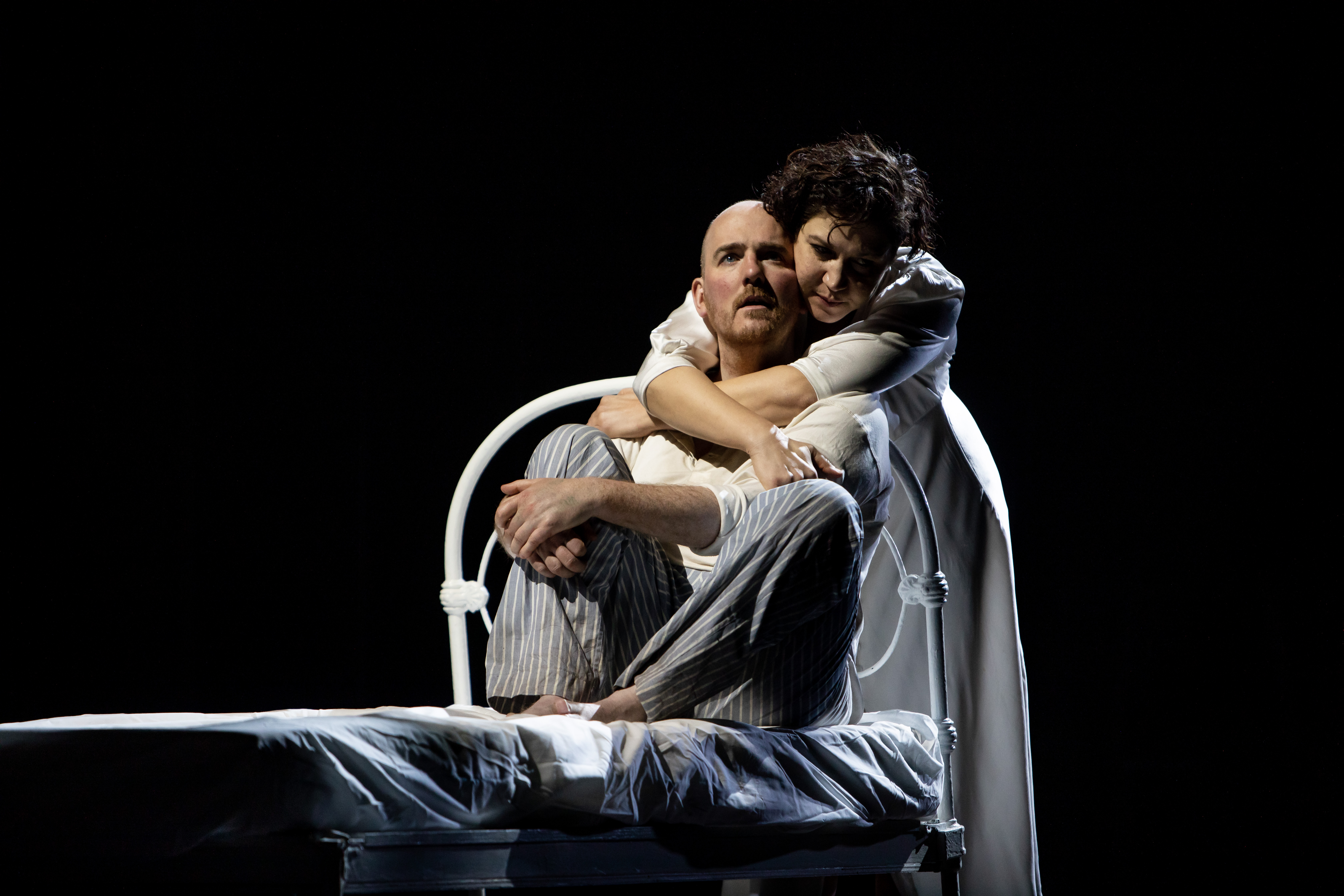
Macbeth (An Undoing) starts from a simple premise: what happens if Macbeth and Lady Macbeth follow their natural trajectories? Because, let’s face it, although Lady M is arguably the best of Shakespeare’s female characters, she’s also the most frustrating, initially a force to be reckoned with – an interesting, complex woman – before disappearing for an age and then returning broken, for a brief goodbye, with very little to tell us why. What if, asks Harris, it’s Macbeth who crumbles? What if it’s Macbeth – whose conscience troubles him from the start – who unravels, while his wife continues unabashed, for a while at least, determined to make their plan succeed? It makes perfect sense, given their starting points.

At first, when the curtains open on a blank stage, and we’re treated to servant/witch Carlin (Liz Kettle)’s fourth-wall-breaking opening gambit, I think perhaps this will be a relatively straightforward version of the play, with just a little mischievous tinkering here and there. After all, “This story will be told, the way it has always been told. What use is it otherwise? The hags on the heath. The woman who went mad. The man who became a tyrant,” she tells us. And, for the first half, that’s sort of what we get: Macbeth at a gallop, mostly in the Bard’s own words, step-by-step through the plot. There are a few changes: we’re in the 1920s, or the early 1930s perhaps; Ladies Macbeth and Macduff (Nicole Cooper and Jade Ogugua respectively) are reimagined as sisters, and share some revelatory new scenes (An Undoing easily passes the Bechdel test); Lady Macbeth and her husband (Adam Best) don’t just want power for power’s sake – they have a meticulously-planned vision for a utopian Scotland. But, in the main, it’s as it’s always been, so that, in the interval, I find myself musing aloud, “How can there still be an hour and a bit to go? There’s not much story left…”

But then we get to the undoing…

Harris’s adaptation is bold, daring and witty. I love the idea of the witches as servants: it makes perfect sense. They’re the eyes and ears of the house, privy to the paperwork the Macbeths have drawn up, witness to intimate moments and careless asides. Invisible. Ignored. These witches are also a family – in fact, Kettle and Star Penders, along with impressive young actor Farrah Anderson Fryer, form the most functional family we see on tonight’s stage, with clear bonds uniting them. I also like the depiction of Malcolm (Penders again) as a petulant youth, patently ill-equipped for leadership and ripe for exploitation by the ruthless Macduff (Paul Tinto).

But this is, without doubt, Lady Macbeth’s play. It’s the part of a lifetime, and Cooper makes the most of it, imbuing her with strength and vitality – and just a hint of vulnerability. She’s ambitious and single-minded, but never merely cruel or heartless. We believe in her love for her husband and sister, and we believe in her idealism too. She’s angry when the lairds misgender her, referring to her as the King because they can’t conceive of a woman behaving as she does (even though, to be fair, she does ask to be ‘unsexed’). In a well-aimed swipe at other interpretations of the role, she’s also angry at being reduced to her infertility.

The set (by Tom Piper) is simple but extraordinarily effective, with warped mirrors concealing as much as they reveal, offering us multiple perspectives, and highlighting the Macbeths’ interdependence and duality. We’re there too, shimmering in the background, complicit and agog, just as Carlin accuses at the start.

The Lyceum is busy tonight – some of the boxes have even been pressed into use – and deserves to be so for the next month. You’ve probably seen Macbeth, but I doubt you’ve seen anything quite like An Undoing before.

4.7 stars

Susan Singfield