Letitia Wright

The Silent Twins

09/12/22

Cineworld, Edinburgh

The real-life silent twins of the title are Jennifer and June Gibbons, born in 1963, who refused – for years – to speak to anyone but each other. No one really knows why, but there are myriad theories: they were outsiders – the only Black kids in their small Welsh town; they were bullied; one was controlling the other – or, more crudely, they were ‘disturbed’.

Certainly ‘disturbed’ was the verdict of a baffled legal system, which over-reacted to the girls’ teenage crimes of petty theft and arson, and sent them to Broadmoor high security mental health hospital – a place more commonly associated with hardened murderers than wayward kids. How did they get through the eleven long years they spent there?

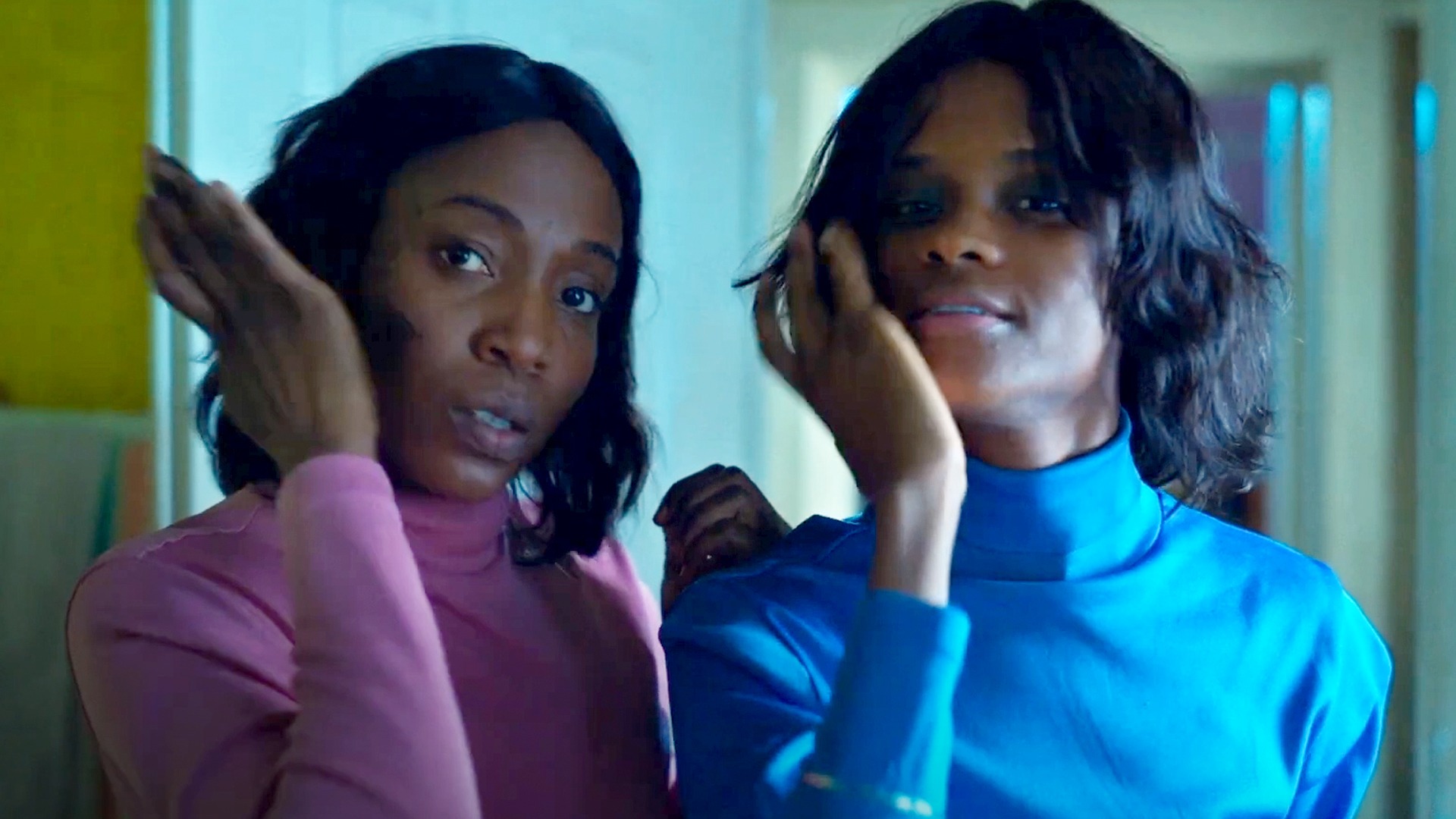
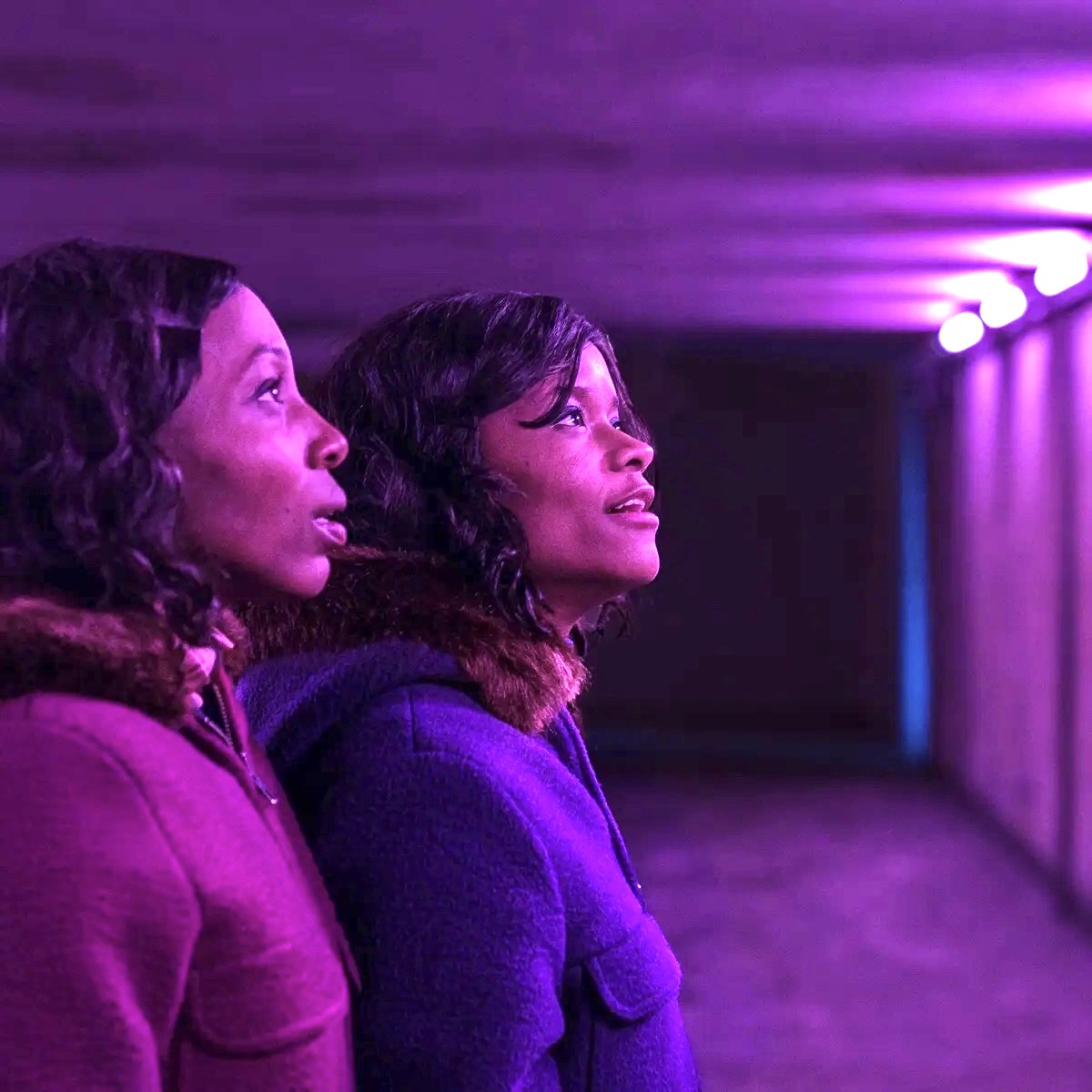
Director Agnieszka Smoczynska shows us how: by retreating into their rich inner lives. In this illuminating biopic, adapted by Andrea Seigel from the book by journalist Marjorie Wallace (played here by Jodhi May), we see that Jenny and June are far from mute and far from short of things to say. They just have a different way of expressing themselves. In reality, their so-called ‘secret language’ was a mixture of Bajan slang and super-fast English, which they used to tell stories to each other; here, their tales are depicted as distinctive animations. The girls are writers, producing countless reams of short stories, poems, even novels, spending their meagre benefits on foolscap, typewriter ink and – eventually – vanity publishing. They refuse to engage with their seemingly lovely family, rejecting any offers of help. Sent to separate schools for kids with special educational needs, they both become further withdrawn, refusing to move or eat, let alone speak. They’re driven by their art: once school is behind them, they realise they need to interact with the outside world – how can they write about romance if they’ve never experienced it? But romance is in short supply in their dalliances with the odious Wayne (Jack Bandeira)…

If only all biopics were as imaginative, engaging and sensitive as this! Jenny and June are not presented here as curiosities, but as troubled young people, let down by a system totally lacking in empathy, keen to other them, to set them apart. We see them as little girls (Eva-Arianna Baxter and Leah Mondesir-Simmonds) and as young women (Tamara Lawrance and Letitia Wright), by turns mischievous and vulnerable, selfish and self-absorbed. The four performances are exemplary, like a house of mirrors, amplifying the twins’ co-dependence, as well as the monstrous cruelty of sending them to an institution destined to destroy them, breaking two butterflies on a barbaric wheel.

Smoczynska imbues the girls’ story with humanity: there is sweetness here, and humour, as well as misery and obsession. It’s a thought-provoking, insightful piece of work.

4.5 stars

Susan Singfield
Death on the Nile

12/02/22

Cineworld, Edinburgh

Kenneth Branagh earned himself a lot of brownie points for the sublime Belfast, but quickly squanders most of them in this, his second Agatha Christie adaptation. While it’s a definite improvement on his previous attempt, Murder on the Orient Express (which suffered from a bad case of too many actors in cameo roles), it still struggles to escape from the suffocating confines of the genre.

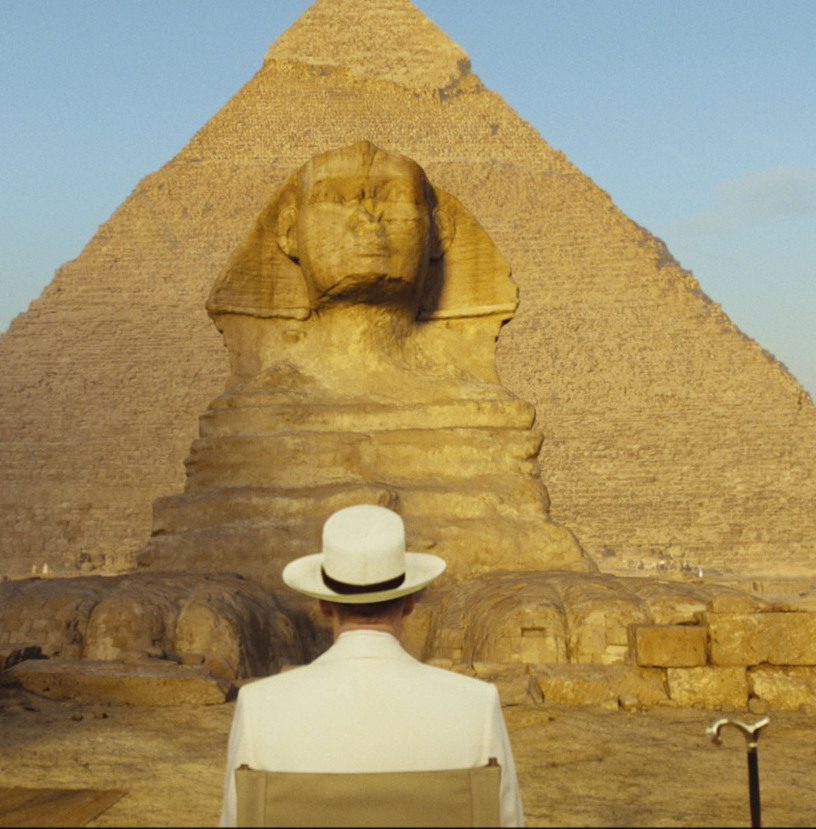
Mind you, it opens with a totally unexpected sequence set in the First World War, where we meet a digitally de-aged Poirot as a solider in the trenches, already flexing his powers of deduction. And then we are offered an origin story for that famous moustache. Interesting…

But all too soon, the action has moved on to 1937 and more familiar territory. Poirot is in a nightclub, fussing over some desserts, listening to blues singer Salome Otterburn (Sophie Okonedo) and watching as a certain Simon Doyle indulges in some rather dirty dancing with his fiancée, Jacqueline de Belfort (Emma McKey). The fact that Doyle is played by the recently disgraced Armie Hammer is, um, awkward, to say the least (and when I reflect that the previous film had a pivotal role for Johnny Depp, it makes me wonder is there isn’t some kind of ‘Curse of the Christies’ going on here).

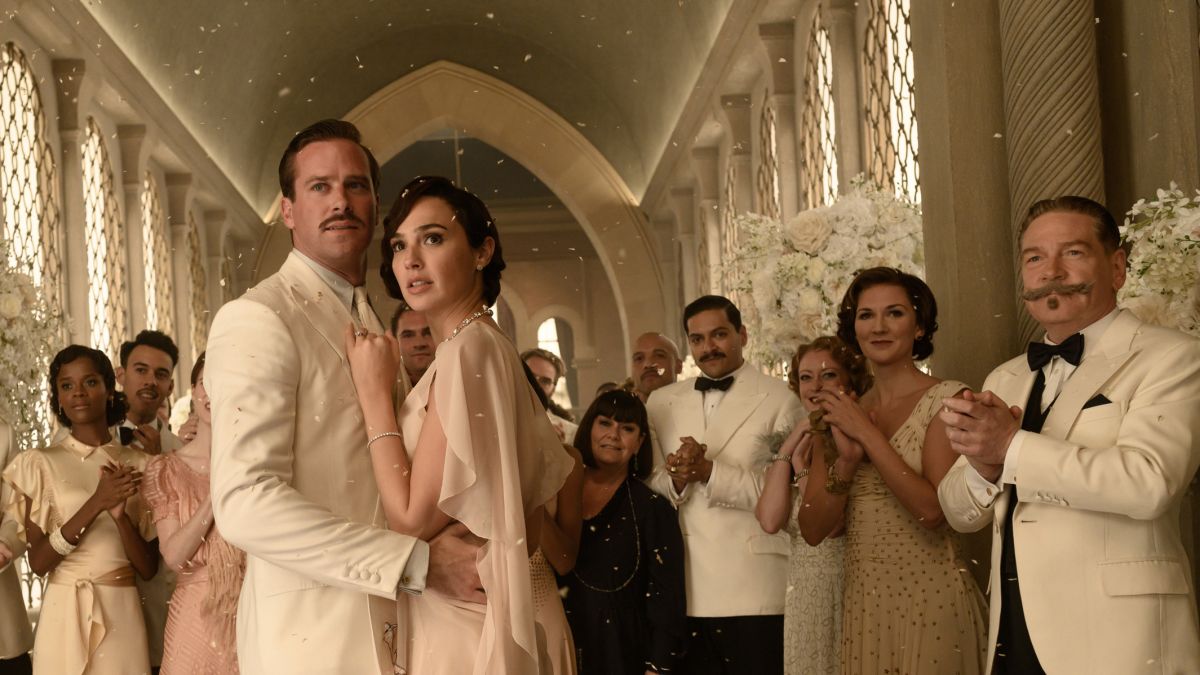
Anyway, six weeks later, Doyle is climbing aboard a cruise ship in Egypt with his new bride… Linnet Ridgeway (Gal Gadot). Things get even more uncomfortable when Jacqueline arrives and spends her time glaring balefully at the newly weds over the lobster and fizzy wine. Honestly, if looks could kill!

Okay, this is Christie territory, so it’s a hardly a spoiler to say that somebody winds up murdered, which puts a proper crimp on the festivities. The perpetrator could be any of the passengers, all of them played by well know faces: Annette Bening, Dawn French, Jennifer Saunders, Russell Brand, Letitia Wright. Place your bets, folks – unless, like me, you saw the 1978 version or have read the book, and already know whodunnit.

Which, I must confess, spoils it somewhat.

It’s all handsomely done and this time around there’s enough focus on the various players to make it feel that they’re more than just cardboard cutouts. Egypt is lovingly recreated in CGI and the shameful opulence of the era is shown in unflinching detail. Here is an age where somebody can throw the contents of a champagne glass into the Nile and declare ‘there’s plenty more where that came from’ while starving people watch in silence from the river bank.

Okay, it was a different time, but at the end of the day, this feels hopelessly antiquated and badly in need of updating. Diehard Christie fans will doubtless tell themselves that Branagh has done his subject proud, and yes, perhaps he has – but I for one will be in no great hurry to see another Poirot movie. Unless, that is, it can offer something more unexpected than an origin story for some facial hair.

3.4 stars

Philip Caveney

Small Axe: Mangrove

20/11/20

BBC iPlayer

The first release in Steve McQueen’s Small Axe series, Mangrove, plays a little like a British version of Aaron Sorkin’s recent American project, The Trial of the Chicago 7. It relates an all-too-familiar story of police persecuting black people, in this case, the proprietors and customers of Mangrove, a West Indian restaurant in Notting Hill, established in the late 60s.

Frank Crichlow (Shaun Parkes) sets the place up in an attempt to give his neighbours a community hub, where they can enjoy traditional Jamaican cuisine, the odd game of cards and some playful banter – but, as the new decade looms, he regularly suffers at the hands of the local Metropolitan police force, in particular PC Pulley (Sam Spruell), an unabashed racist who seizes every opportunity to raid the establishment, beating up customers and gleefully trashing whatever comes to hand, simply because there’s nobody to stop him.

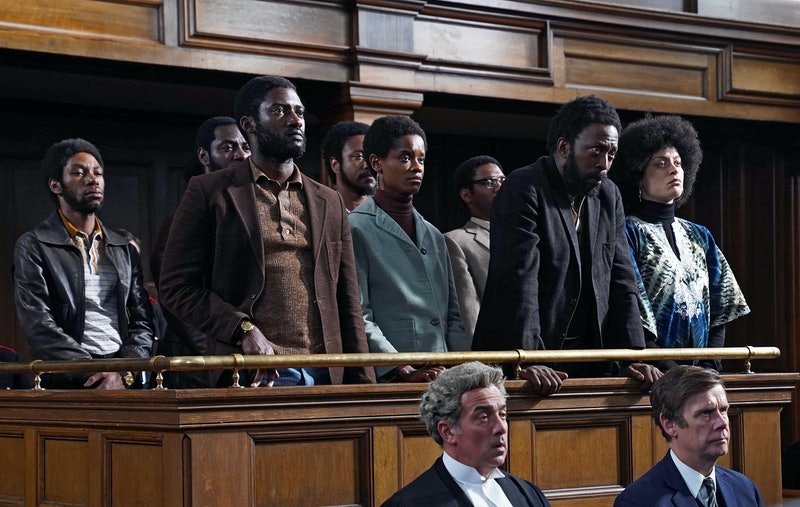
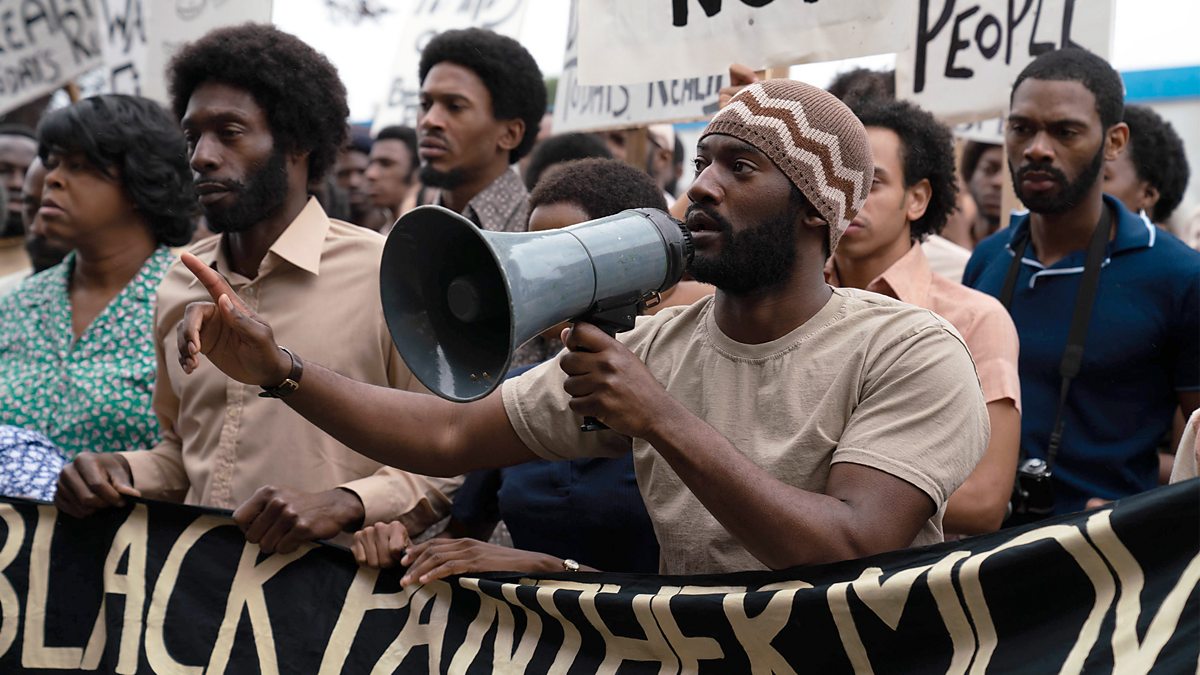
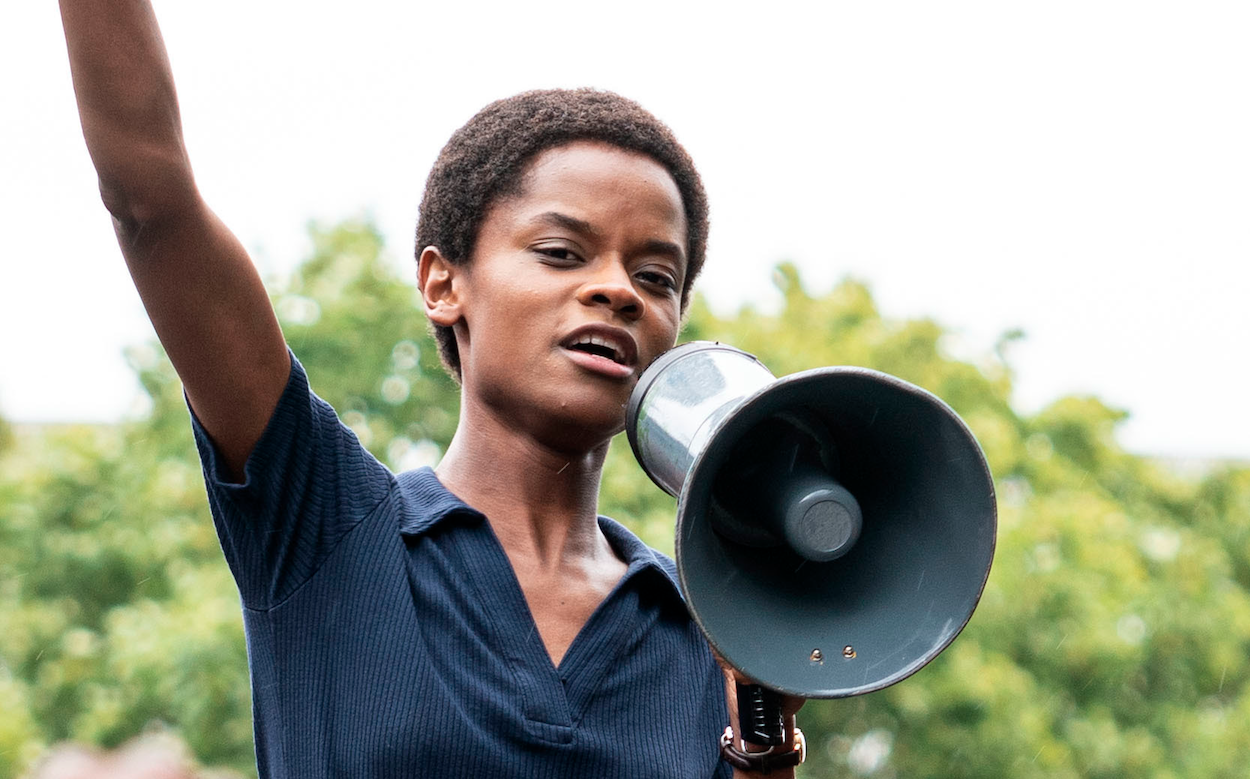
But Pulley has reckoned without Black Panther member Altheia Jones (Letitia Wright) and her activist friend, Darcus Howe (Malachi Kirby). Together, they encourage Frank to organise a peaceful protest march to complain about the rough treatment they are receiving. When the police’s heavy-handed attempts to control proceedings ensure that the march erupts into violence, it soon becomes clear that the only way the matter can be properly resolved is in court.

McQueen manages to capture the heady atmosphere as the inhabitants of Notting Hill spread their wings and take their first flights in the direction of a perceived freedom, little realising what a long and arduous trip it is going to be. There are strong performances from an ensemble cast, with Kirby and Rochenda Sandall particularly impressive as Howe and his girlfriend, Barbara Beese, and Spruell brilliantly loathsome as the odious Pulley.

There’s a vibrant soundtrack of early 70s hits, ranging from ska classics to the mellow tones of Jim Reeves, and McQueen’s team has a good eye for period detail. At times shaming – Alex Jennings’ portrayal of Judge Clarke offers a toe-curling depiction of a privileged white man seemingly oblivious to his own innate racism – Mangrove is a timely reminder that, though things surely have improved to some degree, there’s still a very long way to go before the UK achieves anything approaching equality for all.

With another four episodes to follow, each one featuring a different story, this is a powerful opening salvo in the Small Axe series, and makes it clear that McQueen is determined to take no prisoners. Bring it on.

4.2 stars

Philip Caveney

Black Panther

24/02/18

For those viewers who, like me, are suffering from a bad case of spandex overload, help is at hand in the form of a Marvel superhero movie that doesn’t really feel like anything that’s gone before it. You thought Thor: Ragnarok pushed the envelope? Wait till you get a load of Black Panther!

In what is only his third film, director Ryan Coogler offers a powerful and confident take on the genre, an action film that gets so many things right it’s hard to resist its considerable charms. And I’m not just referring to the fact that the film is almost completely inhabited by black characters – that it’s a celebration of Africa and its culture – that there are so many strong, positive roles for women. This is an object lesson on how to reinvent and subvert a tired and over-familiar concept.

We first meet the hero of the film, T’Challa (Chadwick Boseman), just after the death of his father, as he is about to become the King of Wakanda, a mythical African nation that, after a meteor strike back in its history, has blossomed into a technologically advanced wonderland, thanks to an abundance of vibranium, the precious metal that gives Wakanda’s leaders their superpowers and allows them to transform into the titular hero. But no sooner is T’Challa on the throne than he finds himself drawn into a dangerous mission. His old adversary, Ulysses Klaue (Andy Serkis, revelling in the chance to strut his stuff, for once, without having to wear a motion capture suit), has stolen an ancient artefact made from vibranium and is planning to sell it to the highest bidder. He is aided in the robbery by the mysterious Erik Killmonger (Michael B. Jordan), who clearly has some personal axe to grind with T’Challa…

There’s some fabulous world-building going on here and I particularly love the performance of Letitia Wright as T’Challa’s teenage sister, Shuri, who plays a sort of Q figure, providing her big bother with a whole string of incredible hardware to enable him to complete his mission. A lengthy sequence in a Korean casino followed by a frenetic car chase could have wandered in from a Bond movie and, if the makers of that franchise are ever stuck for a director, Coogler would make an interesting choice  – but I digress.

The film soon ventures into more familiar superhero territory, but even the usual CGI-augmented punchup at the conclusion doesn’t go on interminably – a problem that mars the otherwise enjoyable Wonder Woman and Thor: Ragnarok – and better still, this one has rhinos! Best of all for me, Marvel finally has a more interesting and nuanced villain than the usual ‘bent-on-world-domination’ cliche that is habitually trotted out. Fans of the Marvel EU will want to stay in their seats through the (very long) end credits because there are two extra scenes on offer, one of which ties up a loose end from an earlier film.

Purists will inevitably complain that Black Panther doesn’t stick closely enough to the established conventions of the genre but, for me at least, this is a very welcome step in the right direction.

4.6 stars

Philip Caveney