28/03/23
Traverse Theatre, Edinburgh
The latest in this A Play, A Pie and A Pint season is Variant, written by Peter Arnott and directed by Kolbrún Björt Sigfusdöttir. It’s a distinctly Beckettian slice of absurdist theatre, a slippery two-hander that seems to question the very essence of identity. Who are we? Are we who we really think we are? And are the people we believe we are closest to, actually who they appear to be? Such heavy questions are just the tip of the iceberg in this taut and unsettling play.
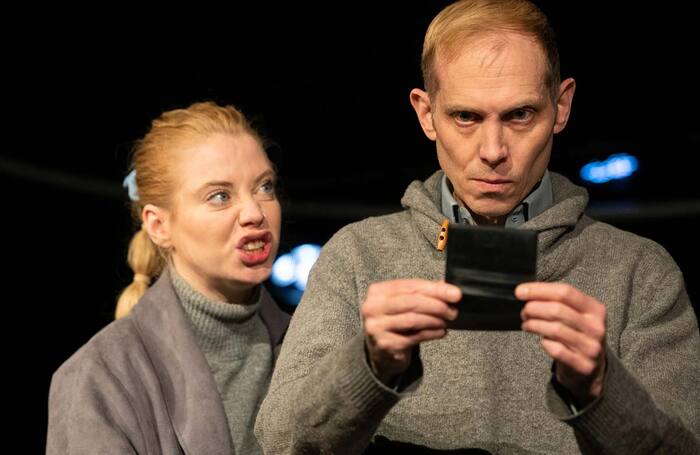
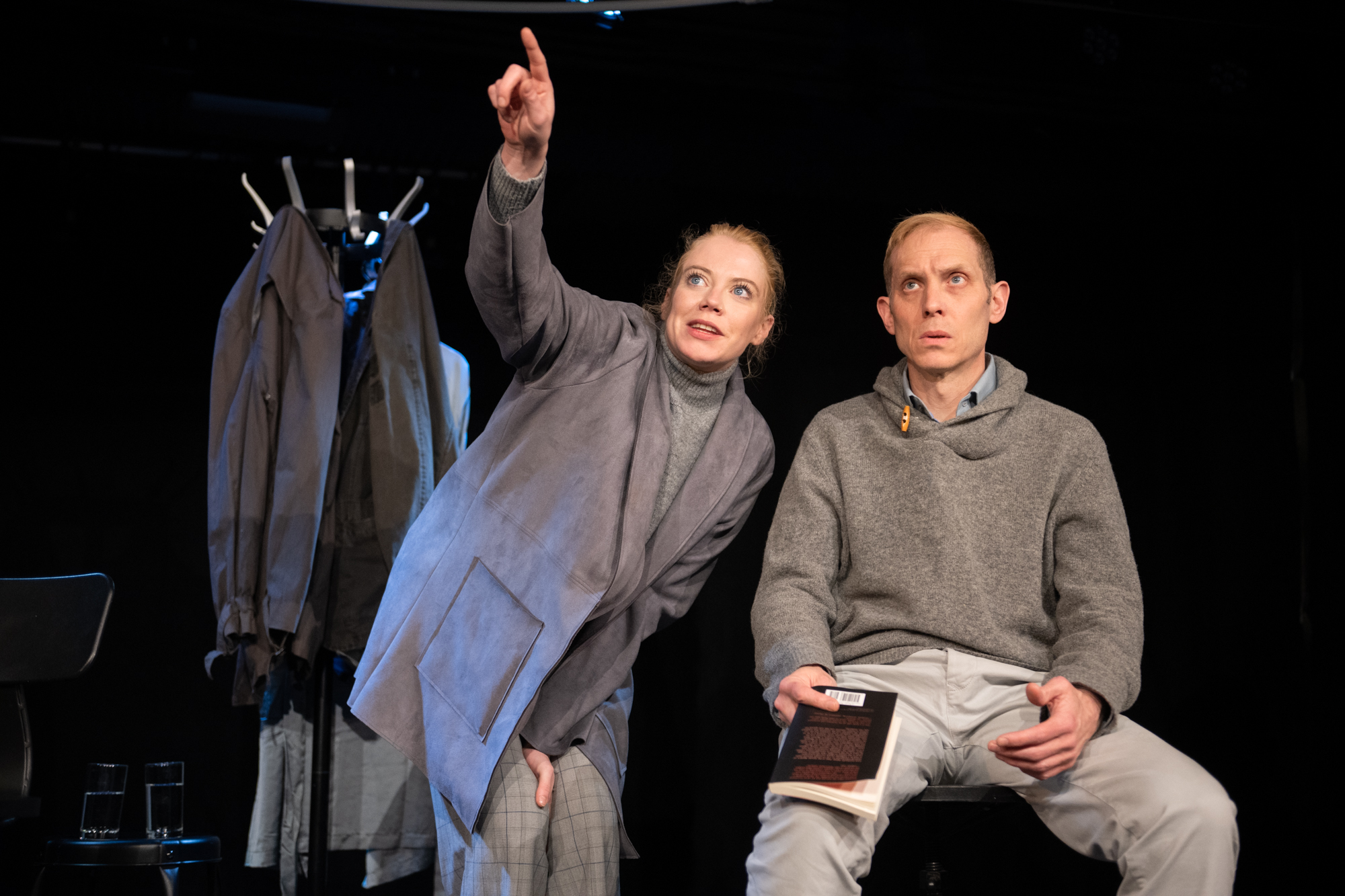
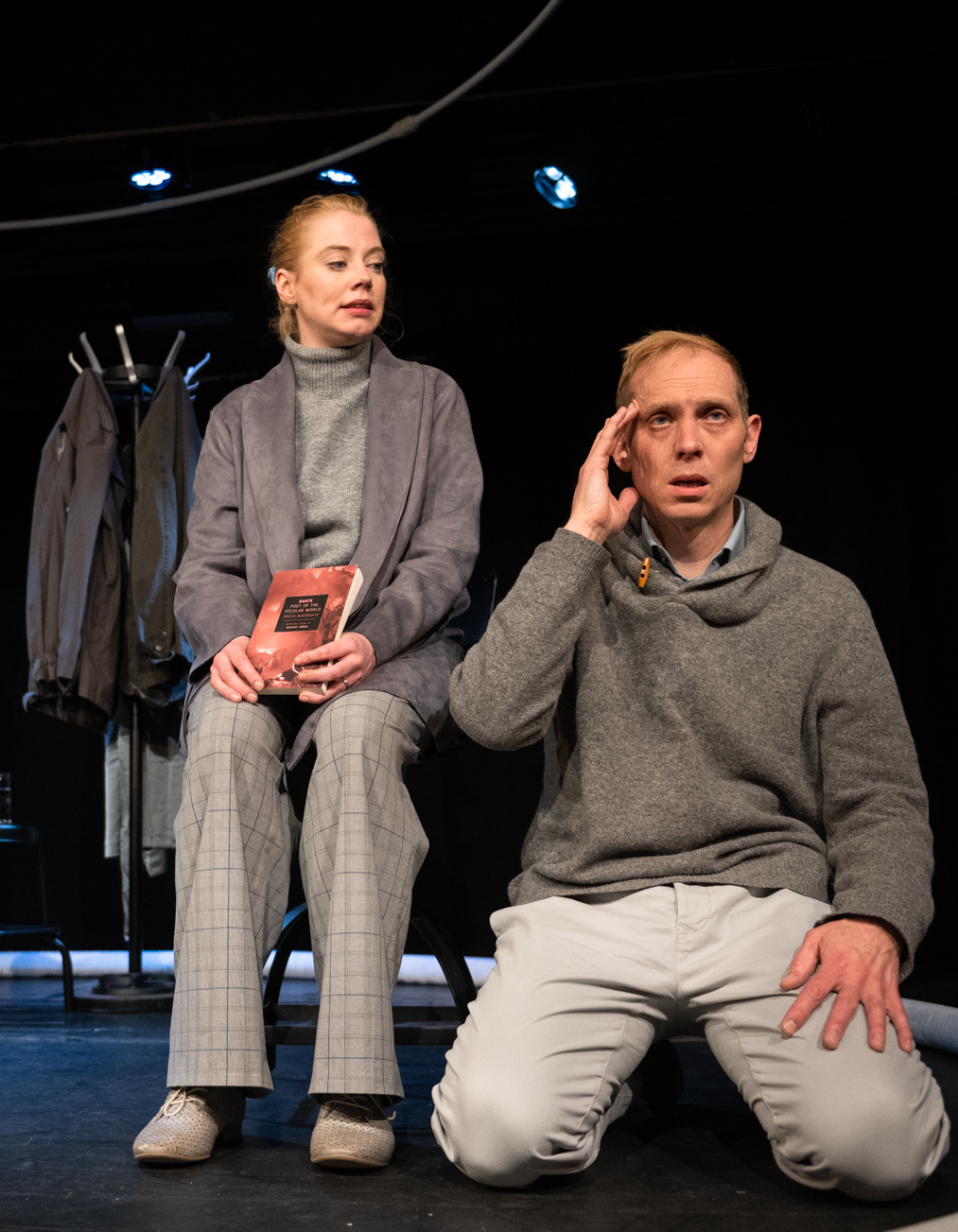
A woman (Meghan Tyler) and a man (Simon Donaldson) saunter into the circular performance space, dressed in muted tones that perfectly match the simple setting. The woman begins to write in a notebook, the man reads a novel, but the silence is almost immediately broken by the arrival of a fly, buzzing annoyingly around the man’s head, interrupting his reading. He kills it. And then he pauses to make a remark to the woman.
‘I see you’ve changed your hair.’
But she quickly questions what he means by this. Was there something wrong with her hair before? Does he approve of what she’s done to it? Or would he have preferred something else? What’s wrong with her hair?
At first the conversation seems innocuous, the bickering of a long-married couple – but as it progresses, it becomes increasingly complicated, loaded with allusions to other things. I find myself asking questions. Are the two people actually married? Because isn’t this beginning to feel distinctly like an interview? And why does the woman keep steering the conversation into darker waters? Why are the images she refers to so violent?
Arnott’s play is cleverly constructed, raising many questions but offering no answers, and – just as we’re beginning to think we have a handle on it – the piece resets itself, and pursues another line of thought, steering us in a different direction. All credit to Tyler and Donaldson, who inhabit their complicated roles with absolute authority. If I’m not always entirely convinced that the piece has as much substance as it has ambition, it’s still nonetheless an engaging, and wryly amusing play, weighing in at a taut forty-five minutes, during which it switches back and forth like a cerebral rollercoaster.
Did I like the play? Well, let me ask you something. What do you mean by the word ‘like’? Are you asking if it entertained me? Or puzzled me? Or even baffled me? Do you think I should review it? But then, what is a review? And perhaps more to the point, who’s writing this one? Oh, hang on a minute. I think it must be me. Whoever I am.
3.8 stars
Philip Caveney


 Bouquets & Brickbats