
Knives Out

Glass Onion: A Knives Out Mystery

23/12/22

Netflix

Rian Johnson’s Knives Out garnered plenty of admirers on its release in 2019, though I felt at the time that it was a case of style over substance. Call me old fashioned, but I’m of the opinion that one of the basic requirements of a whodunnit is that it should be hard to crack and, in this case, it really wasn’t. The sequel (helpfully subtitled A Knives Out Mystery, just in case we’ve missed the connection) recently enjoyed a week in cinemas – at a time when we couldn’t see it. It now appears on Netflix, who financed it and they will also be funding several further instalments. The reviews haven’t been quite so ecstatic this time around, but perhaps ironically, I find this one an improvement on the original, mainly by virtue of the fact that I really can’t guess where it’s headed – though it should also be said that there is a glaring plot hole in there that should have been plugged. (See if you can spot it!)

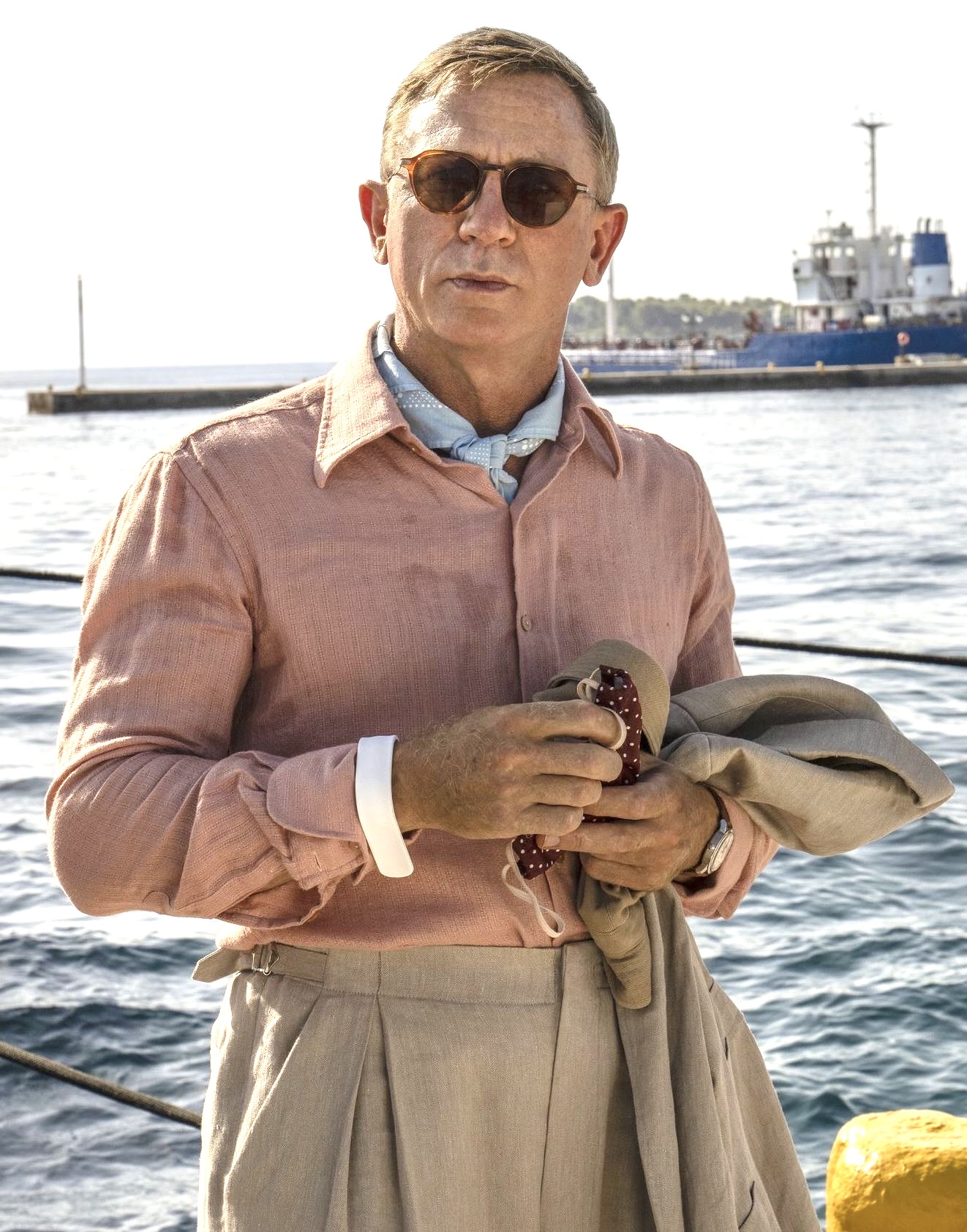
Once again, this is very stylish, bright and kinetic. We’re offered a selection of – mostly repellent – characters who feel more like caricatures than real people. We learn more about ‘the world’s greatest detective’, Benoit Blanc (Daniel Craig), who apparently is fond of sitting in his bath whilst wearing a fez (as you do) and who appears to share his home with a very famous housemate. It all begins with a bunch of seemingly unconnected individuals receiving invitations to an exclusive party on billionaire Miles Bron (Edward Norton)’s private Greek island.

The invites come in the form of elaborate puzzle boxes, which must be deciphered. Soon enough, Blanc is standing on the dockside with the other guests, who include hapless socialite Birdie Jay (Kate Hudson), muscle bound YouTuber, Duke Cody (Dave Bautista) and Bron’s former business partner, Andi Brand (Janelle Monáe). It soon becomes clear that Blanc hasn’t actually been invited to this bash, so his presence is only the first in a whole series of mysteries to be solved.The action is set in 2020, so hats off to Johnson for actually referencing the COVID pandemic, with the characters wearing masks and being all awkward about hugging and shaking hands, something that’s barely ever been referenced in the cinema so far.

Once on the island and inside Bron’s super luxurious home – the centrepiece of which resembles a huge er… glass onion – the host announces that they will all be playing an elaborate murder mystery game. At some point in the evening, he will be ‘killed’ and the guests will have to work out whodunnit…

So far, so Agatha Christie, but it should be said that nothing here goes according to anybody’s plan and, while I feel the early stretches of Glass Onion take some sticking with, once we’ve reached the midpoint, a huge revelation in the form of a series of flashbacks makes everything much more interesting. From here, the proceedings become ever more unhinged, ever more labyrinthine, as Johnson throws aside the conventions of the genre and begins to have fun with proceedings. It’s here too that his central tenet becomes clear. We’re continually reminded that nothing is hidden, nothing is opaque and that the answers to every puzzle are right there in front of us.

It’s clever but, once again, there’s a sense of distance. Because I don’t believe in any of these people, the result is like watching an expert game of chess, with the director manipulating the action like a grandmaster. I’m watching with a sense of detachment rather than being swept up in the proceedings.

Ultimately Glass Onion is an interesting exercise in legerdemain, and Netflix will doubtless do well with it. It will be interesting to see where the series of films goes from here but, for me at least, this feels like a step in the right direction.

4 stars

Philip Caveney
See How They Run

14/09/22

Cineworld, Edinburgh

The recent success of Rian Johnson’s Knives Out seems to have rekindled a cinematic interest in whodunits. Johnson’s sequel, Glass Onion, is due out soon (on Netflix) but, meanwhile, on the big screen there’s See How They Run, a lighthearted spin on the genre, directed by Tom George (previously best known for TV’s This Country) and written by Mark Chappell.

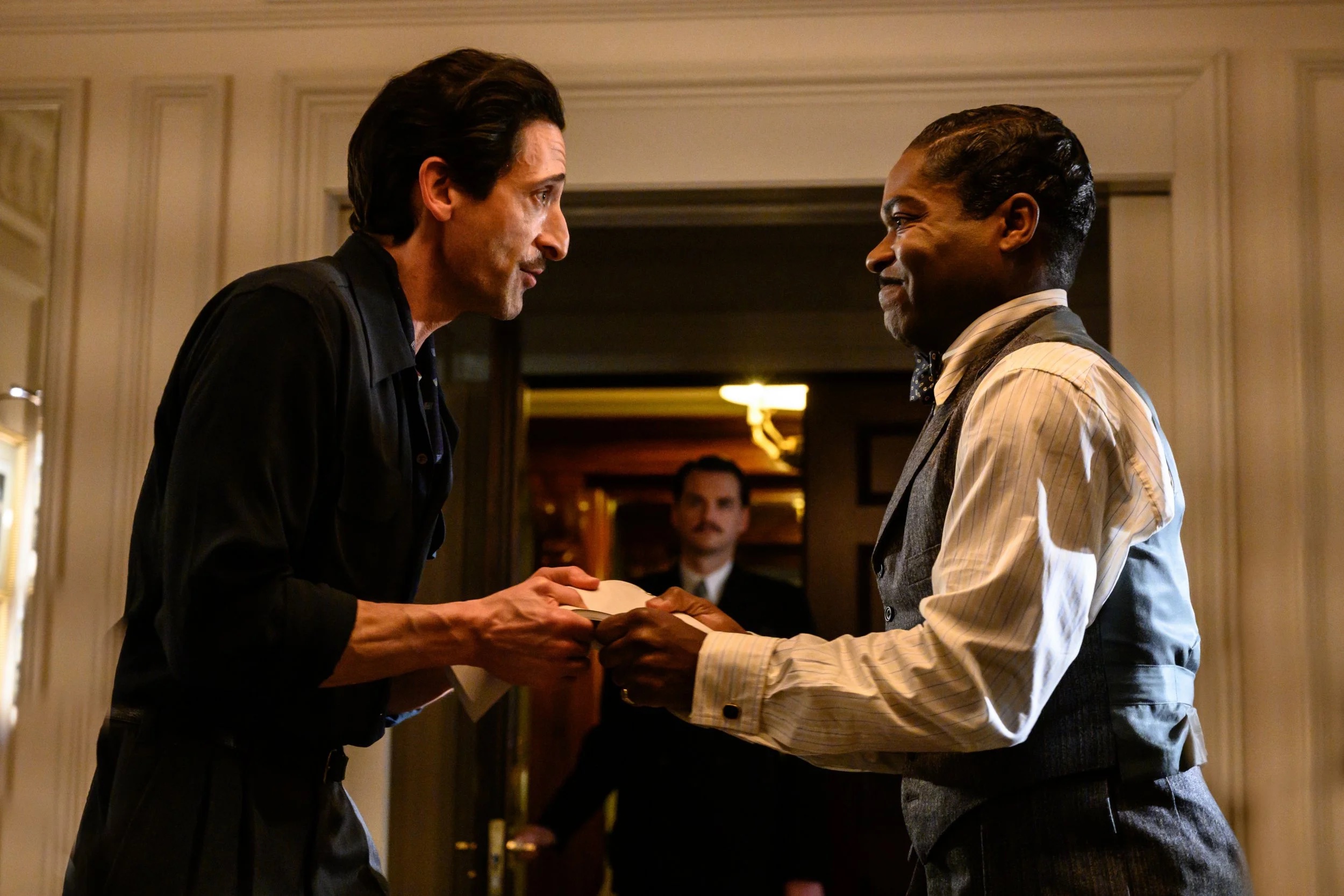
It’s 1953 and Agatha Christie’s The Mousetrap is already approaching its one hundredth performance. Moves are afoot to turn it into a motion picture, spearheaded by odious American screenwriter Leo Kopernick (Adrien Brody) who wants the chosen screenwriter, Mervyn Cocker-Norris (David Oyelowo), to amp up the sex and violence to make it more screen-worthy. Okay, so there is a clause in the play’s contract, stating that it can never make the transition into film until its theatrical run has ended… but that won’t be long, surely?

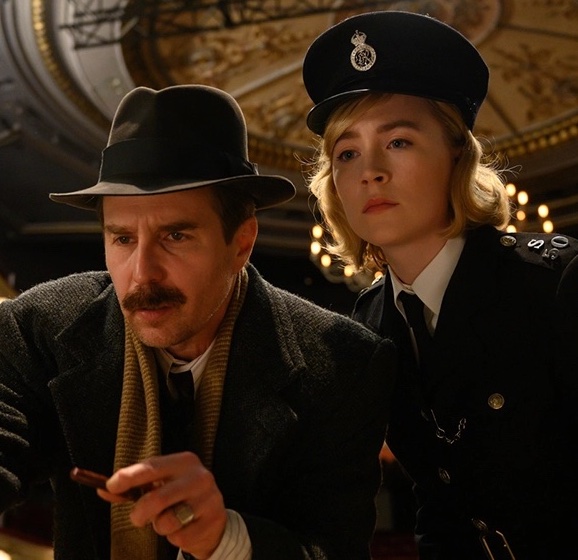
Kopernick quickly winds up dead (don’t worry, this is in no way a spoiler) and suspicion initially falls on Cocker-Norris. But, as rumpled, hard-drinking Inspector Stoppard (Sam Rockwell) soon begins to discover, there are lots of people in the cast and crew who have reasons to bear a grudge – and anyway, he has his hands pretty full with his over-eager assistant, Constable Stalker (Saoirse Ronan).

See How They Run is a tremendously likeable film, virtually stuffed to the gills with big-name actors having a ball in small roles, many of them based on real life characters. Harris Dickinson offers a nicely judged Richard Attenborough (who starred in The Mousetrap‘s original production) and Pearl Chanda is excellent too as his wife and co-star, Sheila Sim. Rockwell does a suitably world-weary turn as Stoppard, but for my money it’s Ronan who really makes this fly, creating an absolutely adorable character, determined to make her mark in a world that has until now been entirely dominated by men. Plaudits should also go to comedian Tim Key, who does a brilliant job of embodying a loathsome police commissioner.

As you might expect, the script is as meta as you like, with plenty of in-jokes and sly references for theatrical fans to pick up on – but, more importantly perhaps, this is funny throughout, with some perfectly timed pratfalls thrown in for good measure. While it’s hardly destined to linger for long in a viewer’s mind, it’s nonetheless a very pleasant way to spend a well-paced hour and thirty-eight minutes.

4.2 stars

Philip Caveney

Knives Out

25/11/19

Rian Johnson’s Knives Out is an Agatha Christie-inspired whodunnit for our times. Although reliant on the tropes and clichés of the murder-mystery, the delivery makes this a thoroughly modern thriller.

The cast is stellar. Christopher Plummer is Harlem Thrombey: a successful eighty-five-year-old novelist with a penchant for games and a vast fortune to bequeath. The morning after his birthday party, he is found dead, his throat cut in an apparent suicide. But just as the police (LaKeith Stanfield and Noah Began) are ready to finalise the cause of death, enigmatic private detective Benoit Blanc (Daniel Craig) turns up, hired by an anonymous client to investigate further.

Thrombey’s children and grandchildren are all present, and it turns out each of them has a motive for his murder – although I won’t reveal the details here. His daughter, Linda (Jamie Lee Curtis), is a forbidding businesswoman, visiting with her husband, Richard (Don Johnson), and their feckless son, Ransom (Chris Evans). Thrombey’s son, Walt (Michael Shannon), is a gentle soul, but a hopeless case, incapable of making it on his own. He has a wife too (Riki Lindome), and an alt-right-leaning teenager (Jaeden Martell), who spends his time perusing questionable websites on his phone. And finally, there’s Thrombey’s yoga-and-crystal-loving daughter-in-law, Joni (Toni Collette), and her student daughter, Meg (Katherine Langford).

As you might expect of the genre, the setting is a remote country house, and so – of course – there are staff too: housekeeper Fran (Edi Patterson) and nurse Marta (Ana de Armas), both of whom prove central to the plot.

There’s an appealing playfulness here, with zingy dialogue and witty repartee, and the performances are as sprightly and assured as you’d expect from these marvellous actors. But the plot is a little predictable: there are no real surprises here, mainly because the various ‘twists’ are too heavily signalled. The middle third sags under the weight of a lengthy red herring, where the focus drifts from the larger-than-life characters and their shenanigans, following instead a more muted, less engaging thread.

Nonetheless, this is a lively and eminently watchable film – just not the masterpiece I hoped that it would be.

3.8 stars

Susan Singfield