08/01/25
Cineworld, Edinburgh
If a film deserves accolades for originality then Here definitely earns them. I’ve never seen anything quite like it. That said, it does feel very much like an experiment, with director Robert Zemeckis continuing the fascination with movie technology he’s been relentlessly pursuing since 2004’s The Polar Express. Not everything in the film quite comes off – but the parts that do are extraordinary.
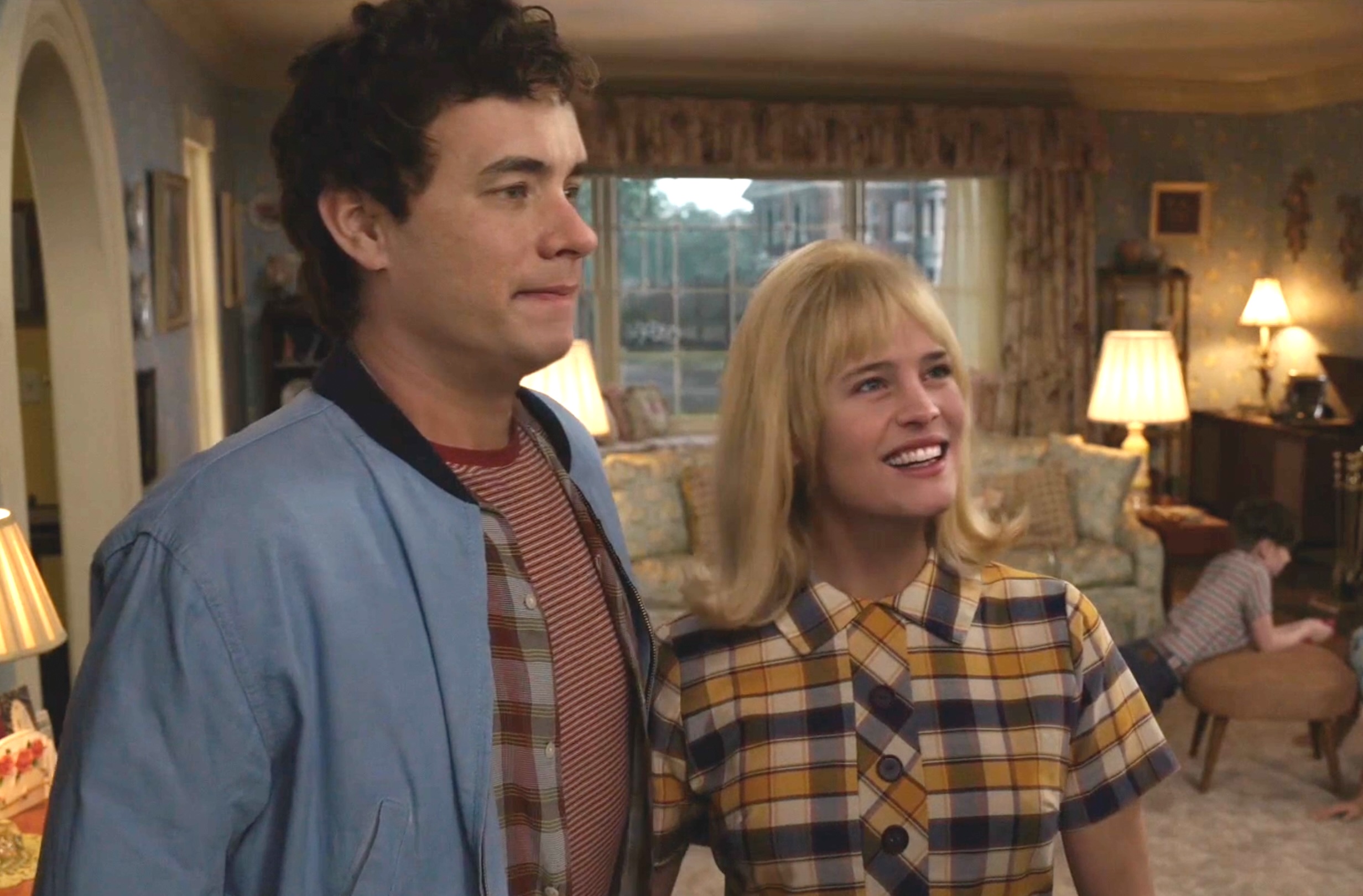
Take the opening sequence for instance, where a fixed camera offers a changing view of a particular point on the compass and, through a series of portals, we are offered glimpses of the ever-changing landscape from the world’s inception and onwards across the unfolding centuries. The gimmick of the film – and there’s no better word to describe it – is that the camera never moves its position. Eventually, we see the woodland where it stands being cleared and, later, a house is constructed around it until it is enclosed in a room. Through the window there’s a view of a much grander house, which once belonged to the illegitimate son of Thomas Jefferson, but here, in the more modest home across the street, a series of middle-class families move in and play out scenes from their lives. The aforementioned portals are used to zip the viewer back and forth in time, allowing us to catch glimpses set in different eras.
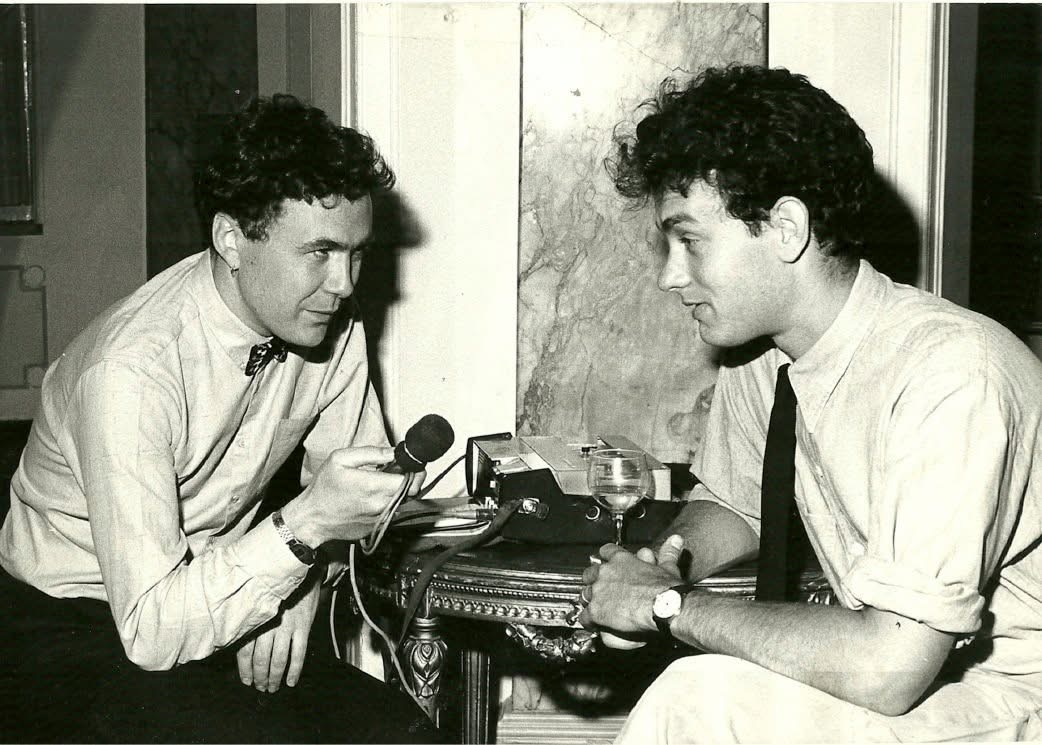
Al (Paul Bettany), who has recently returned from the Second World War, and his wife, Rose (Kelly Reilly), move into the house and start a family. One of their children is Richard, a frenetic, hyperactive sort, played by four different kids before transforming into Tom Hanks. The growing-up process encompasses cowboy hats, drum kits and eventually an obsession with the idea of becoming an artist. (Substitute the word ‘writer’ and I’m pretty much looking at my own youth.) With the use of sophisticated de-aging software, Hanks is exactly how I remember him in 1984 when, as a reporter for Piccadilly Radio, Manchester, I interviewed him for the film Splash. I make no apology for including that image here, because to my mind, this is the quality that Here (adapted by Eric Roth from a graphic novel by Richard McGuire) handles with considerable skill: the ability to transcend the limitations of time.
Richard introduces his parents to Margaret (Robin Wright) and, soon enough, she’s pregnant and Richard is beginning his own journey into adulthood, with all its joys, disappointments and trials. This central thread works well, but some of the other strands are less convincing. A narrative about a romance between a Native American brave and a young woman from his tribe feels too picture-book cute to be convincing – and I’d like to learn more about the Black family that moves in after Richard and Margaret have left the house. A scene where Devon Harris (Nicholas Pinnock) instructs his son Justin (Cache Vanderpuye) about what to do if his car is ever stopped by the police, hints at bigger themes that might have been more challenging than the invention of the La-Z-Boy armchair.
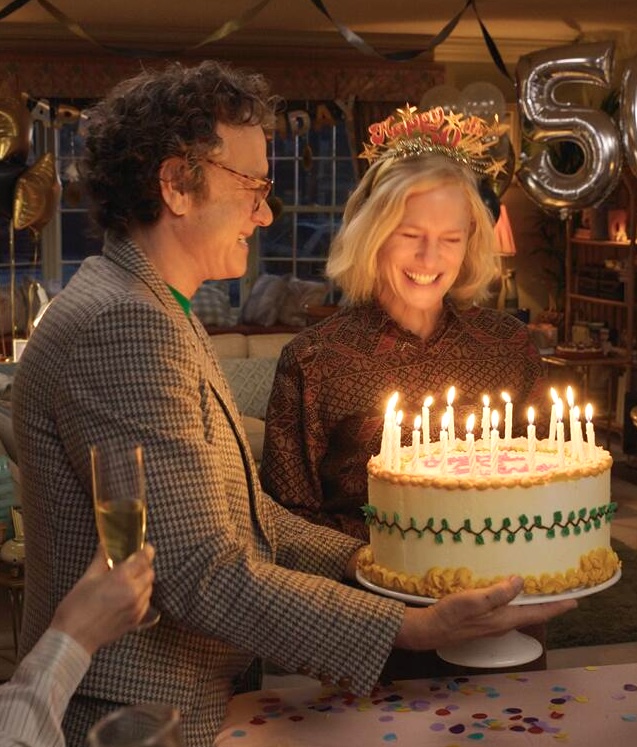
Here won’t be for everyone. The many strands that make up the narrative are occasionally somewhat confusing and that insistence on keeping the point of view so stubbornly fixed occasionally necessitates some unlikely seating arrangements in order to ensure that everybody remains in shot.
Still, I admire Zemeckis’s determination to keep pushing the boundaries of cinema and I think it’s fair to say that the man who gave us Back to the Future, Forrest Gump and Cast Away has earned the right to spend his time playing in the sand box. Here isn’t up there with his best work but it’s nonetheless an intriguing and highly original concept.
3.8 stars
Philip Caveney
 Bouquets & Brickbats