Keith Macpherson

A Streetcar Named Desire

26/10/24

Lyceum Theatre, Edinburgh

It’s sometimes hard to believe that Tennessee Williams’ A Street Car Named Desire was first performed in 1947. This powerful mixture of one man’s toxic masculinity overpowering a woman’s fragile mental condition feels somehow utterly contemporary in its telling, and this perfectly-pitched adaptation by Pitlochry Festival Theatre is compelling in every scene.

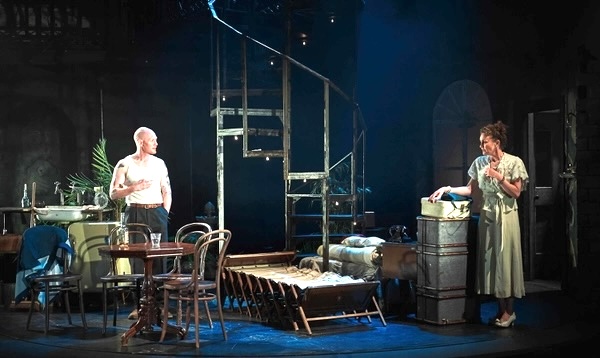
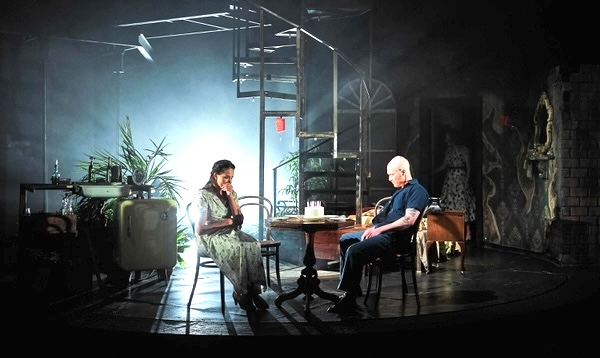
Stella (Nalini Chetty) and Stanley Kowalski (Matthew Trevannion) live in a cramped, two-room apartment in the French Quarter of New Orleans. Stella is pregnant and she’s understandably taken aback when her older sister, high school teacher Blanche DuBois (Kirsty Stuart), arrives unexpectedly, lugging a massive trunk and lacking the necessary funds to pay for a hotel room. Blanche announces that, after the death of their mother, the family plantation, Belle Reve, has been ‘lost to creditors,’ and Blanche has nowhere else to turn.

Stanley is immediately suspicious about Blanche’s rambling explanation for her presence, particularly when he hears about the loss of the DuBois family property, which he has always believed he is owed a share of. When Blanche begins a tentative romance with his card-playing buddy, Mitch (Keith Macpherson), he determines to do a little snooping…

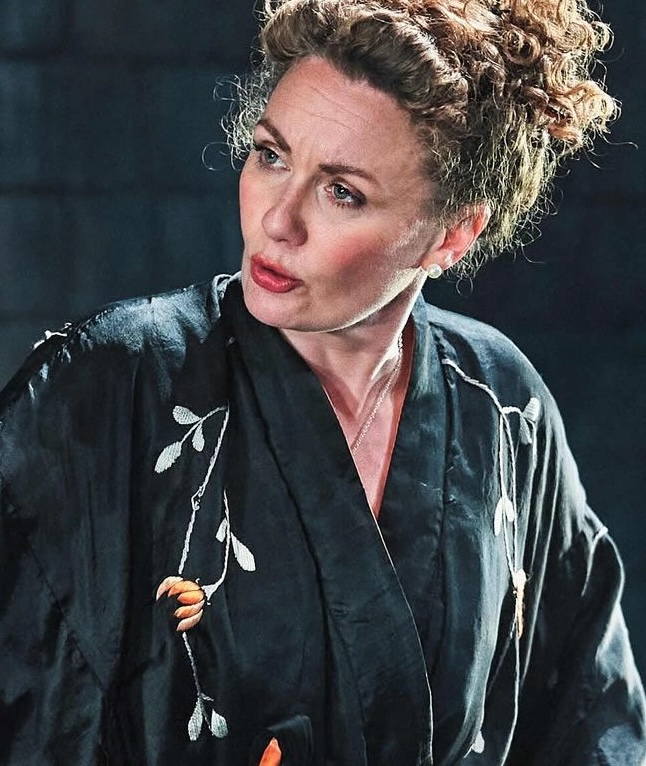
Stuart is superb in the role of Blanche, nailing the woman’s ever-shifting moods with consummate skill, one moment critical and demanding, the next coquettish and playful. Sound designer Pippa Murphy adds to her disturbed moods by overlaying scratchy soundscapes as Blanche is haunted by something terrible that happened in her youth. As the loathsome Stanley, Trevannion has a field day, strutting and bellowing around the cramped environment like a rooster, asserting his dominance over everyone who has the bad fortune to come into pecking distance. Chetty, meanwhile, navigates the turbulent waters between Blanche and Stanley, seemingly unable (and unwilling) to resist her husband’s rapacious demands. No matter how many times he attacks her, she always goes back for more.

Designer Emily James has chosen to situate the Kowalski apartment on a huge turntable and this is a masterstroke. As it rumbles around, presenting different views of both the interior and exterior of the apartment, it increasingly resembles a deranged carousel with the players caught in its unhealthy embrace, unable to get off the ride until it arrives at its ghastly destination. Director Elizabeth Newman eschews the victim-blaming that so often blights interpretations of this play and turns up the heat on the sweaty, malevolent scenario, so that the play’s final half makes intense, disturbing viewing. Those who are triggered by scenes of sexual violence should be warned that there are some challenging moments here, but for me, it’s like passing a car wreck on the motorway – I cannot tear my gaze away.

If you’re thinking, ‘Well, I’ve seen this play before,’ perhaps you should think again. This is a mesmerising slice of theatre, that feels as important now as it ever did.

5 stars

Philip Caveney

Group Portrait in a Summer Landscape

05/10/23

Lyceum Theatre, Edinburgh

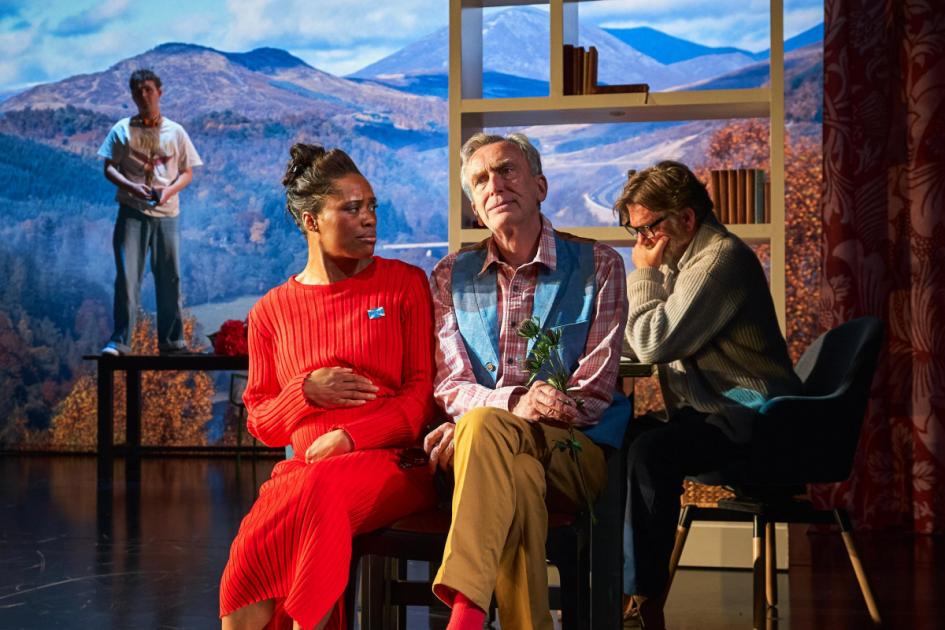
Patriarch Rennie (John Michie) has invited a disparate group of people to his retirement party. He’s had to keep the guest list secret from his wife, Edie (Deirdre Davis), because – with the exception of her old pal, film star Jimmy Moon (Benny Young) – there’s no way she’d agree to hosting the people he has in mind. En route to the couple’s country house in the Scottish Highlands is their daughter Emma’s ex-husband, for example – even though their wedding ended acrimoniously and Charlie (Matthew Trevannion) is renowned for wreaking havoc wherever he goes. Of course, he maximises the antagonism by bringing along his latest girlfriend, Jitka (Nalini Chetty), and why wouldn’t Rennie ask the newly-betrothed Frank (Keith Macpherson) and Kath (Patricia Panther) to join the party? It’s not as if Frank’s always been in love with Emma (Sally Reid) or anything, is it? Oops. There’s an uninvited presence too: the ghost of Rennie and Edie’s son, Will (Robbie Scott), who watches over the day’s proceedings with increasing horror…

Playwright Peter Arnott says he set out to to write a ‘Scottish Chekhov’ and to some extent he has succeeded. At first it seems as though, unlike Chekhov, Arnott is looking back at the political moment that nominally serves as the play’s pivot; he has the advantage of hindsight to create dramatic irony. After all, we know the outcome of the 2014 Scottish independence referendum, the divisive topic inflaming the characters. But we soon learn that this is just a distraction: as Charlie says, it’s mere tinkering around the edges while ignoring the real revolution that is on its way, and which only the rich and ruthless will be able to survive.

If Arnott’s script is retro, then David Greig’s direction is decidedly contemporary, a deliberate jarring of styles that helps to illuminate the sense that something is changing, mirroring the mismatch between parochial politics and apocalyptic predictions, Chekhovian naturalism and magical realism. I like the dissonance.

Jessica Worrall’s set also leans into the contrast, a hyper-realistic backdrop juxtaposed with a more figurative interior: a glorious photograph of a Highland glen and a sketched-in kitchen-diner, symbolised by oversized shelving units, enormous tables and vast floral curtains.

Both Simon Wilkinson’s lighting and Pippa Murphy’s sound are integral to the production: the former spotlighting the snippets of conversation that combine to drive the plot, the latter signalling the shifts to the ghost’s point of view, as the sound distorts and fragmented memories play through Will’s Walkman. This supernatural presence is one of my favourite things about the play: Scott physicalises the spirit’s pain and confusion with a beautiful awkwardness.

The first act is very strong, an interesting set-up that promises something the second doesn’t quite deliver. Although the characters are all cleverly depicted, the piece feels somehow unfinished, as if the story arc has been cut short. Rennie’s revelation, when it comes, is anticlimactic, and I don’t quite buy it as a reason for inviting these particular people to his home (why would anyone ever invite Charlie anywhere?). But, even if it’s a little opaque and doesn’t offer any real answers to the issues it grapples with, Group Portrait in a Summer Landscape is an intelligent and ambitious play, leaving us with a lot to think – and talk – about.

3.8 stars

Susan Singfield

Sunshine on Leith

08/06/22

King’s Theatre, Edinburgh

In Edinburgh, you’re never more than six feet away from a Proclaimer. Or, at least, from someone proclaiming their love for the Proclaimers. The affection is well-deserved. Craig and Charlie Reid are responsible for a multitude of absolute bangers: deceptively simple tunes, combining heart and anger, warmth and sadness. It was inevitable someone would say, ‘Hey, we could make a musical from these.’ (Cue: Stephen Greenhorn.) And equally inevitable that the resulting project would be a hit, a regular on stage since its 2007 debut, with a successful film adaptation to boot.

So there are no surprises here. We’re familiar with the show; of course we are. Nonetheless, there’s a palpable thrill in the air, because we know we’re in for a treat. This two-venue production – co-directed by Elizabeth Newman and Ben Occhipinti – is laden with symbolism: the first show since Pitlochry Festival Theatre’s revamp, and the last before Edinburgh’s King’s Theatre closes for its own refurbishment. It’s the perfect choice for both, a celebration of Scottish talent and a love song to the people of Caledonia.

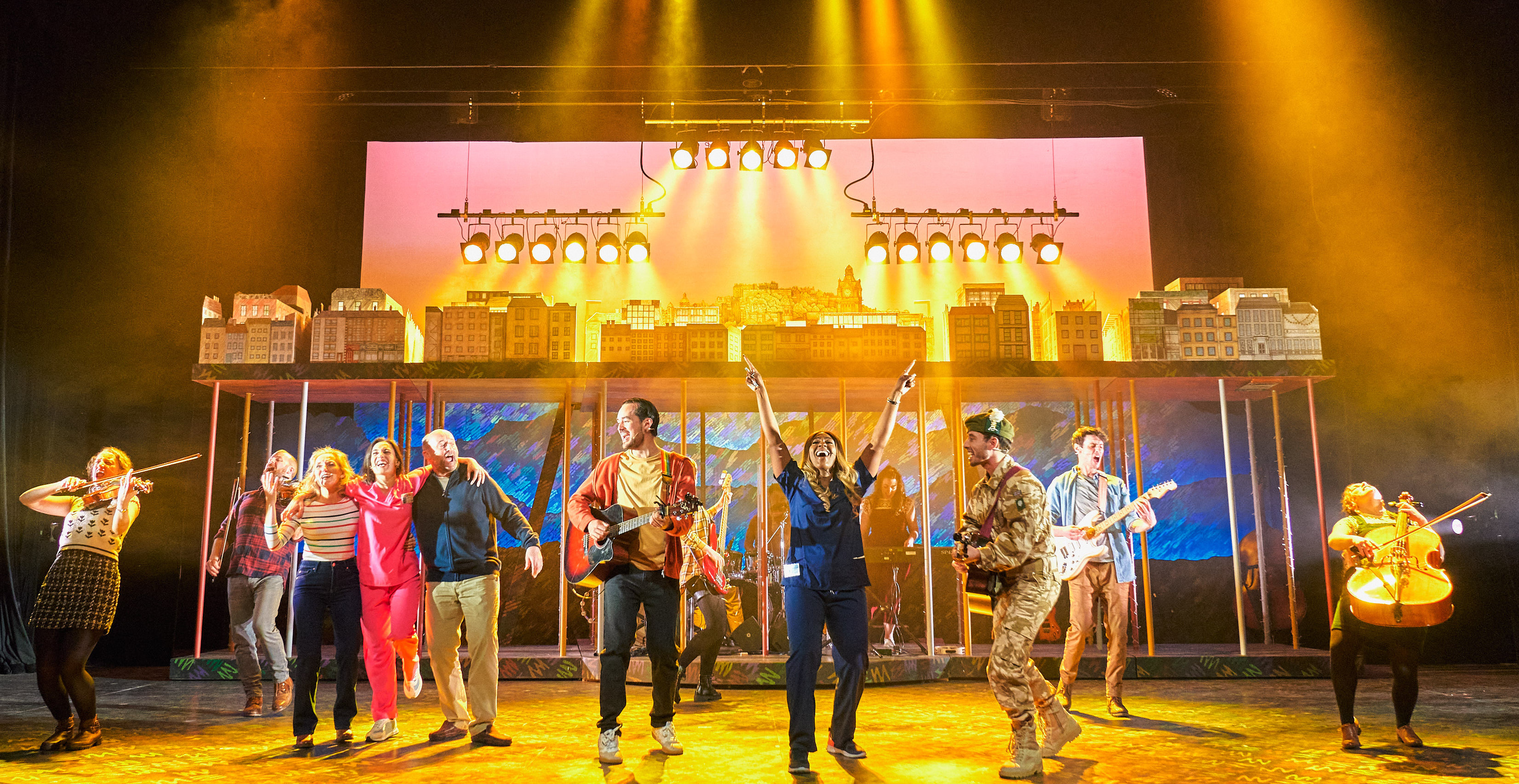
There’s a low-key, homespun ambience, which works well, creating a sense of familiarity between the performers and the audience. There are no flamboyant costumes here, no fancy pyrotechnics. Instead, like the Proclaimers’ songs, it’s quietly clever – no showing off. The band doubles as the ensemble, and they appear to be a happy team, grinning at one another and at us, and vibing unselfconsciously. There are no barriers, which cements that feeling of intimacy, enabling us to empathise with the characters. This is no mean feat in a large, traditional theatre like the King’s, with its proscenium arch and imposing loges, all designed to accentuate the separation of stage and auditorium. It’s really very impressive.

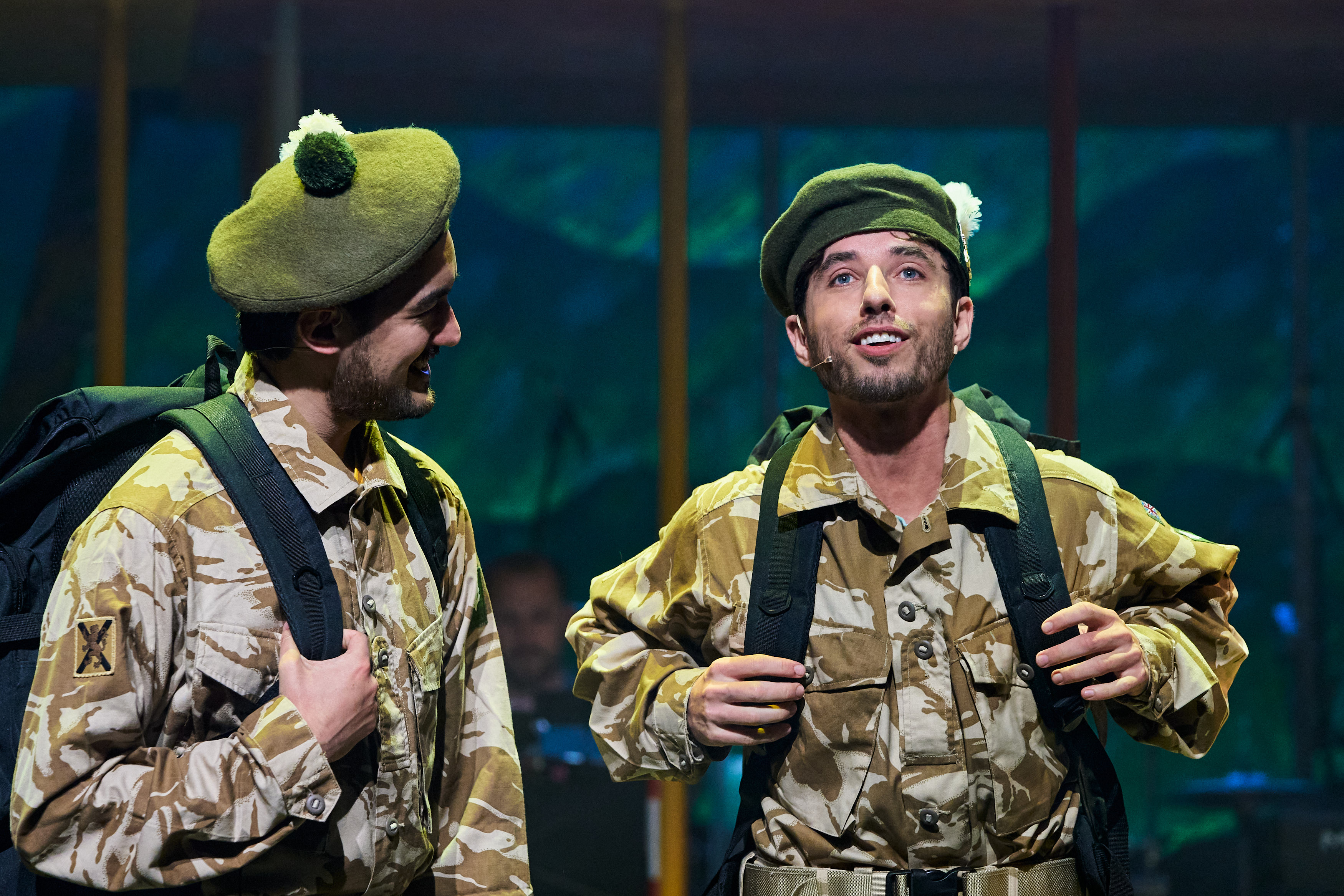
The story is a Willy Russell-esque account of working-class life, told with affection and a strong sense of place. Ally and Davy (Keith Jack and Connor Going) are back in Leith, having been honourably discharged from the army, just in time for Davy’s parents’ thirtieth wedding anniversary party. Ally’s been going out with Davy’s sister for years, and he’s hoping now’s the time to settle down, but Liz (Blythe Jandoo) isn’t quite ready for that. She’s been stuck at home while he’s been away, and she’s restless, keen to stretch her wings. Her nursing pal, Yvonne (Rhiane Drummond), meanwhile, has fallen for Davy – and what is Davy’s dad, Rab (Keith Macpherson), hiding from his wife, Jean (Alyson Orr)? It’s a simple tale, but surprisingly affecting, and I find myself tearing up on more than one occasion. No spoilers, but the line “Because they wanted me” just hits me every time, and Orr’s rendition of the titular song is genuinely heartbreaking.

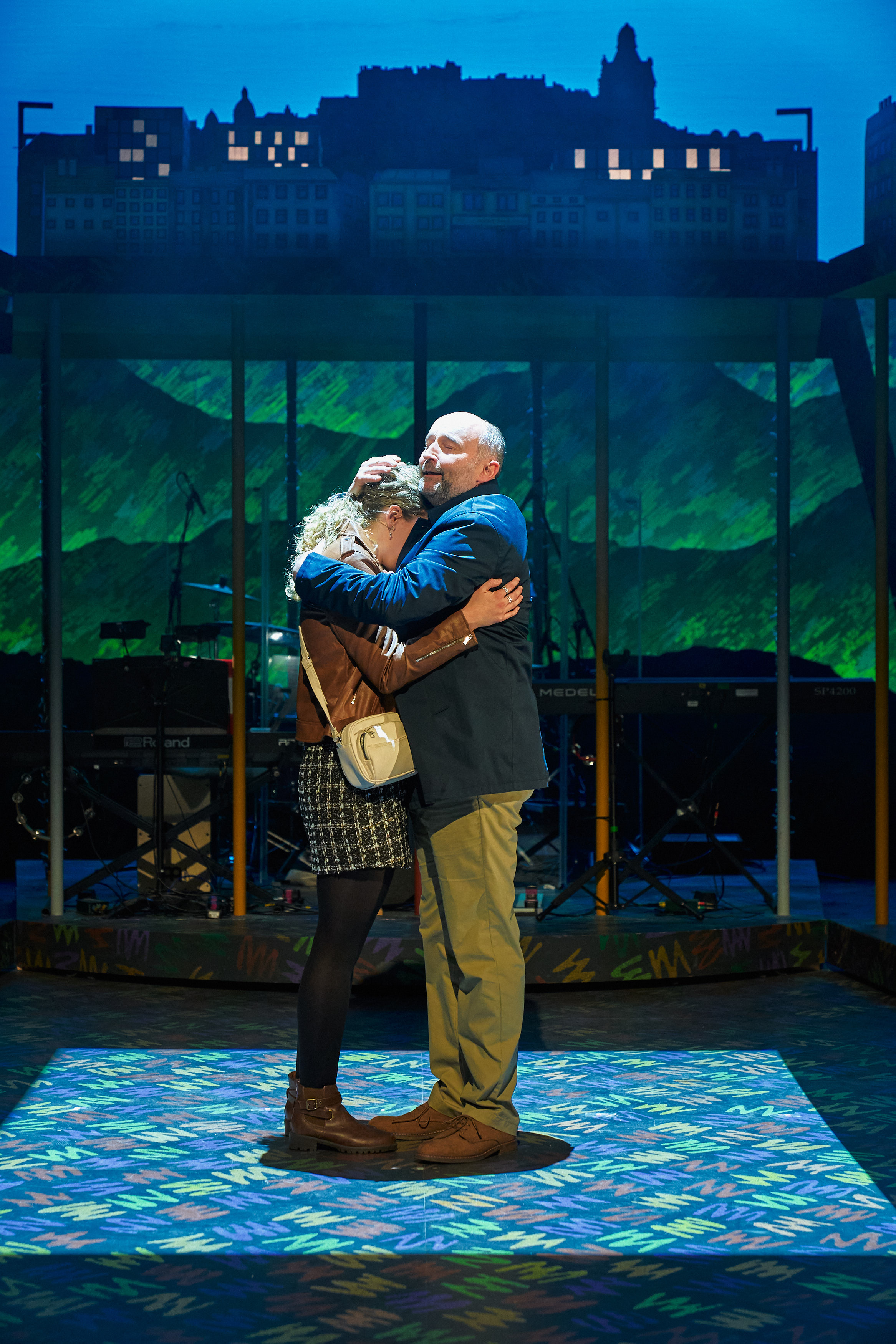
Adrian Rees’ set looks great. A miniaturised Edinburgh skyline is mounted on stilts, while the action occurs below – a neat representation of Leith and Edinburgh, the city looming over the town. There are ladders leading up to Blackford Hill; from here, we join the characters looking down on their home turf, trying to get a handle on their place in the world. The set comes apart, so that sections can be moved to create walls, but this is a distraction for me. It seems unnecessary and, although the transitions are thoughtfully choreographed, there’s too much clutter and stage traffic for very little gain.

In the end, this is all about the music (directed by Richard Reeday), and it’s a fabulous combination of the raucous and the refined. There are some issues with the sound – mics occasionally cutting out, and some imbalance between the vocals and the instrumentals – but none of it really detracts from the serious talent on display.

Sunshine on Leith has a relatively long run, so you’ve got until the 18th June to catch it here in Edinburgh – and to say “bye the nou” to the Old Lady of Leven Street.

4.3 stars

Susan Singfield