Keeley Hawes

Scoop

06/04/24

Netflix

What is the purpose of dramatising recent news events unless it’s to shine a different light on them? Scoop, directed by Philip Martin, doesn’t do that. Instead, it’s a pretty straightforward retelling of something we can all remember: Prince Andrew’s 2018 car-crash interview on BBC’s Newsnight.

Although it’s very watchable, the only fresh thing we’re actually offered here is a little look at some behind-the-scenes admin, and – frankly – that’s not enough. Based on Samantha McAlister’s memoir, her role as the ‘booker’ is almost laughably prominent. I’m sure she was very good at her job, but I don’t really care. “Person does the work they’re paid to do” isn’t much of a revelation. Nobody’s watching this because they’re interested in a “brilliant” TV producer. Self-aggrandising Sam (Billie Piper) gets the bus to work, eats kebabs and relies on her mum for childcare. Am I supposed to take something away from this?

We don’t get any original insights into Prince Andrew’s involvement with Jeffrey Epstein; we don’t learn anything new about his sexual exploitation of trafficked women. (I’m not calling him a paedophile because that’s not what he is. ‘Sexual predator’ and ‘rapist’ are the correct words. Abuse of women is bad enough; we don’t have to call it something else.) We don’t glimpse his reaction to the fall-out. We do see how attached he is to his teddy bears, which is amusing but hardly illuminating. The only vaguely unexplored territory covered is the impact on Prince Andrew’s aide, Amanda Thirsk (Keeley Hawes), who is portrayed here as a naïve and trusting woman, believing both Andrew’s assertions of innocence and McAlister’s assurances that this interview will be good for him. A brief moment with Andrew’s daughter, Beatrice (Charity Wakefield), also offers a little much-needed emotion, her lip quivering as she counters her father’s dismissal of Twitter (“I don’t look at that”) with a muted, sad-eyed, “I do.”

Rufus Sewell’s and Gillian Anderson’s impersonations of the key players are spot-on, although credit for that must be shared by the costume and make-up designers (Matthew Price and Kirstin Chalmers). The likenesses are uncanny. I just don’t know what they’re for.

I can’t help feeling that this is a pointless exercise. The actual interview – in all its startling horror – is available for anyone to see, so why bother watching a facsimile of it?

2.8 stars

Susan Singfield

To Olivia

08/04/21

Now TV

It’s the early 1960s and ambitious author Roald Dahl (Hugh Bonneville) is smarting from the lukewarm reception afforded to his recently published children’s novel, James and the Giant Peach. Undeterred, he’s planning his next opus, Charlie and the Chocolate Factory. We know he’s an author because he constantly talks about the work in progress, dropping little references that relate to what’s coming next and using his three children, Olivia, Tessa and Theo, as sounding boards for his new ideas. This is something that, in my experience, real authors never do. Should I ever fall into the habit, please feel free to tell me to shut up.

Dahl lives in darkest Surrey with his wife, acclaimed screen actress, Patricia Neal (Keeley Hawes), who is herself dissatisfied by the fact that her once eventful career seems to be heading nowhere fast, since she’s reached a certain age – though she has been offered a small part in Martin Ritt’s upcoming movie, a little thing called Hud. (Roald thinks the part is beneath her and advises her not to bother).

But their country idyll is shattered when Olivia contracts measles and, with no vaccine available in the 1960s, promptly dies of encephalitis. This film then is about Dahl’s desperate attempts to come to terms with the death of his daughter and his subsequent struggle to maintain both his marriage to Neal and his relationships with his other children. On paper, it promises to be a visceral tearjerker. But somehow, it’s not.

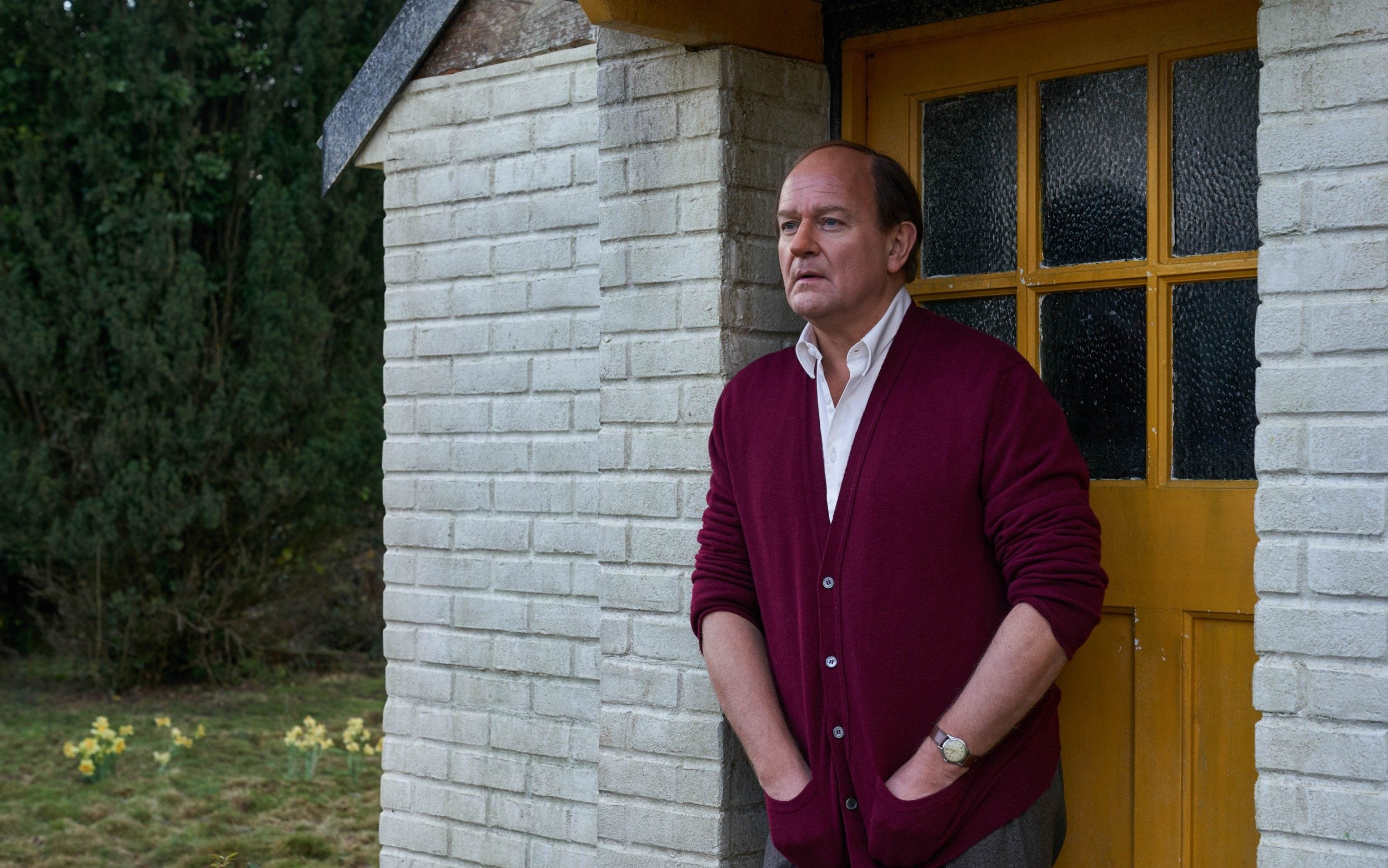
John Hays’ film makes a valiant attempt to cover this difficult subject matter, but seems to shy away from anything too tortuous or distasteful, which means it all feels rather too cosy for its own good. Attempts have been made to ‘plain up’ Hugh Bonneville with a false nose and a balding pate but, even when he’s being unpleasant – something that the real Roald Dahl was allegedly very adept at – he’s still basically Hugh Bonneville, the very definition of a thoroughly nice chap. Hawes is perhaps a better fit for Neal, but isn’t given the kind of catharsis her character requires. Even her brief interplay with Paul Newman (Sam Heughan, who certainly looks the part) seems more concerned with pointing out how capable she is at putting the director and lead actor straight about their own project, which just feels downright odd.

To Olivia is curiously underwhelming. There’s an admittedly lovely turn from Isabella Jonsson as Tessa and there’s also the final performance from Geoffrey Palmer as a deeply unpleasant archbishop of Canterbury, ranting about animals not being allowed into the kingdom of heaven, but even that isn’t enough to make this project fly.

It’s like being assaulted with nicely plumped cushions – you don’t really feel any impact.

2.8 stars

Philip Caveney