

09/11/24
Cameo Cinema, Edinburgh
Steve McQueen is always a fascinating filmmaker and I love the fact that I never quite know what to expect from him. Blitz is an Apple Original, destined to start streaming soon, but I would urge anyone interested to seek out an independent cinema where it’s showing, because this is a film that deserves to be seen on the big screen. As the name suggests, it’s set in 1940 as London undergoes the Blitzkreig, bombed on an almost nightly basis by the Luftwaffe.
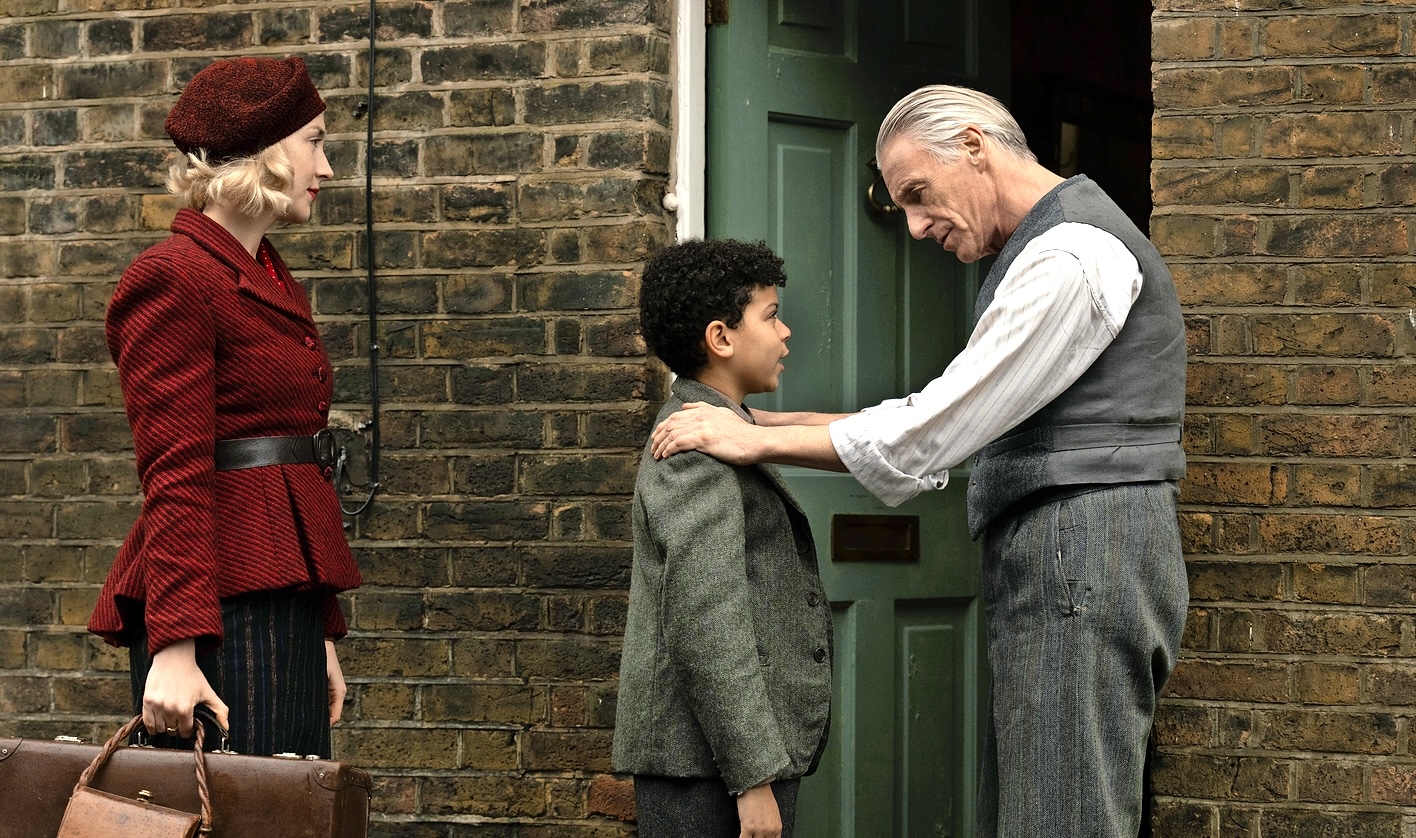
The story is centred around George (Elliott Heffernan), a young mixed-race boy, who lives with his mum, Rita (Saoirse Ronan), and his grandad, Gerald (Paul Weller), in a little terraced house in the city. George has never met his father, who we learn (in flashback) has been deported back to Grenada for entirely nefarious reasons. As the bombing becomes more intense, the government’s plan for the mass evacuation of children from the city is announced. George is reluctant to leave his mum but, together with a bunch of other youngsters, he’s put aboard a train heading for the safety of the countryside.
But George has other plans and, at his first opportunity, he jumps off the train and starts to make his way back along the track in the direction of home…
What ensues repeatedly puts me in mind of a YA adventure as George encounters a whole selection of characters on his way home: kindly Black air-raid warden, Ife (Benjamin Clémentine); callous Fagin-esque thieves, Albert (Stephen Graham) and Beryl (Kathy Burke); and a trio of friendly young boys who keep challenging George to do ever more reckless things. His odyssey is intercut with scenes of what’s happening to Rita: working in a munitions factory; heading out on the town with her friends, Doris (Erin Kellyman) and Tilda (Hayley Squires); even performing a song for the BBC when a live series visits the factory. Episodic it most certainly is but, unlike most of the Sunday evening dramas it might be compared to, the stakes here are perilously high and happy endings are by no means assured. Whenever the story is in any danger of heading towards sentimentality, McQueen (who also wrote the screenplay) finds a way to snatch it back and amp up the jeopardy, never allowing us to forget that these are dangerous, unpredictable times – and not everybody is destined to make it to the end of the line.
The production values are first-class throughout, the depictions of the war-torn city sometimes awe-inspiring, occasionally verging on high art. Blitz also offers a fresh insight into the era, the war seen from the point of view of a boy who suffers from racial slurs on a daily basis. A scene where George wanders through a deserted shopping arcade looking at an exhibition depicting the subjugation of slaves is particularly affecting; so too, an extended sequence at the Café de Paris which depicts a Black orchestra playing for the entertainment of exclusively white, upper-class customers – a frantic, sexually-charged show which is destined to be interrupted in heart-stopping fashion.
Ronan, as ever, portrays her character with absolute assurance and even demonstrates a decent singing voice but it’s Heffernan who is handed the biggest challenge here, carrying this powerful and affecting film with absolute authority. I’ve seen some decidedly lukewarm advance reviews for this, and am at a loss to understand why some critics have failed to appreciate its evident charms. It’s epic filmmaking of the highest order. As I said, it will be on your televisions soon, but it won’t look as awesome as it undoubtedly does on a cinema screen.
4.6 stars
Philip Caveney


 Bouquets & Brickbats